
Disclosure: This page contains affiliate links. If you buy through them, we may earn a commission at no extra cost to you.
The Optimist by Keach Hagey: Book Review — Should You Read the Sam Altman Biography?
Quick Answer
This The Optimist book review lands where most major reviewers did: a readable, well-sourced biography of the man at the center of the AI boom — worth your time if you want Altman’s full story in one volume, worth skipping if you’ve already read two OpenAI tell-alls this year.
Keach Hagey, a Wall Street Journal reporter, traces Altman from Loopt through Y Combinator and the OpenAI saga — starred reviews from Kirkus and Publishers Weekly.
Every few years, one book becomes the biography everyone cites when a name comes up at dinner. In AI circles right now, that conversation starts with Sam Altman — and the book at the center of it is The Optimist. This The Optimist book review covers what Keach Hagey’s biography gets right, who it’s for, and where it falls short.
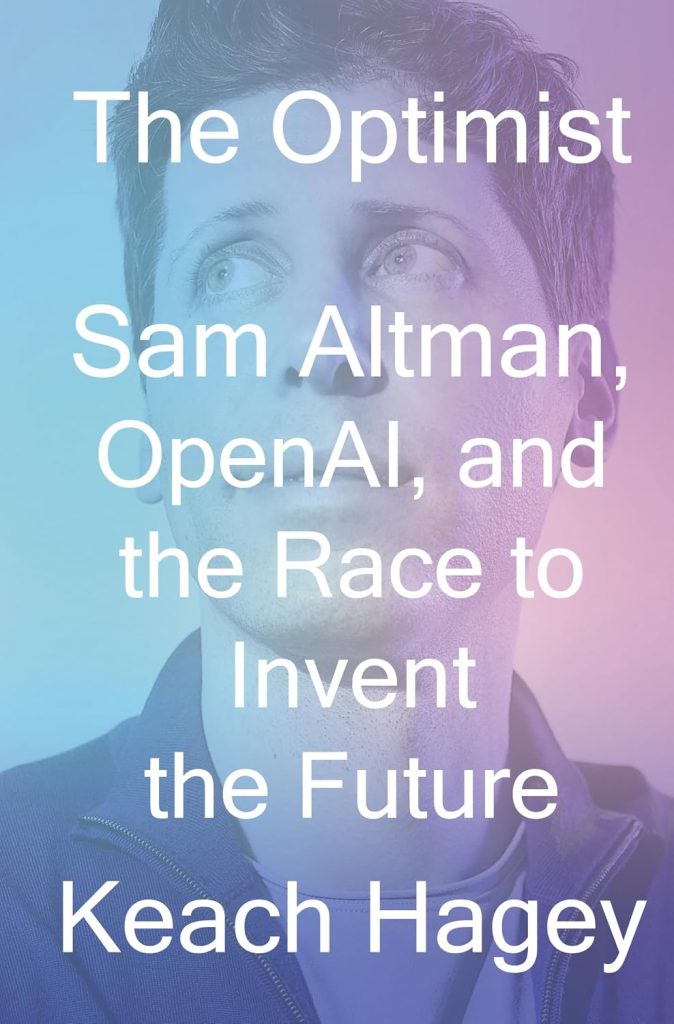
The Optimist: Sam Altman, OpenAI, and the Race to Invent the Future (W. W. Norton, June 2025) is Hagey’s hardcover biography of the OpenAI chief (ISBN 9781324075967): Loopt, the Y Combinator presidency at 28, the OpenAI founding and Musk break, the capped-profit shift, and the 2023 boardroom firing — “not consistently candid” — that ended with his return.
No biography of a living tech CEO is a simple read. The Times paired Tim Wu’s review with Empire of AI; the Guardian, the Economist, and Casey Newton’s Platformer all weighed in. Below, this The Optimist book review stacks the book’s strengths against its real limitations — intercut, not separated.

Compare Top AI Biographies & Histories
Three proven picks side by side — choose the one that fits your needs.
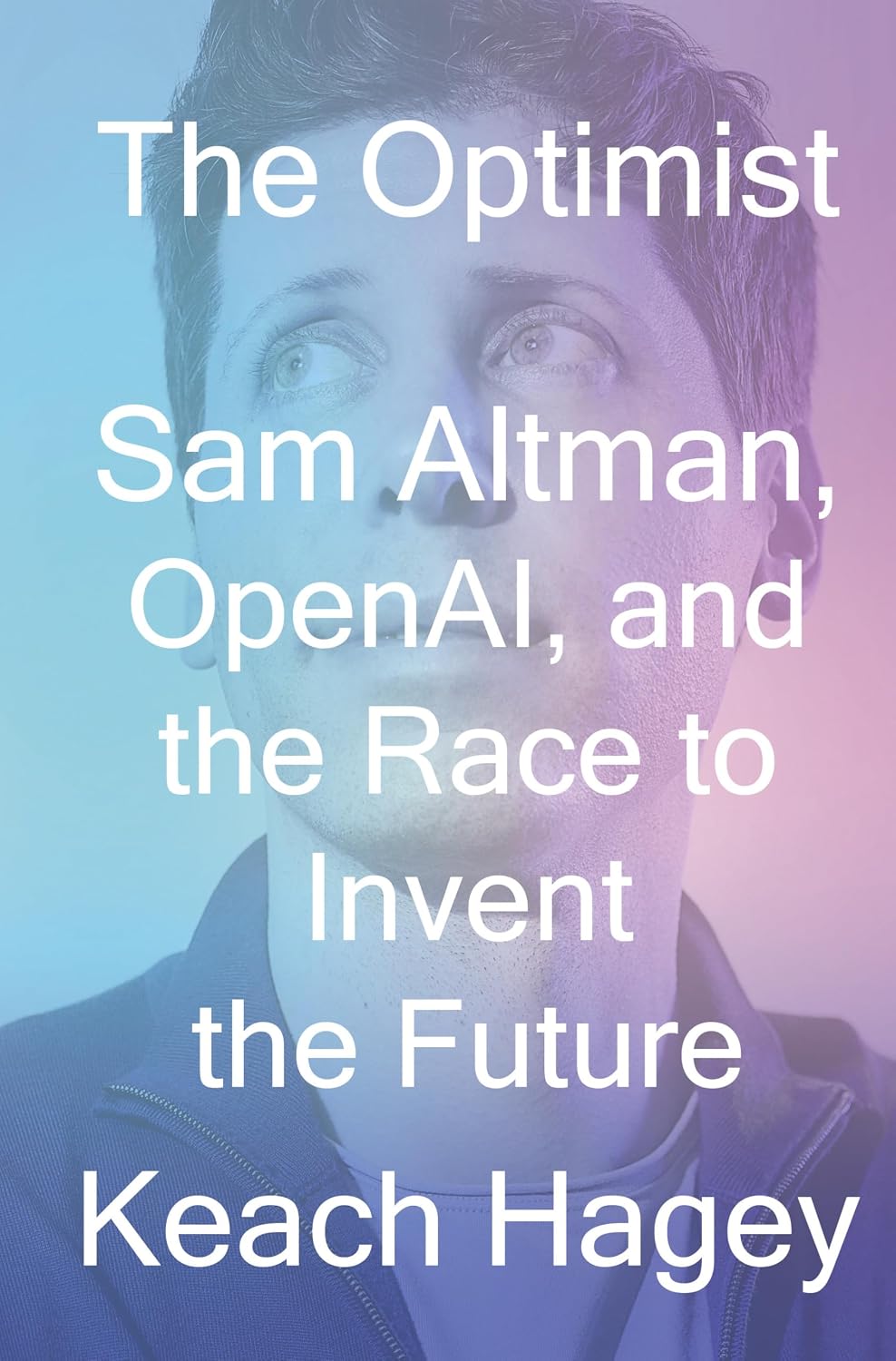
The Optimist by Keach Hagey
The person biography: Altman’s full arc, Loopt to OpenAI, in one volume
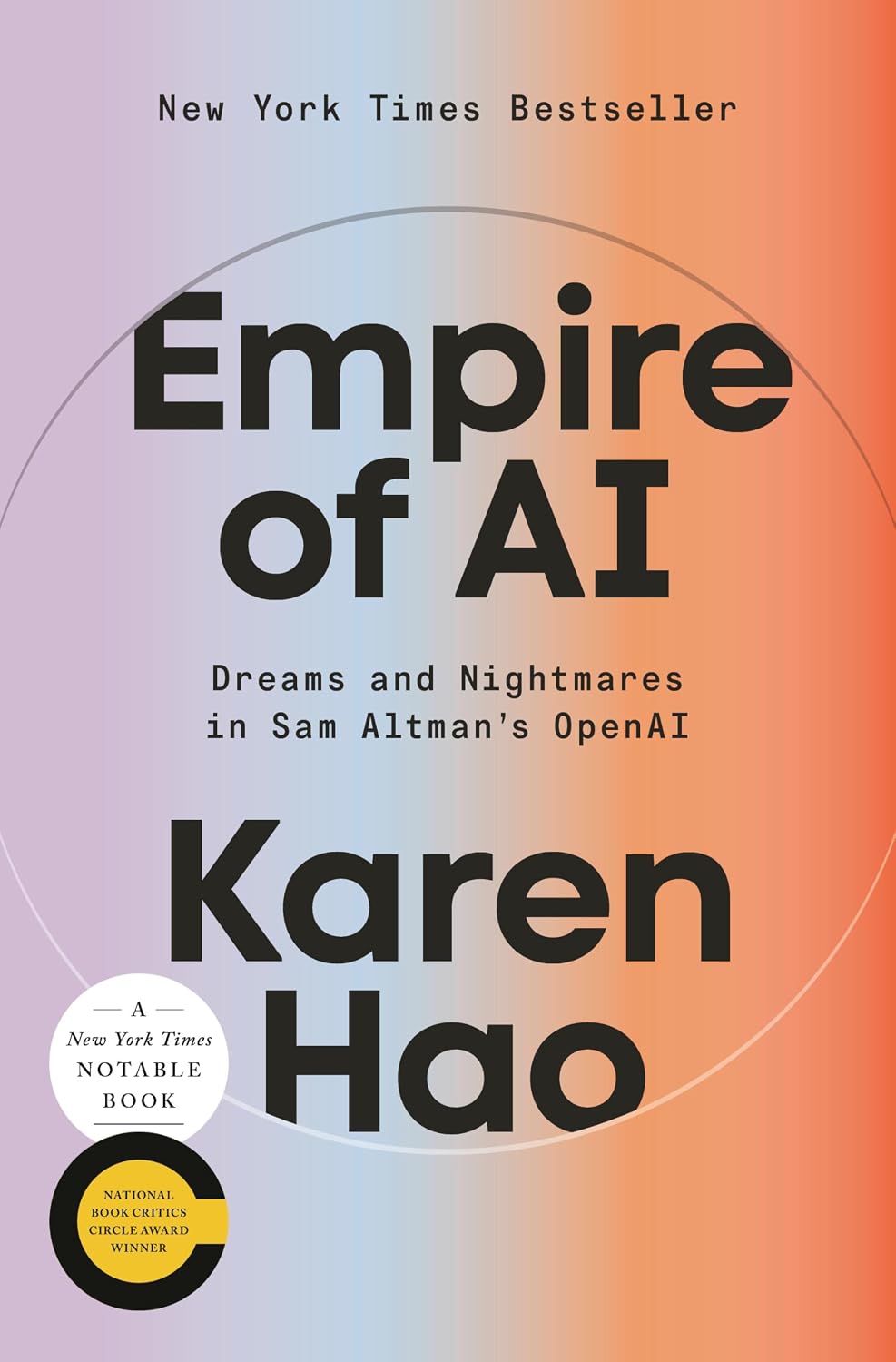
Empire of AI by Karen Hao
The company investigation — the Times reviewed both books side by side
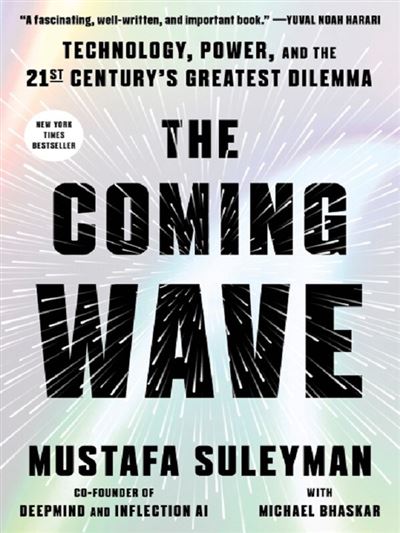
The Coming Wave by Mustafa Suleyman
The founder’s own vision, told from the inside
Prices and availability may vary — tap any product to check the current listing.
What to Look For in an AI Biography Before You Buy
Tech biographies are a crowded shelf, and most are forgettable. The good ones share a few traits — this The Optimist book review checks the book against six.
1. Access to the subject
Everything in this genre depends on access: a biographer who got the subject talking reconstructs scenes nobody else has. Genuine strength here — Hagey got Altman and his circle on the record, so the Loopt and Y Combinator chapters assemble material nobody had put in one place before, the first check on this The Optimist book review’s list.
2. A beat reporter’s instincts
There’s a difference between a writer who researched a subject for a book and one who covered the industry for years. Hagey is the second kind: the Musk-OpenAI split is a long fuse documented over time, not a sudden feud, so the early chapters carry weight instead of reading like filler — this The Optimist book review’s verdict.
3. Scope beyond the headlines
Most readers of this The Optimist book review already know the 2023 board saga. Do the earlier chapters earn their pages? Mostly yes — the Y Combinator presidency at 28 is treated as formative, not a résumé line, and the Loopt years are better still.
4. How it handles the ugly chapters
A biography’s worth is measured by its hardest chapters. The 2023 firing — the board calling Altman “not consistently candid” — gets full treatment: scenes, timelines, named sources. But the book can’t resolve it, because nobody outside that boardroom knows exactly what broke. Hagey lays out the competing accounts honestly — a point this The Optimist book review stresses. Expect no verdict on who was right.
5. The independence question
Here’s the shadow over every living-subject biography: when your subject still runs one of the most powerful companies on earth, access comes with unspoken terms. Critics who wanted a harder edge didn’t get it — the emphasis lands on Altman’s drive rather than his damage.
6. Person versus company
The last factor decides whether you buy this book or a different one: The Optimist is a biography of a person — Altman, his motives, his network. Want OpenAI as an institution? That’s a different book. Tim Wu’s Times review drew the line by pairing it with Empire of AI: one is the man, the other is the machine he built — a pairing this The Optimist book review calls a must-read.
Who Should Read The Optimist — and Who Should Skip It
First up: the AI-curious professional, the natural audience: you follow the news, you’ve used the tools, and every few weeks someone mentions Altman in a meeting. This book fills that gap in a weekend — short chapters, magazine pacing, and you’ll hold your own in any OpenAI conversation afterward.
Then there’s the gift buyer — or the reader who never touches tech books but keeps hearing about AI. Hagey writes for general readers — no math, no jargon walls — and as an introduction to why one person matters, it works. But does a biography of a living CEO ever really get to be neutral? Keep that question in your pocket.
Now the skips: already read Empire of AI and follow AI news daily? Large stretches will feel familiar — same events, different angle, so borrowing beats buying. And if you want to understand how AI actually works, this is the wrong shelf: a technical guide to spotting bogus AI claims serves you better than any biography, a point this The Optimist book review keeps making.
How the Main AI Books Compare
It helps to see where The Optimist sits on the shelf. Against Empire of AI, the difference is person versus company: Hagey wrote a biography of Altman; Karen Hao wrote an investigation of OpenAI. With The Coming Wave, it’s the biographer’s lens versus the founder’s own account. Against the critics’ shelf — a power-focused critique of AI hype or a technical guide to spotting bogus AI claims — The Optimist is neither polemic nor debunking, the stance of this The Optimist book review throughout.
This The Optimist book review puts the three main approaches side by side:
| Type | Best For | Price Tier | Key Feature | Watch-Out |
|---|---|---|---|---|
| Narrative biography (The Optimist) | Readers who want the human story behind AI’s rise | Mid-range | One person’s full arc — Loopt to OpenAI — in a single volume | Living-subject biographies tilt toward access |
| Investigative reporting (Empire of AI) | Readers who want the company story, not the man | Mid-range | Field-level investigation of OpenAI as an institution | Denser, more institutional in tone |
| Insider account (The Coming Wave) | Readers who want the builder’s own argument | Mid-range | First-person vision of where AI goes, from inside | Self-interested by design; an argument, not a report |
The row that matches your curiosity is your book — if it’s the man himself, you’re reading the right The Optimist book review.

Three Ways People Actually End Up Reading This Book
The weekend catch-up reader
You’ve got a free Saturday, a vague sense that Altman matters, and no desire to read three books about him. One book, one weekend, done — short chapters, a timeline that carries you, a Loopt-to-OpenAI arc that reads like a story. For catch-up efficiency, this The Optimist book review rates it highly.
The founder or investor reader
Or you’re reading for pattern recognition, not trivia: how Altman raised money, recruited people, survived being fired. The Y Combinator chapters are the ones you’ll underline — frank about his talent for keeping powerful people aligned. If your interest is the company rather than the man, it pairs well with an investigative look inside OpenAI.
Common Mistakes Book Buyers Make
Mistake one: buying it to understand how AI works. It won’t — no transformers, no model tour. It’s a business biography, and buyers who wanted technical understanding end up disappointed.
Mistake two: expecting a verdict on the 2023 firing. The boardroom chapters are detailed but don’t settle who was right — which reads as a dodge if you came for a ruling.
Mistake three: treating it as the final word. No biography of a living subject should be anyone’s only source. The Optimist is the strongest version of one account; the next book on your shelf should argue with it, per this The Optimist book review.
Mistake four: skipping straight to the headlines. Some buyers flip to the 2023 chapters and shelve it — missing the Loopt and Y Combinator material nobody else wrote. Skip the early chapters and you’ve skipped the reason this The Optimist book review recommends buying it.
Why, How, What: Quick Answers
Why did a Wall Street Journal reporter write a biography of Sam Altman?
Because Altman is the most consequential and least understood figure in the AI boom, and Hagey had spent years covering his beat. Beat reporters write books when a subject outgrows the news cycle.
How should you read it?
With a companion: the strongest way through The Optimist is alongside a book that sees the same events differently — Empire of AI for the company view, or a critical title for the skeptical one. Hagey’s version first for narrative, the other for counterweight.
What does the book actually cover?
The full arc: Loopt, the startup that never quite worked; Y Combinator, where Altman became president at 28; the OpenAI founding, the slow Musk break, the capped-profit shift, the November 2023 firing and return. Nothing invented — the public record, assembled deeper than any news cycle had room for. That assembly is what this The Optimist book review counts as the book’s real contribution.
Decision Tree: Should You Buy The Optimist?
If you want one book that explains how Sam Altman became the face of AI — this is the one.
Already read Empire of AI and just want the 2023 coup retold? The library or a skip both work.
If you want to understand how the technology works — look elsewhere. This is a biography, not a manual.
If you’re buying for someone who half-follows AI news — readable enough to gift, with a pinch of salt about the framing.
Key Takeaways
Hagey’s beat-reporter access is the real asset — the Loopt and Y Combinator chapters hold material assembled nowhere else.
The 2023 boardroom chapters are detailed but deliver no verdict; worth it for the reporting, not a ruling.
It’s a biography of a person, not an investigation of a company — this The Optimist book review stresses knowing which one you want.
Starred reviews and heavyweight coverage signal a serious book, not a cash-in.
The framing favors its subject; pair it with a skeptical counterweight — the closing advice of this The Optimist book review.
Final Recommendation
So: should you buy it? This The Optimist book review says yes for most readers — reservations stated plainly, not buried. A serious, well-reported biography of the figure at the center of the AI story. The weakness (living-subject framing) and the limitation (no verdict on 2023) are real.
It can be skipped only if you’ve read your way through the OpenAI shelf, or if you need technical understanding rather than narrative. Everyone else gets a book that earns its place. If that sounds like your shelf, the hardcover edition of The Optimist is easy to find through the big marketplaces, the purchase this The Optimist book review endorses for the readers above.
Compare Top AI Biographies & Histories
Three proven picks side by side — choose the one that fits your needs.
The Optimist by Keach Hagey
The person biography: Altman’s full arc, Loopt to OpenAI, in one volume
Empire of AI by Karen Hao
The company investigation — the Times reviewed both books side by side
The Coming Wave by Mustafa Suleyman
The founder’s own vision, told from the inside
Prices and availability may vary — tap any product to check the current listing.
Questions People Ask Before Buying
Is The Optimist worth reading?
Yes, for most readers — this The Optimist book review finds it a well-reported, genuinely readable biography that gives you Sam Altman’s full story, from the Loopt startup years through Y Combinator and the OpenAI saga, in one volume, though readers who already devoured multiple OpenAI tell-alls this year may find stretches of it familiar.
The value is the assembly: the facts were mostly public, but the reporting that ties them into one narrative wasn’t. Starred reviews from Kirkus and Publishers Weekly suggest this isn’t a rushed cash-in.
Should I read The Optimist or Empire of AI first?
Read The Optimist first if you’re curious about Sam Altman the person — his motives, his rise, his network — and Empire of AI first if you want the company story, because the two books cover the same era from opposite ends, and the New York Times was right to review them as a pair.
The order matters less than the pairing: one book explains the man, the other the machine he built. If you only ever read one, pick by which question interests you more — the person, or the institution, the central choice this The Optimist book review keeps coming back to.
Is The Optimist just a whitewash of Sam Altman?
Not quite a whitewash, but not a takedown either — this The Optimist book review found that Hagey includes the damaging material, including the 2023 firing and the Musk fallout, yet the book’s framing treats Altman’s optimism as the engine of the story, which means sympathetic readers will feel confirmed and skeptical ones will keep their guard up.
The facts are there; the emphasis isn’t neutral. What you get is a serious biography with a sympathetic tilt — which is why this The Optimist book review keeps recommending a skeptical companion alongside it.
Does the book explain the 2023 OpenAI board coup clearly?
It explains what happened in detail — the timeline, the players, the competing accounts of why the board called Altman “not consistently candid” — but it can’t fully explain why, because nobody outside that boardroom has the complete picture, so expect thorough reporting on the events and an honest admission that the deeper motives remain contested.
That’s the book’s most responsible stretch: Hagey lays out what each side claims and lets the gaps show — the passage this The Optimist book review rates highest.
Who should not buy The Optimist?
Readers who already finished Empire of AI and follow AI news closely can skip it, since the events overlap heavily — as can anyone wanting technical understanding of AI rather than a business biography, because this book explains a person, not the technology; everyone else in the AI-curious camp will get their money’s worth.
Two more edge cases: not for the reader who dislikes nonfiction, and not as investment advice. Altman’s story is a sample size of one. Take the lessons as stories, not instructions.

Frequently Asked Questions
I already read Empire of AI — is The Optimist just the same story again?
Not the same story — the same events from a different camera angle. Empire of AI investigates the company; The Optimist follows the man. You’ll recognize the 2023 board saga, the Musk split, the capped-profit fight: those happened once, so both books cover them. Hao asks what OpenAI is doing to the world; Hagey asks what made Altman the person who could build it. This The Optimist book review finds that distinction real, not marketing.
Does Hagey actually get Altman on the record, or is this all secondhand?
She got real access — the book’s main selling point, and reviewers across the board noted it. Altman and people around him talked, which is why the Loopt and Y Combinator chapters feel lived-in rather than reconstructed from old clips. That said, “on the record” has limits with a sitting CEO. Early chapters hold the gold, per this The Optimist book review.
Is this book too sympathetic to Altman to trust?
It’s sympathetic, and you should know that before page one — the title isn’t ironic. Hagey frames Altman’s optimism as the force that carried him from a failed startup to the center of the AI boom. But sympathetic isn’t dishonest: the damaging episodes are in the book. The practical move, per this The Optimist book review: this book first, then something that pushes back.
I read AI news every day — will this book tell me anything new?
Yes, but not where you’d expect — the 2023 board drama is the part you’ve mostly read already. The surprises sit in the earlier chapters: the Loopt years, the Y Combinator presidency, the long slow break with Musk. This book covers the decade before the events. If your news diet started with ChatGPT, the first half is genuinely new territory — though this The Optimist book review notes longtime watchers will find less unfamiliar.
I’m buying this as a gift for someone new to AI — good idea or risky?
Good idea, with one condition: the recipient should be at least mildly curious about tech or business. Written for general readers — no jargon walls, no engineering prerequisites — it works as an entry point to the whole AI conversation. The risk isn’t difficulty but interest. For the curious-but-not-technical friend, this The Optimist book review considers it one of the safer gifts. Start the recipient on the Loopt chapters; they hook people fast.
Disclosure: This page contains affiliate links. If you buy through them, we may earn a commission at no extra cost to you.