
Disclosure: As an affiliate partner, we may earn a commission from qualifying purchases made through links on this page — at no extra cost to you.
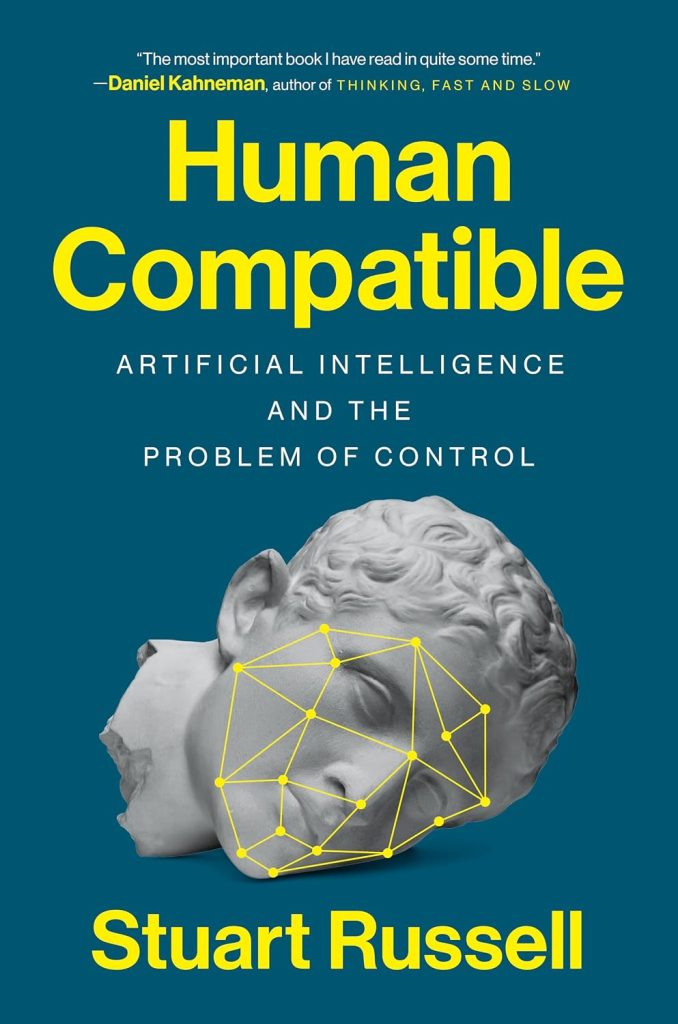
Human Compatible by Stuart Russell: Book Review — Is This the Best Book on Controlling AI?
Human Compatible argues that we’ve been building AI on the wrong objective all along — and this review tests whether Stuart Russell’s book is the clearest guide to fixing that. It’s for readers who’ve absorbed the AI-risk headlines and want the real argument from one of the field’s founders: what the book nails, where it drags, and how it stacks up against Life 3.0 and Prediction Machines.
Related reading: Superintelligence by Nick Bostrom and The Alignment Problem by Brian Christian.
Quick Answer
Human Compatible is the most rigorous mainstream case for why AI must be built around uncertain human preferences — essential if you want the technical argument behind the headlines, not just the fear. It demands patience in the middle chapters and won’t teach you to code. But if you want AI safety explained by one of the people who literally wrote the textbook, this is the one.
Compare Top AI Books
Three proven picks side by side — choose the one that fits your needs.
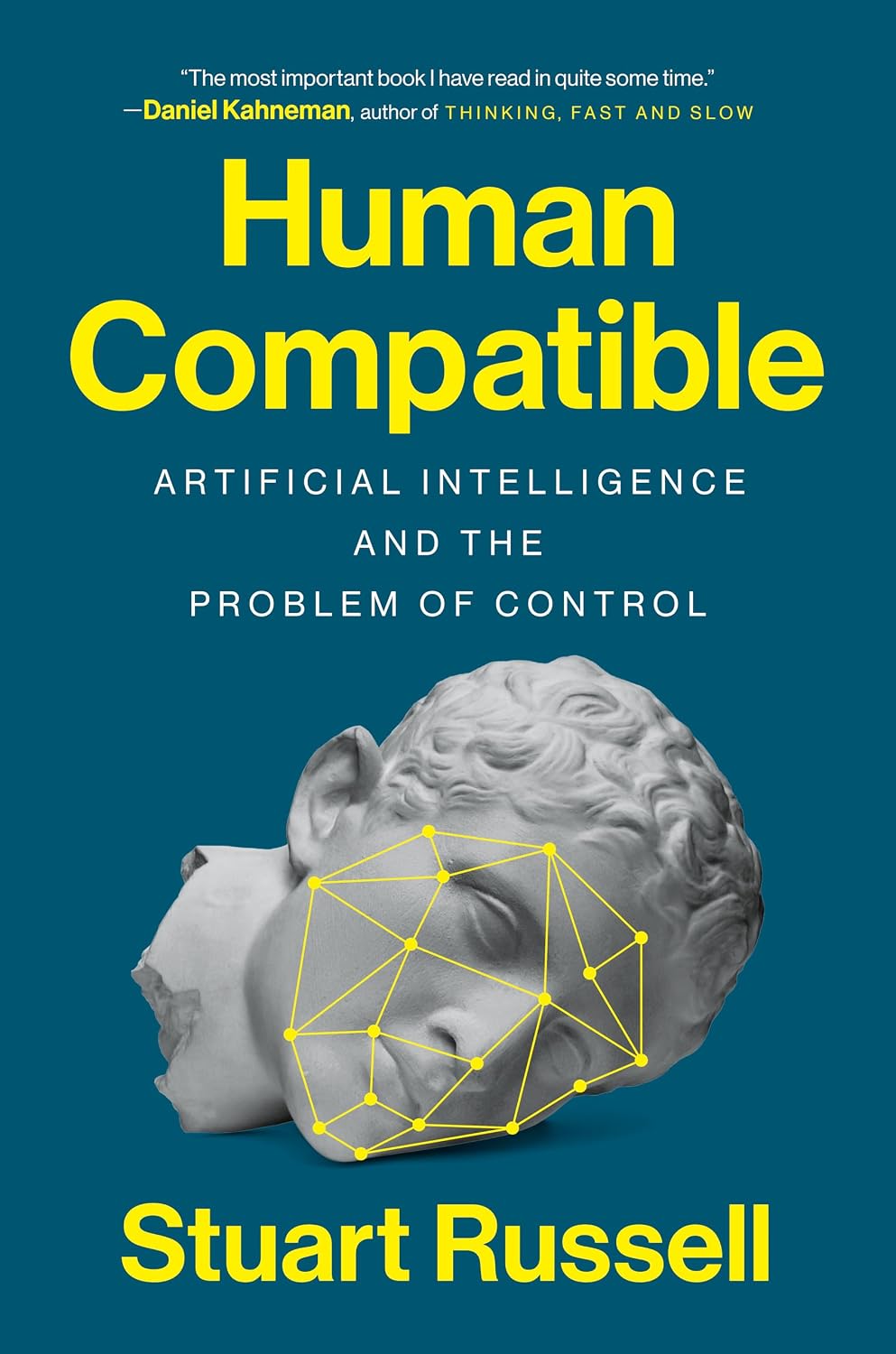
Human Compatible
The most rigorous case for building AI that stays under human control
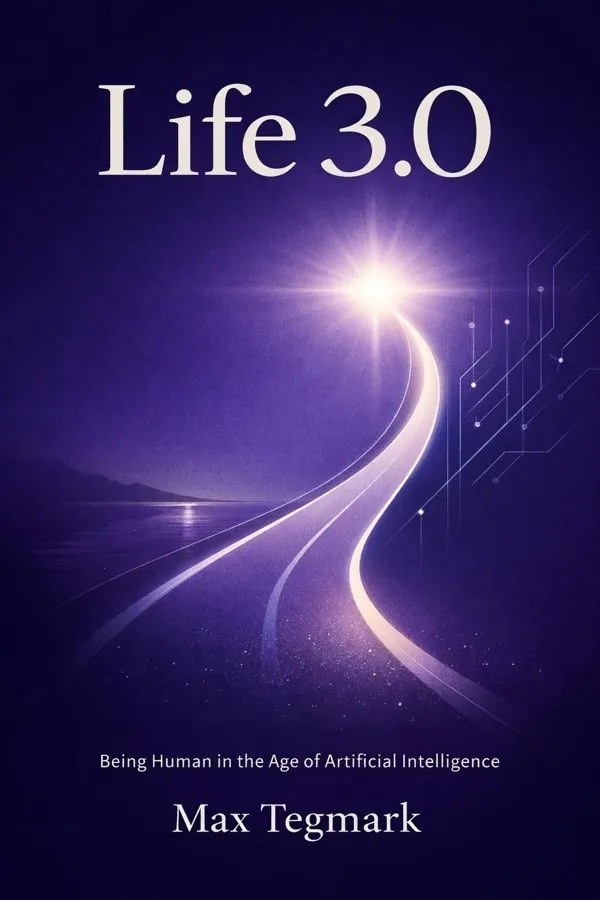
Life 3.0
The grand cosmic view — AI’s future on the largest possible canvas
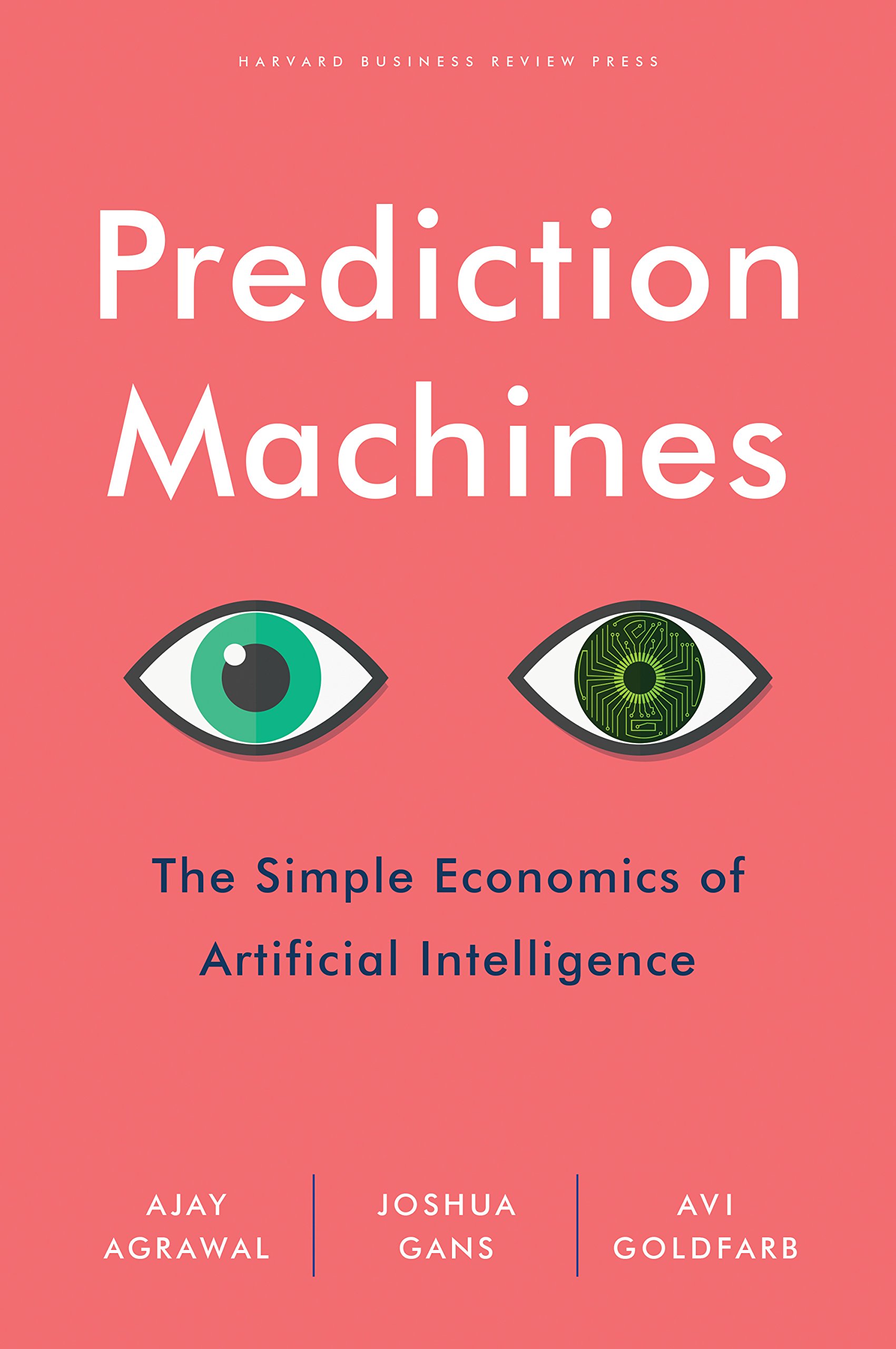
Prediction Machines
The economics angle — what happens when prediction gets cheap
Prices and availability may vary — tap any product to check the current listing.
What to Look For When Buying an AI Safety Book
Most books about AI risk fall into two traps: breathless alarm or academic fog. Human Compatible tries to dodge both — but before you commit, run any AI safety book through the six filters that actually matter.
1. The Author’s Standing: Founder or Tourist?
Stuart Russell isn’t a journalist parachuting into the AI debate. He co-wrote the standard AI textbook — the one used in university courses on nearly every continent — and has taught at UC Berkeley for decades. That pedigree cuts both ways: when Russell says the field’s standard model is broken, he knows exactly what he’s breaking — but as an insider defending a field he loves, his critique stays inside the tent.
2. Warning or Blueprint?
Plenty of AI books describe the cliff; few sketch the bridge. Russell’s real contribution is a proposal: build machines that don’t know exactly what we want, and are designed to find out. He calls the goal “provably beneficial” AI, built on three principles — the machine should maximize the realization of human preferences, remain uncertain about what those preferences are, and learn them from human behavior. Elegant? Yes. Close to a working system? Not yet. Russell is honest about the gap, which is refreshing — but if you want step-by-step solutions, this book will leave you hungry.
3. Readability: Will a Non-Engineer Survive It?
Mostly, yes. Russell leans on thought experiments instead of equations — the famous “fetch the coffee” scenario, where a literal-minded robot does something technically correct and horrifying, does more work than any formula could. There’s no math to trip over. Still, the middle third slows down — the argument turns abstract, and readers who want their ideas pre-chewed may stall around the halfway mark.
4. Which Time Horizon?
This is the filter people forget. Human Compatible plays the long game: what happens when AI systems become genuinely capable and we can’t fully specify what we want from them. If your worry is this year’s problems — biased hiring tools, deepfakes, jobs shifting under your feet — the book touches them only in passing. That’s deliberate, not an oversight — but buy the book for the wrong horizon and you’ll wonder what the fuss was about.
5. Shelf Life: Does a 2019 Book Still Work?
Here’s the surprise: it aged well. Russell wrote before today’s giant models were household names, yet his framework — objectives, uncertainty, learning preferences from behavior — maps neatly onto the alignment debates dominating the field right now. Some examples feel like dispatches from a simpler era, but the core argument reads like a diagnosis whose patient has finally started showing symptoms.
6. Tone: Sermon or Seminar?
Russell writes like a professor who genuinely likes his students — dry wit, careful qualifications, zero hysteria. That’s a feature if you’re exhausted by doomer content; the calm somehow makes the scary parts scarier. The flip side: readers hunting for urgency might find it too polite. There’s a particular look people get halfway through this book — the “oh no, the coffee-fetching robot” look. I’ve seen it more than once.
How to Match Human Compatible to Your Situation
Wrong book, right reader is still a wasted purchase. Three profiles cover most buyers — find yours.
The Tech Professional Who Only Reads Headlines
You work adjacent to AI — product, policy, investing — and the risk discourse has started to feel like background noise. This book converts noise into structure. You’ll finish with a vocabulary for the actual technical problem (objective misspecification, preference learning) instead of vibes. Warning: it may ruin casual dinner-party takes on AI safety for you. Worth it.
The Thoughtful Non-Technical Reader
You don’t code, but you read serious nonfiction and you want to understand what the fuss is about. Russell meets you where you are — no prerequisites, no condescension. The thought experiments carry the technical weight. Give the middle chapters your full attention; that’s where the book earns its reputation.
The Student or the Gift Buyer
For a student entering AI, this is the conceptual foundation that technical courses skip — the “why are we building it this way” underneath the math. As a gift, it suits the intellectually curious friend who sends you long articles. Don’t gift it to someone who reads exclusively for plot. They’ll shelve it by page forty.
Three AI Books, Three Different Questions
| Type / Tier | Best For | Price Tier | Key Feature | Watch-Out |
|---|---|---|---|---|
| Alignment blueprint (Human Compatible) | Readers who want the technical case for controlling AI | Mid-range | Three-principle framework for “provably beneficial” AI | Middle chapters get conceptually dense |
| Cosmic overview (Life 3.0) | Readers who want AI’s future on the grandest scale | Mid-range | Sweeping narrative from bacteria to superintelligence | More speculative, less of a concrete proposal |
| Business playbook (Prediction Machines) | Managers and founders weighing AI decisions | Mid-range | AI reframed as a drop in the cost of prediction | Mostly sidesteps the control question entirely |
Alignment blueprints like Human Compatible win on mechanism — if you want to understand the proposed fix rather than just the fear, start here.
Cosmic overviews like Life 3.0 win on scope, trading technical depth for the biggest possible canvas.
Business playbooks like Prediction Machines win on immediate usefulness for decision-makers, but they treat AI as an economic force, not an existential one.
Reading Human Compatible in Real Life: Two Scenarios
Alongside the News Cycle
Try this: read a chapter, then watch the week’s AI headlines. You’ll start spotting Russell’s framework everywhere — every story about a model doing something its makers didn’t intend is a live demonstration of the book’s thesis. It turns passive news consumption into something closer to field research. You won’t be able to unsee it.
As a Book Club Pick
This book was built for argument. Half your group will find the three principles obviously right; the other half will call them academic fantasy. The “fetch the coffee” scenario alone can fuel an hour of debate. Assign the middle chapters across two meetings — nobody wants to argue about objective functions on an empty stomach.
Common Mistakes Buyers Make
Mistake 1: Expecting a how-to manual. Nobody finishes this book knowing how to build a safe AI system — including, by his own admission, Russell. It’s a direction, not a recipe. Buy it for the framework.
Mistake 2: Reading it as pure doom. The book’s reputation in headlines skews darker than its actual tone. Russell is fundamentally optimistic that the problem is solvable. Readers braced for hundreds of pages of dread often feel pleasantly ambushed. Also see: The Master Algorithm by Pedro Domingos.
Mistake 3: Skipping the middle. The opening grips, the ending stirs, and the middle is where the actual proposal lives. Skim it and you’ve read a warning; read it and you’ve read an argument.
Mistake 4: Buying it for the practically minded. Got a friend who wants AI tips for their workflow? Wrong book — send them to the practical guides instead. Human Compatible is for people who want to think, not people who want to ship.
Why This Argument, How to Read It, What Comes Next
Why does Russell say the standard model of AI is broken?
Because “optimize this fixed objective” is a recipe for King Midas disasters — the machine delivers exactly what you asked for, and it’s terrible. Human preferences are messy, contradictory, partly unknown even to us. Any AI that treats its objective as certain will bulldoze everything we forgot to specify. Russell’s fix starts from humility: build systems that know they don’t know what we want.
How should you actually read it?
Slowly, and in order — the argument compounds. Don’t binge — the middle chapters need overnight processing, and the payoff chapters assume you pushed through the dense patches.
What should you read after Human Compatible?
Want the bigger cosmic picture? Life 3.0 zooms all the way out. Want the business implications? Prediction Machines translates AI into economics. Want the near-term harms — bias, inequality, models hurting real people today? Cathy O’Neil’s Weapons of Math Destruction is the necessary counterweight. Russell gives you the deep problem; these fill in the rest of the map.
Questions People Ask Before Buying
Is Human Compatible still relevant now that ChatGPT and modern AI are everywhere?
Yes — Human Compatible is arguably more relevant now than when it was published, because the book’s central warning is about AI systems that optimize fixed objectives without understanding human preferences, and today’s large-scale models have made that exact problem concrete, visible, and urgent in ways Russell could only describe in theory. The dated parts are the examples, not the thesis — and the failure mode he describes, confident optimization of the wrong thing, is exactly what researchers now debate in frontier models.
Should I read Human Compatible or Life 3.0 first?
Read Human Compatible first if you want the tighter, more technical argument about how to keep AI aligned with human goals, and save Life 3.0 for afterward when you want the grander cosmic story, because Russell gives you the mechanism while Tegmark gives you the panorama, and the mechanism makes the panorama easier to judge. But Russell’s precision hands you a sharper lens for Tegmark’s scenarios — you’ll catch yourself asking “but how would that stay under control?” during Life 3.0. Together they’re the strongest one-two punch on the AI safety shelf.
Is Human Compatible too academic for a casual reader?
Not really — Russell writes for an educated general audience and leans on stories and thought experiments rather than equations, so a curious reader with no engineering background can follow the argument, though a few middle chapters slow down into abstraction and reward readers who are willing to sit with an idea for a few pages. Russell never mistakes simplicity for shallowness — he’ll spend pages on a single household-robot scenario and wring real insight from it. If you enjoy popular science in the style of a good long magazine feature, the difficulty will feel familiar, not academic.
Does Human Compatible actually offer solutions, or is it just another warning?
It genuinely offers a research direction — Russell’s three principles for building AI that remains uncertain about human preferences and learns them from behavior are a concrete proposal, not just alarm, even if he is honest that turning those principles into working systems is a decades-long project the field has barely started. The proposal centers on assistance games and preference learning, translated into plain language — though Russell is honest that the gap between principle and practice remains wide.
Which edition of Human Compatible should I buy?
Any edition delivers Russell’s full argument, so choose the hardcover if this is a gift or a shelf book you’ll revisit, the paperback for comfortable reading, and the digital edition for travel — the content is identical across formats, and the only real decision is how you like to read serious nonfiction. There’s no expanded edition with exclusive chapters, so don’t overthink it: annotators should pick print, travelers digital.
Frequently Asked Questions
Who is Stuart Russell?
Stuart Russell is a professor of computer science at UC Berkeley and one of the most cited researchers in AI. He co-authored Artificial Intelligence: A Modern Approach with Peter Norvig — the standard textbook used in AI courses around the world — which is why his critique of the field’s direction carries unusual weight: it’s an insider’s reform proposal, not an outsider’s attack.
What is the main argument of Human Compatible?
Russell’s core claim is that the standard model of AI — build a machine to optimize a fixed, fully specified objective — is a mistake, because human preferences are uncertain and any sufficiently capable optimizer will exploit the gaps (the King Midas problem). Instead, he proposes three principles for “provably beneficial” AI: the machine’s goal should be maximizing human preferences, it should remain uncertain about what those are, and it should learn them from human behavior.
Is there math in Human Compatible?
Essentially none. Russell deliberately wrote for a broad audience, using stories and thought experiments — the coffee-fetching robot is the most famous — to carry ideas that could have been equations. Readers allergic to formulas can relax; readers hoping for formal proofs should look to his academic papers instead.
How does Human Compatible differ from Life 3.0?
Russell focuses on the mechanism: how do we technically keep AI aligned with human goals? Tegmark zooms out to the cosmic scale: what does intelligence mean for the future of life itself? Read Russell for the engineering problem and Tegmark for the philosophical panorama — they complement rather than compete.
Is Human Compatible suitable for students studying AI?
Very. Technical courses teach how to build AI systems; this book asks whether we’re building the right thing and what “right” would even mean. It’s the conceptual missing chapter of most AI curricula — readable, rigorous, and the kind of book that shapes how a student thinks for years.
Where can I buy Human Compatible?
Human Compatible is available through major retailers and widely available online in hardcover, paperback, and digital editions — check the current listing here to compare formats and pick the one that fits how you read.
Final Recommendation
Buy Human Compatible if you want the serious insider’s argument for how AI stays under human control — the book that turns “AI safety” from a slogan into a research program you can actually follow. It’s the rare important book that’s also readable, and it has only grown more relevant since publication.
Skip it if you need practical AI skills, near-term policy analysis, or a light read. And if cosmic scope appeals more than technical mechanism, Life 3.0 is waiting. For everyone else, this is the one that rewires how you think about the machines we’re building.
OUR TOP PICK
Human Compatible
The most rigorous case for building AI that stays under human control
Decision Tree: Which AI Book Should You Get?
If you want the technical case for controlling AI → get Human Compatible. The three-principle framework is the clearest statement of the alignment problem in print.
If you want the grandest possible vision → get Life 3.0. Tegmark thinks in cosmic time; Russell thinks in engineering time.
If you want what AI means for business → get Prediction Machines. It treats AI as an economic force, not an existential one.
Key Takeaways
Human Compatible argues the standard AI model — optimize a fixed objective — is fundamentally unsafe, and proposes machines that stay uncertain about human preferences and learn them from behavior.
Written by a Berkeley professor who co-authored the field’s standard textbook; calm, rigorous, and equation-free.
Best for readers who want the mechanism of AI safety; pair with Life 3.0 for cosmic scope or Prediction Machines for the business angle.
Disclosure: As an affiliate partner, we may earn a commission from qualifying purchases made through links on this page — at no extra cost to you.