
This review contains affiliate links. If you buy through them, we may earn a commission at no extra cost to you.
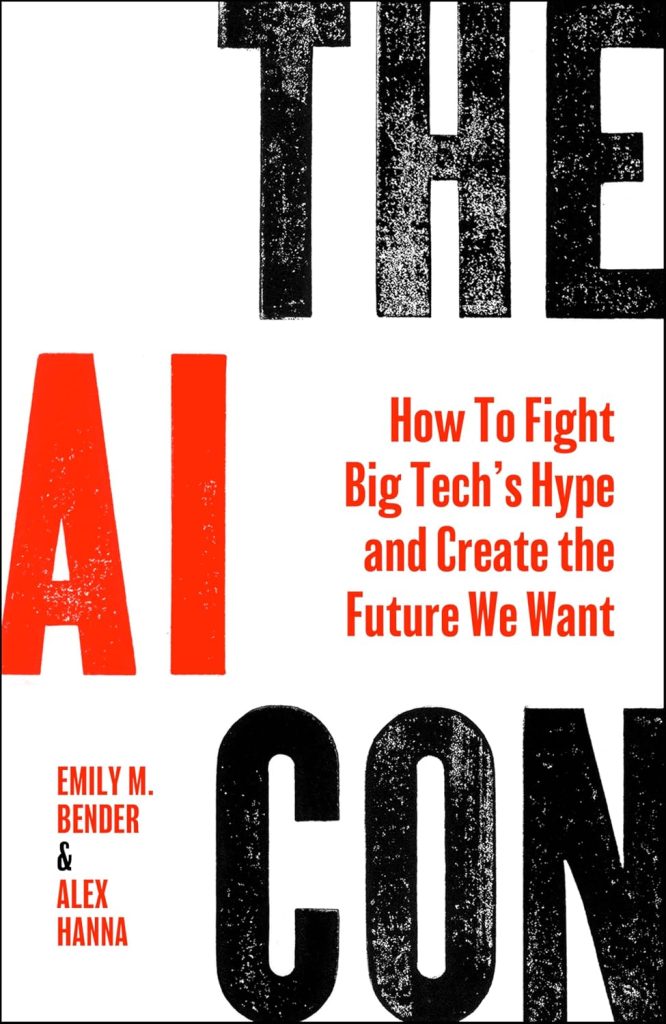
The AI Con by Emily M. Bender & Alex Hanna: Book Review — Should You Read It in 2026?
Quick Answer
Yes — if you feel buried under AI marketing noise, The AI Con is worth reading. It’s not a how-to guide or a technical debunk; it’s an anti-hype toolkit that teaches you to spot inflated AI claims and push back on them. Skip it if you want LLM tutorials or a politically neutral tech survey.
Where it differs from AI Snake Oil: that book asks whether AI tools can do the job. This one asks who benefits from you believing they can. Different question, different fight — and honestly, in 2026, you need both.
Compare Top AI Critique Books
Three proven picks side by side — choose the one that fits your needs.
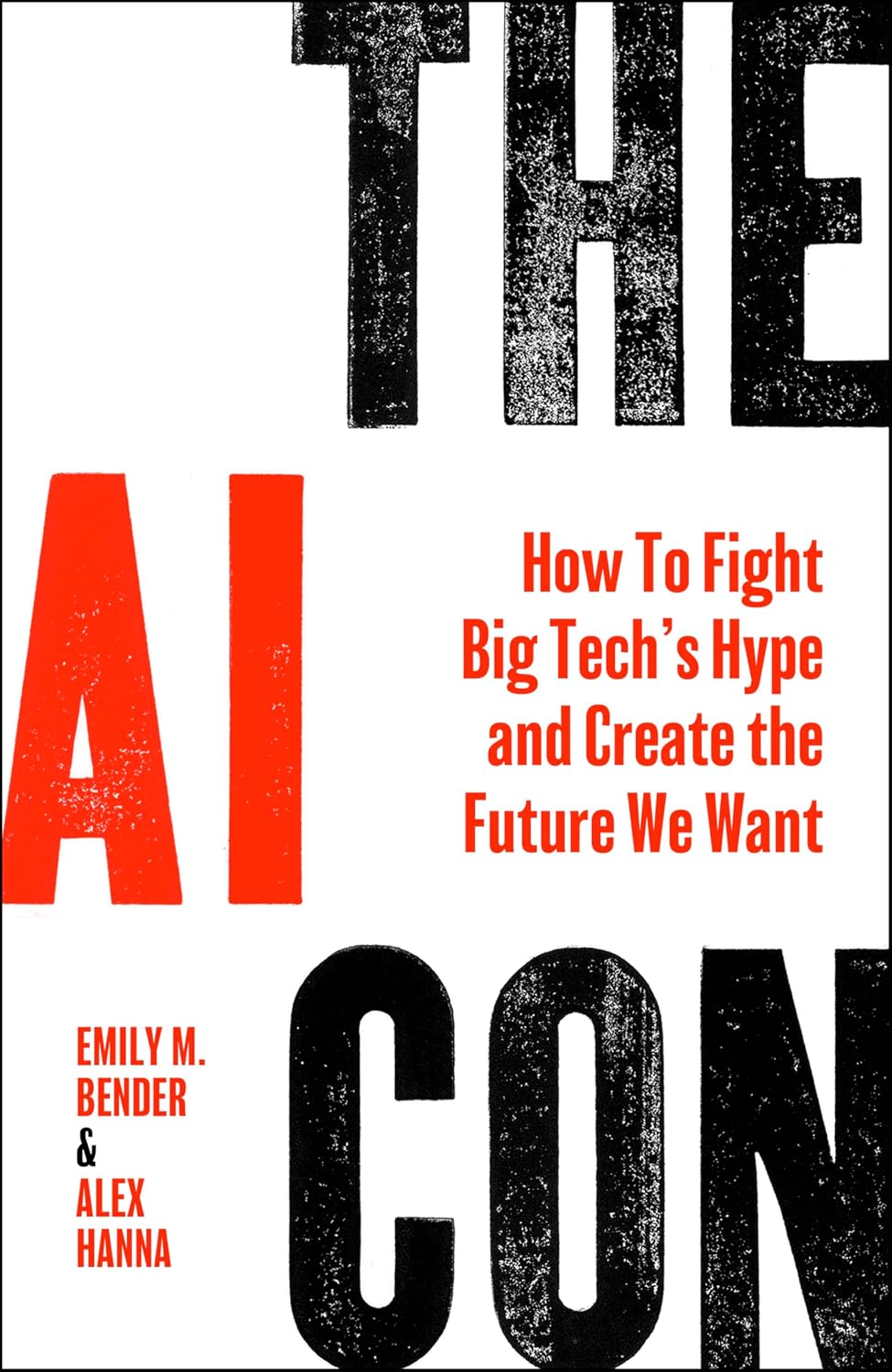
The AI Con: How to Fight Big Tech’s Hype and Create the Future We Want
The power-angle critique: AI hype as a “con” — utopians and doomers are two sides of the same coin, and the real fight is political, not technical.
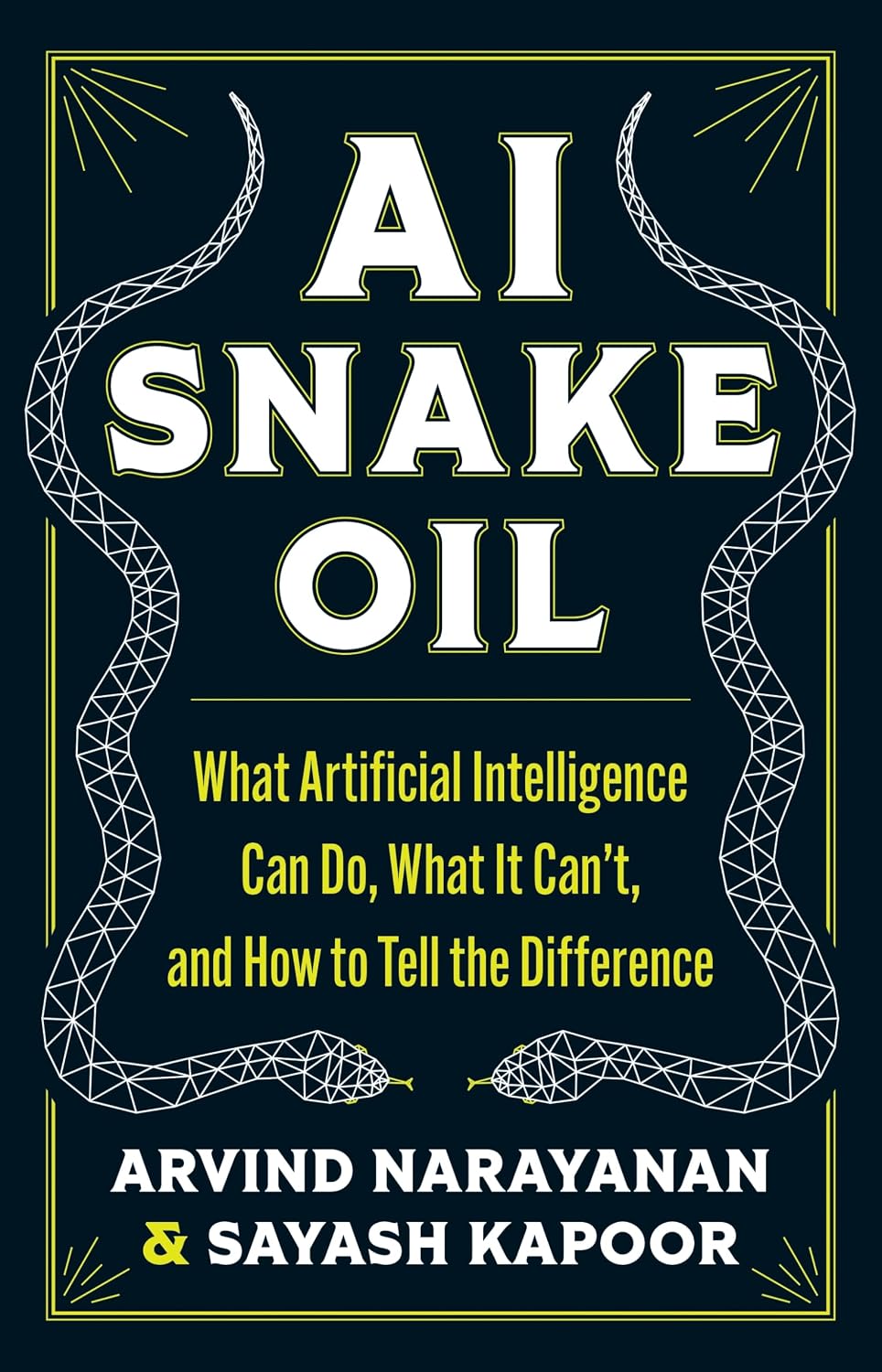
AI Snake Oil: What Artificial Intelligence Can Do, What It Can’t, and How to Tell the Difference
The capability-angle debunk: predictive vs. generative AI, and whether the tools can actually deliver on their promises.
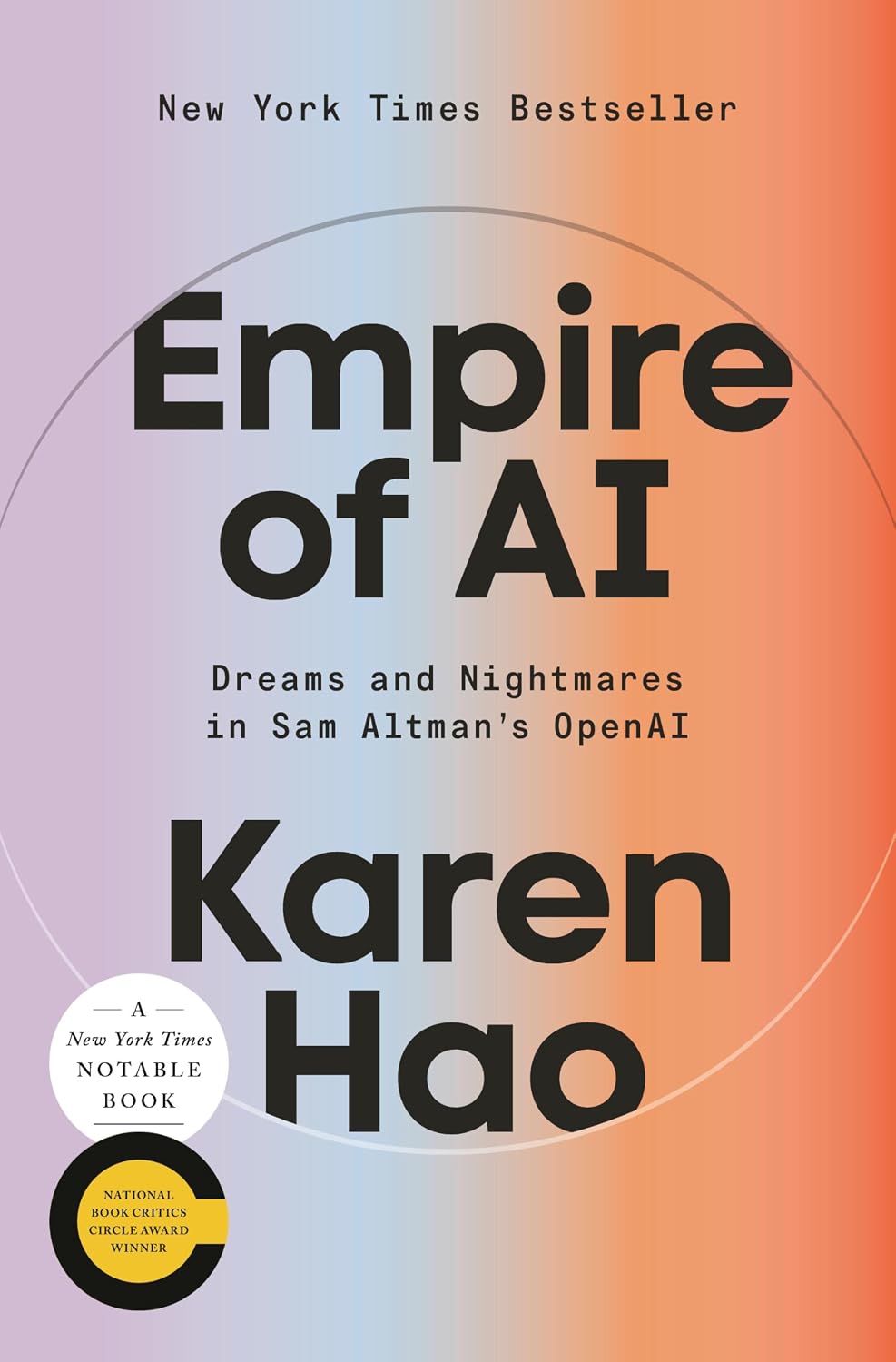
Empire of AI: Dreams and Nightmares in Sam Altman’s OpenAI
The inside-reporting angle: how Big Tech AI actually operates behind closed doors.
Prices and availability may vary — tap any product to check the current listing.
Let’s be honest about the situation most of us are in. Somewhere between the third vendor deck promising “AI-powered everything” and the twentieth doomsday headline, you stopped knowing what to believe. A friend sends you a podcast about AI replacing lawyers. Your boss asks whether to buy some “intelligent” software. Your kid’s teacher sends home a note about AI-written homework. Every claim is loud. Very few come with receipts.
The AI Con was written for exactly that moment. Published in May 2025 by computational linguist Emily M. Bender and Distributed AI Research Institute research director Alex Hanna, it’s the first book-length treatment of an argument the authors have been making for years: that much of today’s AI discourse is a con — not because the technology is fake, but because the story told about it serves the storytellers.
This review covers what the book actually argues, who it’s for, where it earns its place on your shelf, and where it doesn’t. If you’ve already read our AI Snake Oil book review, this one is its natural companion — same shelf, different war. And if you want the investigative-journalism version of the story, our Empire of AI review covers the inside of the companies themselves.
What to Look For in an AI Hype Critique (and How The AI Con Scores)
Not every AI-skeptic book is worth your money. Some are just doom with better lighting. Others are tech boosterism wearing a trench coat. Here’s the checklist I use — and how this book holds up against each.
1. Author credibility: are these people qualified to make this case?
This is the easy part. Bender is a linguistics professor at the University of Washington who co-authored the famous 2021 “stochastic parrots” paper — one of the earliest serious scholarly critiques of large language models. Hanna leads research at DAIR, the independent institute known for centering the communities AI systems affect. Neither is a pundit parachuting in from nowhere. These are people who’ve read the training-data papers, and it shows. On credibility, the book clears the bar with room to spare.
2. Does it say something new, or is it just vibes?
The core thesis is genuinely distinct from the rest of the AI-critique shelf: the boosters (“AI will save the world”) and the doomers (“AI will end it”) are two faces of the same belief — that AI development is inevitable, autonomous, and overwhelmingly powerful. Both camps, the authors argue, end up marketing the same product: inevitability. That’s a sharper argument than the usual “tech bad” or “tech great” takes. It also explains why the loudest warnings about existential risk keep coming from the same executives selling the technology. Funny how that works.
3. Evidence over anecdote
Books like this live or die on whether the authors connect their big claims to documented reality. The AI Con does its homework here: published coverage of the book consistently points to the authors grounding the hype in specific automation harms — algorithmic insurance denials, training data taken without consent, surveillance-capitalism business models, the quiet devaluation of human labor. The criticism, per reviewers, isn’t aimed at the math inside the models. It’s aimed at the marketing outside them. Still, fair warning: if you’re the kind of reader who wants footnotes on every page, some chapters will feel more rhetorical than forensic.
4. Does it hand you something to do with it?
A critique that only diagnoses is a book you finish feeling worse. The authors’ answer here is their strongest selling point: they frame the response as political and collective rather than technical. The reader is given tools to push back — at work, as a consumer, as a reader of the news, as a citizen. “For the future we want,” per the subtitle, is a call to organized action, not a meditation on despair. Whether you buy the program is another question. At least it’s a program.
5. Readability: can a non-technical reader survive it?
At 288 pages, this is a weekend read, not a textbook. Published reviewers describe the tone as punchy and accessible — two insiders translating for outsiders. Bender’s signature move, calling chatbots “text synthesis machines” (or, more casually, souped-up autocomplete), lands because it’s built on linguistics she can explain in plain language. The trade-off: some technical readers will find the treatment of how models actually work a bit breezy. That’s deliberate. The book’s enemy is the marketing narrative, not the architecture diagram.
6. How does it fit the bookshelf you already own?
Here’s where the buying decision gets real. If you own AI Snake Oil, you’ve got the capability question covered: can these systems do what vendors claim? The AI Con answers the question that book leaves open: who profits when we assume the answer is yes? These aren’t overlapping products. They’re a matched set. One tells you the engine is sputtering; the other asks who sold you the car. You can check the current listing to see the current edition and format options.
Who Should Read This (and Who Can Skip It)
Books are tools. The right tool for the wrong job is just clutter.
The manager drowning in pitches. If vendors keep sliding “AI-powered” decks across your desk and you need a framework for asking better questions — this is your book. It won’t teach you to evaluate model benchmarks. It will teach you to ask who benefits from the claim, and what’s being hidden behind the demo. That question, used once, pays for the book.
The educator. Teachers and professors dealing with AI-generated homework need language beyond “ban it or embrace it.” The book’s reframing of chatbots as text synthesis machines gives students a concrete, non-mystical way to think about what the tool is actually doing. Genuinely useful in a classroom.
The policy person or journalist. If you write about AI, regulate it, or brief people who do, the “con” framing is a genuinely clarifying lens for the news cycle. Published reviews and book-coverage discussions consistently single this out: the book is at its strongest when dissecting how press coverage launders industry talking points into inevitability.
Who should skip it? If you want a practical guide to using large language models — prompt techniques, workflow setup, tool comparisons — this book will actively frustrate you. It’s the wrong product. Also skip it if you’re allergic to political economy; the authors are upfront that the answer is collective action, and they don’t apologize for it. And if you just want a neutral technical survey of what AI can and can’t do, AI Snake Oil is the better purchase for that job.
Three Books, Three Different Fights: The AI Con vs. AI Snake Oil vs. Empire of AI
The AI-critique shelf is getting crowded, so here’s how the three most relevant titles actually differ — because buying the wrong one for your question is the real mistake.
| Book | Core Question | Best For | Watch Out |
|---|---|---|---|
| The AI Con (Bender & Hanna) | Who profits from the hype story? | Managers, educators, policy folks who need an anti-hype toolkit | Not a technical manual; light on model internals |
| AI Snake Oil (Narayanan & Kapoor) | Can the tools actually do what they claim? | Buyers and builders who need to separate predictive from generative AI | Less coverage of the labor and power dimensions |
| Empire of AI (Hao) | How does Big Tech actually operate? | Readers who want inside-the-room reporting on OpenAI and the industry | It’s reporting, not a how-to-fight-back guide |
The AI Con row is the pick when your problem is the narrative itself — the meeting where everyone nods along to the vendor because pushing back feels like being anti-progress.
The AI Snake Oil row wins when your problem is practical: should we deploy this tool, and will it do the job? Its predictive-vs-generative distinction is the single most useful technical frame I’ve seen for buyers.
The Empire of AI row is for the reader who suspects the story starts inside the companies. It’s the most readable of the three, and the most damning in a different way.
One more honest note: buying all three isn’t redundant, but it is a commitment. If your budget only stretches to one and you’re on the business side of AI decisions, start here. If you’re on the technical side, start with Snake Oil.
Two Scenarios: Where This Book Earns Its Price
Your vendor just pitched you an “AI-powered” everything
You’ve been in this meeting. Slide deck, big numbers, a demo that looks suspiciously smooth. The vendor says their system “understands” your data. What the book gives you: the vocabulary to ask, in polite professional language, whether the system predicts or generates — whether the demo shows capability or choreography. Bender and Hanna’s central move is making “inevitability” visible as a sales tactic rather than a law of physics. Once you see it, vendor decks look very different. That’s worth the cover price for anyone who signs software contracts.
You teach students who treat chatbots like oracles
Students aren’t foolish; they’re responding to an interface that talks like a person and a culture that treats it as one. The book’s refusal to anthropomorphize — text synthesis machines, not minds — gives you a way to demystify the tool without banning it. That framing, paired with the labor and data-theft angles, turns “don’t use AI on your essay” into a much more interesting conversation about how the thing is made and who it serves. Several published reviews specifically praise the book’s classroom usefulness.
Common Mistakes People Make When Buying AI Books
Mistake 1: Buying the critique that matches your mood, not your question. Angry at Big Tech? There’s a book for that. Worried about your job? Different book. The shelf is big enough now — including titles like The Big Nine, which focuses on the US-China AI power struggle — that you should match the book to the question you’re actually trying to answer, not the feeling you’re trying to validate.
Mistake 2: Expecting one book to cover everything. The AI Con barely touches model evaluation; AI Snake Oil barely touches labor politics. Reviewers who ding this book for “ignoring the technical side” are reviewing a book it never tried to be. Read the subtitle. Trust the subtitle.
Mistake 3: Treating “critical” as “hostile to all AI.” This is the laziest misread. The book’s argument, as covered in published reviews, is aimed at the hype machine — the marketing, the inevitability narrative, the laundering of press coverage — not at every application of machine learning. Confusing the two is exactly the category error the authors want you to stop making.
Mistake 4: Buying it and shelving it. A toolkit book you don’t open at the right moment is decoration. The honest use case: read it before budget season, before the next vendor renewal, before the school year. Timing matters more than most buyers admit.
Quick Why / How / What
Why did two researchers write a book calling AI hype a “con”?
Because they’d spent years watching the same dynamic from inside the field: every inflated claim about AI’s inevitability gets converted, somewhere downstream, into contracts, valuations, and policy deference. Bender’s linguistics background let her name what was happening at the level of language — the metaphors, the personification, the sleight of hand. Hanna’s research on AI’s effects on labor and marginalized communities supplied the stakes. The “con” framing isn’t a provocation for its own sake; it’s the thesis, stated plainly. And judging by the breadth of media and podcast coverage the book has drawn since publication, the plain statement was overdue.
How does the book argue its case?
Structurally, it works by reframing. First, the boosters-vs-doomers mirror: both believe AI is arriving, autonomous, unstoppable — they just disagree on whether to cheer. Then the deflation: chatbots are text synthesis machines, impressive pattern-completers that are neither thinking nor understanding. Then the stakes: data taken without consent, workers displaced or devalued, surveillance normalized. Then the pivot: the fix is political — organizing, regulating, refusing — because the problem was never really the math. It’s a rhetorical structure, and it works best on readers who arrive skeptical of the marketing but short on language for it.
What will you actually walk away with?
A changed reading habit, mostly. Headlines about “AI breakthroughs” start to look like press releases. Vendor claims get a new question attached: who benefits if I believe this? And the inevitability story — “AI is coming, get on board or get left behind” — starts to read as what the authors say it is: a sales pitch for a future that hasn’t been decided yet. Whether that converts into action is up to you. The book’s honest bet is that enough informed people pushing back, in workplaces and newsrooms and classrooms, can actually change the trajectory. Call it optimistic. The authors would probably take that as a compliment.
Decision Tree: Should You Buy The AI Con?
You’re choosing AI vendors or signing software contracts → Buy it. The “inevitability is a sales tactic” lens will save you from at least one bad purchase. That’s the ROI.
You teach, write about, or make policy around AI → Buy it. This is the language you’ve been missing for the hype cycle.
You want hands-on LLM skills, prompts, workflows → Skip it. This book has zero interest in teaching you to use the tools. Get a practical guide instead.
You want a neutral technical survey → Get AI Snake Oil instead. Different book, different job.
Key Takeaways
✅ The central argument: AI boosters and doomers are two sides of the same coin — both sell inevitability, and both profit from you believing it.
✅ The most useful reframe: chatbots as “text synthesis machines,” not minds. Once that lands, the hype grammar falls apart.
✅ The book’s real product isn’t information — it’s a toolkit for pushing back at work, as a consumer, and as a citizen.
⚠️ Not a tutorial, not a neutral survey, not heavy on model internals. Buy it for the power angle, not the technical one.
📚 Pairs with (doesn’t replace) AI Snake Oil: capability debunk there, hype-power critique here.
Questions People Ask Before Buying
Questions People Ask Before Buying
Is The AI Con book actually worth reading in 2026?
Yes — The AI Con is worth reading in 2026 for managers, educators, journalists, and policy people who need a clear framework for cutting through AI marketing noise, because its core argument about hype as a power strategy gets more relevant as vendor claims get louder, not less. Published reviews consistently describe it as a punchy, accessible read at 288 pages, and its toolkit framing — push back at work, as a consumer, as a citizen — means it functions as a reference you return to, not a one-time read. If your 2026 involves AI purchasing decisions or AI-related teaching, the timing argument is strong: read it before budget season.
The AI Con vs AI Snake Oil — which one should I read first?
Read AI Snake Oil first if your job involves choosing or building AI tools, since its predictive-versus-generative distinction is the most practical test of whether a product can do what it claims; read The AI Con first if your problem is the sales pitch itself — vendor decks, board meetings, and the feeling that questioning AI makes you look anti-progress. For the full picture, both — they cover genuinely different territory, as our AI Snake Oil review and this one together make clear. If budget forces a choice: technical role, Snake Oil; business, education, or policy role, The AI Con.
Is The AI Con a biased or political book?
Yes, it’s political, and the authors don’t hide it — the book openly argues that the response to AI hype must be collective and political rather than technical, but reviewers across the spectrum note that its critique targets the marketing machine and documented automation harms rather than pushing a partisan agenda. The politics here is labor, data consent, and surveillance capitalism, not party lines. Readers who want a politics-free technology book will be disappointed; readers who accept that AI deployment is already political will find it honest. Know which reader you are before buying.
Do I need a technical background to understand The AI Con?
No technical background is needed — the book is written for general readers at 288 pages with plain-language explanations, and its central ideas about hype, language, and power are deliberately non-technical; engineers may find parts breezy, but managers, teachers, and journalists are the intended audience. Bender’s linguistics background shows in how clearly she explains why the metaphors around AI matter, without requiring you to know what a transformer is. The one prerequisite: some familiarity with the current AI discourse, so the examples land.
What is the main takeaway of The AI Con?
The main takeaway is that AI hype is a con in the specific sense that both utopian boosters and existential doomers sell the same product — inevitability — and recognizing this lets you see vendor claims, breathless headlines, and “adapt or perish” memos as sales tactics rather than descriptions of a fixed future you can’t influence. The book’s closing move is to hand that recognition back to you as agency: the future is undecided, and pushing back — in purchasing, in teaching, in policy, in the news you share — is how it’s decided. Whether you buy the optimism is your call; the diagnosis stands on its own.
Who wrote The AI Con, and why should I trust them?
Emily M. Bender is a computational linguistics professor at the University of Washington and co-author of the influential 2021 “stochastic parrots” paper critiquing large language models. Alex Hanna is director of research at the Distributed AI Research Institute (DAIR) and a lecturer at UC Berkeley. Both have published, peer-recognized track records in exactly the areas the book covers — language technology and AI’s social impacts.
Is The AI Con an anti-AI book?
Not in the way the label usually gets thrown around. As covered in published reviews, the book’s target is the hype machine — the marketing, the inevitability narrative, the laundering of industry talking points — plus documented automation harms like data taken without consent and labor devaluation. It’s critical of how AI is sold and deployed, not a call to abolish the technology. If you came for a nuanced take on which AI applications are genuinely useful, though, you’ll find that part thin.
How long is The AI Con, and when was it published?
The book was published by Harper on May 13, 2025, and runs 288 pages. It’s a weekend-length read, written for a general audience rather than specialists. The tone, per published reviews, is punchy and accessible — two insiders translating for outsiders, not a textbook.
How is The AI Con different from AI Snake Oil?
AI Snake Oil (Narayanan & Kapoor) is a capability debunk: it asks whether AI tools can actually do what vendors claim, built around the predictive-vs-generative AI distinction. The AI Con is a power critique: it asks who benefits from you believing they can. One tests the engine; the other questions who sold you the car. They overlap very little, which is why they pair well — see our AI Snake Oil book review for the other half of the picture.
Will The AI Con teach me how to use AI tools?
No — and this is the most important thing to know before buying. There are no prompt techniques, no workflow guides, no tool comparisons. If your goal is practical LLM skills, this is the wrong product and you’ll resent it. The book’s payoff is entirely in how you think about AI claims and who you push back against.
Where can I get a copy of The AI Con?
The book is widely available online and through major retailers in hardcover, ebook, and audiobook formats. You can check the current listing for the edition and format that fits you best.
Final Recommendation
Buy it if: you make AI purchasing decisions, teach students, write or report about AI, or just want better armor against the hype cycle. The “con” framing — boosters and doomers selling the same inevitability — is genuinely clarifying, and the push-back toolkit gives the book a longer shelf life than most tech titles. At 288 accessible pages by two credentialed researchers, the value-to-effort ratio is strong.
Skip it if: you want LLM tutorials, a neutral technical survey, or a book that pretends AI politics don’t exist. And if your role is hands-on tool evaluation, buy AI Snake Oil first — capability questions come before power questions when you’re the one deploying.
The AI Con won’t teach you how to use AI. It teaches you how to not get used by AI’s storytellers. In 2026, that’s the more valuable skill. Check Price Now
Disclosure: This review contains affiliate links. If you purchase through them, we may earn a commission at no extra cost to you — it helps us keep publishing independent reviews like this one.