
Disclosure: This page contains affiliate links. If you buy through them, we may earn a commission at no extra cost to you.
Related reading: AI Snake Oil and Empire of AI by Karen Hao.
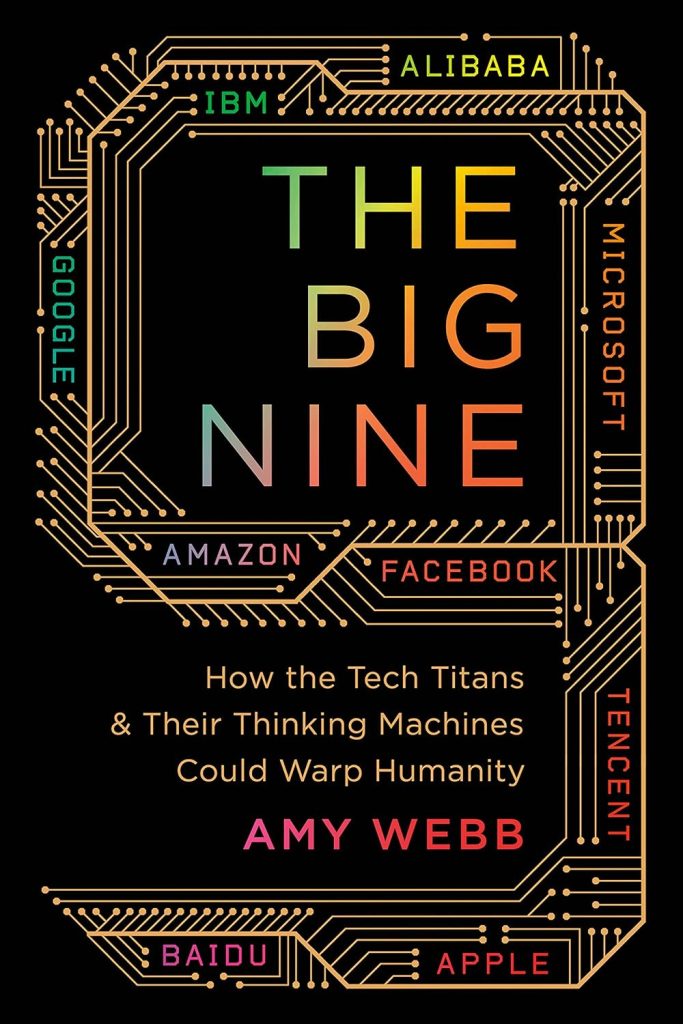
The Big Nine by Amy Webb: Book Review — Who Should Actually Read It in 2026?
This The Big Nine book review is for anyone wondering whether a book published in 2019 still belongs on an AI reading list in 2026. Amy Webb’s core claim — that nine corporations, not governments, are deciding what artificial intelligence becomes — is the reason this book refuses to disappear from recommendation lists. You’ll get an honest read on what the book actually covers, where its age shows, and which readers should spend their time on it (and which shouldn’t).
Quick Answer
The Big Nine is worth reading in 2026 if you care about who controls artificial intelligence — Webb’s argument that nine corporations decide AI’s future without real oversight has only grown more relevant. Skip it if you want technical coverage of the post-2022 language model era, because the book predates all of that.
Compare Top AI Books
Three proven picks side by side — choose the one that fits your needs.
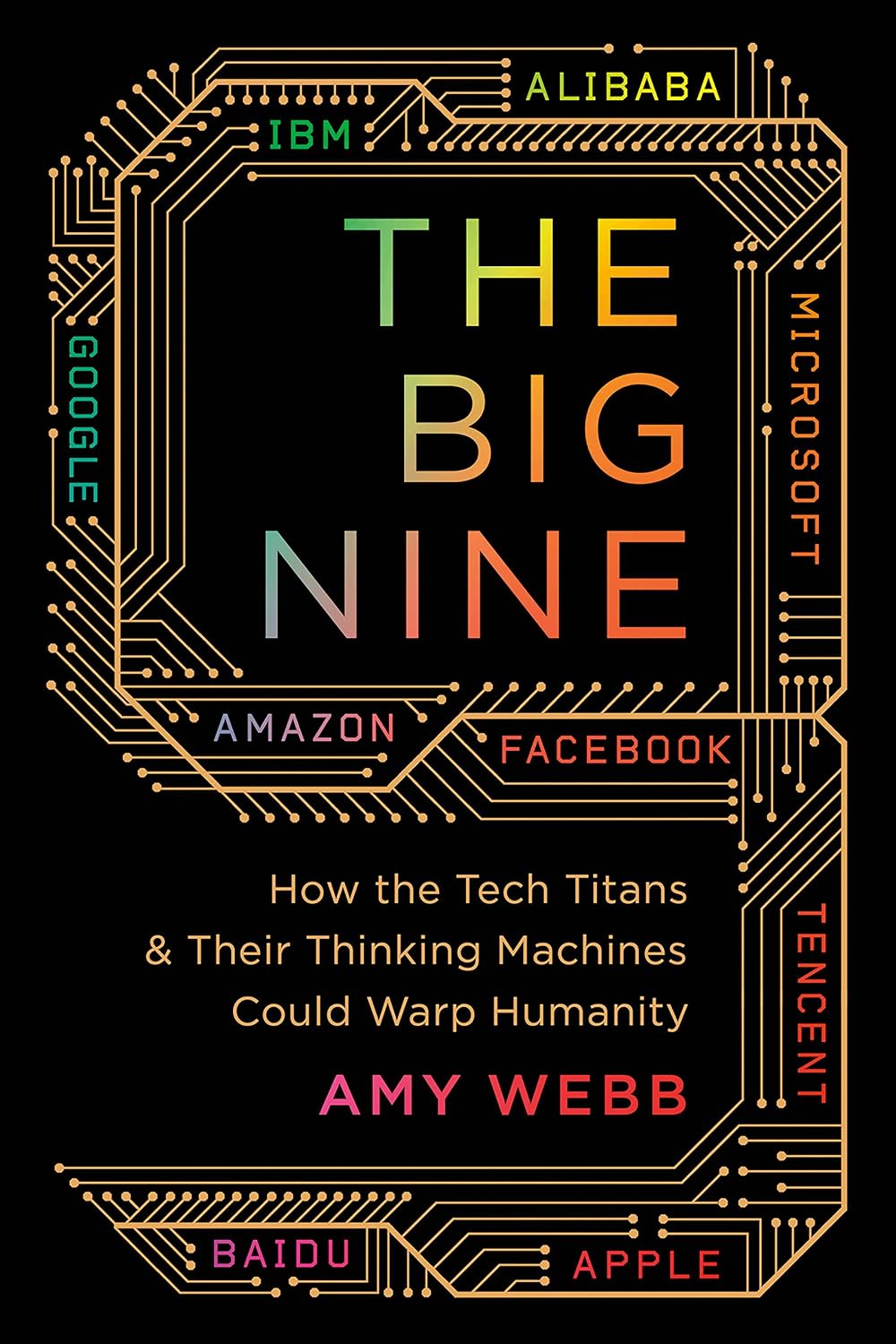
The Big Nine
The power-structure view of AI — nine corporations, three futures, and who really sets the agenda
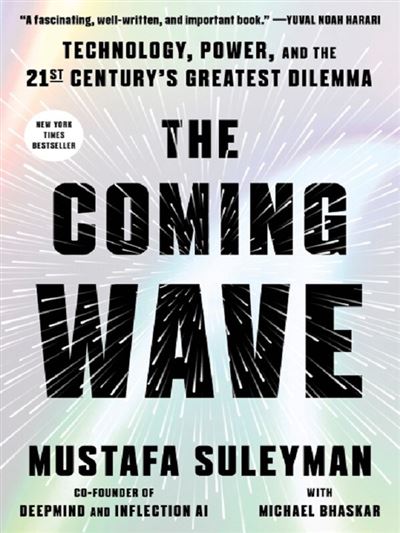
The Coming Wave
Suleyman’s 2023 deep dive on containing transformative technology — newer and current on the model era
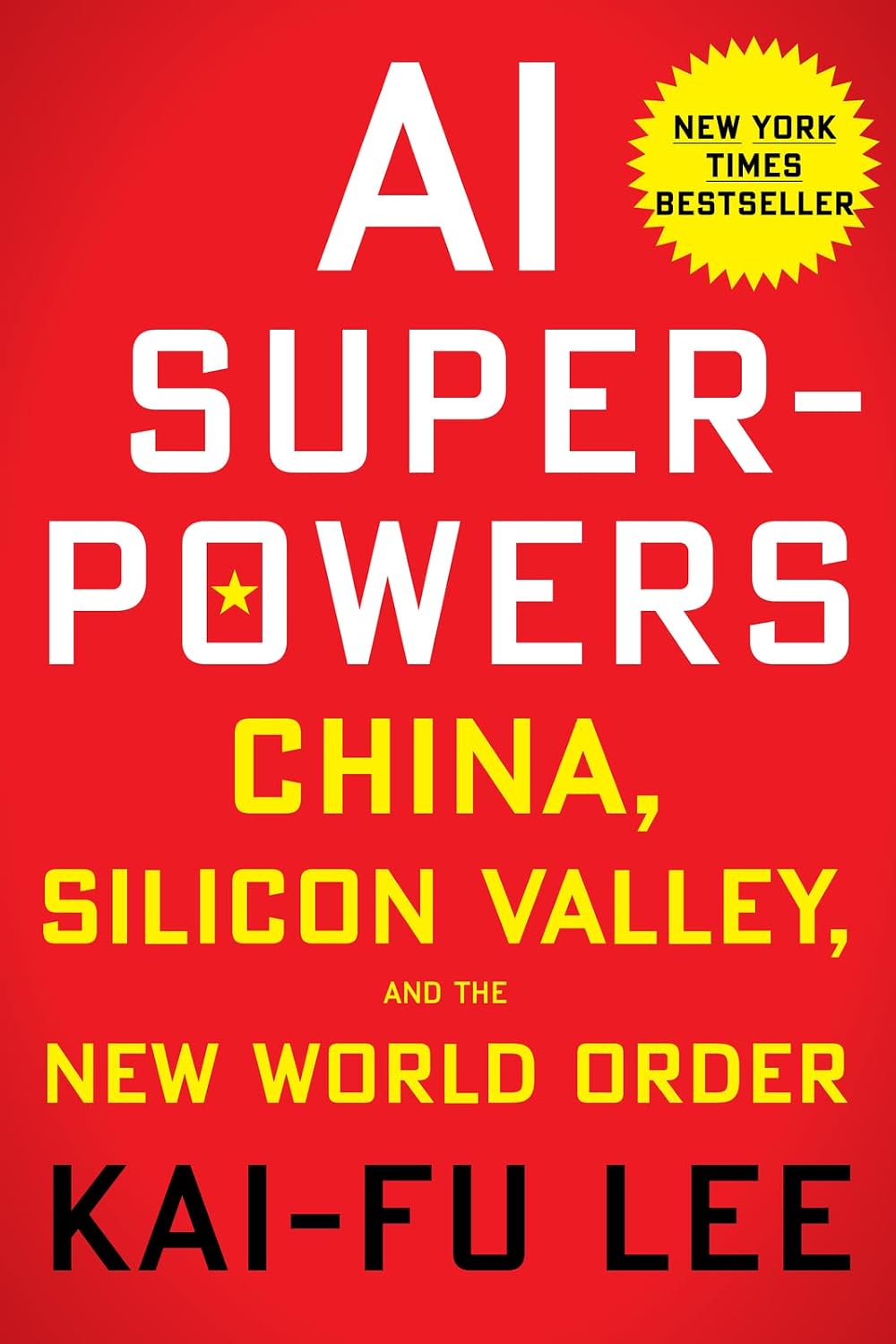
AI Superpowers
Kai-Fu Lee’s China-vs-US lens — the economics and rivalry side of the same story
Prices and availability may vary — tap any product to check the current listing.
What The Big Nine Is Actually About
The Big Nine came out on March 5, 2019, from PublicAffairs — a 336-page hardcover that reads faster than its subject matter suggests. Amy Webb is a professor of strategic foresight at NYU’s Stern School of Business and the founder of the Future Today Institute, a futures research firm that briefs governments and Fortune 500 companies. That pedigree matters. This isn’t a journalist parachuting into AI for a book deal; it’s someone whose day job is advising people who make consequential bets.
The premise is blunt: the future of artificial intelligence is being decided by nine companies, largely free of democratic oversight. On the American side, Webb names the G-MAFIA — Google, Microsoft, Apple, Facebook, IBM, and one more Seattle giant — and on the Chinese side, the BAT: Baidu, Alibaba, Tencent. These nine hold the data, the talent, and the computing power. Everyone else — startups, universities, regulators, you — is playing on fields they built.
The book’s middle section runs through three scenarios for where this concentration leads: an optimistic one, a pragmatic one, and a catastrophic one. Then it closes with a call for a collective governance plan — Webb’s argument that we need something like a shared, multi-stakeholder framework before the trajectories lock in. Reviewers noticed. Alec Ross called the book “important and intellectually crisp.” Jonathan Zittrain praised how it “makes bold predictions” with “careful arguments, deep historical context” and “a frightening degree of plausibility.”
The Core Argument: Who Controls AI
Strip away the details and Webb is making one big claim: the most consequential technology of our lifetime is being shaped inside a handful of boardrooms, and that’s a problem nobody elected to solve. Governments can’t regulate what they can’t staff — the AI talent works for the nine, not for the state — and the nine have little incentive to slow down and ask permission.
The three scenarios are where the argument stops being abstract. The optimistic version imagines AI flourishing under something like enlightened stewardship, with the companies cooperating on standards. The pragmatic version is messier: partial progress, uneven benefits, some disasters contained. The catastrophic version is the one that got quoted most — concentration of AI power enabling authoritarian control, whether corporate or state.
Here’s the uncomfortable part, and the reason this review exists in 2026: the argument got stronger after the generative AI boom. Watching the model race consolidate around exactly the companies Webb named — the same firms with the data centers, the talent, and the capital — made the thesis look less like speculation and more like pattern recognition. The technology chapters aged. The power analysis didn’t.
Notable Strengths
Books about AI’s future come in two flavors: vague futurism and finger-wagging. This one mostly avoids both. Four strengths earned it a spot on serious reading lists.
It Names Names — and Backs It Up
Most “AI and society” books talk about “big tech” in the abstract, which lets everyone and no one feel responsible. Webb refuses that move. She walks through each of the nine companies’ actual AI investments, talent pipelines, and strategic incentives. A reader finishes the first section with a concrete map of who holds what — data assets here, chip infrastructure there, a research lab quietly acquired over there. That specificity is rare, and it’s the book’s single biggest asset. You can disagree with her conclusions, but you can’t accuse her of hand-waving about “the industry.”
The Three Scenarios Make the Abstract Concrete
Futures writing usually dies in abstraction. Webb’s scenario chapters give you something to actually picture: what daily life, commerce, and geopolitics look like under each trajectory. The pragmatic scenario — neither utopia nor apocalypse — is quietly the most valuable, because it forces you past the binary that dominates AI discourse. I’ve watched readers use these chapters as the starting point for real strategy conversations. They work.
Webb Briefs Real Decision-Makers — and It Shows
You can tell when a book was written for TED applause versus written for people who have to act. The Big Nine has the second quality: recommendations aimed at governance, standards-setting, and corporate accountability, not just vibes. Whether her proposed plan is workable is debatable — honestly, parts of it read more like a wish list than a roadmap — but the orientation toward action separates this from shelf-filler futurism.
The US-China Framing Still Clarifies Headlines
Webb’s comparison of the American corporate model against China’s state-aligned BAT approach remains one of the clearest explanations of why AI competition looks the way it does. When you see a headline about export controls on chips or a new Chinese model release, the framework in this book helps you parse what’s actually happening. Seven years later, that framing still earns its keep.
Honest Limitations — Every One With a Reason
A review that only praises is an ad. Here’s where The Big Nine falls short, stated plainly.
Published in 2019 — the Technical Examples Aged
Webb wrote before large language models went mainstream, before the chatbot era, before the phrase “foundation model” was in every press release. Some passages about what AI can and can’t do read quaintly now — like finding a 2019 travel guide that warns about a restaurant that closed. The core power argument survives this, but don’t buy the book expecting it to reflect the current technical landscape. It doesn’t, and it can’t.
The Middle Scenarios Are Speculative
The optimistic/pragmatic/catastrophic framework is useful as a thinking tool, but parts of it are thinly sourced compared with the corporate analysis. The catastrophic scenario in particular leans on extrapolation that some readers will find more cinematic than rigorous. Treat these chapters as provocations to think with, not predictions to bet on. That’s what they’re for — but the book occasionally presents them with more confidence than the evidence supports.
US/China-Centric by Design
The “Big Nine” framing leaves out the rest of the world almost entirely. Europe’s regulatory ambitions, India’s AI push, the open-source community’s role — these get passing mentions at best. If you want the global picture, this book gives you two superpowers and a void. That’s a deliberate choice, and defensible for a book about concentration of power, but know what you’re getting.
Zero Practical AI How-To
Obvious, but worth stating: this book will not teach you to use AI tools, build anything, or improve a workflow. If your question is “how do I get better at prompting” or “which tool should my team adopt,” you’re on the wrong shelf. This is a book about who decides — not a manual.
Who Should Read It — and Who Should Skip It
Fit matters more than quality here. A great book for the wrong reader is a waste of everyone’s evening.
The Strategy or Business Reader: Read It
You make decisions where AI competition matters — investment, partnerships, hiring, market positioning. Webb’s company-by-company breakdown gives you a durable mental model of where the power sits and how it moves. The 2019 date matters less for you than for anyone else, because your question is structural, not technical. This is the book’s home turf.
The Policy-Minded Citizen: Read It
You follow AI regulation debates and want to understand what’s actually at stake beyond the slogans. The governance chapters give you vocabulary and frameworks that most coverage lacks — and the scenario section is genuinely useful for thinking about what “good oversight” would even mean. You’ll finish with stronger opinions. Whether you agree with Webb’s plan is almost beside the point.
The Hands-On AI Practitioner: Skim It
If you build with models daily, the technical chapters will feel elementary and dated. But — and this surprised me — the power-structure argument still lands, because engineers rarely get this view of their own industry’s political economy. Borrow it, skim the company chapters, skip the scenarios. Don’t pay full attention to parts that predate your tooling.
The “Just Teach Me the Tools” Reader: Skip It
Your time is better spent elsewhere. Nothing in The Big Nine will make you more effective with the AI products you use on Monday morning. Pick a hands-on guide instead, and come back to Webb when you start wondering who’s steering the whole enterprise.
Three AI Books, Three Different Jobs
These three books get shelved together constantly, but they’re doing completely different work. Match the book to your question.
| Book | Best for | Key angle | Publication year |
|---|---|---|---|
| The Big Nine | Readers asking “who decides what AI becomes?” | Corporate power and governance of AI | 2019 |
| The Coming Wave | Readers wanting the post-2022 picture | Containing transformative technology | 2023 |
| AI Superpowers | Readers curious about the US-China rivalry | China vs. US economics and deployment | 2018 |
The Big Nine wins when your question is about power — no other mainstream book maps corporate control of AI this directly.
The Coming Wave wins on currency — it’s the only one of the three written after the generative AI explosion, and it shows.
AI Superpowers wins on the rivalry story — Lee’s insider account of China’s AI ecosystem is the natural companion to Webb’s governance lens. Also see: Superintelligence by Nick Bostrom.
How It Compares to The Coming Wave and AI Superpowers
Mustafa Suleyman’s The Coming Wave is the obvious modern alternative: a 2023 deep dive on containing transformative technology, written by a DeepMind co-founder who lived inside the machine. It’s newer, it’s current on the model era, and its containment framing speaks directly to post-ChatGPT anxieties. If you read exactly one book about AI’s future and you want it to reflect the world as of 2026, that’s probably the one. But — and this matters — Suleyman doesn’t do what Webb does. His lens is the technology and its governance; hers is the corporate power structure that produces the technology. They’re complementary, not substitutes.
Kai-Fu Lee’s AI Superpowers sits closer to Webb’s territory: the US-China rivalry, the data-versus-algorithms debate, the economics of deployment. Lee is the insider (he ran Google’s China operation); Webb is the analyst (she briefs the institutions). Read together, they give you both the view from inside the companies and the view from the boardrooms trying to oversee them. And yes — AI Superpowers is even older, from 2018. Pairing two pre-2020 books sounds odd until you realize both are about structures, and structures outlive product cycles.
So which shelf order? If the power question is what brought you here — who owns AI’s future, and what should be done about it — start with The Big Nine. If you want the freshest take on where the technology goes next, start with The Coming Wave. If the US-China rivalry is your entry point, start with AI Superpowers. Honestly? The serious reader ends up with all three. They argue with each other in productive ways.
Questions People Ask Before Buying
Before you decide — straight answers
Is The Big Nine still relevant in 2026, given it was published in 2019?
Yes, The Big Nine remains relevant in 2026 because its central thesis — that a handful of giant technology companies control AI’s direction largely free of democratic oversight — describes the current landscape even better than the one Webb wrote about, although the technical examples and timelines feel dated. The dated parts are specific claims about when capabilities would arrive; the power analysis — who holds the data, the talent, the compute — has only gotten more accurate. It’s a book about power structures, not product roadmaps.
Is The Big Nine too technical or academic for a regular reader?
No, The Big Nine reads like an engaging reported book rather than an academic text — Webb is a strategic foresight professor, but she writes for business leaders and policymakers, explaining AI concepts in plain language, so a curious general reader can follow the argument without any engineering background. Engineers may find some chapters light — they’re overviews, not papers. If you can follow a good long-form magazine feature, you can follow this book.
Should I read The Big Nine or The Coming Wave first?
Read The Big Nine first if your main question is who controls AI — Webb’s corporate power-structure lens is the best entry point for understanding why a few companies set the agenda; choose The Coming Wave if you want a newer, containment-focused analysis of transformative technology written after the generative AI boom. They don’t really compete: one maps the power, the other maps the technology. The serious reader eventually reads both, but start with whichever question keeps you up at night.
Is The Big Nine worth buying if I just want practical AI skills?
No, this isn’t a practical AI skills book — The Big Nine is a strategy and governance book about who shapes artificial intelligence and why that matters, so if your goal is learning to use AI tools at work, you’ll get far more from a hands-on guide and should treat this as background reading instead. Nobody’s workflow improved because they read the scenario chapters. Buy it for the framework, not the toolkit.
Does The Big Nine mention ChatGPT or large language models?
No, The Big Nine predates the public launch of ChatGPT and the large language model era, so you won’t find those technologies discussed; ironically, the book’s warning about concentrated corporate control of AI reads even more pointedly after watching how quickly the model race consolidated around the same nine companies. The absence is the point, in a way — the book predicted the concentration, and the concentration is what the chatbot era delivered.
Final Recommendation
Buy The Big Nine if your question is about power — who decides what AI becomes, why nine companies hold that much leverage, and what governance could realistically look like. It’s the clearest single book on the corporate structure of artificial intelligence, and its thesis has aged better than almost any AI book from the pre-2020 era. Check the current listing if you’re ready — and pick the format that suits your shelf.
Skip it if you want post-2022 coverage, hands-on skills, or a global survey beyond the US-China axis. Everyone else: this is a 2019 book whose central argument 2026 keeps confirming. That’s rare enough to be worth your time.
Decision: Buy The Big Nine If…
Buy it if you want the power-structure view of AI — who holds the data, talent, and compute — argued with named companies and concrete scenarios.
Buy it if you follow AI policy, strategy, or regulation and want frameworks that outlast the news cycle.
Skip it if you need coverage of the post-2022 language model era — start with The Coming Wave instead.
Skip it if you want practical AI skills — this book teaches you who steers the ship, not how to sail it.
Key Takeaways
The Big Nine argues that nine corporations — America’s G-MAFIA and China’s BAT — are deciding AI’s future largely free of oversight, and that thesis has grown more relevant since 2019.
Amy Webb writes from real advisory experience: NYU Stern professor of strategic foresight and founder of the Future Today Institute.
Strongest for strategy, policy, and business readers; the technical examples predate the generative AI era, so adjust expectations.
Pairs naturally with The Coming Wave (newer, containment-focused) and AI Superpowers (the US-China rivalry lens).
Frequently Asked Questions
Who is Amy Webb?
Amy Webb is a professor of strategic foresight at NYU’s Stern School of Business and the founder of the Future Today Institute, a futures research firm that advises governments and large companies on emerging technology. She’s known for her annual tech trends reports and for briefing decision-makers on AI’s strategic implications — which is exactly the perspective The Big Nine is written from.
When was The Big Nine published?
The Big Nine was published on March 5, 2019, by PublicAffairs. The date matters: it captures the pre-generative-AI era’s dynamics and predates the chatbot boom, so read it as a power-structure analysis rather than a current-events book.
Which companies are the “Big Nine”?
Webb’s nine are split into two groups: America’s G-MAFIA — Google, Microsoft, Apple, Facebook, IBM, and one more Seattle-based giant — and China’s BAT: Baidu, Alibaba, and Tencent. Her argument is that these nine hold the data, talent, and computing power that determine AI’s trajectory.
Is The Big Nine biased toward American or Chinese tech companies?
Webb is critical of both models in turn — she faults the American giants for operating with almost no oversight and the Chinese system for state-aligned concentration of AI power. The book doesn’t pick a team; it argues that concentration itself is the problem, regardless of which flag flies over it.
How long is The Big Nine?
The hardcover runs 336 pages, but it reads faster than that number suggests — the prose is built for business readers and policymakers, not academics. Most readers finish within a week of casual reading, and the chapters are self-contained enough to read in short bursts.
Where can I buy The Big Nine?
The Big Nine is available through major retailers and widely available online in hardcover, paperback, and digital editions — check current availability. Use the links on this page to see the current listing and choose the format that fits how you read.
Disclosure: This page contains affiliate links. If you buy through them, we may earn a commission at no extra cost to you.