
Disclosure: This page contains affiliate links. If you buy through them, we may earn a commission at no extra cost to you.
Code Dependent by Madhumita Murgia: Book Review — Should You Read It in 2026?
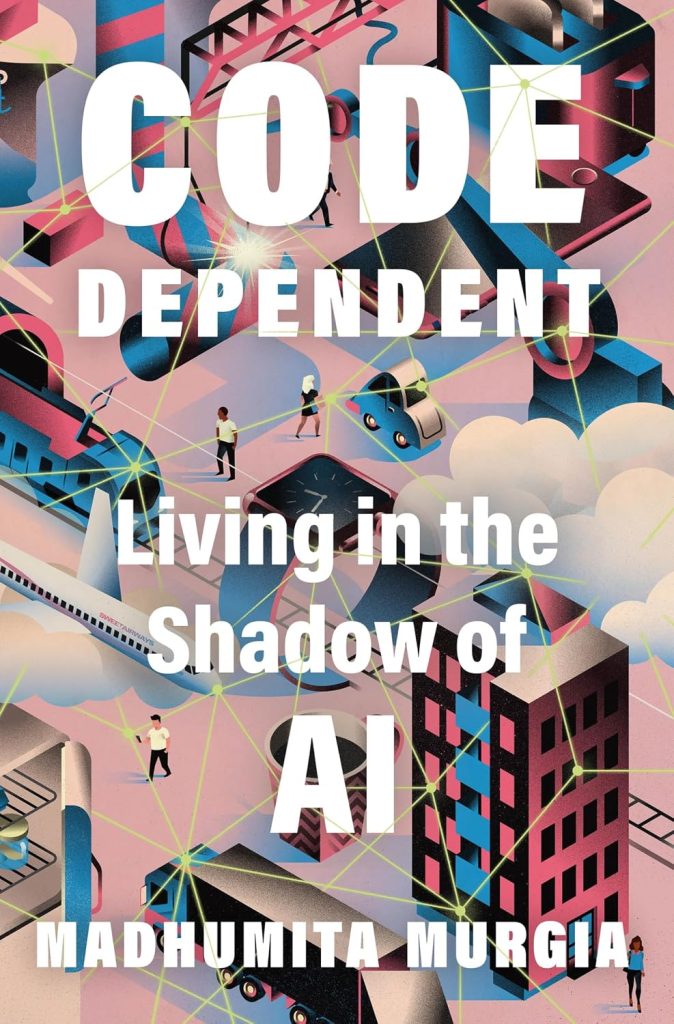
Most AI books start in a boardroom or a research lab. This Code Dependent book review starts somewhere else entirely: in the offices and clinics where people label images, moderate feeds and take instructions from an app. Madhumita Murgia’s Code Dependent: Living in the Shadow of AI (Henry Holt, first published 2024; US paperback 2025, 320 pages) argues that artificial intelligence runs on human labour the industry would rather you never pictured.
Murgia is the Financial Times’ first AI editor, and the reporting shows. She spent years following the workers behind the systems: data labellers in Kenya tagging images for a few dollars a day, content moderators absorbing the worst of the internet, gig drivers whose pay and deactivation hang on a score they cannot see. Code Dependent was shortlisted for the inaugural Women’s Prize for Non-Fiction in 2024 and landed on best-book-of-the-year lists at Esquire, the Spectator and the New Scientist.
One story sets the tone. A doctor in India uses an AI tool to help diagnose patients in a clinic short on specialists — a genuinely hopeful use of the technology — yet even his judgement gets quietly reshaped by what the software suggests. Murgia keeps returning to that tension: the systems help, and they also govern. Nobody in the book is a cartoon villain. That’s what makes it unsettling.

So is the book worth your money in 2026? For readers who want the human stories behind AI systems — yes, emphatically. For readers hunting for model mechanics, no, and this Code Dependent book review will say so plainly rather than oversell the fit.
Quick Answer
Buy Code Dependent if you want to understand AI through the people who train it, moderate it and get scored by it — the hidden human cost behind systems sold as automatic. Skip it if you want a how-to guide for using chatbots or a technical account of how models are built. This Code Dependent book review rates it a strong buy for the first group, an easy pass for the second.
Compare Top Books on AI’s Human Cost
Three proven picks side by side — choose the one that fits your needs.
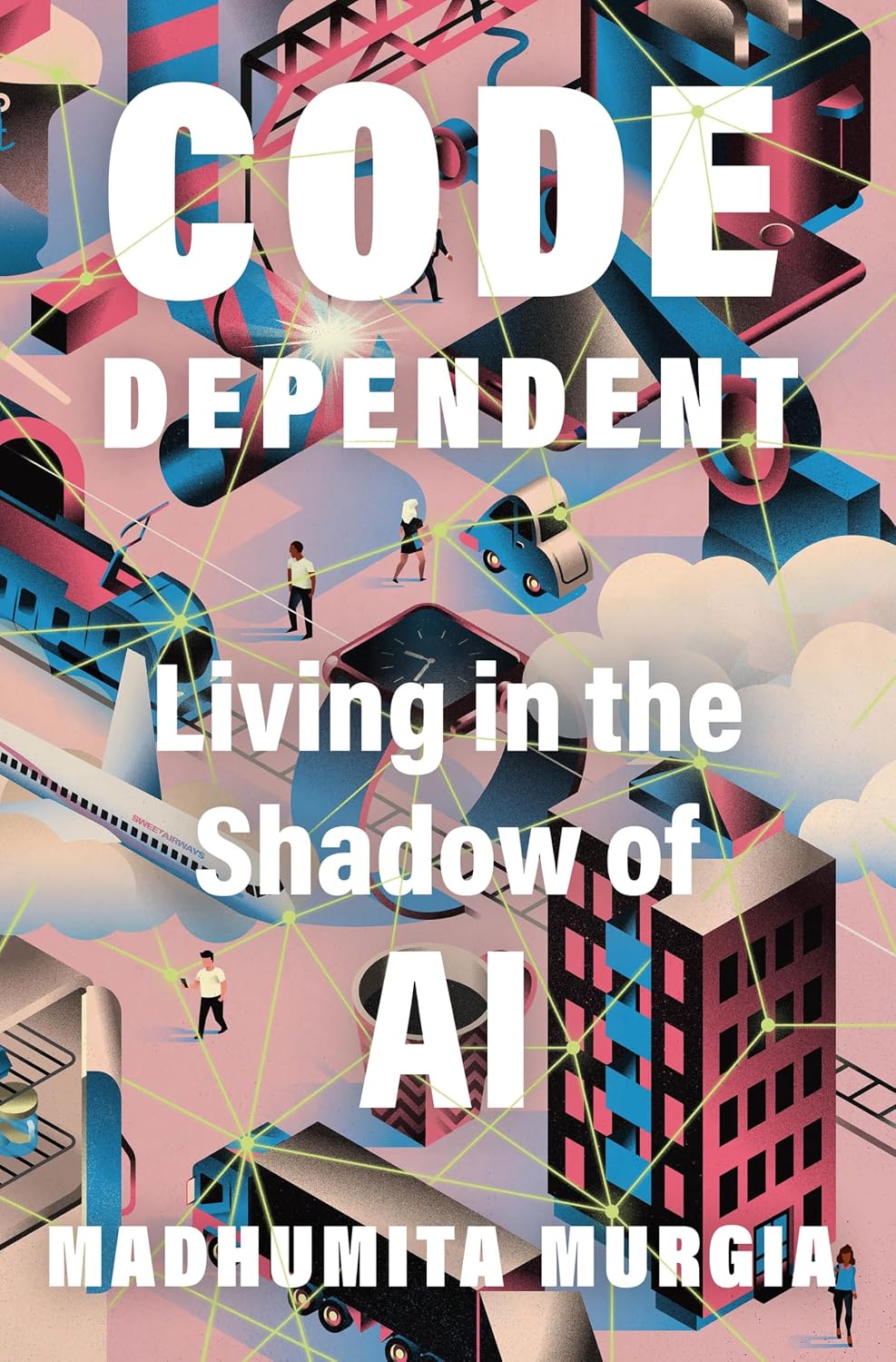
Code Dependent by Madhumita Murgia
The human-labour account: the labellers, moderators and scored workers behind AI
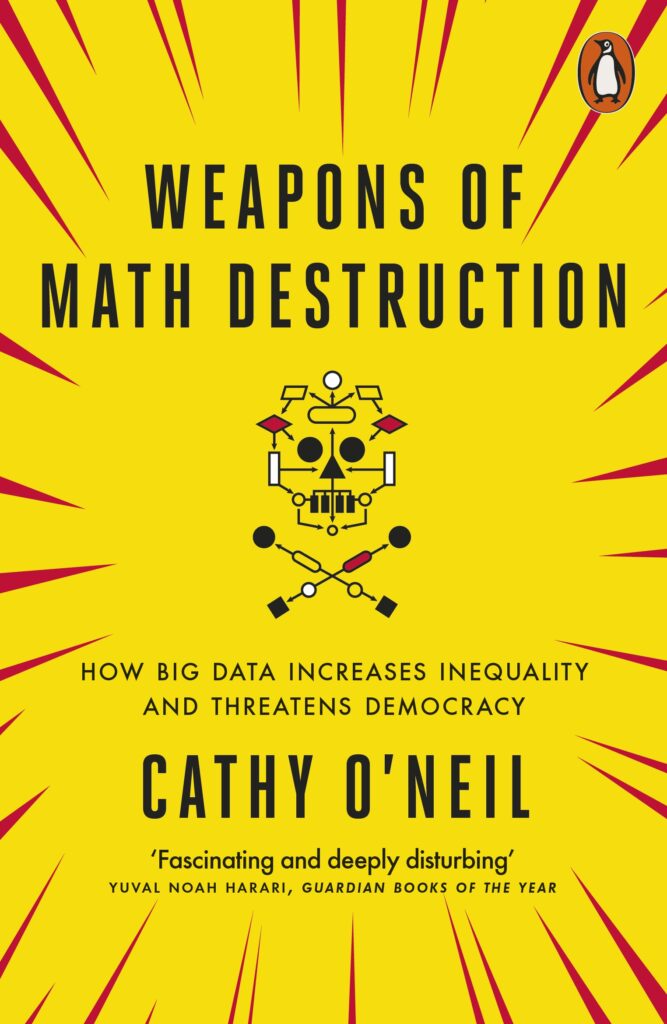
Weapons of Math Destruction by Cathy O’Neil
The scoring-systems classic: how opaque models punish the poor and reward the lucky
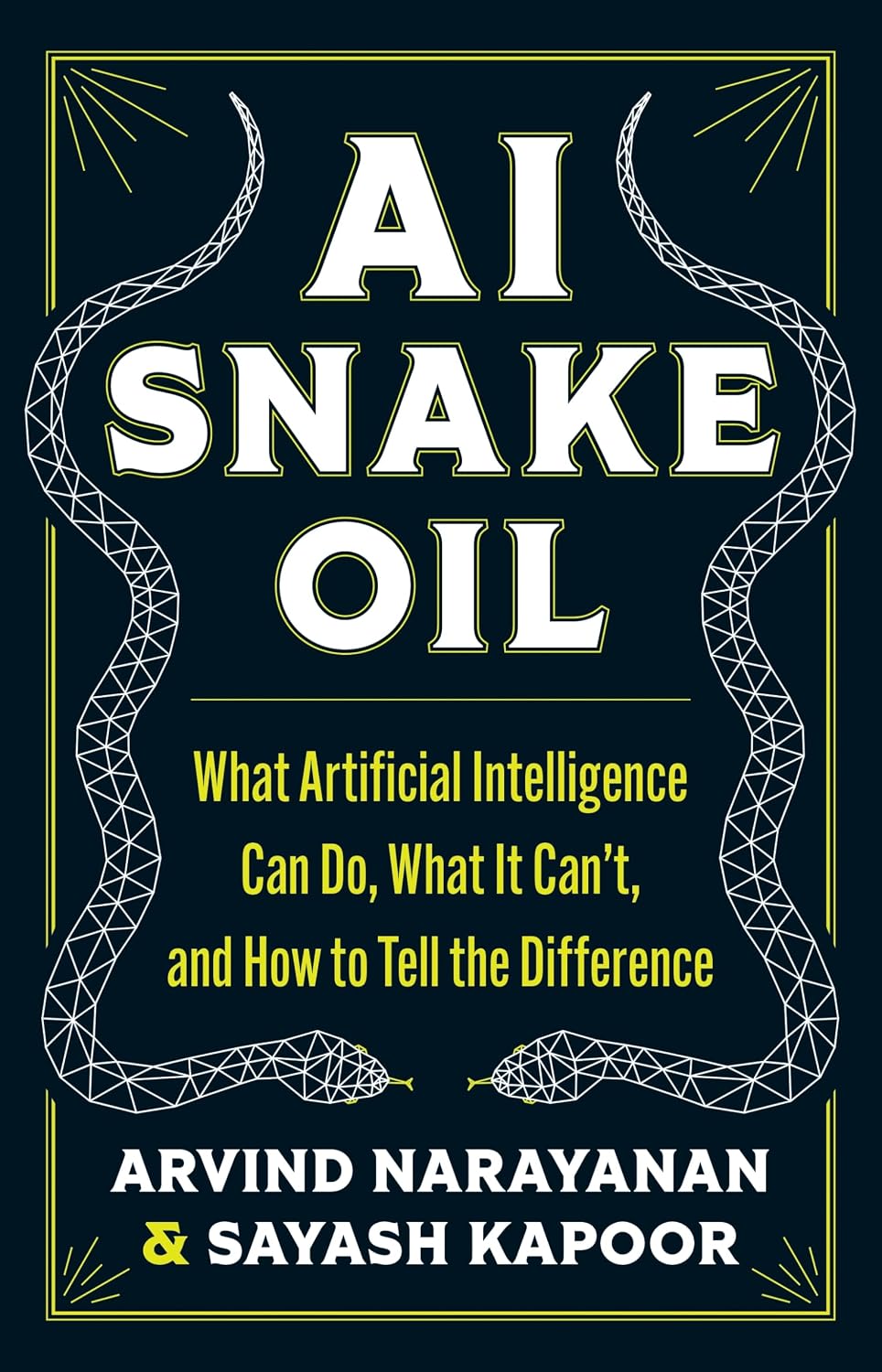
AI Snake Oil by Arvind Narayanan & Sayash Kapoor
The claim-checking account: what AI can actually do, and what is marketing dressed as math
Prices and availability may vary — tap any product to check the current listing.
What to Look For in a Book About AI’s Human Cost
The AI shelf is crowded with insider memoirs and hype rebuttals. Books about the people underneath the systems are rarer, and easier to get wrong — sentimentality is a constant risk. Six tests separate the serious ones from the filler, and this Code Dependent book review runs Code Dependent through each.
1. Reporting from the work floor, not the press release
A book about hidden labour has to go where the labour happens. Murgia’s does: labelling offices in Kenya, moderation work, clinics and delivery routes, described with the texture of someone who sat there and asked awkward questions. The trade-off is structure — the book moves case by case rather than building one tight thesis, which some readers will find episodic.
2. Named people, not anonymous victims
The workers in these pages have names, histories and opinions that sometimes complicate the author’s own framing — a labeller proud of the work sits a few chapters from one worn down by it. That refusal to flatten people into symbols is the book’s moral core — and why the bleak chapters land.
3. Range: labelling is only the first floor
Plenty of coverage stops at data labelling. Murgia pushes further — into algorithmic management of gig workers, welfare and policing tools that score citizens, and medical AI reshaping a doctor’s judgement in India. The spread is the argument: dependence on opaque systems isn’t a niche labour issue in one country. It’s a general condition arriving at different speeds.
4. Balance: does it admit when the technology helps?
Yes, and the book is stronger for it. The Indian clinic chapters treat diagnostic AI as a real good, even as they track how reliance grows. This Code Dependent book review counts the balance as a genuine strength — Murgia criticises dependence, not every deployment.
5. Evidence and the anecdote problem
Here’s the honest weakness. Reported stories persuade, but they don’t measure. Readers who want systematic data — how widespread a practice is, how outcomes compare — will find the book suggestive rather than conclusive. The cases are well chosen. The denominator is sometimes missing.
6. Readability for non-specialists
No technical background required. Murgia writes as a journalist for general readers, explaining each system through the person working inside it, and at 320 pages the book reads at weekend pace. The cost of that accessibility is depth on the technology itself — anyone wanting to understand training pipelines in detail will need a second book. Check the current listing for edition and format options.
Who Should Read Code Dependent — and Who Should Skip It
This Code Dependent book review splits the audience three ways. Two of these readers should buy without much hesitation. The third should walk past it.
The reader who suspects AI has a supply chain
You’ve used the tools, read the launch posts, and started wondering who actually makes them work. Code Dependent was written for you. It connects dots that usually live in separate investigations: the labelling office, the moderation queue, the welfare algorithm, the clinic — one system of dependence.
Anyone scored or managed by an algorithm
Drivers, warehouse staff, freelancers rated by clients, applicants screened by software — if an opaque score has ever decided your shift, your pay or your deactivation, Murgia’s subjects will feel familiar. Readers who want the hype-politics version of the same anger can pair it with our The AI Con book review and then come back here for the human ground level.
The hands-on practitioner — skip this one
You build with models, tune pipelines, evaluate detectors. Code Dependent will frustrate you: almost nothing here about prompting, model quality, training technique or deployment — AI shows up as a workplace and a power relation, not a practice. Your reading time buys more elsewhere.
How Code Dependent Compares With Weapons of Math Destruction and AI Snake Oil
Our earlier AI Snake Oil book review covered Narayanan and Kapoor’s claim-by-claim test of what AI can actually do. Cathy O’Neil’s Weapons of Math Destruction, published back in 2016, mapped how opaque scoring models punish people at scale. Murgia asks a different question from both: not whether the systems work, and not only whom they punish, but whose hands and hours keep them running — and what that dependence does to everyone involved. Complements more than rivals, then. But if shelf space forces a choice, the table below is the honest map of this Code Dependent book review.
| Book | Central Argument | Best For | Watch-Out |
|---|---|---|---|
| Code Dependent by Madhumita Murgia (2024) | AI depends on hidden human labour and quietly governs the people who supply it and the people scored by it | Readers who want the human stories and labour behind AI systems | Case-driven reporting; light on model mechanics and systematic data |
| Weapons of Math Destruction by Cathy O’Neil (2016) | Opaque, scalable scoring models amplify inequality because they punish the poor and reward the already lucky | Readers focused on algorithmic scoring in jobs, credit, policing and education | Predates the generative AI era; its examples are scoring systems, not chatbots |
| AI Snake Oil by Arvind Narayanan & Sayash Kapoor (2024) | Many AI products cannot do what is claimed; separating predictive from generative AI exposes the bogus ones | Buyers and builders who need to test vendor claims before trusting a tool | Less attention to the labour and lived-experience side of the industry |
Code Dependent’s row is the most human: it’s the only one of the three built from the working days of the people inside the pipeline.
The Weapons of Math Destruction row is the most structural — O’Neil, a former quant, explains the feedback loops that make bad scores self-confirming, a mechanism Murgia’s stories repeatedly illustrate.
The AI Snake Oil row is the most practical: it hands buyers a test kit for claims, where Murgia hands readers a set of faces they won’t forget.
Where Code Dependent beats the other two
Three concrete strengths. It’s reported, not argued from a desk — the Kenyan labelling chapters alone contain more ground truth about how training data gets made than most AI titles manage in total. It updates O’Neil’s scoring story for the generative era, showing dependence running in both directions. And it travels — Nairobi, Amsterdam, rural India, same pattern, never forced into a slogan.
Where Code Dependent is weaker
Two real weaknesses, also concrete. The technology stays a backdrop — readers who want to understand how the models are built get faces, not mechanisms, where Narayanan and Kapoor deliver the mechanics. And the case-by-case method leaves scale unproven: how typical each story is remains an open question a more data-driven book would have closed. Both are reasons to read it alongside a second title, a caveat this Code Dependent book review repeats because it matters.
Three Reading Scenarios: How This Book Actually Gets Read
The commute read that rearranges your feed
A week of train rides, a phone full of AI headlines that all sound the same — Code Dependent is built for exactly this: self-contained chapters, each ending with a person you keep thinking about at the next station. By Friday the headlines read differently — every launch announcement raises the question of whose labour sits underneath it.

The book-club pick that starts arguments
Some books end conversations; this one starts them. Half your group will defend the clinic chapters; the other half will keep returning to the moderators. It pairs neatly with the company-level story too — check our Empire of AI book review for the view from inside the firms whose products Murgia’s workers service.
The gift for the person who forwards AI articles
Every circle has one: the friend who sends every breakthrough story and every doom thread in the same afternoon. Code Dependent respects their curiosity and complicates it — neither celebration nor panic, just the people.
Common Mistakes Buyers Make With Books Like This
Mistake one: buying it as a technical explainer. The subject is labour and dependence, not model architecture. Buyers expecting overlap with engineering titles end up annoyed.
Mistake two: reading it as only an exposé of faraway factories. Skip the chapters on welfare scoring and gig management and you’ve cut the argument in half — the point is that dependence reaches office workers and patients in wealthy countries too.
Mistake three: treating every story as the industry average. Reported cases show what can happen and what it feels like; they don’t, by themselves, measure how often it happens. Quoting them as statistics misuses the book.
Mistake four: waiting for a programme at the end. Murgia diagnoses more than she prescribes; buyers hunting for a policy checklist or a personal action plan will leave with better questions instead of instructions.
Why, How, What: Quick Answers
Why does Murgia call the book Code Dependent?
Because the dependence runs in every direction at once. The systems depend on human labellers and moderators to exist at all; workers depend on the platforms that score them; doctors, claimants and drivers depend on outputs they cannot inspect. Societies have quietly reorganised themselves around software whose upkeep and judgement they no longer control.
How does the book show algorithmic management at work?
Through days, not diagrams. A gig worker refreshing an app that decides whether rent gets paid, a score that drops without explanation, an appeal routed to the same system that made the call. Murgia stays close to the routine until the routine makes the argument: management hasn’t disappeared, it has become software — present everywhere, answerable nowhere.
What does Code Dependent add to the AI debate?
Most AI debate argues about capability and risk as if systems appeared by themselves; Murgia restores the supply chain of people — the annotators, moderators, drivers and patients whose hours and judgements are baked into every output. Finish it and product launches read differently: less like magic arriving, more like labour being rearranged, sometimes fairly, often not.
Decision Tree: Should You Buy Code Dependent?
You keep wondering who actually builds AI → Buy it. The labelling and moderation chapters answer the question with names and working days, not abstractions.
An algorithm manages, scores or screens you at work → Buy it. Murgia documents your situation from the inside and gives it a history.
You work in health, policy or journalism around AI → Buy it. The clinic and welfare chapters are the ones your colleagues will be quoting.
You want hands-on skills, prompts or model detail → Skip it. This book has zero interest in teaching the tools. Get a practical guide instead.
Key Takeaways
✅ The central argument: AI is not automatic — it depends on human labellers, moderators and scored workers whose labour the marketing leaves out.
✅ The strongest chapters pair hope with dependence: a doctor in India helped by diagnostic AI whose judgement the tool quietly reshapes.
✅ Shortlisted for the inaugural Women’s Prize for Non-Fiction and named on multiple best-book-of-the-year lists — the reporting, not the thesis, is the draw.
⚠️ Not a tutorial, not a technical explainer, and case-driven rather than statistical. Buy it for the people, not the mechanisms.
📚 Pairs with (doesn’t replace) AI Snake Oil: capability claim-checking there, human cost here.
Questions People Ask Before Buying
Is Code Dependent worth buying?
Yes — this Code Dependent book review recommends Code Dependent for readers who want to understand artificial intelligence through the people who build, train and live under it, because Madhumita Murgia’s reporting follows Kenyan data labellers, gig workers and patients rather than executives, though readers wanting technical instruction should look elsewhere.
The reporting base is the difference: years of fieldwork compressed into 320 pages that never turn into a lecture. Readers who follow AI’s effects on work will get the most from it.
Code Dependent or AI Snake Oil — which should I read first?
Read Code Dependent first if your question is who pays the human cost when AI systems are trained, deployed and trusted with decisions about work, health and safety, and read AI Snake Oil first if your question is whether those systems can actually do what their sellers claim they can.
Plenty of readers end up with both — Murgia supplies the people, Narayanan and Kapoor supply the tests. If budget forces one purchase, match the book to your question, not the loudest headline.
Does Code Dependent explain how AI models actually work?
No — Code Dependent explains what AI systems do to the people around them far better than it explains model architecture, because Murgia is a reporter following workers, doctors, drivers and moderators through their days, not an engineer walking readers through training runs, weights or inference step by step in technical detail.
Set expectations accordingly and the book delivers. Readers who want the machinery itself should pair Murgia with a technical title — confusing the two kinds of book is the most common buying error this Code Dependent book review sees.
Is Code Dependent only about workers in poor countries?
No — the reporting moves between Kenyan labelling offices, Indian clinics, Dutch welfare investigations and American gig platforms, because Murgia’s point is that algorithmic management and automated judgement now reach warehouse staff, drivers, patients, benefit claimants and office workers in wealthy countries as directly as annotators overseas.
That spread is the book’s real contribution, and why this Code Dependent book review recommends it well beyond the development-studies shelf. Dependence turns out to be a general condition.
Who should skip Code Dependent?
Skip Code Dependent if you want a practical guide to using chatbots, a technical explainer of how large language models are built, or a business book centred on one famous founder, because Murgia writes reported human stories at essay length and readers who dislike case driven arguments will feel restless.
Students are a borderline case: assigned chapters work well in courses on technology and society, but buying a personal copy for one seminar argues for a library first. Readers who want a verdict on which AI company wins will also leave empty-handed.
Final Recommendation
The call, plainly: this Code Dependent book review recommends buying Code Dependent if you want the human stories behind AI systems — the labellers in Kenya, the moderators, the drivers scored by software, the doctor in India leaning on a diagnostic tool — told by a reporter who went and stood where the work happens. It’s the missing ground floor of the AI debate, and at 320 pages it respects your time.
Pass if your shelf needs AI practice rather than AI’s human context. Murgia won’t help you there. For everyone in the first group, the paperback of Code Dependent is available through major retailers — check the current listing, and consider adding O’Neil’s scoring classic beside it.
Compare Top Books on AI’s Human Cost
Three proven picks side by side — choose the one that fits your needs.
Code Dependent by Madhumita Murgia
The human-labour account: the labellers, moderators and scored workers behind AI
Weapons of Math Destruction by Cathy O’Neil
The scoring-systems classic: how opaque models punish the poor and reward the lucky
AI Snake Oil by Arvind Narayanan & Sayash Kapoor
The claim-checking account: what AI can actually do, and what is marketing dressed as math
Prices and availability may vary — tap any product to check the current listing.

Frequently Asked Questions
When was Code Dependent published, and who published it?
Henry Holt published Code Dependent in the United States in 2024, with the US paperback following in June 2025 at 320 pages. It’s Madhumita Murgia’s first book, though her years as the Financial Times’ AI editor had already made her a familiar byline in technology coverage.
Who is Madhumita Murgia, and why should I trust her reporting?
Murgia is the Financial Times’ first AI editor, a journalist who has covered artificial intelligence and its social effects for over a decade. Her qualification here is fieldwork: the book reports from labelling offices, clinics and gig platforms rather than summarising other people’s studies, and it was shortlisted for the inaugural Women’s Prize for Non-Fiction in 2024.
How long is Code Dependent, and is it a hard read?
The paperback runs 320 pages, and the prose is reported narrative rather than academic — chapters are self-contained stories, so it reads well in sittings. Density comes from the subject matter, not the sentences. Most general readers this Code Dependent book review has in mind will finish it in a week of evenings.
How is Code Dependent different from Empire of AI?
Empire of AI reports from inside one company and the industry around it — executives, deals and lab politics. Code Dependent reports from the other end of the same system: the workers who label its data, moderate its outputs and live under its scores, plus the patients and claimants its tools judge. Same industry, opposite vantage point, which is why the two books pair so well.
Which edition does this Code Dependent book review cover?
The US paperback from Henry Holt (June 2025, 320 pages) is the edition this Code Dependent book review evaluates and links to. A hardcover from 2024 carries the same text. Other formats exist — check the current listing if you want a specific one.
Disclosure: This page contains affiliate links. If you buy through them, we may earn a commission at no extra cost to you.