
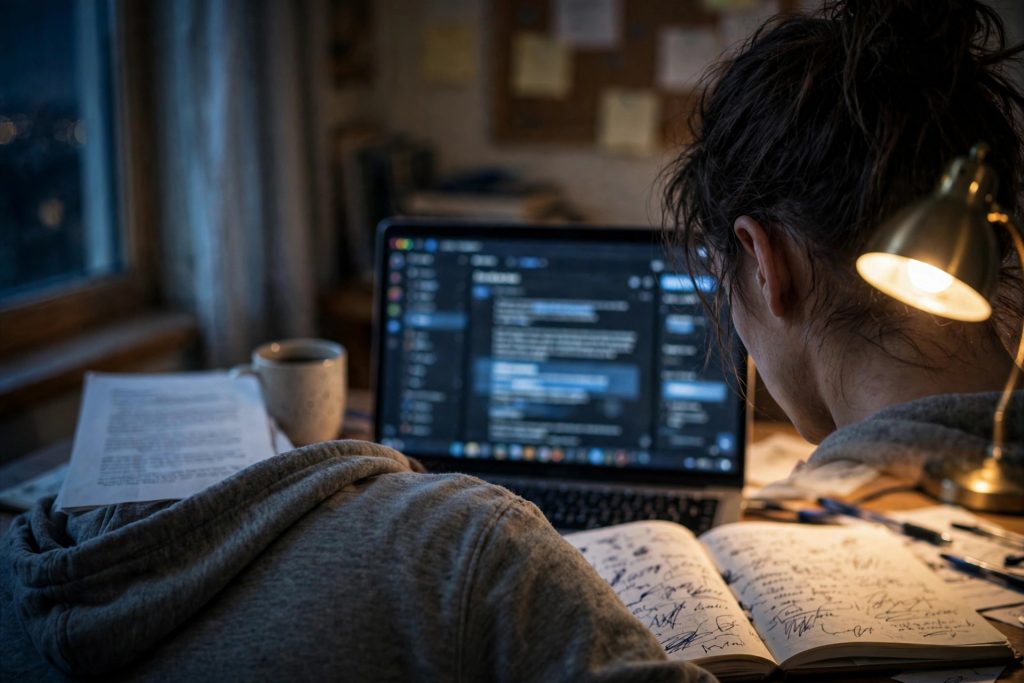
The email had the word “integrity” in the subject line. My history essay — two weeks of drafts, a notebook full of crossed-out openings, one source I tracked down in a library basement — had come back from Turnitin with a score of 43% AI. I had not opened a chatbot once. Not for the outline, not for a sentence. And here is the part nobody warns you about: I could not check the claim. Students get no access to the model that accused me. The first time you ever see your number, it is sitting in a meeting request.
So, does Turnitin detect AI? Yes. When a school has the feature switched on, every submission runs through a detection model Turnitin has operated since April 2023, and the instructor gets back a percentage plus a set of highlighted sentences the model thinks a machine wrote. What the instructor does not get is proof. Buried in Turnitin’s own report is a warning that the score is not, by itself, a basis for punishing a student. That sentence exists. Almost nobody reads it, because the big colored number is at the top and the warning is not.
Then there is the score you cannot even read. When the result lands between 1% and 19%, Turnitin refuses to print the number at all and shows an asterisk instead — *%. The official reason is that false positives pile up in that low band, so the company hides the figure rather than stand behind it. Sit with that for a second. A student can be summoned to an integrity meeting over a score the vendor itself will not commit to paper. Reports from students who have been through exactly that describe the whole exchange in our guide to being falsely accused of using AI, and the asterisk comes up again and again.
What does the Turnitin percentage actually count?
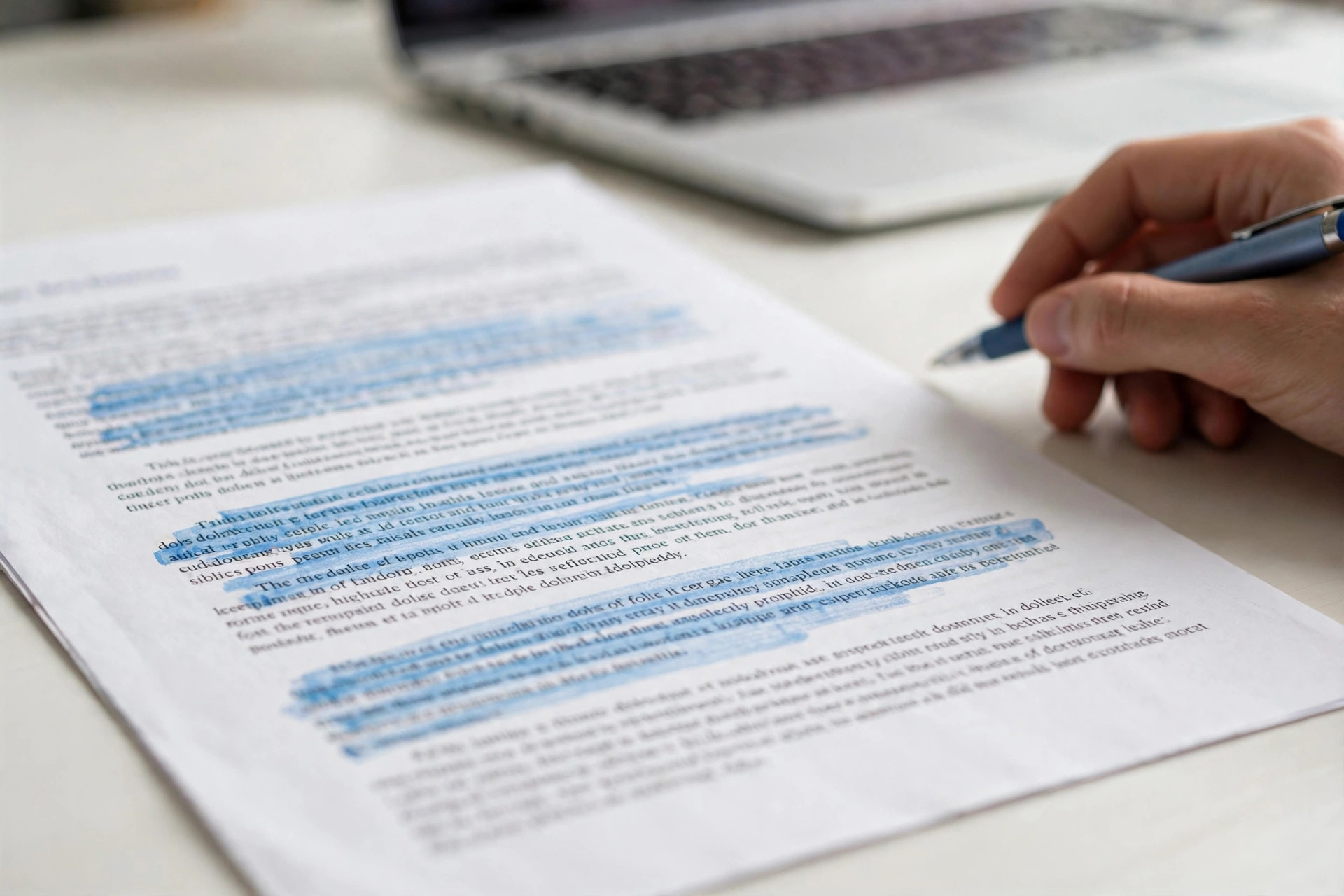
The percentage is worked out only over the sentences Turnitin counts as qualifying prose — it is not a share of your whole document. Headings, bullet lists, code, bibliography lines, short answers: excluded. They never enter the denominator. Which means the arithmetic can turn savage on ordinary coursework. Write a paper where half the pages are lists, tables and references, and the model judges the remaining prose only. Three flagged paragraphs inside that smaller pool can produce a headline number that looks like half your work was machine-written when the flagged text is maybe a fifth of the file.
My 43% came from two stretches. The section where I laid out my method, and the closing pages. The formulaic parts. Every history student alive writes those sections in roughly the same shape, because the shape is taught. Smooth, orderly, predictable prose — which is precisely what a probability model flags. My messier middle chapters, the ones where I argued with my own sources and changed my mind mid-paragraph, sailed through untouched. The detector had not found a machine. It had found the tidy bits.
The truth about Turnitin false positives and non-native writers
The false-positive problem is real, published, and it does not fall evenly — it lands hardest on students writing in a second language. In a 2023 Stanford study published in Patterns, researchers ran essays through seven popular detectors. The detectors flagged 61% of TOEFL essays written by non-native English speakers as AI-generated. Essays by US eighth-graders were flagged at a rate close to zero. Turnitin was not one of the seven tools tested, and I want to be straight about that. The signal it reads is the same family of signals, though: predictable word choices, even pacing, a narrow vocabulary used carefully. Careful, simple English is what a second-language writer produces on purpose. It is also what the model has learned to call a machine.
I ran the sentence-length count on my own older writing after the meeting, mostly to calm down. Five sentences in a row from an essay I wrote in 2021: 9 words, 27, 6, 31, 14. Human rhythm is lumpy like that. I fed ten of those pre-2023 essays — text that predates the tools entirely — through the public detectors I could reach, since Turnitin itself stays locked behind institutional accounts. Two of the ten got flagged as likely AI. Twenty percent. On writing from before these systems existed. And when I ran the accused essay through six different public detectors, the scores came back from 8% to 94%. Same file. Same sentences. That is not a measurement. That is weather.

Here is the self-check I wish someone had handed me before submission, because it costs nothing and takes four minutes. Take the last five sentences of your draft and count the words in each. If the counts bunch together — 19, 21, 18, 22, 20 — your rhythm is flat, and flat rhythm combined with safe vocabulary is the profile these models punish. You do not fix that by mangling your essay into slang. You fix nothing, actually. What you do is protect yourself: write in a document that keeps version history, keep your notes, keep the ugly first drafts. When my meeting came, the timestamps ended it. Not a re-run through some rival detector — those scores disagreed with each other anyway — the boring trail of edits showing the essay growing sentence by sentence over eleven days. Drafts are evidence. A score is an opinion wearing a lab coat.
Books That Take Detector Claims Apart
For anyone who has stared at a percentage and wondered who grades the graders.
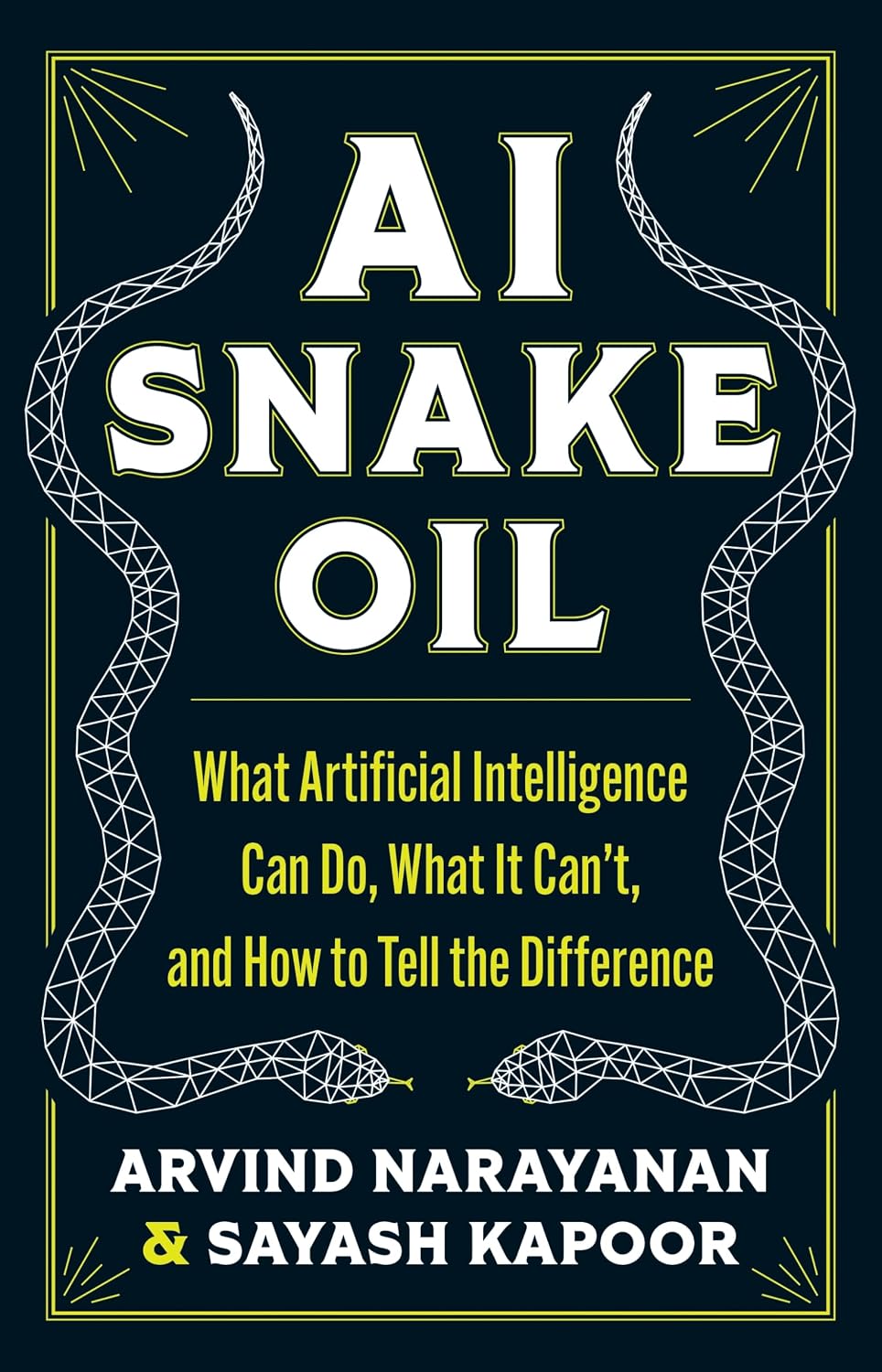
AI Snake Oil — Narayanan & Kapoor
The clearest takedown of inflated AI accuracy claims, detection tools included
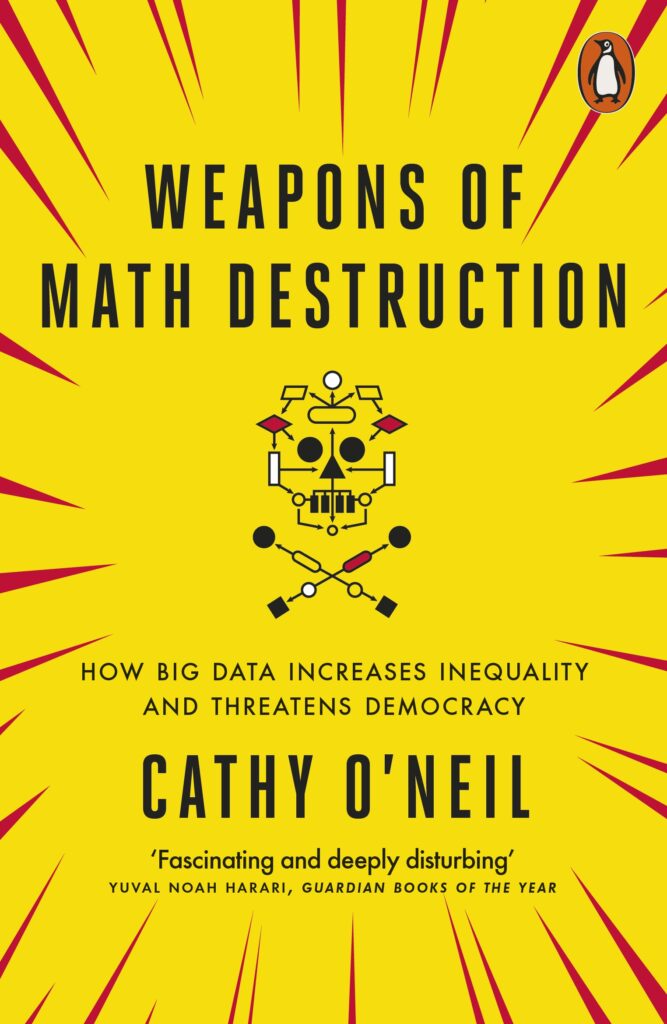
Weapons of Math Destruction — Cathy O’Neil
What happens when an opaque score starts making decisions about people’s lives
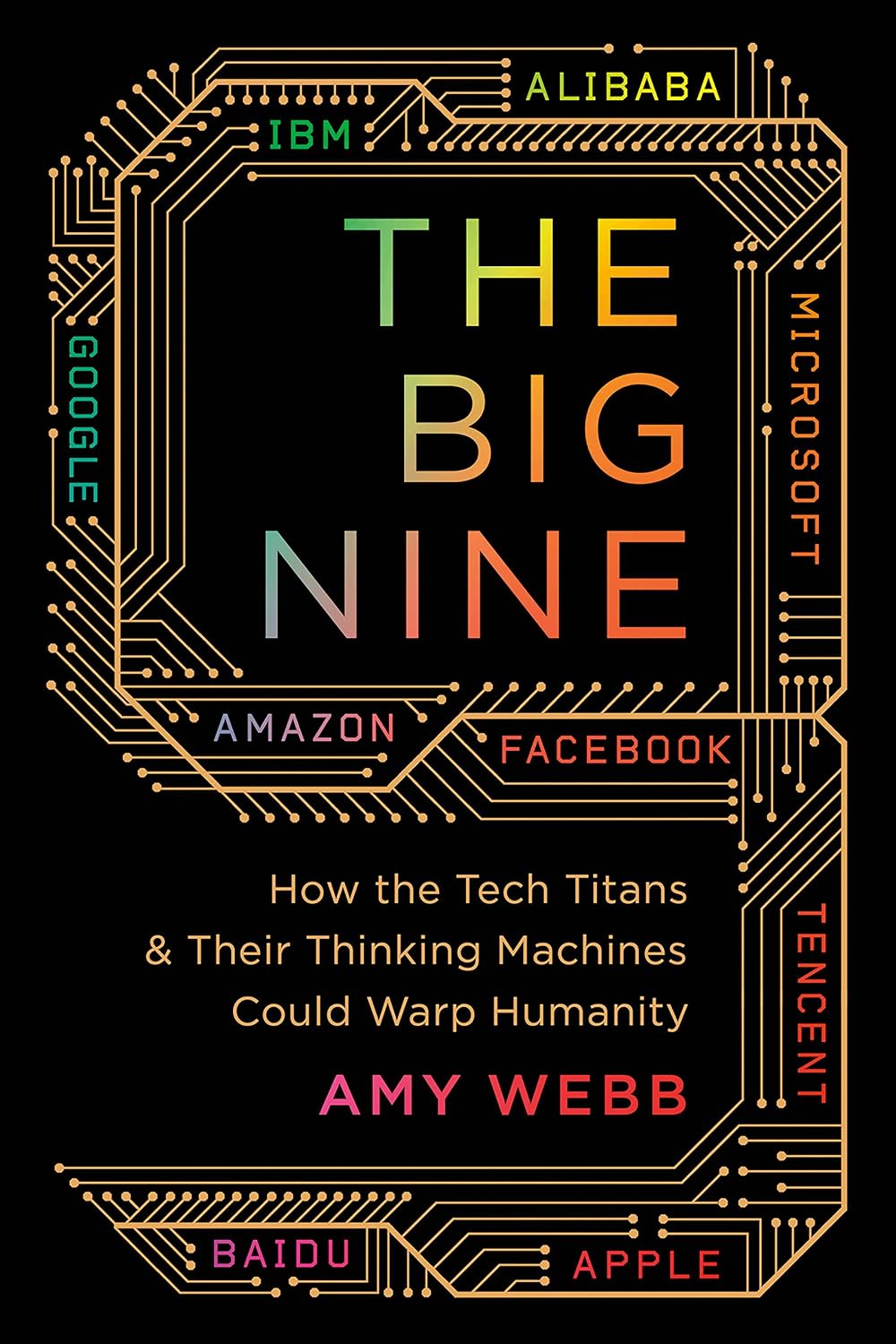
The Big Nine — Amy Webb
How a handful of tech giants ended up grading the world’s homework
This site contains affiliate links. We may earn a commission on qualifying purchases.
Before you panic: why some universities switched it off
Vanderbilt University turned Turnitin’s AI detection off in 2023, within months of launch, judging the false-positive risk impossible to justify to its students. Other institutions quietly did the same, or never enabled it. Turnitin markets a false-positive rate below 1%, and that figure may even be honest — at the document level, on its own test conditions, for the scores it is willing to print. The asterisk band is the confession hiding in the product design. If the low end of the scale were reliable, they would show you the number. Instead the number disappears exactly where the errors live. Our broader test of how accurate AI detectors actually are found the same pattern across the industry: confidence in the brochure, hedges in the fine print.
The instructor in my case was not a villain. Actually, no. That is too generous, and I keep doing it. For the first ten minutes of that meeting he read the 43% the way you would read a verdict, and it was only when we scrolled to the highlighted sentences together — my method section, my bibliography-adjacent summaries — that his voice changed. He started reading them as sentences instead of as evidence. Writers who cannot face Turnitin at all end up shopping for substitutes, which is why the hunt for AI checkers most similar to Turnitin never ends; the substitutes disagree with Turnitin and with each other, sometimes on the same paragraph. Whether the model has gotten any better at handling essays in Spanish or German since then — I have not tested that, and I cannot. The accused do not get a login.
My case was dropped. Nobody apologized, and the 43% is still sitting in some file with my name on it, as far as I know, forever. Some nights I reopen the essay and read the highlighted sentences out loud. They sound like me on a careful day. That is the part that stays. They sound like me on a careful day, and careful is now a thing a machine can hold against you.
Questions students actually ask me
My report just shows *% instead of a number. Am I in trouble?
The asterisk means the score landed somewhere between 1% and 19%, the band Turnitin considers too error-prone to print as a figure. Your instructor sees the same asterisk, not a secret precise number. It is low-score territory by the company’s own design. Ask for the sentence-level view of the report and talk about the actual sentences, because a percentage that the vendor hides is a strange thing to build a punishment on, and plenty of instructors know it the moment you point it out calmly.
Can I run my essay through Turnitin myself before I submit it?
No. There is no student version. Detection runs inside your institution’s account after submission, which is the whole structural unfairness of the setup: the person with the most at stake is the one person who cannot test. Public detectors exist, and running your draft through two or three of them tells you something about how your prose reads to models in general. Just do not mistake their scores for a preview. They are different models, they disagree wildly, and a clean bill from one of them means very little in a room where the Turnitin report is already printed out.
Why did my methods section get flagged when my analysis section didn’t?
Because methods sections are supposed to sound like everyone else’s methods section. The genre demands it: passive constructions, standard phrases, procedures described in the order everyone describes them. A detection model reads predictability, and a well-behaved methods section is the most predictable prose in the entire paper. Analysis is where your own habits leak in — the odd comparison you reach for, the sentence you restructure three times. That mess is yours. Ironically, the more faithfully you followed the taught format, the more machine-like the model finds you.
If I rewrite the flagged sentences, will the score drop?
Probably, yes, some amount — scores move when text moves, everyone who has watched a re-run knows the number is not carved in stone. Whether your school even allows a resubmission is another matter, and policies vary enough that I would not guess yours. There is a trap in it anyway. Rewriting your own honest sentences until a model approves of them means the model is now editing your education. I did change how I write after that semester. Shorter here, stranger there, less tidy. It worked, in the narrow sense. I am still not sure it was a trade worth making, and I think about it every time I catch myself loosening a sentence that was fine.