
Disclosure: This guide contains affiliate links. If you buy through them, we may earn a commission at no extra cost to you.
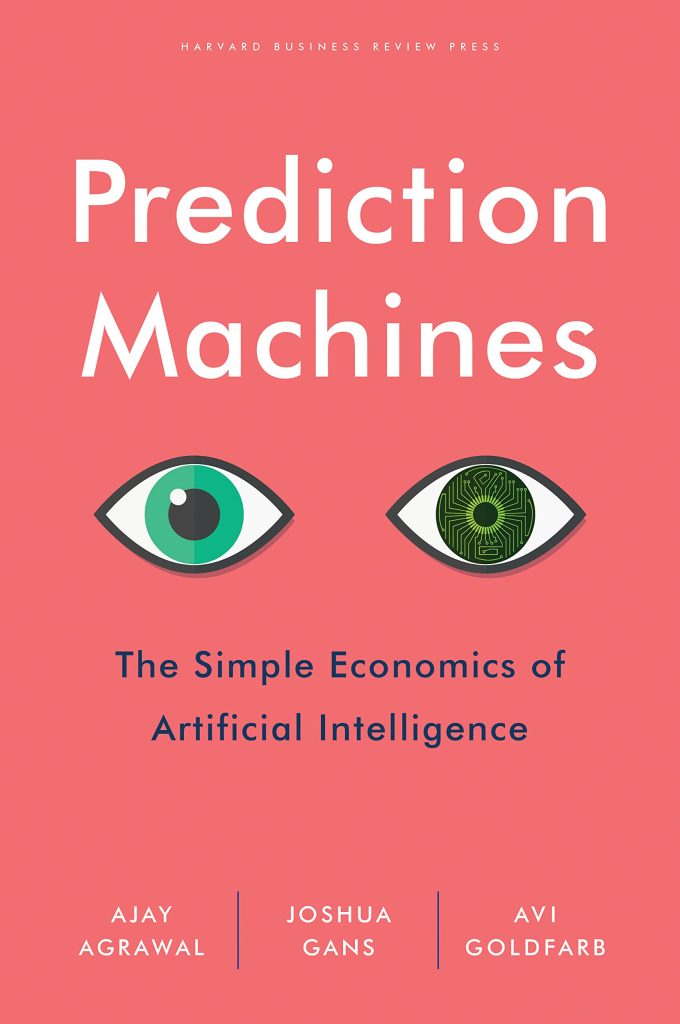
Prediction Machines by Agrawal, Gans & Goldfarb: Book Review — The AI Economics Classic?
Most AI books teach you what the technology can do. Prediction Machines asks a sharper question: what happens to business, work, and strategy when prediction becomes cheap? Three Rotman economists recast AI as a drop in the cost of prediction — then follow that single insight through every decision a company makes.
Related reading: Superintelligence by Nick Bostrom: Book Review — Still the AI Safety Classic in , Empire of AI by Karen Hao: Book Review — Is This the Definitive Inside Story of .
This review is for readers who want the economics of AI, not the engineering: managers, founders, strategists, and the curious wondering what all this AI spending actually buys. A short book with an outsized reputation — The Economist once named it essential for understanding AI.
Quick Answer
Yes — Prediction Machines remains the clearest short book on the economics of AI. Stop treating AI as magic, start treating it as cheaper prediction, and watch it reframe decisions about automation, strategy, and where humans add value. Managers and founders get the most.
Want a hands-on daily mindset? Co-Intelligence is the practical companion. Vivid stories about AI’s societal stakes? AI 2041 delivers ten fictional futures.
Compare Top AI Economics Books
Three proven picks side by side — choose the one that fits your needs.
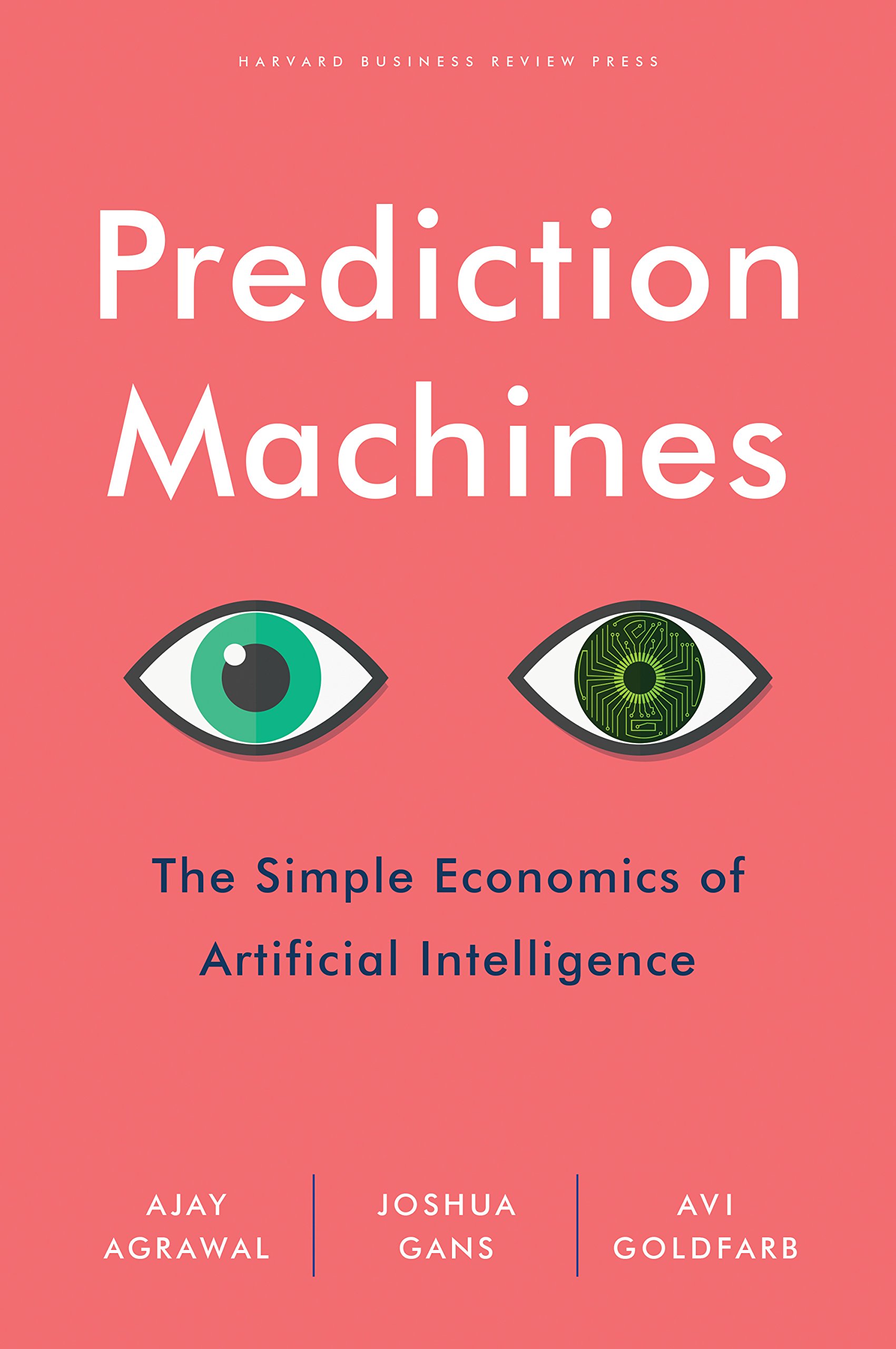
Prediction Machines
The economics lens: AI as a collapse in the cost of prediction — crisp, strategic, short.
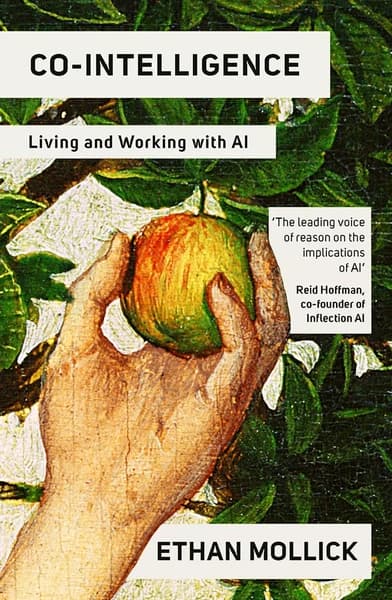
Co-Intelligence
Practical AI mindset for daily work — hands-on guidance for living with the tools.
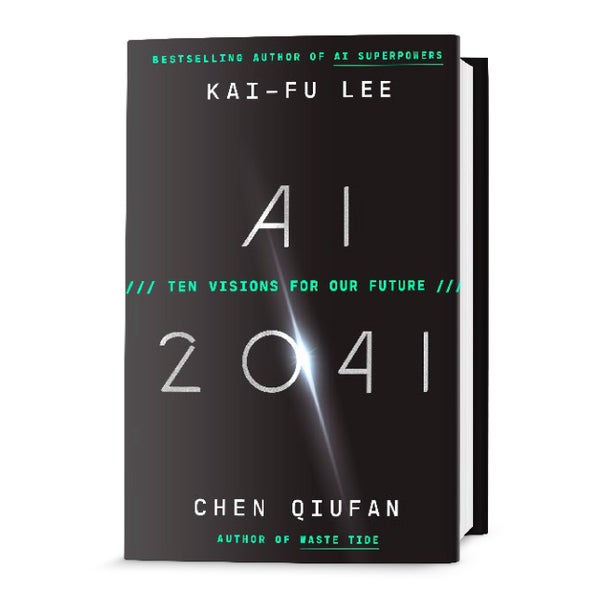
AI 2041
Ten fictional AI futures — storytelling that makes the societal stakes feel real.
Prices and availability may vary — tap any product to check the current listing.
What to Look For in an AI Economics Book
Business books about technology age badly. Most of them, anyway. The survivors share a few traits — check for them before buying.
1. Does it offer one clear framework, or a pile of anecdotes?
Prediction Machines stands or falls on a single idea: machine intelligence is, at its economic core, prediction — and AI is a sharp fall in the cost of prediction. When prediction gets cheap, you use more of it; tasks get restructured around it; judgment (deciding what to do with a prediction) becomes the scarce, valuable input.
This is the book’s superpower. Most tech business books are 300 pages of vibes. Here you get a lens you can actually apply: take any decision in your work, ask where prediction sits inside it, and the logic starts working for you.
2. Does it separate prediction from judgment?
The book’s most-cited distinction: prediction (filling in missing information) versus judgment (deciding what to do, including the values and trade-offs). Cheaper prediction doesn’t eliminate judgment. It raises its value.
Think about hiring: a model can predict which candidates might succeed, but deciding what “success” means — and what trade-offs you’ll accept — stays human. That framing alone is worth the price for anyone managing people or budgets, and it quietly deflates automation hype.
3. Is it concrete enough to act on?
The authors are economists, but the book earns its Harvard Business Review Press imprint: each concept arrives with business situations — how prediction changes workflows, where to hunt for AI opportunities, why some tasks get automated while others get augmented. The examples are plain-spoken: warehouses, call centers, medical imaging, driving.
One fair criticism: the examples skew toward large organizations. Solo founders and freelancers must translate the logic down to their own scale. The framework scales fine — prediction is prediction — but the book won’t do the translating for you. Read it with a notebook open.
4. Does it handle strategy, not just tech?
Later chapters take on the harder stuff: how cheaper prediction reshapes industry structure, why data advantages compound, what happens to competition when the key input gets abundant. This is where the book separates from “AI for managers” fluff — it’s thinking about equilibrium effects.
The answer, roughly: advantage shifts to judgment, proprietary data, and the organizational redesign most companies are too timid to attempt. Read those chapters twice. They explain why so many AI pilots stall: the technology was never the hard part. The restructuring was.
5. Has it survived contact with reality?
Published in 2018, before the generative-AI wave, its examples predate the tools readers now associate with AI. Does that break it? Mostly no — and that’s the test a framework book must pass. The prediction-judgment distinction applies to language models just as well as to 2018-era classifiers; arguably better.
What it won’t give you: prompting guidance, specific tools, anything from the last few years. Need a field manual for today’s AI products? Pair this with something current like Co-Intelligence. Prediction Machines is the theory; Mollick is the practice.
6. Is it actually readable?
Under 300 pages — the rare business book that respects your time: clean prose, short chapters, no academic hedging.
The trade-off for brevity: some arguments get asserted faster than proved. Economists wanting rigor will want more evidence; everyone else will appreciate the pace. For a first book on AI and business, the pace is a feature.
Match the Book to Your Situation
Three portraits. One of them is probably you.
The manager deciding where AI fits
You don’t need to understand transformers; you need to decide which processes to redesign. Prediction Machines gives you the decision logic: find the prediction tasks inside your workflows, ask what cheaper prediction unlocks, protect the judgment calls. Read it with your org chart in mind and you’ll leave with a shortlist worth testing.
The founder or strategist
You’re betting on where value accrues as AI spreads. The strategy chapters — data advantages, abundant prediction — are written for exactly this reader. The book won’t tell you what to build, but it sharpens your instincts about which moats are real and which are sandcastles.
The hands-on practitioner
You work with AI tools daily and want to get better at it. Start with Co-Intelligence instead — the practical manual. Then come back for the framework that explains why the manual’s advice works.
How These AI Books Compare
Three books, three different jobs. Here’s the map.
| Type / Tier | Best For | Price Tier | Key Feature | Watch-Out |
|---|---|---|---|---|
| Economics framework (Prediction Machines) | Managers, founders, strategists | Mid-range | Prediction-vs-judgment lens for business decisions | 2018 examples; big-company skew |
| Practical mindset (Co-Intelligence) | Daily AI users and teams | Mid-range | Hands-on guidance for working alongside AI | Less on strategy and economics |
| Narrative futures (AI 2041) | Readers who learn through story | Mid-range | Ten fictional scenarios with expert analysis | Speculative; not a decision tool |
| Textbooks & academic papers | Researchers and specialists | Varies | Rigor and the latest results | Dense; no business framing |
Prediction Machines: strategic clarity no other short book matches. Co-Intelligence: immediate usefulness. AI 2041: memorability — stories make abstract trends concrete. The academic route: depth, at the cost of accessibility.
Reading Scenarios: Which Path Fits You?
Scenario 1: You’re writing an AI strategy memo
Read Prediction Machines first, the prediction-vs-judgment and industry-structure chapters twice. The vocabulary — prediction tasks, judgment, the restructuring bottleneck — gives your memo a spine that “we should explore AI opportunities” never will.
Scenario 2: You’re wondering if AI threatens your role
List what you do in a week, split each item into prediction and judgment, and look at the ratio. Prediction-heavy work is where pressure lands; judgment-heavy work is where your value concentrates. The book doesn’t promise you’ll be fine — it gives you the tool to assess the risk yourself. More useful than reassurance.
Scenario 3: You want the full picture
Prediction Machines for the framework, Co-Intelligence for the practice, AI 2041 for the futures. In that order: the economics explains what’s happening, the mindset book teaches you to operate inside it, the fiction shows where it might lead.
Common Mistakes Buyers Make
Mistake 1: Expecting a how-to manual. This is a 2018 framework book, not a prompt guide. Get Co-Intelligence for the manual; get this for the thinking.
Also see: AI Snake Oil by Arvind Narayanan & Sayash Kapoor: Book Review — Can It Really Te.
Mistake 2: Reading it as pure theory. The book only pays off if you apply it: take your actual decisions, find the prediction inside them, run the logic. Passive reading wastes a good framework.
Mistake 3: Assuming “economics of AI” means boring. It reads like a strategy conversation, not a lecture — short chapters, plain language, real business situations. The label undersells it.
Mistake 4: Dismissing it because it’s from 2018. The examples predate the current wave, but the framework anticipated it. Judge the lens, not the publication date.
Why, How, and What
Why does “cheaper prediction” matter more than “smarter machines”?
Because “smarter machines” invites mysticism and “cheaper prediction” invites analysis. Frame AI as a fall in prediction costs and the tools of economics start working: demand curves, substitution effects, organizational responses. You stop asking “is AI intelligent?” — a philosophical tar pit — and start asking “where does cheaper prediction change what we do?” A business can answer that.
How do you apply the prediction-judgment split?
Take a regular decision. Write down what information was missing when you made it — that’s prediction. Then the values, trade-offs, and accountability involved — that’s judgment. Now ask: if prediction got ten times cheaper, what would you do differently? That exercise is the book’s method in miniature.
What won’t this book tell you?
It won’t teach any specific AI tool, predict which companies win, or settle AI’s big societal debates. It’s a lens, not an encyclopedia. But how to think about AI’s economic effects on any decision turns out to cover remarkable ground. Just don’t ask a hammer to be a map.
Questions People Ask Before Buying
Is Prediction Machines worth reading if I’m not an economist?
Absolutely — it’s written for business readers, not academics, keeping the economics at the level of plain reasoning rather than equations. Managers and founders consistently finish it in a weekend and start applying the prediction-versus-judgment framework to their own decisions immediately.
The point is accessibility: if you can follow a good business magazine feature, you can follow this book.
How does Prediction Machines compare to Co-Intelligence?
They operate at different altitudes: Prediction Machines gives you the strategic framework — why AI changes business through cheaper prediction — while Co-Intelligence gives you the practical manual for working with AI tools daily. The first teaches you how to think; the second, how to act.
Managers: start with the framework. Practitioners: start with the manual. Most serious readers end up wanting both.
Is a 2018 book on AI still relevant, or is it outdated?
Still relevant: it’s built on an economic framework, not a tour of then-current tech. The core insight — AI as a fall in the cost of prediction, raising the value of judgment — describes today’s generative AI at least as well as 2018’s machine learning.
What’s dated is the scenery, not the ideas — pair it with something current for today’s tools, but don’t confuse old examples with old ideas.
Prediction Machines vs AI 2041 — which should I read first?
Read Prediction Machines first if your goal is understanding and decision-making — its framework gives you the analytical tools for AI’s business impact — then read AI 2041 for the imaginative payoff: Lee and Chen Qiufan’s ten fictional futures hit harder once you grasp the economic forces driving them.
Story-first learners can flip the order — AI 2041’s narratives build motivation for the framework afterward. Either way: one trains your judgment, the other stretches your imagination.
Does Prediction Machines actually help with real business decisions?
Yes, if you do the application work: the prediction-versus-judgment split is a genuinely usable decision tool — identify the prediction tasks inside any workflow, ask what cheaper prediction unlocks, protect the judgment calls. Readers apply it to hiring, pricing, automation, and strategy memos.
The caveat: the book gives you the lens, not the answers. Work through one real decision while reading and you’ll get far more from it.
Frequently Asked Questions
Who wrote Prediction Machines?
Ajay Agrawal, Joshua Gans, and Avi Goldfarb — three University of Toronto economists studying the economics of innovation. Hence the strategy-analysis feel, not tech journalism.
How long is the book?
Under 300 pages — the rare business book that doesn’t pad. Most readers finish it in a focused weekend.
Do I need to understand machine learning to follow it?
No. It abstracts away the technical details and treats AI as an economic input: cheaper prediction. What you need is familiarity with how businesses make decisions — that’s the book’s terrain.
What’s the central idea in one sentence?
Artificial intelligence is, economically speaking, a sharp drop in the cost of prediction — and that single change restructures which tasks get automated, which get augmented, and where human judgment becomes most valuable. Everything else in the book is that idea, worked through.
Should I read it before Co-Intelligence?
Managers and strategists: framework first, then practice. Hands-on daily users: start with Co-Intelligence, then come back for the why. No wrong order — only a better fit for your role.
Final Recommendation
Buy Prediction Machines if you make decisions about AI — where to invest, what to automate, how strategy shifts as prediction gets cheap. Short, clear, and more relevant than at publication. For managers and founders, the highest-value couple of hours on this topic.
Then add Co-Intelligence for daily practice, AI 2041 for imagination. Framework, practice, futures — the complete shelf. But if you buy one, make it the framework.
OUR TOP PICK
Prediction Machines
The economics lens: AI as a collapse in the cost of prediction — crisp, strategic, short.
Decision Tree: Which AI Economics Book Should You Buy?
Deciding about AI investment or strategy → Prediction Machines: the cleanest decision tool on this shelf.
Getting better with AI tools yourself → Co-Intelligence: the practical manual first, framework after.
Learning through stories → AI 2041: ten vivid scenarios, abstract trends made concrete.
The complete picture → all three, in that order: framework, practice, futures.
Key Takeaways
Prediction Machines reframes AI as a drop in the cost of prediction — a simple lens clarifying automation, strategy, and where human judgment gains value.
Strongest short book for managers, founders, strategists: readable in a weekend, applicable for years.
Co-Intelligence adds the practice; AI 2041 adds the futures. All three form a complete shelf.
Disclosure: This guide contains affiliate links. If you buy through them, we may earn a commission at no extra cost to you.