
Disclosure: This page contains affiliate links. If you buy through them, we may earn a commission at no extra cost to you.
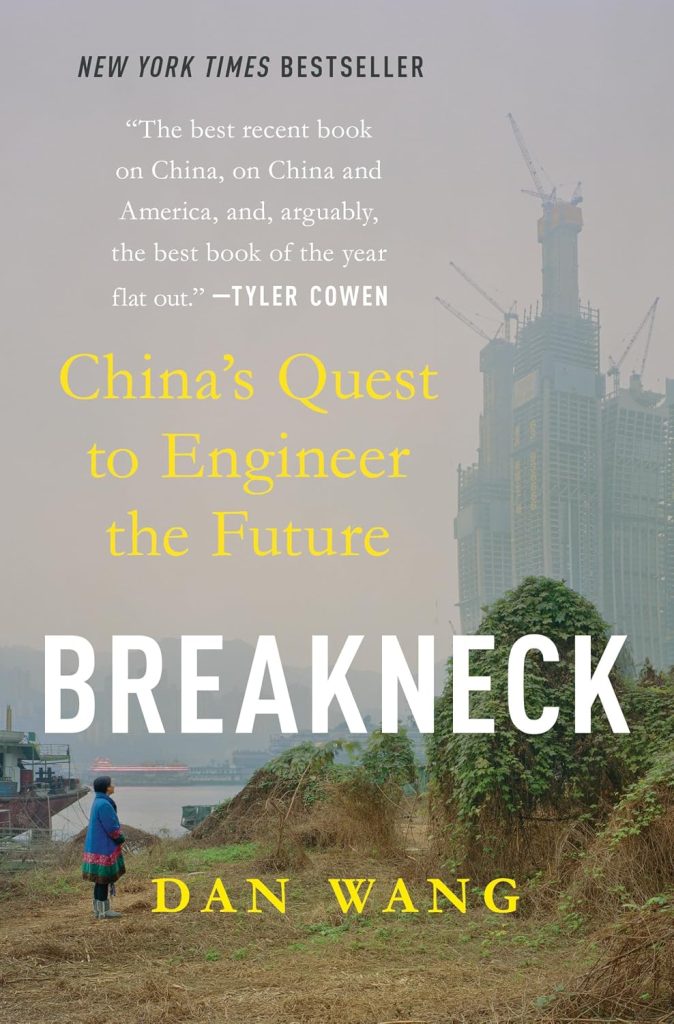
Breakneck by Dan Wang: Book Review — Should You Read It in 2026?
Most books about the US-China rivalry argue about software. This Breakneck book review starts from a different place: the rivalry also runs on concrete, transmission lines and factory floors, and Dan Wang’s Breakneck: China’s Quest to Engineer the Future (W. W. Norton & Company, August 26, 2025) treats those physical systems as the main event. It’s a New York Times bestseller, 288 pages in hardcover, and it’s become the book people cite when AI talk turns into talk about who can actually build things.
Wang is a research fellow at Stanford’s Hoover History Lab. Before that he held a fellowship at Yale Law School’s Paul Tsai China Center and worked as a technology analyst at Gavekal Dragonomics. Readers of his annual letters from China will recognize the method: years of travel, factory visits, a habit of counting what got built rather than repeating official promises. That matters for this Breakneck book review — the book’s authority comes from observation, not a think-tank model.
Wang calls China an engineering state: a system run by people trained to build, delivering high-speed rail, bridges, housing and power capacity at a scale nobody else attempts — and reaching for the same tools when the problem is society itself, with results from impressive to grim. The United States gets the opposite label, a lawyerly society, where legal process and veto points give almost anyone standing to slow a project down. One system overbuilds; the other struggles to build at all.
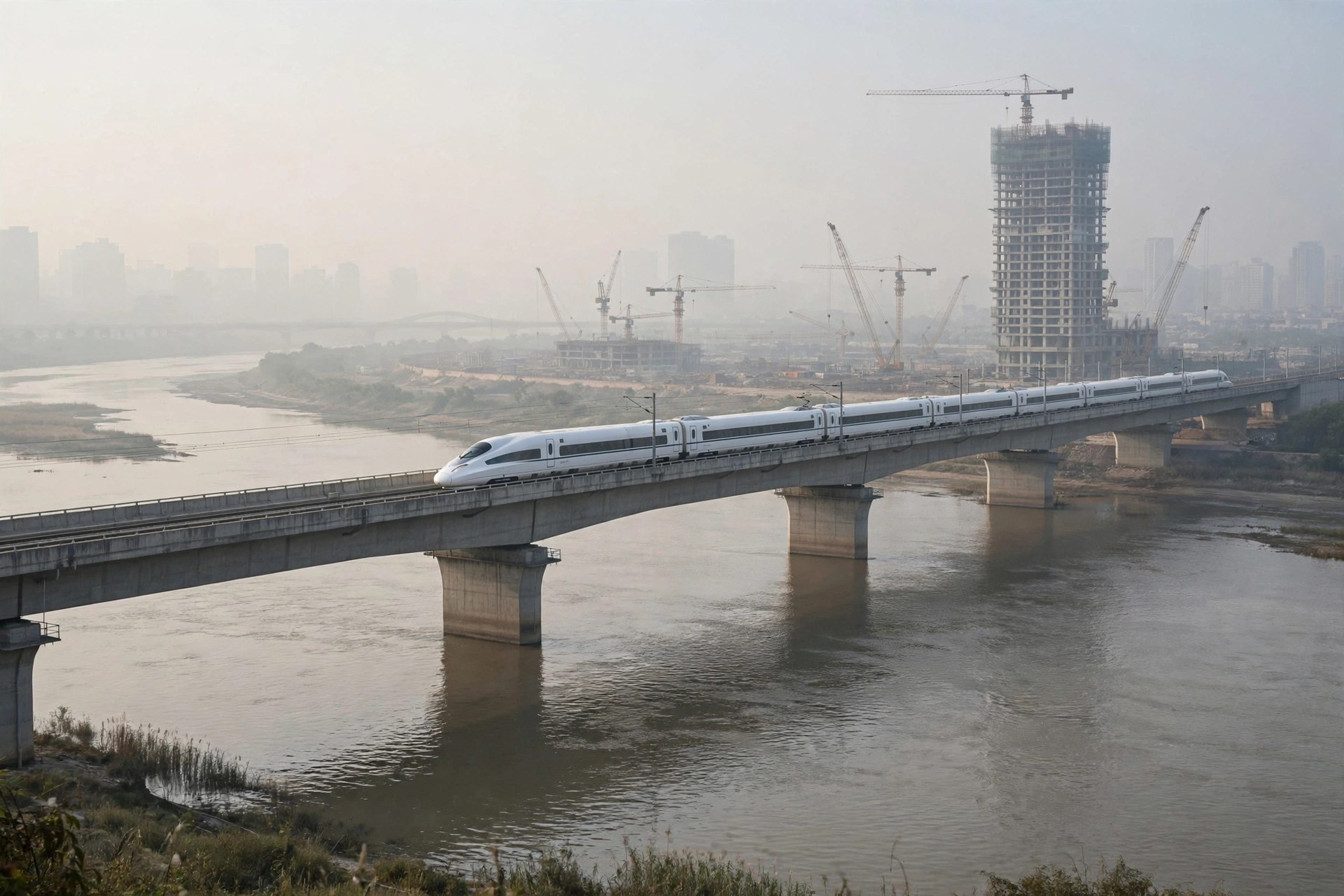
AI runs through the book as one thread among several — semiconductors, electric vehicles, drones, data centers — but anyone expecting a book about models will misread it. Wang’s subject sits upstream of the insider accounts: the industrial base that decides how far any of it can scale. So is the book worth your money? For the right reader, emphatically yes — with two real reservations, spelled out below.
Quick Answer
Buy Breakneck if you follow the US-China tech race, AI infrastructure, manufacturing or industrial policy — it’s the clearest one-volume explanation of why China builds so fast and why the US doesn’t. Skip it if you want hands-on AI guidance or a pure book about AI; the technology here is a thread, not the whole cloth. This Breakneck book review scores it a strong buy for the first group, an easy pass for the second.
Compare Top Books on the US-China Tech Race
Three proven picks side by side — choose the one that fits your needs.
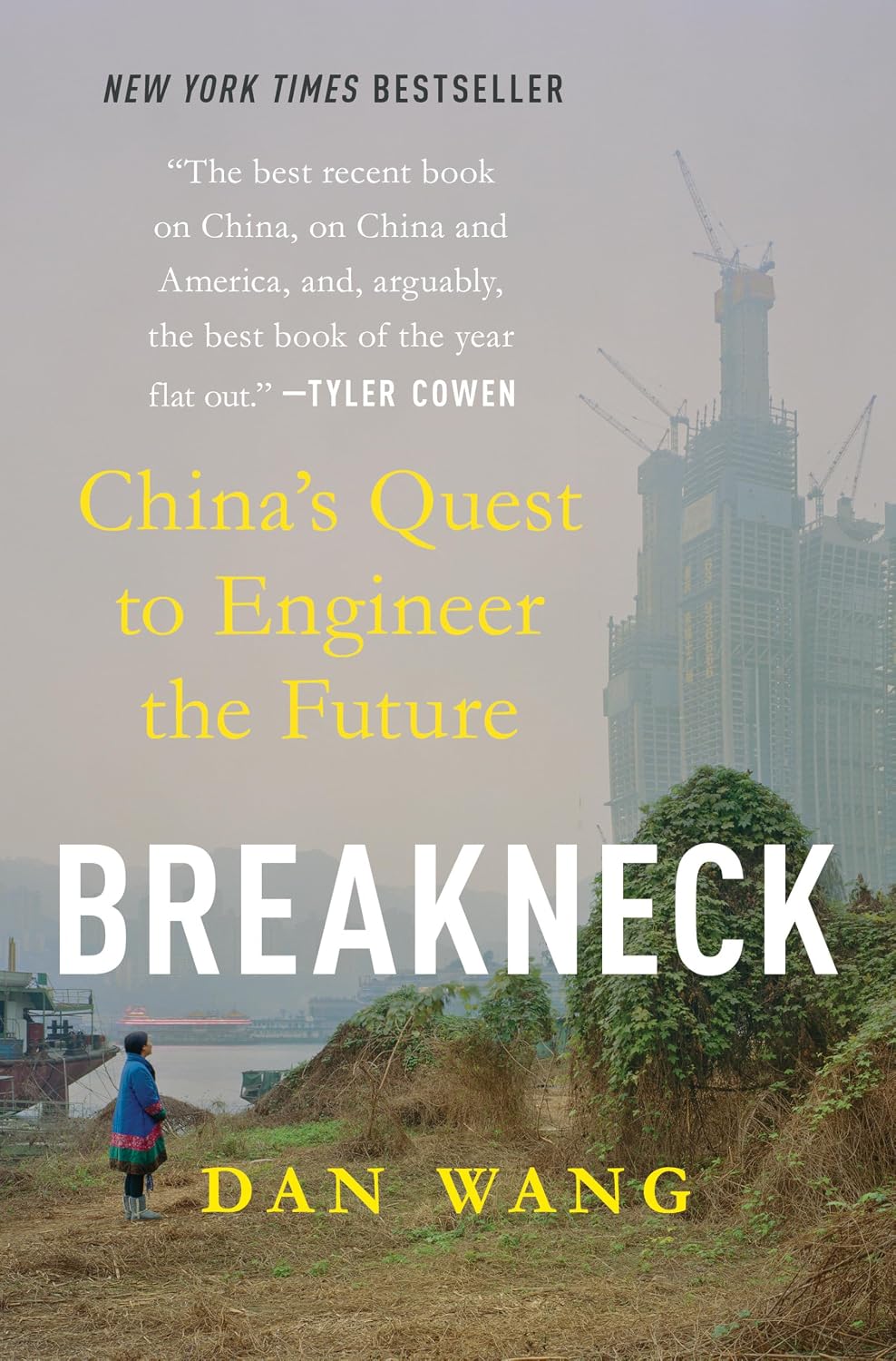
Breakneck by Dan Wang
The engineering-state account: how both countries build — or fail to
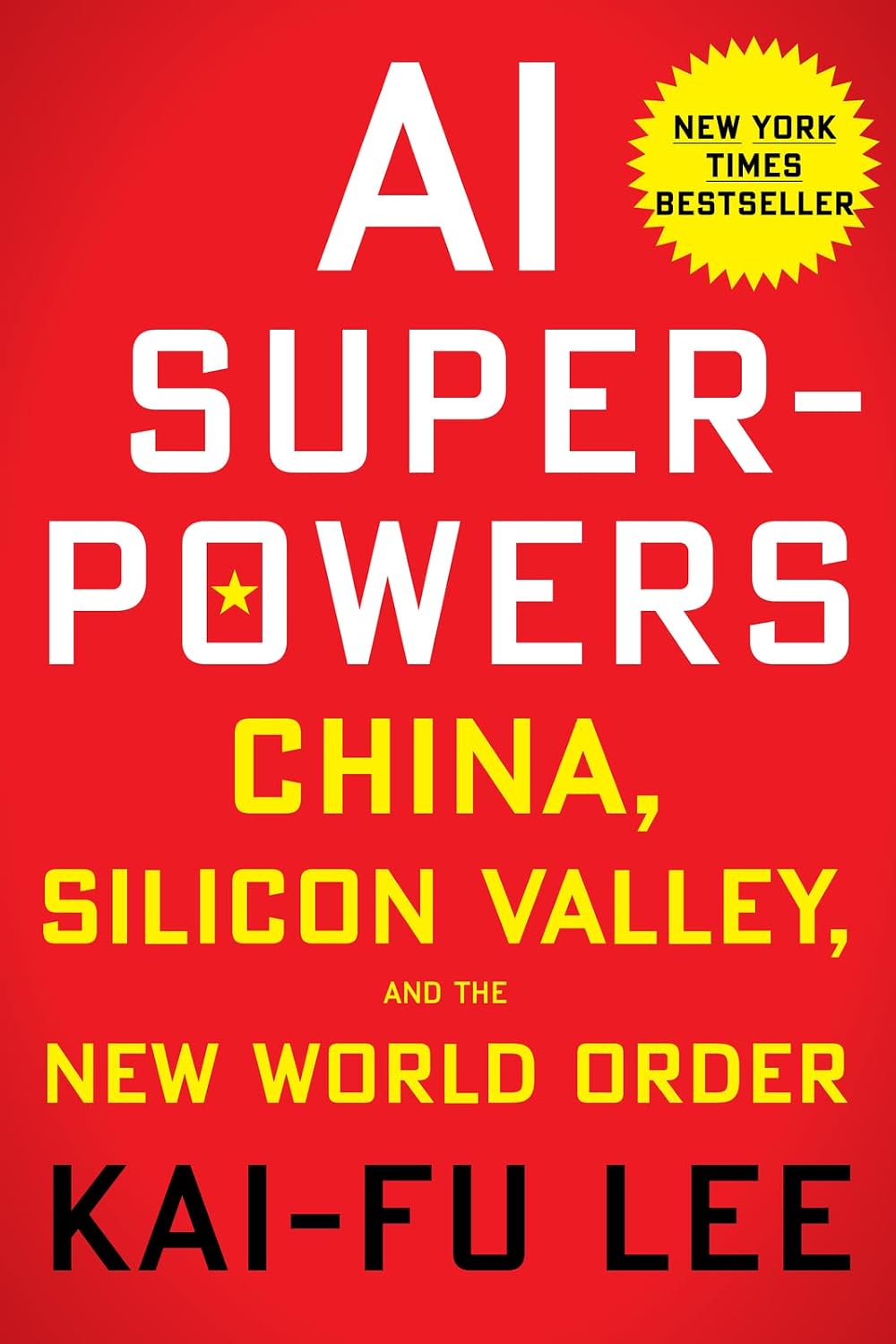
AI Superpowers by Kai-Fu Lee
The 2018 forecast of the US-China AI race — industry-first, AI-specific
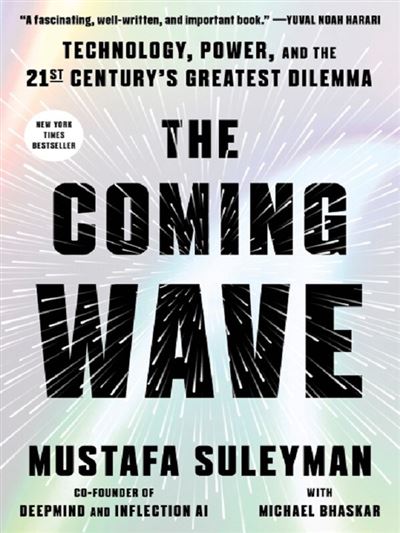
The Coming Wave by Mustafa Suleyman
Technology, power and containment — the broader governance angle
Prices and availability may vary — tap any product to check the current listing.
What to Look For in a Book About the US-China Tech Race
Big-idea books about China are easy to write badly — the shelves groan with titles that recycle three anecdotes and a prediction. Six tests separate the serious ones from the filler, and this Breakneck book review runs Breakneck through each. It passes most, strains on two.
1. Ground-level reporting, not armchair theory
A book about building should show some building. Wang’s does: the chapters move through construction sites, industrial cities and projects across China, and the detail — how a bridge gets financed, why a local government wants a showcase project — reflects reporting, not news clipping. The trade-off is pace: readers who want a tight thesis will find some travelogue stretches slow, a recurring note in this Breakneck book review.
2. How far the central metaphor stretches
Every book like this lives or dies on one idea, and engineering state versus lawyerly society is a strong one — it explains rail networks and chip fabs alike. Wang is mostly disciplined, showing where engineering logic fails in China — above all when the state tries to engineer social outcomes. Occasionally the frame gets forced onto episodes it only half fits. It doesn’t break the book.
3. The American half of the argument
Plenty of China books treat the US as a backdrop. Wang doesn’t — the American chapters take the lawyerly society on its own terms: permitting fights, environmental review, litigation that stalls housing, transit and energy projects. One limitation, flagged in this Breakneck book review: the US material leans on a handful of stalled projects, so infrastructure specialists may find fewer surprises than in the China chapters.
4. Coverage of AI and chips specifically
Here’s the question AI readers bring to a Breakneck book review: how much AI is in it? A meaningful thread, not the spine. Semiconductors get serious treatment — the book is useful on why chip supply chains resist quick fixes — and AI appears as a sector where the two systems’ habits collide. Absent is the technology itself: no model architectures, no inside account of any AI company.
5. Evidence, sourcing and the anecdote problem
Wang argues from cases: a city that built too much, a campaign that pushed engineering logic into social life, an American project that died in review. Skeptical readers will ask the fair question — how representative are they? The book rarely pauses for systematic data, which keeps it readable and leaves it open to the cherry-picking charge. This Breakneck book review counts that as the honest weakness: the cases are vivid, the denominator sometimes missing.
6. Readability for non-specialists
No economics degree required. Wang writes clean, essayistic prose — honed in those annual letters — and explains technical terms in place rather than assuming them. At 288 pages it’s a weekend-scale read, not a doorstop. The cost of that accessibility is depth: readers deep into industrial policy will want more on financing mechanics. For everyone else, the balance lands right.
Who Should Read Breakneck — and Who Should Skip It
This Breakneck book review splits the audience three ways. Two of these readers should buy without much hesitation. The third should walk past it — no review does that reader a favor by pretending otherwise.
The policy and infrastructure watcher
You follow industrial policy, export controls, grid buildouts — where technology meets the state. Breakneck was written for you. It connects dots that usually live in separate articles: why a country that can raise a rail line across a river in a season also ends up with developments nobody moved into, and why American transmission projects die in permitting.
The founder, investor or supply-chain reader
Your interest is practical: where things get made, how fast capacity can appear, what a supply chain looks like under stress. Wang won’t give you a sourcing playbook, but he explains the system your suppliers operate inside. Readers who want the corporate version alongside the state-level one can start with our Empire of AI book review and then come back here for the wider frame.
The hands-on AI practitioner — skip this one
You build with models, evaluate tools, maybe read detector reviews on this site. Breakneck will frustrate you: nothing here about prompting, model quality, detection or deployment — AI shows up as an industry, not a practice. Your reading time buys more elsewhere, and this Breakneck book review would rather lose the sale than oversell the fit.
How Breakneck Compares With AI Superpowers and The Coming Wave
Our earlier AI Superpowers book review covered Kai-Fu Lee’s 2018 industry-first forecast of the AI race. Suleyman’s The Coming Wave asks how powerful technologies get contained, or don’t. Wang asks something more basic: what kind of state can build the physical world those technologies need? Complements more than rivals, then — but if shelf space forces a choice, the table below is the honest map of this Breakneck book review.
| Book | Central Argument | Best For | Watch-Out |
|---|---|---|---|
| Breakneck by Dan Wang (2025) | States shape technology: an engineering state builds fast and overreaches; a lawyerly society blocks and delays | Readers tracking the US-China race, infrastructure and industrial policy | AI is a thread, not the subject; case-driven rather than data-driven |
| AI Superpowers by Kai-Fu Lee (2018) | The AI race will be won on data, deployment speed and grind as much as research brilliance | Readers who want the AI industry contest itself | A 2018 forecast — parts have aged, and the frame predates the current model era |
| The Coming Wave by Mustafa Suleyman (2023) | AI and synthetic biology form a wave of power states must contain without killing | Readers focused on governance, risk and containment | Broader than the US-China question; prescriptive where Wang is descriptive |
Breakneck’s row is the widest: it’s the only one of the three that explains why a chip fab is a political problem before it’s a technical one.
The AI Superpowers row is the narrowest and, for pure AI readers, the most direct — Lee stays inside the industry Wang only visits.
The Coming Wave row is the most alarmed: Suleyman writes as a builder worried about his own creations, an urgency Wang’s cooler analysis avoids.
Where Breakneck beats the other two
Three concrete strengths. It’s current: published in 2025, it reasons about the chip-control era as lived reality, where Lee’s 2018 forecast can’t. Its scope is physical: data centers need power and land, and Wang is the only one of the three who treats electricity as an AI variable. And it’s symmetric — both countries get the same treatment, praise and damage included. That fairness is the book’s signature virtue, per this Breakneck book review.
Where Breakneck is weaker
Two real weaknesses, also concrete. The AI coverage is thinner than AI-first readers will want — Lee and Suleyman both go deeper on the technology’s trajectory. And the case-based method leaves the argument exposed: pick different Chinese cities or different American projects and the story’s balance could shift. Both are reasons to read it alongside a second title — a caveat this Breakneck book review repeats because it matters.
Three Reading Scenarios: How This Book Actually Gets Read
The weekend big-picture read
You’ve got two days and a head full of disconnected headlines — chip bans, EV price wars, a bridge opening six months early. Breakneck is built for exactly this: compact chapters, no prerequisites. By Sunday you’ll have a framework instead of a pile of clippings — the clearest buy signal in this Breakneck book review.

The book-club or team discussion pick
Some books end conversations; this one starts them. The engineering-state frame is contestable — half your group will apply it to everything, the other half will hunt for counterexamples. It pairs neatly with a person-level story too — check our The Optimist book review for the biography side of the same AI moment.
The gift for the China-watcher in your life
Every family has one: the person who forwards high-speed rail articles and asks why home can’t do that. Breakneck respects their obsession and complicates it — China chapters that feed the fascination, American chapters that redirect it. The hardcover helps — it’s the kind of object that stays on a shelf.
Common Mistakes Buyers Make With Books Like This
Mistake one: buying it as an AI book. The subject is state capacity, not AI practice. Buyers expecting overlap with model explainers end up annoyed at a book that never promised it.
Mistake two: reading it as a China-only story. Skip the American chapters and you’ve cut the argument in half — the lawyerly-society material is what makes the China material mean something.
Mistake three: treating the frame as a law of nature. Useful lenses, not physics. Readers who apply them to every headline are using the book worse than readers who argue with it.
Mistake four: waiting for a verdict on who wins. Wang doesn’t crown a winner in the AI race; buyers hunting for a prediction to quote will leave empty-handed. The book explains capacities, not outcomes.
Why, How, What: Quick Answers
Why does Wang call China an engineering state?
Because the system’s leaders are trained as engineers and rewarded for building, and the state measures itself in finished projects — rail mileage, power capacity, housing starts. The label carries its warning inside it: a state that engineers things well keeps trying to engineer people, and the book’s darkest chapters live in that gap. A diagnosis, not a compliment.
How does the lawyerly-society idea explain slow American building?
Wang points to process: permits layered on permits, environmental review that invites lawsuits, and veto points where one opponent can stall a project for years. Each safeguard defends something real — that’s the uncomfortable part — but stacked together they tax the physical projects the AI era needs most. The result isn’t corruption or laziness; it’s a system working as designed, toward an outcome nobody chose.
What does Breakneck add to the US-China AI debate?
Most AI-debate books argue about models, talent and compute as if they float free; Wang grounds them in power grids, industrial land and manufacturing depth — the things that decide whether compute exists at scale. Finish it and chip headlines read differently: less tech news, more industrial policy with a scoreboard.
Questions People Ask Before Buying
Is Breakneck worth buying?
Yes — this Breakneck book review recommends Breakneck for readers who follow the US-China technology race, because Dan Wang explains the physical side of that race, the factories, power grids, chip plants and rail networks underneath the software headlines, better than any recent title, though general readers after a pure AI explainer should look elsewhere.
The reporting base is the difference: years of travel, in 288 pages that never turn into a lecture. Policy, investing and supply-chain readers will get the most from it.
Should I read Breakneck or AI Superpowers first?
Read Breakneck first if your question is how either country actually builds the things AI depends on, and read AI Superpowers first if your question is how the two AI industries themselves developed, because Kai-Fu Lee wrote the sharper industry forecast back in 2018 while Wang wrote the broader story about states, engineers and concrete.
Plenty of readers end up with both — Lee explains the industry’s logic from the inside, Wang the state capacity underneath it. If budget forces one purchase, match the book to your question, not the hype cycle.
Is Breakneck only about China?
No — roughly half the argument is about the United States, which Wang portrays as a lawyerly society where permits, lawsuits and veto points slow almost every attempt to build, and that American half is what turns a book about Chinese engineering into a direct comparison of the two systems competing over AI and manufacturing.
That structure is the book’s real contribution, and why this Breakneck book review recommends it to American readers. Both systems come out damaged. That’s the point.
Does Breakneck explain how AI works?
No — Breakneck treats AI as one arena inside a larger contest over industrial capacity, so readers get data centers, chip supply chains and the electricity those systems devour, but almost nothing about how models are trained, how they fail, or how anyone should evaluate an AI tool in daily work or content production.
Set expectations accordingly and the book delivers. Readers who want the technology itself should pair Wang with an AI-first title — confusing the two kinds of book is the most common buying error this Breakneck book review sees.
Who should skip Breakneck?
Skip Breakneck if you need a hands-on guide to AI tools, a technical explainer of modern models, or a fast business book built around one company, because Wang writes comparative political economy at essay length, and readers who dislike detours into dams, housing policy and local government finance will feel the argument wandering.
Students are a borderline case: assigned chapters work well, but buying a personal copy for coursework alone argues for a library first. Readers who strongly prefer narrative biography — one life, one arc — will find Wang’s system-level approach cool where they wanted warm.
Final Recommendation
So here’s the call, plainly. This Breakneck book review recommends buying Breakneck if you follow the US-China tech race, work anywhere near manufacturing or infrastructure, or keep wondering why one country pours concrete while the other files injunctions. It’s the most useful recent frame for the AI era’s physical layer, and at 288 pages it respects your time while rearranging your assumptions.
Pass, without regret, if your shelf needs AI practice rather than AI context — tools, models, detection, deployment. Wang won’t help you there. For everyone in the first group, the hardcover of Breakneck is available through major retailers — check the current listing, and consider adding Lee’s forecast beside it.
Compare Top Books on the US-China Tech Race
Three proven picks side by side — choose the one that fits your needs.
Breakneck by Dan Wang
The engineering-state account: how both countries build — or fail to
AI Superpowers by Kai-Fu Lee
The 2018 forecast of the US-China AI race — industry-first, AI-specific
The Coming Wave by Mustafa Suleyman
Technology, power and containment — the broader governance angle
Prices and availability may vary — tap any product to check the current listing.

Frequently Asked Questions
When was Breakneck published, and who published it?
W. W. Norton & Company published Breakneck on August 26, 2025 — hardcover, 288 pages. It’s Dan Wang’s first book, though his annual letters from China had already built him a following. It became a New York Times bestseller after release.
Is Dan Wang qualified to write about China’s engineering state?
His background is the qualification: research fellow at Stanford’s Hoover History Lab, previously a fellow at Yale Law School’s Paul Tsai China Center and a technology analyst at Gavekal Dragonomics. Years traveling across China gave him the ground-level view the book argues from. Skeptics can dispute his frame — plenty do — but not his time on the ground.
How long is Breakneck, and is it a hard read?
The hardcover runs 288 pages, and the prose is essayistic rather than academic — chapters are self-contained enough for a commute. Density varies by chapter. Most general readers this Breakneck book review has in mind will finish it in a weekend or two.
Does Breakneck take sides in the US-China debate?
It criticizes both systems: China for overreach, especially when engineering logic gets applied to society; the US for a legal process that blocks building by default. Readers looking for a cheerleader for either capital will be disappointed.
Breakneck or The Coming Wave — which should I pick?
Pick Breakneck if your question is how nations build the physical base technology runs on; pick The Coming Wave if your question is how powerful technologies should be governed. Suleyman writes about AI and synthetic biology as forces needing control. Wang writes about states. This Breakneck book review’s tiebreaker: the reader who keeps asking ‘but who builds it?’ belongs with Wang.
Which edition does this Breakneck book review cover?
The hardcover from W. W. Norton & Company (August 2025, 288 pages) is the edition this Breakneck book review evaluates. Other formats may appear over time — check the current listing if you want a specific format.
Disclosure: This page contains affiliate links. If you buy through them, we may earn a commission at no extra cost to you.