
Disclosure: As an affiliate partner, we may earn a commission from qualifying purchases made through links on this page — at no extra cost to you.
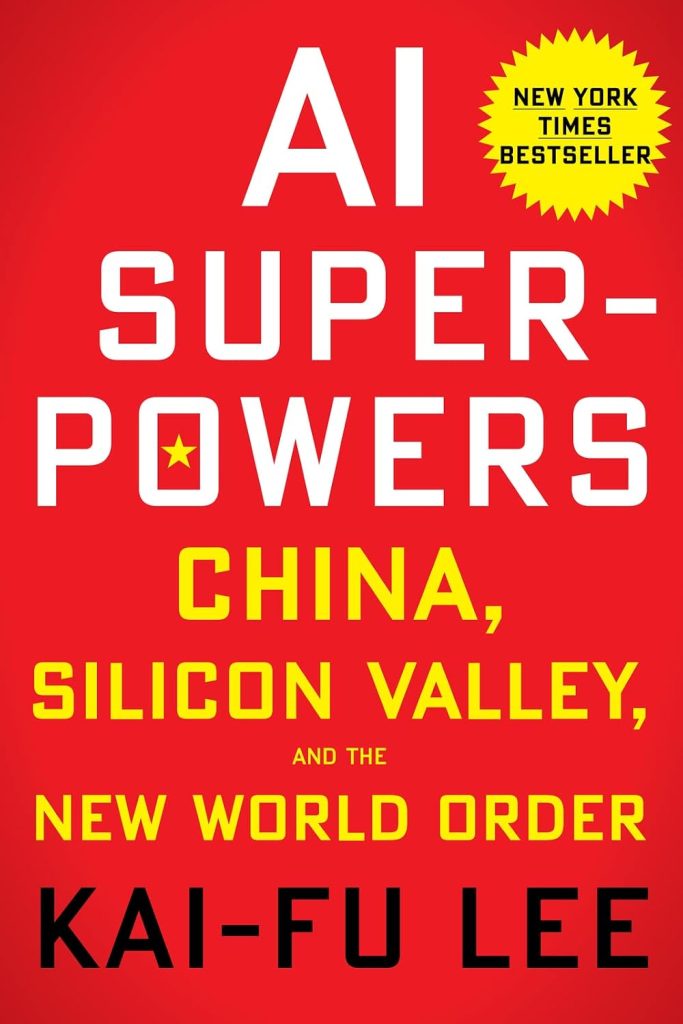
AI Superpowers by Kai-Fu Lee: Book Review — Still the Best Book on the US-China AI Race?
Kai-Fu Lee’s AI Superpowers has lived on “essential AI reading” lists for years — but does a book from 2018 still earn its place in 2026? This review is for readers who want to understand the US-China AI race, the data-versus-algorithms debate, and what automation could do to work. You’ll get who the book serves best, where its age shows, and how it compares with two other well-known AI books.
Related reading: AI 2041 by Kai-Fu Lee and Empire of AI by Karen Hao.
Quick Answer
AI Superpowers is still the most readable insider account of China’s AI rise and the US-China technology rivalry — buy it for that story. Lee ran Google’s China operation before becoming a venture investor, so the analysis carries lived-in detail Western commentary usually lacks. Skip it only if you need post-2022 generative AI coverage.
Compare Top AI Books
Three proven picks side by side — choose the one that fits your needs.
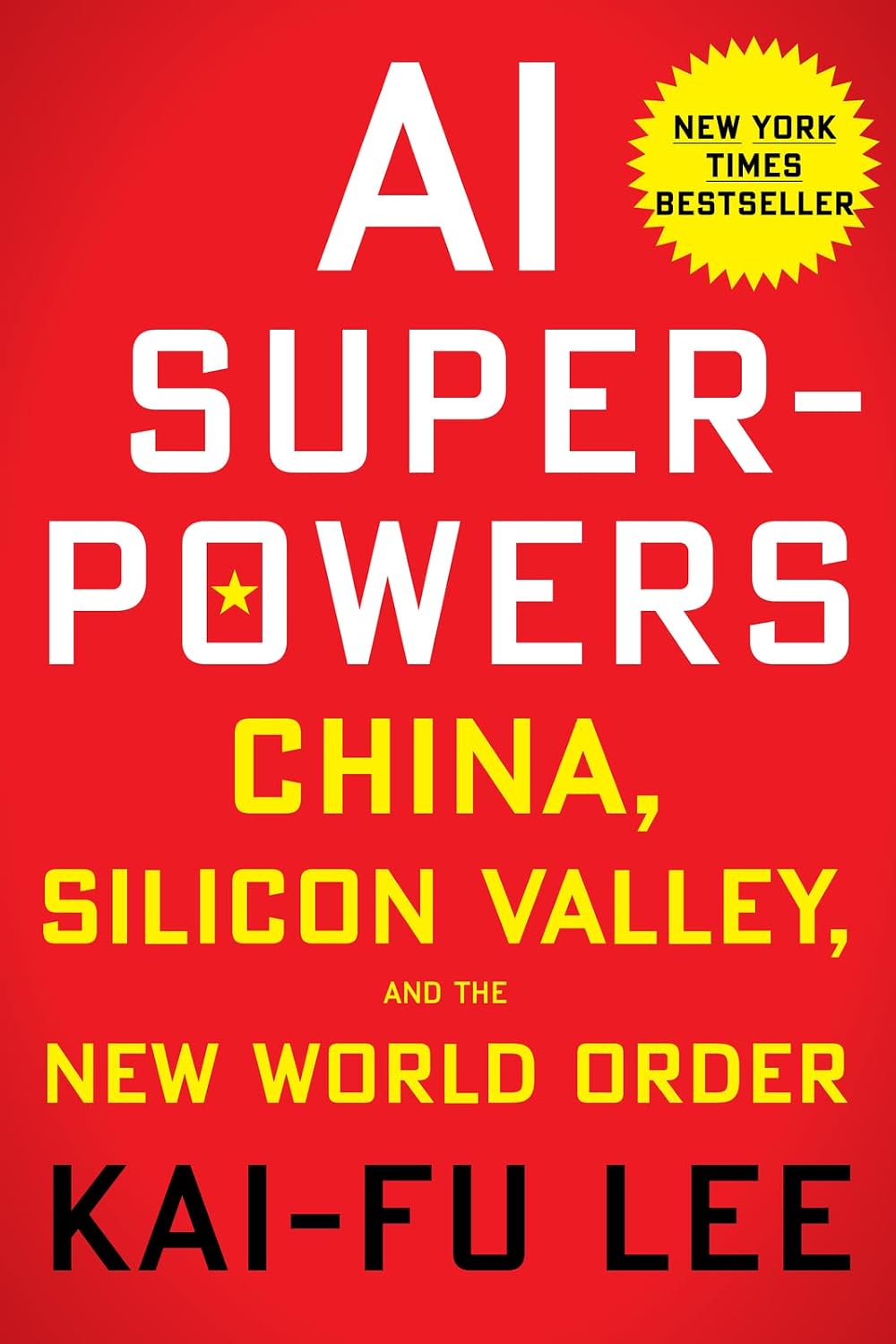
AI Superpowers
Insider account of the US-China AI race — strategy, data, and the future of work
Co-Intelligence
Practical guide to working with AI every day — collaboration skills, not geopolitics
AI 2041
Ten sci-fi stories imagining AI’s future — the same author’s more imaginative side
Prices and availability may vary — tap any product to check the current listing.
What to Look For in an AI Geopolitics Book
Most AI books expire fast — the field moves, the examples rot, and last year’s insight becomes this year’s trivia. AI Superpowers has outlasted most of them. Run it through these six filters before you buy.
1. Written in 2018 — Handle the Timeline With Care
AI Superpowers was published in 2018 by Houghton Mifflin Harcourt, before the generative AI boom. Some projections about where capabilities would land by the mid-2020s read optimistically now. Does that sink the book? Mostly no. The argument that matters is structural — who has the data, who deploys fastest, how advantages compound — and structures age slower than predictions.
2. The Author’s Insider Lens
Kai-Fu Lee ran Google’s China operation, then became a venture capitalist funding AI startups in China. That résumé cuts both ways: you get texture no outside journalist can fake — how Chinese tech companies actually operate, how fast they iterate — but you’re also reading an investor’s worldview, someone whose professional life depends on AI succeeding. The optimism isn’t hidden. Read him like any insider: informed, valuable, worth cross-checking.
3. The Central Bet: Data Beats Elite Algorithms
The core thesis is disarmingly simple: in the age of deep learning, data matters more than breakthrough algorithms, and China holds structural advantages in collecting and deploying it. Lee argues the era of the lone genius researcher is giving way to the era of the relentless implementer. Researchers would push back on how far this goes — but the thesis is argued with enough specificity, through deployment speed and data feedback loops, that engaging with it teaches you something even if you disagree.
4. Readability for Non-Engineers
Here’s where the book genuinely shines: it’s written for curious general readers, not machine learning engineers. Technical concepts get explained in plain language, often through analogy. Working AI researchers will find these passages light — they’re primers, not papers. For everyone else, the level is well judged. I’ve seen people bounce off denser AI books and finish this one in a weekend. That counts for something.
5. How It Handles the Jobs Question
A full section wrestles with automation and employment — which jobs AI hollows out, what that does to meaning and social stability, what societies might do about it. It’s the most human part of the book, and the most speculative. The proposed remedies (Lee discusses ideas like a basic income and a stipend for care work) will strike some readers as thoughtful and others as hand-wavy. Either way, the jobs chapters alone justify the purchase for many readers.
6. Case Studies That Feel Like History
Some company examples now read like dispatches from another era — the tax every current-affairs technology book pays. Read past the specific names to the patterns: deployment speed, data flywheels, the gap between research leadership and market leadership. If you can abstract, the patterns still describe the industry remarkably well.
How to Match AI Superpowers to Your Situation
Books aren’t one-size-fits-all, and geopolitics books least of all. Three reader profiles cover most buyers — find yours.
The Business or Policy Reader
You follow tech competition professionally — strategy, investment, regulation. This book was more or less written for you. The research-versus-implementation framework and the data-advantage argument give you a lens you can reuse on every AI headline. Just remember it’s one lens, not a balanced briefing.
The Curious General Reader
You keep hearing that AI is a US-China race and want to understand what that actually means. Start here. The prose won’t punish you, Lee’s Google China anecdotes keep it human, and you’ll finish with opinions you can defend at dinner. Small caveat: remember the publication date when friends cite newer developments.
The AI Practitioner or Researcher
Honest caveat: if you build models for a living, the technical chapters will feel elementary. Buy it for the strategy and the China perspective you can’t get from papers — not for the science.
AI Books Compared: Three Lenses on the AI Story
Three books, three completely different projects. Pick by what you want the book to do for you.
| Type / Tier | Best For | Price Tier | Key Feature | Watch-Out |
|---|---|---|---|---|
| Geopolitics & strategy (AI Superpowers) | Readers tracking the US-China tech race | Mid-range | Insider account of China’s AI ecosystem | Written pre-generative-AI; timelines need adjusting |
| Practical AI use (Co-Intelligence) | Professionals who want to work with AI now | Mid-range | Actionable mindset for collaborating with AI | Advice ages fast as tools change |
| Narrative futures (AI 2041) | Readers who absorb ideas through stories | Mid-range | Ten sci-fi stories paired with tech analysis | Same author, but fiction-first; less analytical depth |
Geopolitics and strategy win when your question is “who wins and why” — no other mainstream AI book gives you this insider’s seat.
Practical AI guides win on Monday-morning usefulness, but their half-life is short; a workflow trick from last year may already be obsolete.
Narrative futures win on readability — and AI 2041 pairs naturally as the imaginative companion to AI Superpowers‘ analysis.
Reading AI Superpowers in Real Life: Two Scenarios
The Weekend Catch-Up Reader
You’ve been skimming AI headlines for months and feel vaguely behind. Two or three evenings with this book fixes that — the first half gives you the China story, the second the jobs story. Read it like a long magazine feature: the chapters are self-contained enough that a week-long gap won’t hurt.
Prepping for a Debate or Class Discussion
Students and debaters get real mileage here: the thesis is clear, quotable, and arguable — exactly what a good discussion needs. Bring a recent generative-AI article as counterweight, because someone will ask about everything since 2022.
Common Mistakes Buyers Make
Mistake 1: Reading it as a prediction scorecard. Some readers treat AI Superpowers like a forecast to be graded against 2026 reality. That misses the point: the value is the structural argument about data, deployment, and incentives, not whether a capability arrived on schedule. Grade the framework, not the dates.
Mistake 2: Ignoring the author’s incentives. Lee is an investor in Chinese AI — disclosed, but easy to forget mid-chapter. His optimism is the worldview of someone whose portfolio depends on AI succeeding. The book reads better with that awareness: an insider’s honest-but-interested account, not a referee’s ruling. Also see: AI Snake Oil.
Mistake 3: Expecting generative AI coverage. The book predates the large language model era. Buyers who want the post-2022 story will be disappointed through no fault of the book’s — start with something newer, then read this for the backstory.
Mistake 4: Buying it for someone who hates nonfiction. Gifting AI Superpowers to a reader who only touches novels is a classic misfire. For fiction-loving, AI-curious friends, AI 2041 (same author, story-driven) is the safer gift.
Why This Book, How to Read It, What Comes Next
Why does this book still get recommended?
Because the US-China AI story only got bigger, and this remains the most readable entry point written by someone who lived inside both worlds. Lee ran a major American tech company’s China operation, then funded Chinese startups — that dual vantage point is genuinely rare. Recommendations persist for a reason.
How should you actually read it?
Front to back, but not in one sitting — the argument builds, and the jobs chapters land harder after the China chapters. Keep a mental asterisk on anything time-sensitive: when Lee projects, ask what’s changed since. Slow down. That habit turns a 2018 book into a 2026 education.
What should you read after AI Superpowers?
Want the imaginative version? AI 2041 — same author, fiction format. Want practical AI skills? Co-Intelligence. Want the AI safety counterweight? That’s a different shelf, and a healthy one to visit. AI Superpowers gives you the race; you decide how fast to run.
Questions People Ask Before Buying
Is AI Superpowers still worth reading in 2026, or is it outdated?
Yes — AI Superpowers remains worth reading in 2026 because its core argument about China’s data advantages and structural strengths in AI implementation still explains much of today’s AI landscape, even though the book predates the generative AI boom and some technology timelines need updating. The dated parts are specific predictions about when capabilities arrive; the social questions — what happens to work, who benefits — haven’t aged at all. It’s a book about people living with AI, not a product roadmap.
Should I read AI Superpowers or AI 2041 first?
Read AI Superpowers first if the US-China AI rivalry and the economics of automation are what pulled you toward this shelf, and pick up AI 2041 afterward for the imaginative, story-driven side of the same author’s thinking; start with AI 2041 only if you know you absorb ideas better through fiction than through analysis. The two barely overlap: one builds understanding through argument, the other through narrative. For a non-technical gift recipient, AI Superpowers demands more attention — AI 2041 is the easier hand-off.
Is AI Superpowers biased toward China?
Not in the way the question implies — Lee is critical of and admiring toward both sides in turn, because his argument is that America leads in elite research while China leads in implementation and data, which means readers on either side of the debate will find passages that challenge their assumptions. He clearly admires China’s execution speed, and he clearly respects American research culture. What he doesn’t do is pick a team. Read it as an analyst’s split verdict, and you’ll get the most out of it.
Is AI Superpowers too technical for a non-engineer?
No — AI Superpowers was written for business readers and policymakers rather than engineers, and Lee explains concepts like deep learning and data network effects in plain language, so a curious reader with no coding background can follow the argument from the first chapter to the last without getting lost. Engineers may find the technical passages too basic — they’re introductions, not deep dives. If you can follow a good science documentary, you can follow this book.
Which edition of AI Superpowers should I buy?
Any edition delivers the same text, so choose based on how you read: the hardcover suits collectors and gift buyers who want a sturdy shelf presence, while paperback or digital editions work better for commuters and annotators who care more about the content than the object. There’s no definitive edition with exclusive material — pick for your hands and your shelf, not for completeness anxiety.
Frequently Asked Questions
Who is Kai-Fu Lee?
An AI scientist, entrepreneur, and venture capitalist — former president of Google China, with earlier career chapters at major American tech companies. He founded Sinovation Ventures, which backs AI startups. In AI writing, he’s known as a bridge figure between Silicon Valley and China’s tech world.
When was AI Superpowers published?
In 2018, by Houghton Mifflin Harcourt. That date matters: the book captures the deep-learning era’s dynamics well but predates the generative AI wave of the early 2020s. Read it as essential backstory, not current events.
Does AI Superpowers cover ChatGPT or generative AI?
No — it was written before large language models went mainstream, so you won’t find them here. The book’s framework (data advantages, deployment speed, implementation over invention) still applies to the generative era, but the specific discussion lives in newer books. Buy this for the foundation.
Is AI Superpowers pro-China or pro-America?
Neither, exactly — Lee argues each side leads in different things: America in elite research and breakthrough innovation, China in implementation, data, and deployment speed. Readers looking for a victory lap for either side will be disappointed. It’s an analyst’s split verdict, not a fan’s.
How long does AI Superpowers take to read?
A focused reader finishes in a few evenings — it’s written for general readers, not academics, and the prose moves. The chapters are self-contained, so short bursts work too. Most people finish within a week of casual reading.
Where can I buy AI Superpowers?
AI Superpowers is available through major retailers and widely available online in hardcover, paperback, and digital editions — check current availability. Use the links on this page to see the current listing and choose the format that fits how you read.
Final Recommendation
Buy AI Superpowers if the US-China AI race is the story you want to understand — the strategy, the data argument, the jobs question — told by someone who operated on both sides of it. It’s the rare geopolitics book that reads fast and ages gracefully. Check the current listing if you’re ready — and pick the format that suits your shelf.
Skip it if your priority is post-2022 generative AI. Everyone else: eight years on, it remains the clearest short education in how AI became a great-power contest. That’s worth the shelf space.
OUR TOP PICK
AI Superpowers
Insider account of the US-China AI race — strategy, data, and the future of work
Decision Tree: Which AI Book Should You Get?
If the US-China AI race is your question → get AI Superpowers. It’s the insider account, and nothing else on this page substitutes for it.
If you need AI skills for work right now → get Co-Intelligence. Practical, current, hands-on — the manual this book deliberately isn’t.
If you learn through stories → get AI 2041. Same author’s imagination, fiction-first format, zero geopolitics homework.
Key Takeaways
AI Superpowers is the most readable insider account of China’s AI rise and the US-China rivalry — written by a former Google China president turned venture investor.
Published in 2018, it predates generative AI; its structural argument (data and deployment advantages) holds up better than its timelines.
Strongest for business, policy, and curious general readers; researchers may find the technical passages light.
Pair it with Co-Intelligence for practical skills or AI 2041 for the story-driven companion.
Disclosure: As an affiliate partner, we may earn a commission from qualifying purchases made through links on this page — at no extra cost to you.