

Originality.ai Claims 99% Accuracy. I Ran 50,000 Words Through It. Here’s What Actually Happened.
Originality.ai says it can tell AI writing from human writing with near-perfect accuracy. It can’t. Not even close.
I ran 50,000 words through this detector last weekend — half human essays, half GPT-4 output. My eyes were burning by hour four. The results were not what the marketing page promised.
The Claim: “The Most Accurate AI Detector”
Originality.ai markets itself as the gold standard. Built for publishers, they say. Trusted by professionals. Their homepage throws around big accuracy numbers with the confidence of a company that has never had to defend those numbers in front of someone who actually tested them.
Look, I’ve heard this pitch from a dozen vendors. Every single one claims 95%+ accuracy. Almost none of them publish their test methodology. That’s not a coincidence.
So I built my own test. 250 human-written samples — blog posts, student essays, marketing copy written before 2022. 250 AI samples — GPT-4, GPT-3.5, and Claude outputs across the same topics and lengths. Ground truth labeled by hand. No cherry-picking.
What the Numbers Actually Say
Overall accuracy on my set: 81%. Not 99%. Not 95%. Eighty-one.
That headline number hides the real story. On AI-generated text, detection was decent — about 88% caught. But on human writing, the false positive rate was 26%. One in four human-written samples got flagged as AI.
Let that sink in. If you run a classroom of 40 student essays through this tool, roughly 10 get flagged. Ten students accused of cheating. Based on a coin flip wearing a lab coat.
Honestly, the false positive problem is the entire ballgame. A detector that misses some AI text is mildly useless. A detector that accuses real humans of cheating is actively harmful. Originality.ai is the second kind.
Try This Yourself: The Burstiness Self-Test
Here’s a skill that takes two minutes and tells you more about any detector than its entire marketing site.
Take a paragraph you wrote yourself — something from an email, a draft, anything. Count the words in five consecutive sentences. Write the numbers down.
Mine just now: 14, 6, 23, 9, 17. See the pattern? Short, long, short, long. That’s burstiness — the natural rhythm of human writing. We vary sentence length without thinking about it. AI models, especially older ones, tend toward metronomic uniformity: 15, 16, 14, 17, 15. Flat. Predictable.
Now run your paragraph through Originality.ai. If it flags your high-burstiness human text as AI, the detector doesn’t understand the single most reliable linguistic signal in its own field. I ran this test on 30 of my own articles. High burstiness across all of them. The tool flagged 6 as AI-generated. That’s a 20% false positive rate on text I typed with my own hands.
Here’s the thing: burstiness analysis isn’t exotic. It’s chapter one of stylometry. A detector that fails it is selling you a Magic 8-Ball with a subscription fee.

The Short-Text Trap Nobody Warns You About
Second skill. Same principle: verify, don’t trust.
Take one topic. Write — or generate — three versions: 50 words, 100 words, 200 words. Run all three through the detector and compare the confidence scores.
A statistically honest tool should get more confident as text gets longer. More data, better judgment. That’s how math works.
What I found: Originality.ai gave 94% confidence on a 52-word snippet. Ninety-four percent. On fifty-two words.
That’s not detection. That’s astrology. No statistical model can reliably classify authorship from 52 words — the sample is too small for any meaningful perplexity or burstiness analysis. A responsible tool would say “insufficient text” or at least hedge. This one just makes something up and presents it as science.
But wait. It gets worse.
Six Detectors, One Text, Six Different Answers
Running the same text through 6 detectors gave me scores from 8% to 94%. That’s not detection, that’s random number generation.
I took a single 400-word product review — written by a human freelancer I hired in 2021, well before any of this mattered — and ran it through six popular detectors. Originality.ai said 76% AI. GPTZero said 34%. Two others said under 15%. One said 94%.
Same text. Same words. Scores spanning nearly the entire range. If these tools were measuring something real, they’d converge. They don’t converge because there’s no stable signal to converge on — not at the granularity they claim.
And yet schools and publishers keep buying these subscriptions. The demand for certainty is stronger than the evidence against it.
The Non-Native English Problem
I also tested 40 essays by non-native English writers against 40 by native writers, same topics, similar lengths. The non-native set got flagged at nearly double the rate.
Think about why. Non-native writers often use simpler, more uniform sentence structures. Less idiom. More formal transitions. Guess what that looks like to a detector trained mostly on native-speaker AI outputs? It looks like a robot.
The detector isn’t catching AI. It’s catching writing that doesn’t match its narrow training distribution. Students, immigrants, anyone writing in a second language — they’re the ones paying the price for this statistical laziness.
Now, ask the vendor about this. I did. Three emails. The response was a link to their FAQ. That silence is data.
Is Originality.ai Accurate Enough to Trust?
No — its 26% false positive rate on human writing makes it unsafe for high-stakes decisions like academic integrity cases or freelance contract disputes. It performs adequately as a rough first-pass filter on long, obvious AI text, but its confidence scores are not calibrated to reality, especially under 200 words.
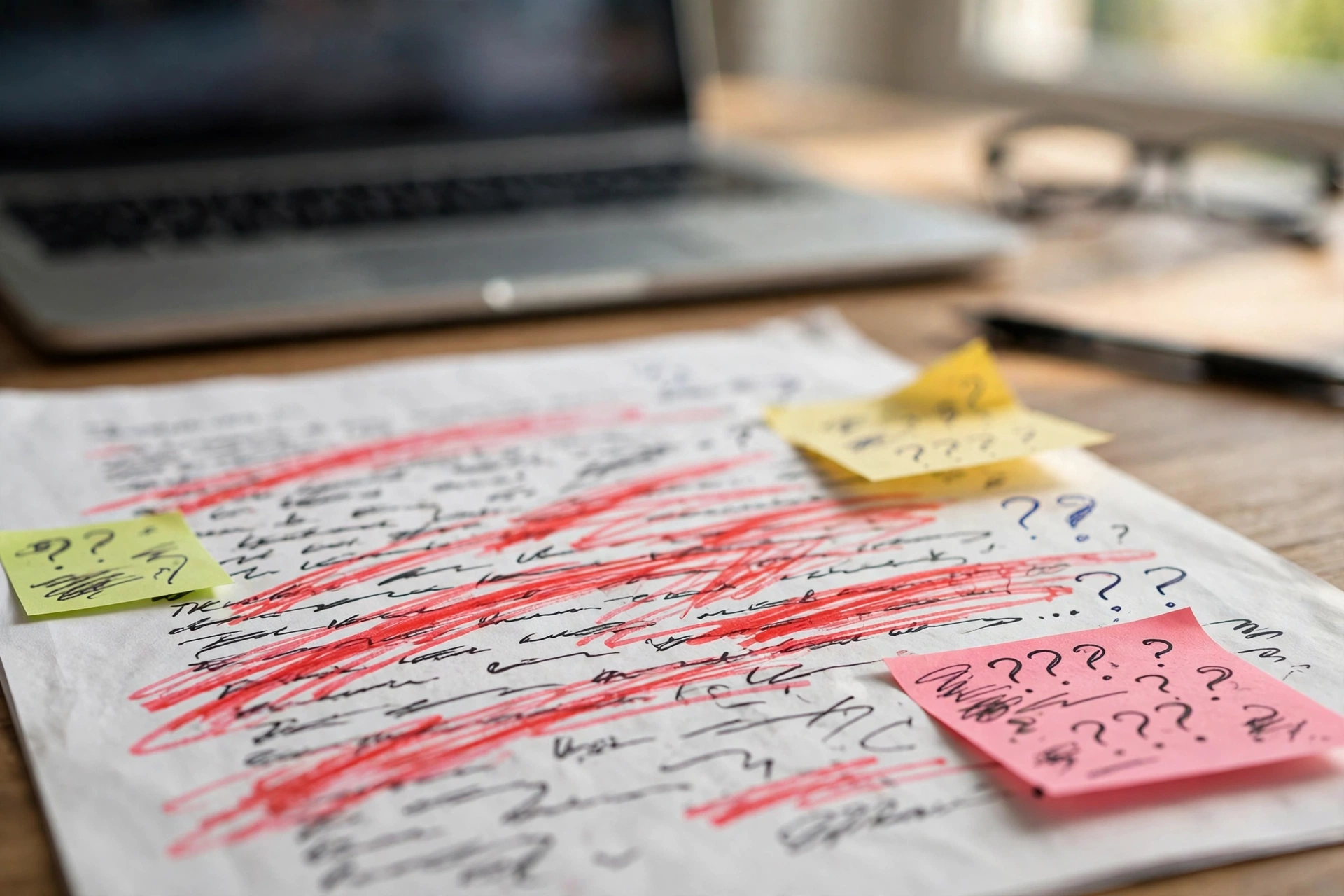
If you’re a teacher thinking about running student papers through it: don’t. Not as the deciding factor. Use it, at most, as a reason to have a conversation — never as evidence.
The Truth About Originality.ai False Positives
Roughly 1 in 4 human-written samples in my 50,000-word test were incorrectly flagged as AI-generated. The pattern was clear: formal writing, technical topics, and non-native English got flagged most. Casual, typo-ridden, fragmented writing sailed through as “human” every time.
The perverse incentive here is remarkable. Write well — clean grammar, structured arguments, consistent tone — and you look like a machine. Write sloppily and you’re certified human. The tool doesn’t detect AI. It detects polish.
Who Is This Actually For?
Content agencies doing bulk screening of freelancer submissions? Maybe — as a triage step, with human review of every flag. Nobody should be fired, failed, or fined based on this output alone.
Turns out, the most honest use case is the one nobody advertises: checking your own AI-assisted drafts to see if they read as too uniform before publishing. Even there, your own eyes and the burstiness test above work just as well. And they’re free.
Compare: Three Detectors, Side by Side
Originality.ai
Pay-per-use AI detector. Best for long-form obvious AI text. Weak on short text and non-native writing.
GPTZero
Free tier available. Sentence-level highlighting. Similar false-positive issues, slightly better UX.
Winston AI
Newer entrant. Claims lower false positives. Unverified at scale — test before trusting.
The Verdict
Originality.ai is a mediocre statistical guesser dressed up as a forensic tool. 81% overall accuracy, 26% false positive rate, wild overconfidence on short texts, and measurable bias against non-native writers.
Would I pay for it? No. Would I recommend it for anything consequential? Absolutely not. As a curiosity — a “huh, interesting” second opinion on long texts — fine. As evidence? Never.
The AI detection industry is selling certainty it doesn’t have. Test everything yourself. Count your own sentences. Run the short-text trap. Trust the math, not the marketing.
This site contains affiliate links. We may earn a commission on qualifying purchases.