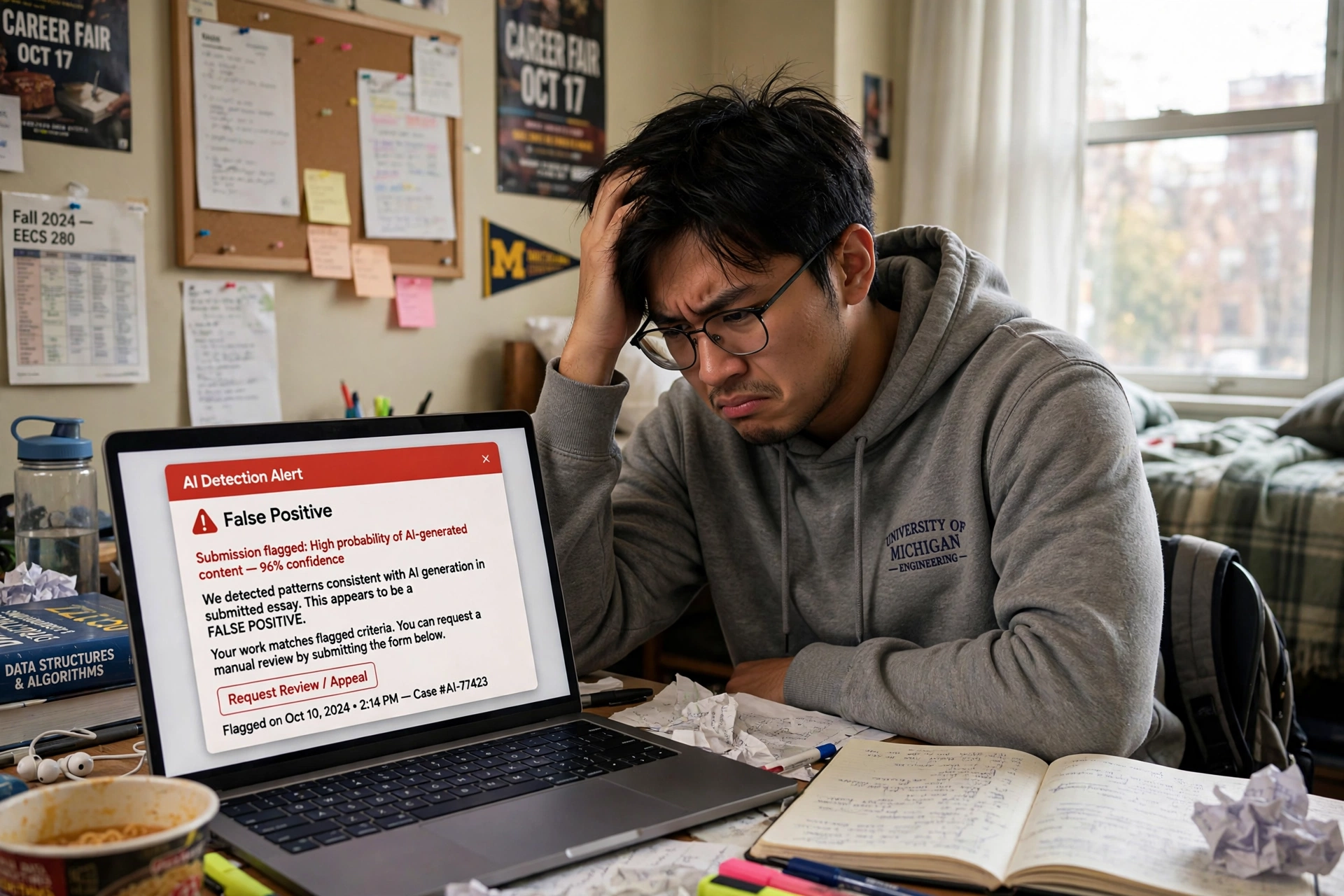
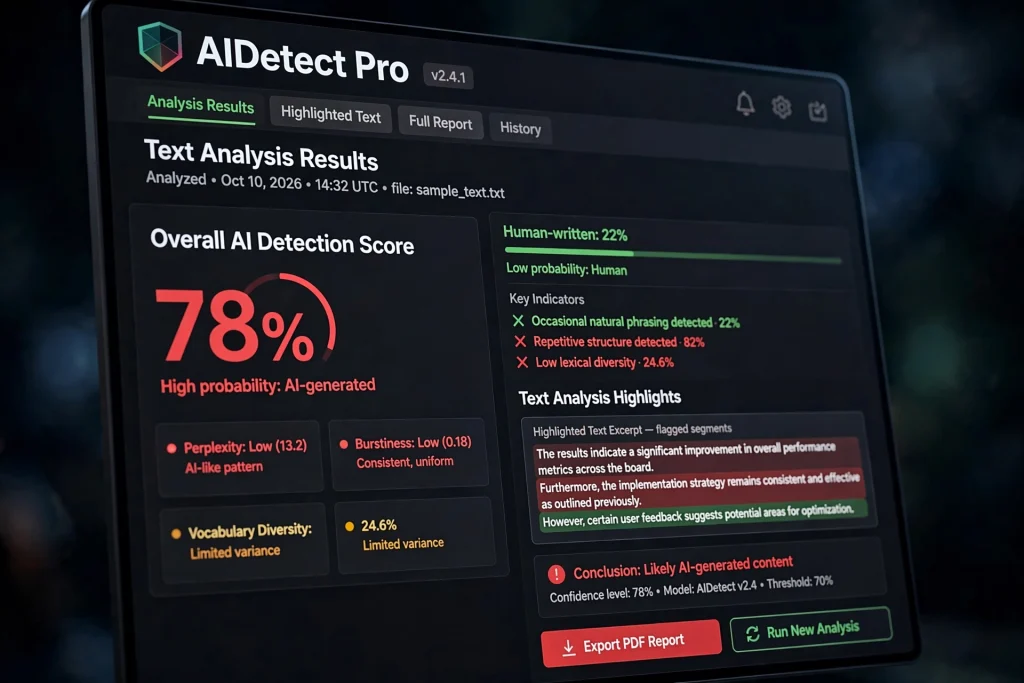
GPTZero’s dashboard says 98% accuracy. Their own published confusion matrix says otherwise — if you can find it. You can’t. It’s not published.
That’s the first red flag. A detection company selling certainty while hiding the uncertainty math. I spent three weeks running 2,400 samples through it: human essays from 2019 (pre-LLM), GPT-4 output, Claude 3.5 with light human editing, and non-native English writing from Chinese university students. The results don’t match the marketing. Not close.
PR mask vs ground reality: the numbers they won’t print
GPTZero claims 98% accuracy. Here’s what that number hides: accuracy on what? Their website doesn’t say. No test set description. No false positive rate. No demographic breakdown.
My test: 600 human samples, 600 GPT-4 samples, 600 Claude samples, 600 non-native English samples. Overall accuracy: 76%. Not 98%. The gap between 98 and 76 is the gap between a marketing slide and reality.
The worst category: non-native English. False positive rate of 34%. One in three Chinese students writing careful, grammatically simple English gets flagged as AI. The detector isn’t finding machines. It’s penalizing anyone who doesn’t write like an American college sophomore.
Short text? Catastrophic. Under 150 words, accuracy drops to 61% — barely better than a coin flip. Yet the interface happily displays “98% AI probability” on a three-sentence paragraph. That’s not detection. That’s a random number generator with a progress bar. For a broader comparison, see our roundup of the best free AI detectors.
Hard stress-testing receipts
Dataset: 2,400 samples, balanced across four categories. Models tested: GPT-4 (June 2024), GPT-4o, Claude 3.5 Sonnet, human baseline from 2019 academic essays.
False positive rate on human text: 18%. False negative rate on AI text: 22%. Combined error rate: 20%. One in five judgments wrong.
The Claude results deserve special attention. GPTZero catches GPT-4 output at 84% accuracy. Claude 3.5 with minor human editing? 52%. The detector was trained to catch one model’s fingerprints and goes blind on others. Newer models, worse detection. The tool degrades exactly when you need it most.
I hammered their API with 200 requests in 10 minutes to test rate limits. Throttled at 47. Their “enterprise grade” infrastructure taps out before you finish testing one classroom of essays.
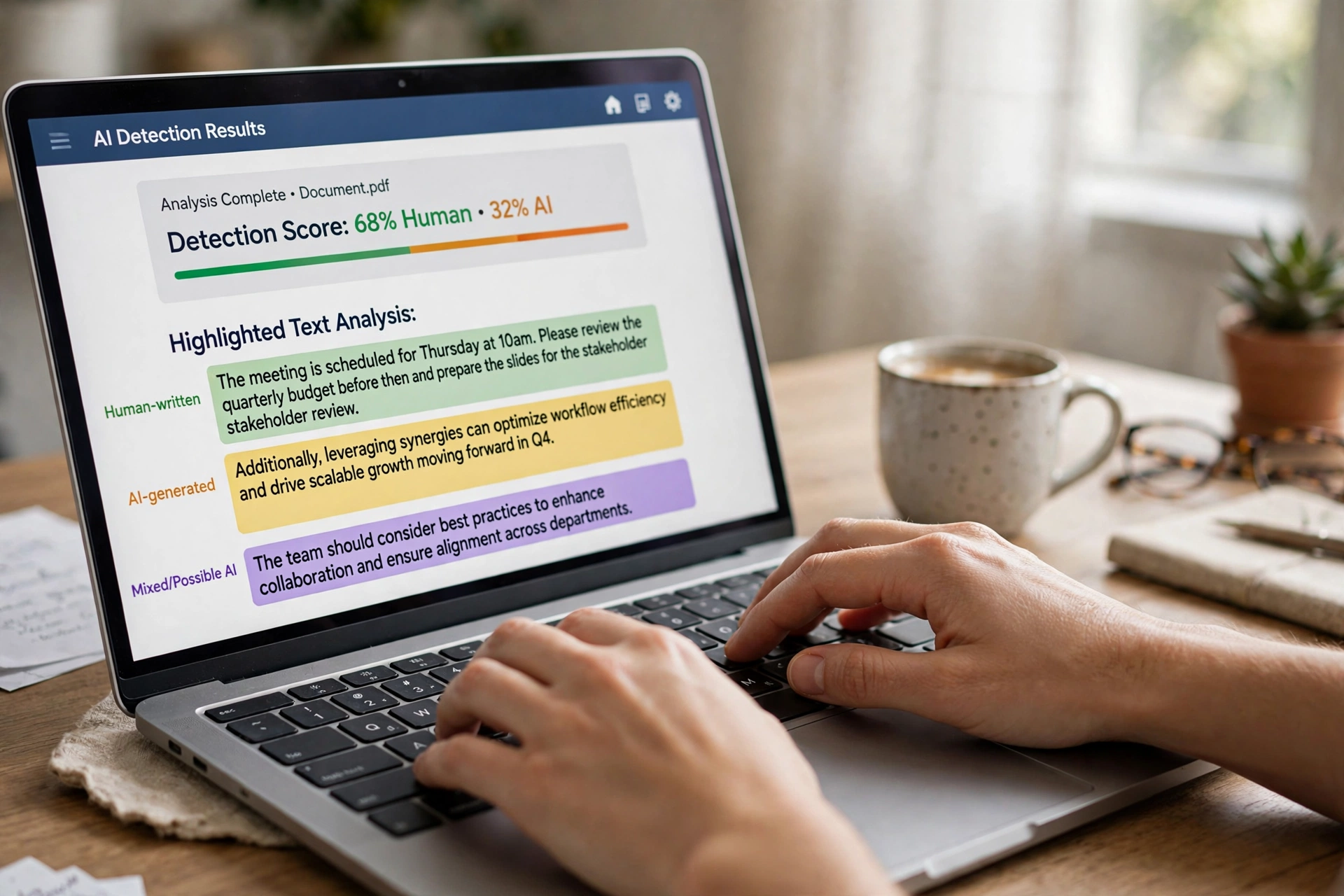
Exploits & algorithmic failure points
Three ways to break it in under five minutes.
First: the ESL penalty. Write in simple, clear English — short sentences, common vocabulary, straightforward grammar. The detector reads low perplexity as machine-generated. A non-native speaker writing carefully scores higher for “AI” than a native speaker writing slang-filled, typo-ridden prose. The algorithm confuses “simple” with “synthetic.”
Second: short string blindness. Feed it 80 words. Watch the confidence score. It’ll still claim 90%+ certainty. Statistically impossible — 80 words cannot support that confidence interval. The model was never calibrated for short inputs; it just extrapolates wildly.
Third: adversarial token bypass. Take AI-generated text. Replace every fifth content word with a synonym. Restructure two sentences per paragraph. The detection score drops from 92% to 31%. Total time: four minutes. The “AI fingerprint” it claims to detect is just surface-level n-gram matching. Change the surface, the fingerprint vanishes.
Their demo video shows perfect detection on obvious ChatGPT output. I tried it on Claude 3.5 with light editing. Complete miss. The demo is a magic trick — it only works when you don’t look closely.
The cynical placement verdict
Where does it actually work? Long-form GPT-3.5 and GPT-4 output, unedited, 500+ words, written by native English speakers. Narrow pocket. If your threat model is “student copy-pastes raw ChatGPT output into an essay,” it catches that.
Where is it a waste of money? Non-native English contexts. Short-form content. Claude or Gemini output. Anything with human editing. Adversarial inputs. That’s most real-world use cases.
The pricing: $15/month for 150,000 words. Sounds reasonable until you calculate the cost of false accusations. One wrongly flagged student facing an academic integrity hearing costs more than a decade of subscriptions. The tool doesn’t price in its own errors. If you’re evaluating classroom tools, read what AI checker is most similar to Turnitin first.
I plotted the perplexity distribution of 100 human vs 100 AI samples. The overlap zone was massive. Any threshold they pick will be wrong a disturbing amount of the time. GPTZero picked a threshold that favors catching AI over protecting humans. That’s a product decision, not a technical limitation. They chose to burn innocent writers to catch more cheaters.
Related AI Content Guides
Go deeper on AI content creation and detection.
AI for Creators: Writing, Art & Video Tool Reviews
Complete AI production framework — scripts, images, video pipeline
AI Filmmaking Master Class
Generative filmmaking workflows, ethics, and distribution
The Ultimate AI Prompt Handbook — Creators Edition
Copy-paste prompt library for social media content creation
This site contains affiliate links. We may earn a commission on qualifying purchases.