

Quick Answer
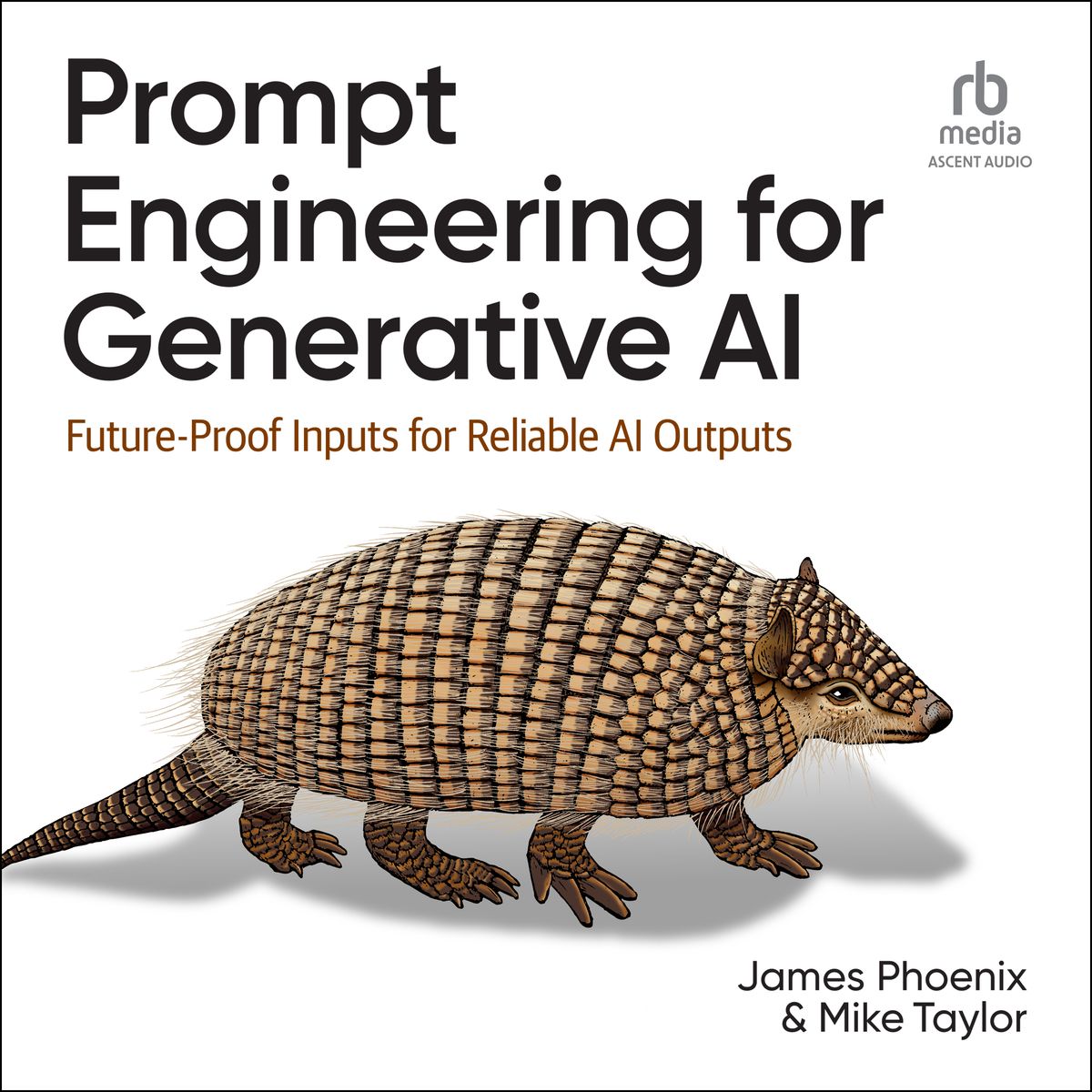
Prompt Engineering for Generative AI (O’Reilly) promises to take the randomness out of AI results. This review puts it to the test — comparing three prompt engineering books, matching each to real reader scenarios, and answering whether it’s still worth reading in 2026.
Related reading: Life 3.0 by Max Tegmark: Book Review — Still Worth Reading in 2026?, Empire of AI by Karen Hao: Book Review — Is This the Definitive Inside Story of .

Disclosure: This page contains affiliate links. If you buy through one of them, we may earn a small commission at no extra cost to you — it keeps our book reviews free and independent.
Prompt Engineering for Generative AI (O’Reilly): Book Review — Is It Worth Reading in 2026?
If you’ve been typing into a chat window and getting mediocre answers back, this book was written for you. Prompt Engineering for Generative AI, by James Phoenix and Mike Taylor and published by O’Reilly, is one of the few guides that treats prompting as a learnable craft instead of a grab bag of tricks. This review breaks down who the book genuinely helps, where it comes up short, and how it stacks up against the other AI books people keep asking about in 2026.
Here’s the honest version up front: most “AI books” are either victory laps by people who got lucky or philosophy lectures wearing a tech costume. This one is neither. It’s a working book. And in a category full of content that expired six months after publication, that distinction matters more than you’d think.
Quick Answer
Yes — if you want usable prompting skills rather than AI philosophy. This O’Reilly title is a practical, technique-driven book built around repeatable patterns: structure your inputs, iterate deliberately, and check the outputs instead of hoping for luck. It shines for people who already use generative AI regularly and want better results on purpose, not by accident.
Skip it if you’re looking for big ideas about AI’s future, or if you barely touch AI tools. There are better books for both of those jobs, and I’ll point you at them below.
Compare Top AI Books
Three proven picks side by side — choose the one that fits your needs.
Prompt Engineering for Generative AI
Hands-on prompting techniques from O’Reilly
Prices and availability may vary — tap any book to check the current listing.
What to Look For in a Prompt Engineering Book
Not all AI books play the same game. A prompting guide lives or dies on different things than an AI strategy book does — here’s what separates the keepers from the recycling-bin candidates.
1. Recency — AI books age in dog years
An AI book from 2023 already reads like archaeology in places — anything tied to a specific tool’s interface has a short half-life. What you’re really buying is the layer beneath the tools: principles of clear instruction, iteration, and evaluation that survive the next model release. Phoenix and Taylor lean on patterns — context, examples, step-by-step breakdowns, output checks — rather than screenshots of an interface that changed three updates ago. That’s the right call, and it’s the thing most AI books get wrong.
2. Author credibility — practitioners, not tourists
There’s a whole genre of AI book written by people who discovered the topic eight months ago. You want authors who were in the room before it was fashionable: Phoenix and Taylor come from the applied side — real projects, real clients, real constraints — and it shows in the texture of the advice.
The trade-off? Practitioners sometimes assume you share their context. A few sections move briskly past ideas a true beginner might need spelled out. Not a dealbreaker, but worth knowing if you’re starting from zero.
3. Techniques, not tricks
Tricks are brittle. “Type this magic phrase and get flawless results” is the junk food of AI advice — satisfying for a day, useless by next month. Techniques are different: they’re repeatable ways of thinking about the interaction between you and the model. The book’s strength is that it mostly deals in the second category.
You’ll find structured approaches to few-shot examples, step-by-step reasoning, and prompt iteration as a discipline rather than a vibe. None of this is magic. That’s the point.
4. Model-agnostic principles
The prompting fundamentals — specificity, context, constraints, examples, evaluation — transfer across tools because they describe communicating with language models generally, not operating one product’s dashboard. That’s why the book still reads well in 2026. Don’t expect cutting-edge coverage of every new capability, though — a book teaches you how to think, not what’s new this month.
5. Worked examples you can actually steal
Abstract advice about “being specific” is worthless without seeing it in action. The book’s strongest passages show a weak prompt next to a strong one and explain what changed and why. You can lift the patterns directly.
One gap: examples cluster around knowledge-work tasks. If your job is deeply visual or spreadsheet-heavy, you’ll translate the patterns yourself — they still apply.
6. Honest audience calibration
This one is for people who use generative AI as a tool and want to get measurably better at it — marketers, writers, analysts, developers, founders, students. It is not for AI researchers, and not for people who want to debate AI’s societal merits.
Know which reader you are before you buy. The most common disappointment isn’t “this book is bad” — it’s “this book wasn’t written for me.”
How to Match the Book to Your Situation
The Weekly User. You open an AI chat tool several times a week — drafting, summarizing, brainstorming. Results are fine: sometimes good, sometimes weirdly off. This book was basically written for you. The iteration chapter alone pays for itself if you practice it, because most prompting problems are really iteration problems: people accept the first answer instead of treating it as draft one.
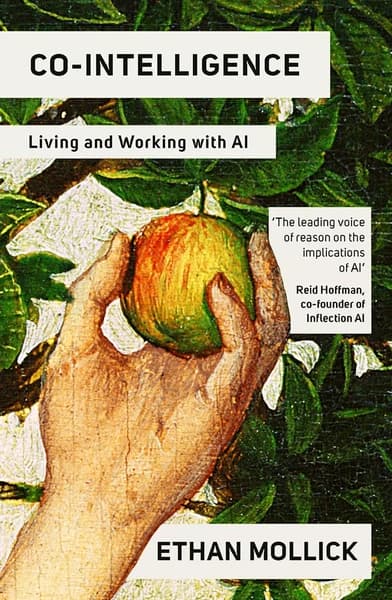
The Team Lead. You’re the person everyone asks about AI at work, and you’re tired of answering from vibes. You need a shared vocabulary — words for what’s going wrong when the model hallucinates, a framework for reviewing AI-assisted work, a way to train people that isn’t “just play around with it.” The book gives you that, plus repeatable team habits. Pair it with Co-Intelligence for the bigger human-AI collaboration picture.
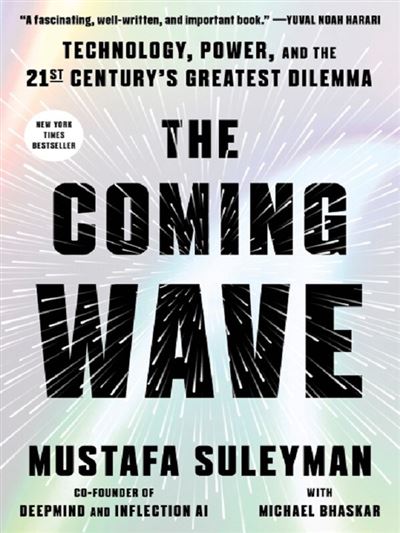
The Curious Dabbler. You use AI occasionally, mostly out of curiosity. Be honest: will you do the exercises? If not, start with The Coming Wave — it reads like a story. Come back to this O’Reilly book when you’re ready to get serious about technique.
How the Three Books Compare
These are the three AI books people ask me to rank, and ranking them straight is the wrong move — they do different jobs. Here’s the honest breakdown:
| Book | Best For | Price Tier | Key Strength | Watch Out |
|---|---|---|---|---|
| Prompt Engineering for Generative AI (O’Reilly) | Skill-building: getting better outputs from AI tools | Mid-range | Repeatable prompting patterns you can use immediately | Skews hands-on; light on AI’s societal questions |
| Co-Intelligence (Ethan Mollick) | Mindset: working alongside AI effectively | Mid-range | Practical principles for human-AI collaboration | Not a techniques manual; assumes you already use AI tools |
| The Coming Wave (Mustafa Suleyman) | Context: where AI is headed and why it matters | Mid-range | Big-picture view from an industry insider | Broad by design; won’t improve tomorrow’s prompts |
Prompt Engineering for Generative AI is the one to buy when your problem is “my AI outputs aren’t good enough” — it treats the cause, not the symptom.
Co-Intelligence is the one to buy when your problem is “I don’t know how AI fits into my work” — it upgrades the operator, not just the operation.
The Coming Wave is the one to buy when your problem is “I want to understand what’s happening” — it’s the most entertaining dinner-party book of the three, and there’s no shame in that.
The most common pairing is the O’Reilly book plus Co-Intelligence: technique plus mindset, skills plus judgment.
Scenario 1: You Use AI Daily but the Results Feel Random
You know the feeling. Monday the model writes a solid draft; Tuesday, same task, same tool, garbage. You start wondering if it’s you. (It’s not you. Well — it’s partly you, but in a fixable way.)
Random-feeling results almost always come from underspecified prompts plus zero iteration. The book’s core argument: prompting is a loop — specify, generate, evaluate, refine — and most people stop after step one. Work through the early chapters with a chat window open, trying the patterns on your own tasks, and the randomness fades fast.
Scenario 2: You’re Responsible for How Your Team Uses AI
This is the harder scenario, and the book is only half the answer. The techniques transfer fine to teams — standardized prompt templates, review checklists, “show your work” habits. What it won’t give you is the organizational layer: policy, training cadence, data handling.
So buy it for the craft, then supplement with judgment. Mollick’s Co-Intelligence covers the “how do we work with this stuff responsibly” half. Together they answer the two questions every team lead is actually being asked.
Common Mistakes Buyers Make With AI Books
Mistake 1: Buying the book, skipping the practice. A prompting book you only read is entertainment. The value is in the reps — rewriting your own real prompts using the book’s patterns. Ten practiced prompts beat a hundred highlighted pages.
Also see: AI Snake Oil by Arvind Narayanan & Sayash Kapoor: Book Review — Can It Really Te.
Mistake 2: Expecting the book to cover this month’s features. Books can’t keep up with model releases, and this one doesn’t try to. If you need the latest capability rundown, read the model makers’ docs. If you need durable skill, read the book. Different jobs.
Mistake 3: Confusing “about AI” books with “with AI” books. A book about AI’s future won’t make your Tuesday better. A book about prompting won’t settle the alignment debate. Buy the one that matches the problem you actually have this quarter.
Mistake 4: Collecting instead of committing. The AI shelf is a real phenomenon — five unread books, zero changed habits. One book, worked through properly, beats a library of good intentions. Start here, finish it, then decide if you need the next one.
Why, How, and What: The Short Version
Why read a prompting book when free tutorials exist?
Tutorials teach you what to type; books teach you how to think. A tutorial gets you through today’s task, a good book changes every future one. There’s also a curation problem: free prompting content is mostly recycled, contradictory, or quietly selling something. A published book from a technical publisher has been through an editorial filter most blog posts haven’t. You’re paying for someone to have done the sorting.
How should you actually work through it?
With a chat window open — that’s the whole method. Read a pattern, then immediately apply it to something real: an email to draft, a summary to write, a decision you’re weighing. Rewrite your prompt three times using the book’s iteration guidance and watch what changes. Treat it like a workbook that happens to look like a paperback.
What does a “good prompt” even mean in 2026?
Less than it used to, and more. Less, because models keep getting better at inferring intent from sloppy input. More, because the gap between a decent output and a genuinely useful one is still about how well you specify context, constraints, and what good looks like. A good prompt in 2026 isn’t a magic incantation — it’s a clear brief. Write it like you’d brief a smart, fast, slightly literal colleague.
Questions People Ask Before Buying
Is Prompt Engineering for Generative AI worth buying in 2026, or is the content already outdated?
It’s worth buying if you want durable prompting skill rather than news about the latest model, because the book teaches repeatable, model-agnostic patterns — specifying context, showing examples, iterating deliberately, and evaluating outputs — that still apply across today’s tools and will survive the next model release. It won’t teach you this month’s new features, so check the model makers’ docs for those. For weekly AI users who want reliably better results, the core techniques hold up well in 2026.
Should I read Co-Intelligence or Prompt Engineering for Generative AI first?
Read Prompt Engineering for Generative AI first if your main frustration is weak AI outputs and you want hands-on techniques you can apply this week, since it delivers concrete prompting patterns and step-by-step guidance you can test immediately on your own tasks, making it the faster win when better results now matter more than big-picture thinking. Read Co-Intelligence first if your bigger question is how AI fits into your work and decision-making, because Mollick’s book upgrades your judgment about working with AI rather than your prompting mechanics. Many readers end up owning both — technique plus mindset covers the most ground.
I already use AI chat tools every day — do I still need this book?
Daily use doesn’t automatically mean skilled use, and that’s exactly the gap this book targets: most heavy users plateau at “good enough” prompts and never learn systematic iteration, output evaluation, or reusable prompt patterns, so even experienced users often see results improve once they adopt the book’s deliberate iteration and evaluation habits. If your results feel inconsistent — strong on Monday, off on Tuesday — the iteration framework alone is worth the read. If you already refine prompts methodically, parts will feel familiar, though the worked examples can still sharpen your approach.
Is this book too technical for a complete beginner?
Not really, though it assumes you’re already using AI tools rather than merely curious about them, and you don’t need any coding background since the techniques are about clear communication with the model rather than programming — total beginners just need a week of hands-on chat time first. Absolute beginners may find a few sections brisk, but a week of actually using a chat tool first will make the book land much harder. Spend a week actually using a chat tool first; the book lands much harder once you have your own “why did it do that?” moments.
Will this book actually help me at work, or is it mostly theory?
It’s genuinely work-oriented: the patterns map directly onto drafting, summarizing, brainstorming, analysis, and coding-assistance tasks, and the emphasis on iteration and evaluation mirrors how professionals already review human work, which means the skills transfer straight into the documents, emails, and reports you’re already producing every week. The honest limit is the organizational side — team policies, training, data handling — which it doesn’t cover. For individual productivity and team leads building a shared prompting vocabulary, it’s one of the more practical AI books available.
Frequently Asked Questions
Do I need to know how to code to benefit from this book?
No. It’s about communicating clearly — context, constraints, examples — not programming. Developers get extra mileage from the coding sections, but the core patterns apply to writing, analysis, and planning just as well.
Which edition should I get — print or digital?
Whichever you’ll actually use with a chat window open. Print is good for annotating; digital is searchable mid-task. Check the current listing for available formats — the wrong choice is the one that sits unopened.
Does the book cover specific AI tools, or is it general?
Deliberately general. The principles — specificity, context, examples, iteration, evaluation — describe communicating with language models as a category, so they transfer across tools instead of locking you into one interface. For the latest features of a specific tool, check its own documentation.
How long does it take to read and work through?
A straight read is a few sittings. But reading isn’t the point — practicing the patterns on your own real tasks is, and that’s where the value lives. A couple of weeks of casual practice alongside normal work will internalize what matters.
Will the techniques still be relevant as models keep improving?
The fundamentals get more relevant as models improve, not less — better models reward better instructions with better work. Tricks tied to one model’s quirks will fade; the underlying discipline won’t.
Is this a good gift for someone who’s curious about AI?
Only if they’re hands-on. For the curious-but-casual reader, The Coming Wave is the friendlier gift — it reads like a story. This book suits the person who already uses AI tools and complains about the outputs.
Final Recommendation
Buy Prompt Engineering for Generative AI if you use AI tools regularly and want measurably better results — and commit to practicing the patterns, not just reading about them. It’s the rare AI book that’s still useful a year after publication, precisely because it teaches thinking instead of tricks.
Buy Co-Intelligence instead (or as well) if your real question is how to work with AI wisely rather than how to prompt it well. Buy The Coming Wave if you want the big picture first. All three earn their shelf space — they just earn it for different readers.
OUR TOP PICK
Prompt Engineering for Generative AI
Hands-on prompting techniques from O’Reilly
Decision Tree: Which AI Book Should You Buy?
Want better AI outputs starting this week? → Prompt Engineering for Generative AI. Technique first, philosophy later.
Want a smarter way to think about AI at work? → Co-Intelligence. It upgrades the operator, not just the operation.
Want to understand where AI is headed? → The Coming Wave. Big picture, well told.
Still torn between the first two? → Buy the O’Reilly book, borrow Co-Intelligence from the library, and see which one you finish first. The one you finish is the one you needed.
Key Takeaways
✓ Prompt Engineering for Generative AI teaches repeatable, model-agnostic prompting patterns — not tricks that expire with the next update.
✓ It fits weekly AI users and team leads well; casual dabblers may prefer starting with The Coming Wave.
✓ The value comes from practice: work through it with a chat window open and real tasks from your own work.
✓ Co-Intelligence is the natural companion for the mindset half; The Coming Wave covers the big-picture half.
✓ One AI book, finished and practiced, beats five unread ones on the shelf.
Disclosure: Some links on this page are affiliate links. If you purchase through them, we may earn a commission at no extra cost to you. We only recommend books we’ve researched and believe are worth your time.
Common Questions About Prompt Engineering Books
Is the O’Reilly prompt engineering book worth reading in 2026?
Yes, if you want a structured, durable foundation rather than scattered blog tips — books force a coherence that online guides rarely achieve — it is less useful if you only need quick recipes for today’s models, since books age while models evolve. The review’s verdict: worth it for practitioners building serious prompting skill, skippable for casual users. Buy it for fundamentals, not for today’s model quirks.
Can I learn prompt engineering from free guides instead?
You can learn the basics free — the core techniques are widely documented — but free guides vary wildly in quality and rarely build into a complete system — the book’s value is curation: tested methods organized into a progression. Serious learners often do both: free guides for breadth, the book for structured depth. Free teaches tricks; the book teaches craft.
Who benefits most from this book — beginners or teams?
Both, differently: beginners get a guided path from first principles, while teams get shared vocabulary and patterns for standardizing AI use — the scenario sections in this review map specific situations to the right book — solo casual users benefit least — the investment pays off with repeated, high-stakes prompting. Match the book to how often you prompt.
Does it cover advanced techniques like RAG prompting?
The review examines how far the book goes beyond basic prompting into applied patterns — check the comparison section for the honest assessment of depth — no single book stays current on every advanced technique, so treat it as foundation plus pointers to further learning. For cutting-edge RAG and agent patterns, supplement with current documentation. Foundation from the book, frontier from the docs.
How does it compare to the other books in this review?
This review compares three books head-to-head on depth, practicality, and audience fit — the comparison table lays out which book suits which reader — no single title wins for everyone: the right pick depends on whether you need fundamentals, team patterns, or advanced techniques. Read the scenario section to find your match before buying. Compare first, buy once.