
Disclosure: This article contains affiliate links. If you buy through them, we may earn a commission at no extra cost to you.
Life 3.0 by Max Tegmark: Book Review — Still Worth Reading in 2026?
Max Tegmark’s Life 3.0 asks the biggest questions about artificial intelligence: what happens when machines outthink us, and how do we stay in charge of our future? This review examines whether a book written in 2017 — before today’s AI wave — still earns its shelf space. It’s for thoughtful readers who want the long view on AI, not another roundup of this month’s tools.
Related reading: Prompt Engineering for Generative AI (O’Reilly): Book Review — Is It Worth Readi, Superintelligence by Nick Bostrom: Book Review — Still the AI Safety Classic in .
Quick Answer
Life 3.0 remains one of the most thought-provoking AI books you can buy: Tegmark’s framework for thinking about superintelligence, consciousness, and humanity’s future holds up remarkably well, even if some 2017 examples feel dated. Get it if you want big ideas; skip it if you need practical AI skills or can’t stand speculative philosophy.
Compare Top AI Books
Three proven picks side by side — choose the one that fits your needs.
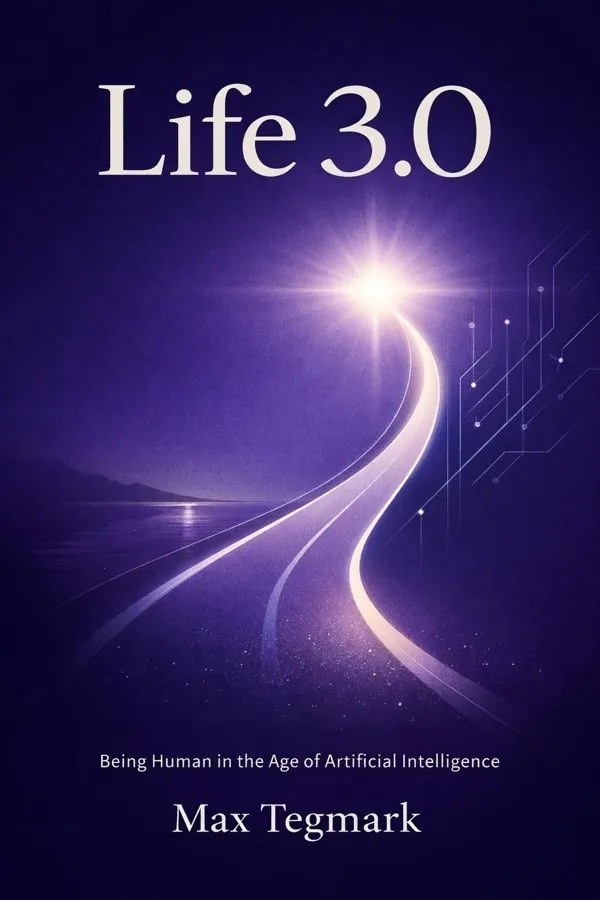
Life 3.0
The big-picture classic on superintelligence and humanity’s AI future
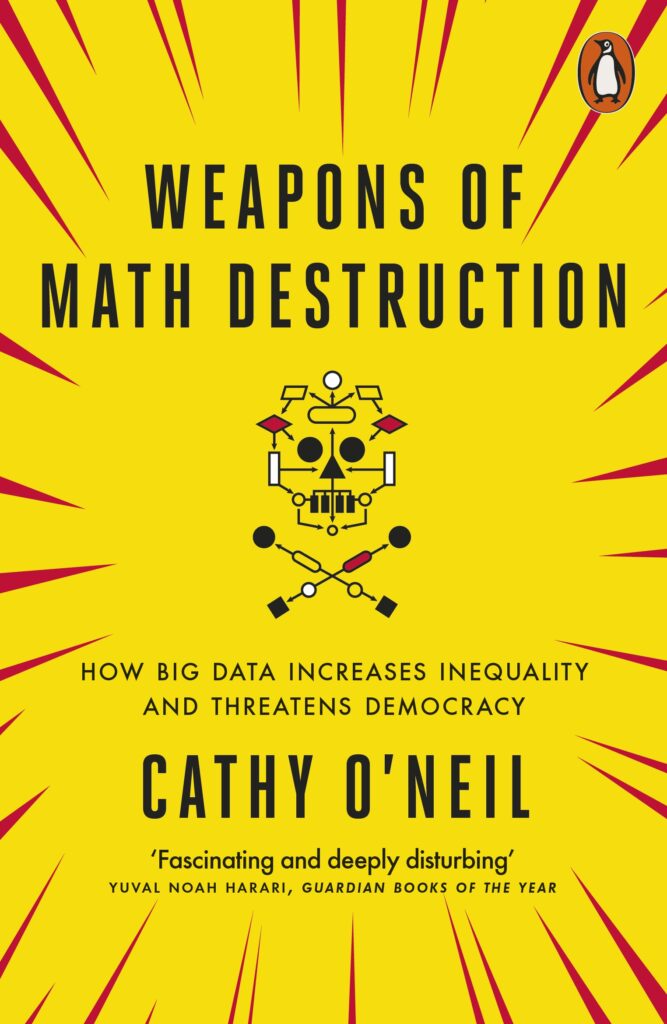
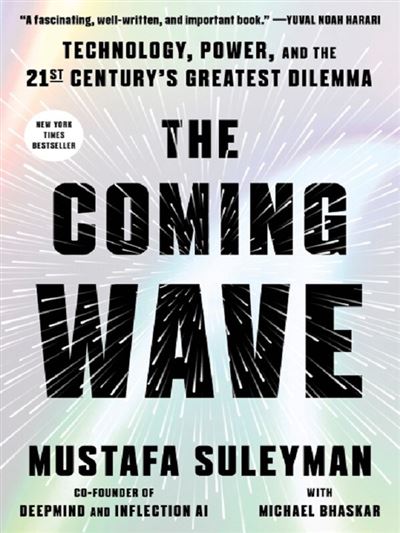
Prices and availability may vary — tap any product to check the current listing.
What to Look For When Buying a Big-Idea AI Book
Not all AI books do the same job. Some teach today’s tools; Life 3.0 rewires how you think about intelligence itself. Six filters to check whether Tegmark’s style of thinking is your kind of evening.
1. Cosmic Framing vs. Practical Focus
Tegmark is a physicist, and it shows: he opens with life’s story — Life 1.0 (biological evolution), Life 2.0 (cultural evolution: us), and the coming Life 3.0 (technological design of hardware and software). This cosmic zoom-out is either the book’s greatest strength or its most annoying habit. Love stepping back to see the whole board? Electrifying. Want to know what AI means for your job next quarter? Distant. Buying a telescope when you needed a microscope wastes everyone’s evening.
2. The Scenario Chapters: Breadth Over Precision
The centerpiece is a tour of possible futures — a dozen scenarios from libertarian utopias to digital dictatorships, benevolent superintelligence to extinction. Tegmark doesn’t claim to know which arrives; the point is stretching your imagination across the full range. Most people’s “AI future” contains two scenarios, both from movies. The trade-off is precision: thought experiments, not forecasts. If you want better questions rather than answers, this is the strongest part of the book.
3. Optimism, Pessimism, and the Author’s Honest Uncertainty
Refreshing: Tegmark doesn’t pick a team. Optimistic cases (disease cured, poverty ended) get the same care as grim ones, and he’s upfront about where he’s guessing — rarer than it should be in AI writing. The limitation? No clear verdict — “should I be scared or excited?” goes unanswered. You get a better map, not a destination. Fair warning.
4. The Consciousness Detour: Love It or Skip It
A full section tackles consciousness — what it is, whether machines could have it, why it matters for AI safety. Fascinating for some; an uninvited philosophy seminar for others. Practical advice: if these chapters bore you, skip them — the safety arguments stand without them, and the book is modular enough that jumping around costs little. But don’t skip them just because they’re hard; the payoff is a genuinely new way of thinking about your own mind.
5. Written in 2017: What Dates and What Doesn’t
Life 3.0 predates the large language model era, so its “current AI” examples — game-playing systems, image classifiers — feel like ancient history. But the core arguments barely depend on them: aligning superintelligent goals with human values, who controls powerful systems, what consciousness means. None got less relevant when chatbots arrived — if anything, recent years made Tegmark look prescient. Read it as philosophy with dated illustrations, not journalism.
6. Length and Density: A Real Read, Not a Skim
Under 400 pages, but denser than that suggests — Tegmark packs heavy argument into each chapter, and the middle sections reward slow reading. Plan for a week or two of steady evenings. You’ll close it feeling like your brain got a workout, in the good way. Buying for a chapter-a-month reader? Pick something lighter.
How to Match Life 3.0 to Your Situation
Life 3.0 is a specific flavor of book for a specific flavor of reader. Three profiles cover most buyers.
The Big-Picture Thinker
You read about AI and immediately wonder what it means for civilization, not just your workflow. Thought experiments delight you; unanswered questions don’t scare you. This book was written for you — full stop. You’ll underline constantly and annoy your friends for weeks.
The AI Ethics Student or Curious Professional
Studying or working adjacent to AI — policy, product, journalism, education — you need the conceptual vocabulary: alignment, superintelligence scenarios, the control problem. Life 3.0 delivers it in its most readable form. Pair it with Weapons of Math Destruction on this page for the full picture: future theory plus current reality.
The Skeptic of AI Hype
You roll your eyes at techno-utopian keynotes. Good news: Tegmark isn’t selling anything — his treatment of AI risk is serious without being alarmist, and he takes doubts seriously instead of hand-waving them. If your worry is that AI books are all hype, this is the counterexample.
AI Books Compared: Three Angles on the Same Revolution
| Type / Tier | Best For | Price Tier | Key Feature | Watch-Out |
|---|---|---|---|---|
| Big-idea futures (Life 3.0) | Readers who want the philosophical framework | Mid-range | Life 1.0/2.0/3.0 framing + 12 future scenarios | 2017 examples predate the LLM era |
| Present-day critique (Weapons of Math Destruction) | Readers focused on algorithmic harm today | Mid-range | Concrete cases of biased automated systems | Narrower scope — the here and now only |
| Policy & containment (The Coming Wave) | Readers who want the governance debate | Mid-range | Insider view of the containment dilemma | Denser, more demanding prose |
Big-idea futures win on intellectual ambition — no other book on this page thinks on quite the same timescale.
Present-day critique wins on immediacy: the harms it describes are already happening, which makes it the easiest of the three to act on.
Policy and containment wins on practical stakes, connecting the philosophical questions to the rooms where decisions get made.
Reading Life 3.0 in Real Life: Two Scenarios
Your First Serious AI Book
You’ve read the headlines, tried the chatbots, and want to understand what’s actually at stake. Life 3.0 is a strong first serious book: it builds from zero and never assumes background. Start at the beginning — the cosmology chapters set up everything. Caution: afterward, most AI news will feel shallow. That’s mostly a feature.
The Reading Group on AI Safety
Seminar or four friends with wine — Life 3.0 is built for discussion; the scenario chapters beg to be debated. (“Would you upload your mind?”) Assign the consciousness section as optional. The book’s even-handedness keeps arguments about ideas, not the author.
Common Mistakes Buyers Make
Mistake 1: Expecting predictions about 2026. Life 3.0 thinks in decades and centuries, not product cycles. Readers who open it hoping for takes on this year’s models will be confused by chapter two. It’s a book about the destination, not the next rest stop.
Mistake 2: Treating scenarios as forecasts. The twelve futures are possibilities to reason about, not predictions to bet on. The reader who asks “but which one is right?” has missed the exercise — the point is to widen the range of futures you can imagine, because policy made from a narrow imagination fails in predictable ways.
Mistake 3: Skipping to the “AI parts” and ignoring the physics. The early chapters on cosmology and the later ones on consciousness aren’t filler; they’re load-bearing. The Life 1.0/2.0/3.0 framework only clicks if you’ve absorbed the setup. Skimmers get a decent book; patient readers get a great one.
Also see: AI Superpowers by Kai-Fu Lee: Book Review — Still the Best Book on the US-China .
Mistake 4: Buying it for a practical-skills seeker. Gifting Life 3.0 to someone who wants to learn prompting or build AI products is a mismatch — like giving a philosophy of cooking book to someone who wants recipes. Match the book to the reader’s actual hunger.
Why This Framework, How to Read It, What Comes Next
Why does the Life 1.0 / 2.0 / 3.0 framing matter?
Because it reframes AI as a continuation of a 3.8-billion-year story, not a tech fad. Life 1.0 evolves hardware and software biologically (slow); 2.0 — us — redesigns software culturally (faster); 3.0 designs both (fastest). Once you see AI as life redesigning itself, the stakes snap into focus: who — or what — steers evolution next? It also dissolves the “AI is unnatural” objection. It’s as natural as everything before it; that’s precisely what’s unsettling.
How should you actually read the scenario chapters?
Slowly, and argumentatively. Don’t absorb each scenario — interrogate it: what assumptions does it smuggle in, whose interests does it serve? After each, note the one thing that would have to be true for it to happen, and the one thing preventing it. You’ll finish sharper — or at least better armed for your next debate.
What should you read after Life 3.0?
Scenarios gripped you? The Coming Wave continues into policy and power — what do we actually do? Ethics questions nagging? Weapons of Math Destruction grounds them in today’s harms: less dramatic, far more immediate. Want the same questions as stories? AI 2041‘s fiction half. Life 3.0 gives the map; the next book picks the road.
Questions People Ask Before Buying
Is Life 3.0 still worth reading in 2026?
Yes — Life 3.0 still rewards reading in 2026, because its core questions about superintelligence, consciousness, and what goals we give powerful AI systems were written independently of any single product cycle, even if the 2017 examples predate today’s large language models and occasionally feel like a time capsule. The dated parts are illustrations, not arguments. The arguments — alignment, control, intelligence’s long-term future — have only grown more relevant as capabilities advanced.
Should I read Life 3.0 or The Coming Wave first?
Read Life 3.0 first if you want the big philosophical framework for thinking about superintelligence and humanity’s long-term future, and The Coming Wave first if you’d rather start with near-term policy debates about containing powerful technology; together they cover the full spectrum from cosmic speculation to Washington-style regulation talk. Life 3.0 is the more accessible entry point; The Coming Wave the denser policy sequel. In that order, each makes the other richer.
Is Life 3.0 too academic or hard to follow?
Not really — Tegmark writes for curious general readers, explains physics and AI concepts from scratch, and keeps the math out, though the middle chapters on intelligence scenarios demand more concentration than the opening stories, so plan for slower reading there rather than skimming. The difficulty is conceptual, not technical: big ideas, plain language. Fans of popular science writing will feel at home.
Do I need a physics or computer science background to enjoy Life 3.0?
No — the book assumes zero specialist background, defines every technical term it uses, and leans on thought experiments instead of equations, which is exactly why it became a mainstream bestseller rather than a textbook that only researchers read and debate. Science backgrounds add bonus layers, not prerequisites. Curiosity is the only entry requirement.
Which edition of Life 3.0 should I buy — hardcover or paperback?
The paperback reprint is the sensible default for most readers since it carries the same complete text in a lighter, easier-to-hold format, while the hardcover suits collectors and gift-givers who want a sturdier keepsake; content-wise, nothing meaningful changes between editions. A book to carry and annotate — paperback wins for active readers, hardcover for the shelf or gifting. Either way, the full text; no abridged edition to hunt down.
Frequently Asked Questions
Who is Max Tegmark?
Max Tegmark is an MIT physics professor whose research spans cosmology and AI foundations. He co-founded the Future of Life Institute, which works on AI safety research and policy. Life 3.0 grew from his conviction that physicists and AI researchers must think together about where intelligent machines take us.
What does “Life 3.0” actually mean?
It’s Tegmark’s three-stage story of life: Life 1.0 is biological — evolution designs both hardware (bodies) and software (instincts). Life 2.0 is cultural — humans keep the hardware but redesign the software through learning and culture. Life 3.0 is technological — life that can redesign both its hardware and software, which is what advanced AI represents. The book asks what happens when we meet — or create — Life 3.0.
How long does Life 3.0 take to read?
Medium-length — under 400 pages — but denser than that suggests. Most readers finish in one to two weeks of steady evenings. Don’t rush the scenario chapters; they reward slow reading.
Is Life 3.0 pro-AI or anti-AI?
Neither, deliberately. Optimistic and pessimistic scenarios get equal seriousness; Tegmark’s position is that outcomes depend on choices we make now — especially AI safety research and governance. No “be excited” or “be afraid” verdict; honest analysis instead.
Is Life 3.0 suitable for students?
Yes — widely used in courses on AI ethics and technology policy, and readable for motivated high schoolers through grad students. No prerequisites, defined terms, discussion-friendly scenarios. Note the consciousness section runs philosophical.
Where can I buy Life 3.0?
Life 3.0 is available through major retailers and widely available online in hardcover, paperback, and digital editions — check current availability. Use the links on this page to see the current listing and choose the edition that fits how you read.
Final Recommendation
Buy Life 3.0 if you want the clearest tour of AI’s long-term questions available to a general reader — the kind that rearranges how you think, not just what you know. Its central questions have only grown sharper since publication.
Skip it if you need practical AI skills, if speculative philosophy bores you, or if you want the latest on current models. Everyone else: read it slowly, argue with it often, keep it on the shelf. You’ll reach for it when the headlines get strange. They will.
OUR TOP PICK
Life 3.0
The big-picture classic on superintelligence and humanity’s AI future
Decision Tree: Which AI Book Should You Get?
If you want the big philosophical framework → get Life 3.0. Nothing else on this page thinks on the same timescale.
If you care about AI harm happening right now → get Weapons of Math Destruction. It’s the most actionable of the three.
If you want the policy and containment debate → get The Coming Wave. It connects the big questions to real decisions.
Key Takeaways
Life 3.0 frames AI as the next stage of life itself — Life 1.0 (biological), 2.0 (cultural), 3.0 (technological) — and tours twelve possible futures with unusual even-handedness.
Written in 2017, its examples predate today’s AI wave, but the core questions about superintelligence, alignment, and consciousness have only grown more relevant.
Best for big-picture thinkers, students, and AI skeptics; not for readers seeking practical skills or current-model coverage.
Disclosure: This article contains affiliate links. If you buy through them, we may earn a commission at no extra cost to you.