
Disclosure: This page contains affiliate links. If you buy through one of them, we may earn a small commission at no extra cost to you — it keeps our book reviews free and independent.
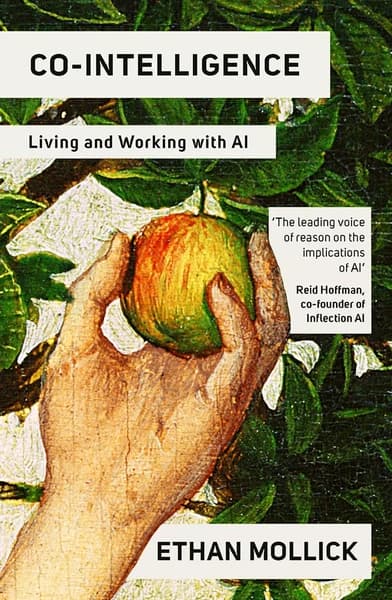
Co-Intelligence by Ethan Mollick: Book Review — The Best AI Mindset Book?
Most AI books teach you how to use the tools. Co-Intelligence, by Wharton professor Ethan Mollick, asks a harder question: how should you think about working with AI in the first place? It’s the rare AI book that’s less about button-pressing and more about judgment — and in 2026, judgment is the part most people are still missing.
Related reading: Empire of AI by Karen Hao: Book Review — Is This the Definitive Inside Story of , AI Snake Oil by Arvind Narayanan & Sayash Kapoor: Book Review — Can It Really Te.
Mollick isn’t a pundit parachuting into the AI conversation. He spent the last few years actually running experiments on how AI changes real work — in classrooms, in companies, in creative tasks — and the book reads like field notes from someone who’s been in the trenches. That’s what separates it from the pile of AI opinion books. Whether it deserves the “best mindset book” label depends on what you need, and this review will help you figure that out.
Quick Answer
Yes, with one caveat: Co-Intelligence is the strongest AI book I know for upgrading how you think about working with AI — when to trust it, when to check it, how to stay in charge of the collaboration. Mollick’s four principles for co-intelligence are genuinely usable, not just quotable. The caveat: it won’t teach you hands-on prompting technique, so pair it with a skills book if your outputs still need work.
Skip it if you want step-by-step tutorials or predictions about AI’s future. This book is about the human side of the equation, and it stays in that lane on purpose.
Compare Top AI Books
Three proven picks side by side — choose the one that fits your needs.
Prices and availability may vary — tap any book to check the current listing.
What to Look For in an AI Mindset Book
A mindset book is judged differently than a skills book. Nobody buys Co-Intelligence to learn prompt syntax — they buy it to stop feeling like an impostor every time they open an AI tool, and to build instincts they can trust. Here’s what actually matters in this category.
1. Usable principles, not just commentary
The failure mode of AI think-pieces is beautifully written helplessness: fascinating observations, zero guidance. Mollick’s book clears this bar: it’s organized around principles you can apply — including the memorable advice to assume today’s AI is the worst you’ll ever use, and to stay in the loop as the human in charge. You finish chapters with things to try, not just things to ponder.
Trade-off: principles are broad by nature. If you want “do exactly this on Tuesday,” you’ll need a technique book alongside. Principles tell you where to steer; they don’t drive the car.
2. Real-world grounding
Mollick teaches at Wharton and has spent years testing AI in classrooms and working with companies on adoption. The book is full of concrete situations — students, managers, writers, analysts — rather than abstract theorizing about “the future of work.” That grounding is why the advice feels earned instead of guessed.
The flip side: his world is largely knowledge work. If your context is very different — field work, small business, non-office roles — you’ll do some translating.
3. Balance between hype and doom
AI discourse has two gears: breathless utopia and certain apocalypse. A mindset book that picks either gear is useless for decision-making. Co-Intelligence sits in the uncomfortable middle: AI is genuinely transformative and genuinely unreliable, often in the same afternoon. Mollick takes both halves seriously, which is rarer than it should be.
Some readers will find this unsatisfying. If you want someone to tell you AI will either save or end everything, this book will annoy you. It’s written for people who have to make real decisions in the gray area.
4. Honesty about the limits
Any AI book that doesn’t dwell on hallucinations, over-reliance, and the erosion of human skill isn’t being straight with you. Co-Intelligence spends real time on where AI goes wrong and what that costs — including the subtle danger of getting slightly worse at things you delegate. That honesty is a feature, not a bug: a mindset built on blind trust isn’t a mindset, it’s a liability.
5. Frameworks that age well
Does it expire? Mollick’s core ideas — treat AI as a collaborator, keep human judgment in the loop, experiment constantly — are about the human-AI relationship, not any model’s features. Relationships evolve slower than software, which is why this book still reads fresh in 2026.
6. Companion value
No single book covers the whole AI learning curve. Co-Intelligence pairs naturally with a skills book: Mollick upgrades your judgment, O’Reilly’s Prompt Engineering for Generative AI upgrades your technique. Mindset without skill is philosophy; skill without mindset is a faster way to make confident mistakes.
How to Match the Book to Your Situation
The Manager Leading AI Adoption. Your company bought the tools, ran the training webinar, and now everyone’s either ignoring AI or using it in ways that make you nervous. Mollick’s principles give you a short, memorable framework — “be the human in the loop,” “assume this is the worst AI you’ll ever use” — that survives being repeated in meetings. This is arguably the book’s ideal reader.
The Solo Professional. Freelancer, consultant, creator, founder — you are the team. Your question is practical: where does AI help, and where does it quietly make you worse? The book’s honest treatment of delegation and skill erosion speaks directly to you, and you’ll come away with experiments to run on your own workflow.
The Curious Skeptic. You’re not anti-AI, but you’re not drinking the Kool-Aid either. Mollick’s even-handedness — excited about the potential, worried about the failure modes — will feel like a relief after the hype cycle. If you finish still skeptical, at least it’ll be an informed skepticism.
How the Three Books Compare
Same trio as always, different ranking — because from the mindset angle, the order shuffles:
| Book | Best For | Price Tier | Key Strength | Watch Out |
|---|---|---|---|---|
| Co-Intelligence (Ethan Mollick) | Mindset: working alongside AI wisely | Mid-range | Usable principles grounded in real experiments | Not a techniques manual; light on step-by-step skills |
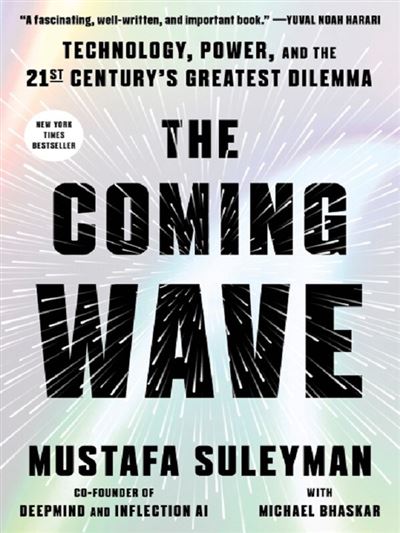
| The Coming Wave (Mustafa Suleyman) | Context: where AI is headed and why it matters | Mid-range | Sweeping insider view of AI’s trajectory | Broad and societal; won’t change how you work Monday |
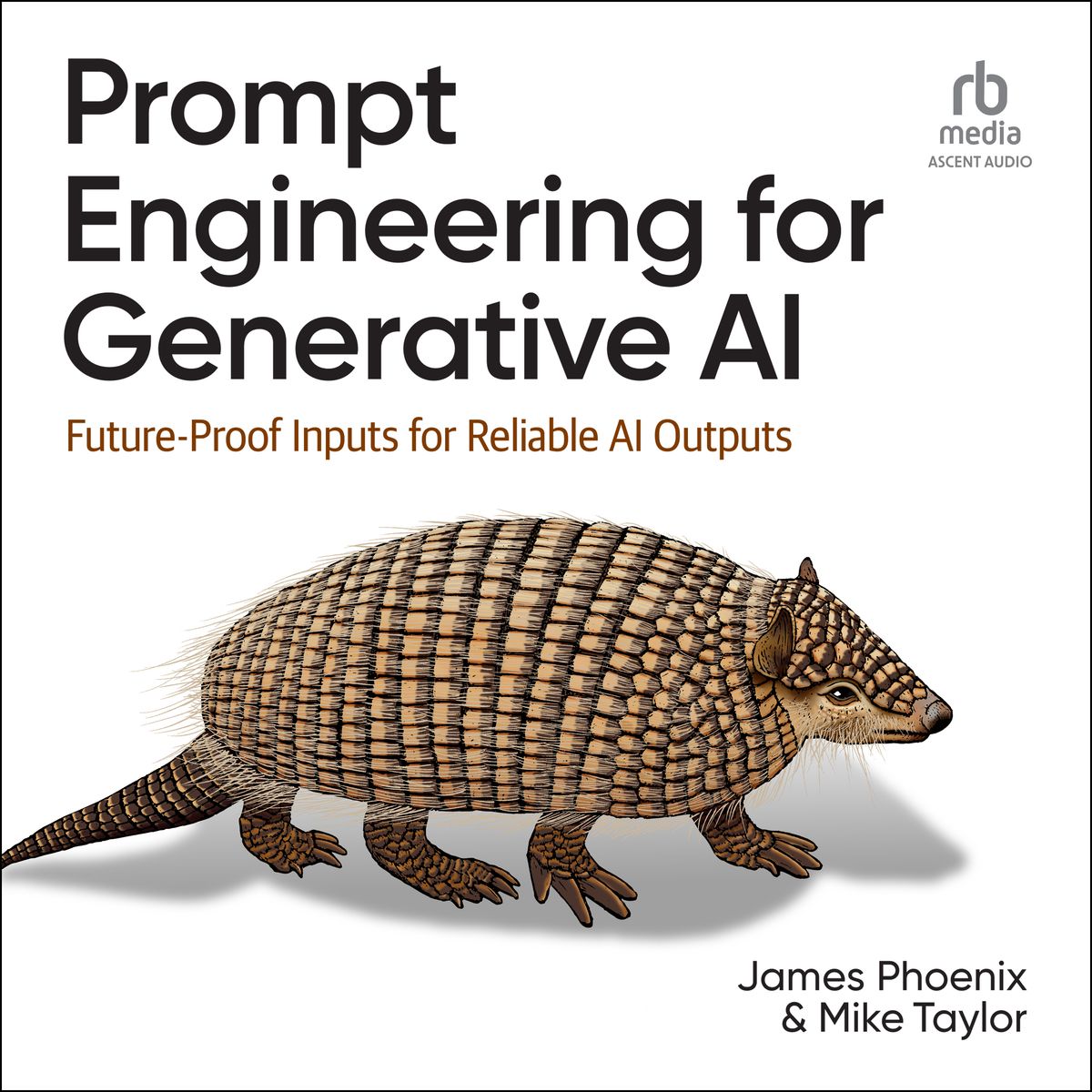
| Prompt Engineering for Generative AI (O’Reilly) | Skill-building: better outputs from AI tools | Mid-range | Repeatable prompting patterns with worked examples | Technique-focused; thin on the bigger judgment questions |
Co-Intelligence is the one to buy when your problem is “I don’t know how to think about AI at work” — it upgrades the operator.
The Coming Wave is the one to buy when your problem is “I want to understand what’s happening in AI” — it’s the big-picture book, told by an insider.
Prompt Engineering for Generative AI is the one to buy when your problem is “my AI outputs aren’t good enough” — pure craft, minimal philosophy.
The classic pairing is Co-Intelligence plus the O’Reilly book: judgment plus technique.
Scenario 1: Your Team Just Got AI Tools and Nobody Knows What to Do
The licenses are purchased. The kickoff deck was beautiful. And now… crickets, plus one person using it to write performance reviews they clearly didn’t read. Sound familiar?
This is where a mindset book earns its keep. You can’t policy your way to good AI use — people need instincts, and instincts come from principles plus practice. Mollick’s framework gives a team shared language fast: what “human in the loop” means for your review process, where experimentation is encouraged, where it isn’t. Buy a few copies, run one lunch session on the principles, and you’ll be ahead of most companies.
Scenario 2: You’re a Freelancer Wondering If AI Eats Your Job
The anxiety is real, and pep talks don’t help. What helps is a clear-eyed view of what AI is actually good at versus what clients still pay humans for — judgment, taste, accountability, relationships. Co-Intelligence is unusually good on this because Mollick has run the experiments: he knows where AI matches or beats professionals and where it quietly falls apart.
The takeaway: position yourself as the human in the loop, not the human replaced by it. Use AI to expand what you deliver, keep your name on the judgment calls, and get visibly better at the parts AI can’t fake.
Also see: The Big Nine by Amy Webb: Book Review — Who Should Actually Read It in 2026?.
Common Mistakes Buyers Make With AI Mindset Books
Mistake 1: Reading it as a prediction book. Co-Intelligence is about how to work with AI now, not a forecast of 2030. Readers who skim for predictions miss the point — the principles are the product.
Mistake 2: Expecting tutorials. If you want click-here-then-type-this instructions, you’ll be disappointed. This book operates one level up: it tells you how to think about the interaction, and assumes you’ll figure out the buttons. Pair it with a skills book if you need both levels.
Mistake 3: Outsourcing judgment anyway. The irony trap: reading a book about staying in the loop, then letting the model decide everything because the book made AI sound capable. Mollick’s whole point is that capability increases your responsibility, not the reverse. Stay in the loop means stay in the loop.
Mistake 4: Reading without experimenting. A mindset you don’t practice is just an opinion. The book keeps nudging you to try things — run the experiment, compare the outputs, notice where you were wrong. Readers who actually do this get 10x the value of readers who just nod along. Be the first kind.
Why, How, and What: The Short Version
Why does “co-intelligence” matter more than prompt tricks?
Tricks expire; relationships don’t — or at least, they expire slower. A clever prompt hack dies with the next model update, while a good mental model of when to trust AI, when to verify, and when to overrule pays off across every tool you’ll ever use. Tricks make you better at operating the machine; co-intelligence makes you better at deciding what it should do. One scales with your career. The other doesn’t.
How do you actually apply the book day to day?
Start with Mollick’s core moves: invite AI into real tasks, stay in the loop on anything that matters, and treat the model like a capable-but-unreliable colleague whose work you always check. Then experiment deliberately — try AI on a task, compare against your own work, note where it surprised you. Turn the principles into weekly habits, not bookshelf wisdom.
What is this book NOT?
It’s not a technical manual, not a history, not a prediction — it’s a field guide to the present for people who work with these systems now. Mollick has a point of view (AI is a big deal; use it thoughtfully; stay in charge). Want pure reportage? Read Suleyman. Want a thinking partner for the AI transition? This is your book.
Questions People Ask Before Buying
Is Co-Intelligence worth reading in 2026, or has AI moved past it?
It’s worth reading because the book is about the human-AI working relationship — when to trust the model, when to verify, how to stay in charge — and that relationship evolves much slower than the software itself, so Mollick’s principles still apply cleanly to today’s tools. If you want durable judgment about working with AI rather than news about the latest release, it holds up well in 2026.
Should I buy Co-Intelligence or The Coming Wave?
Buy Co-Intelligence if your question is “how do I work with AI well?” — it’s practical, principle-driven, and focused on your own decisions at work and in life, with experiments you can run immediately rather than on industry trends, which makes it the stronger choice for anyone whose priority is changing their own working habits this quarter. Buy The Coming Wave if your question is “where is all of this headed?” — Suleyman writes the sweeping insider account of AI’s trajectory and its societal stakes. Plenty of readers own both: Mollick for Monday morning, Suleyman for the bigger picture.
I’m not technical — will Co-Intelligence be over my head?
Not at all — in fact, non-technical readers are arguably the book’s core audience, since Mollick writes about judgment, collaboration, and decision-making rather than code or model architecture, and every principle is illustrated with plain real-world situations, so all you need is curiosity and some hands-on time with AI tools for the book to meet you where you are. You need curiosity about AI and some experience using the tools, but zero programming background. Highly technical readers may find parts familiar, though the management and education angles usually still offer something new.
I already use AI heavily — is Co-Intelligence too basic for me?
Probably not, because heavy use and thoughtful use are different things — most power users have strong habits but unexamined ones, and the book’s real value is in surfacing the questions you’ve been skipping, like where you’re over-delegating or quietly losing skills. If you’ve already built a disciplined, reflective AI practice, some principles will confirm what you know — still useful, just less transformative.
Does Co-Intelligence give practical advice, or is it just big ideas?
It’s genuinely practical, just at the principles level rather than the tutorial level: Mollick’s four rules for working with AI translate directly into daily habits — invite AI into real work, stay in the loop, give it clear roles, and keep experimenting as the tools change. Think of it as the operating manual for the human half of the collaboration — pair it with a skills book if your prompting technique needs work too.
Frequently Asked Questions
Who is Ethan Mollick, and why should I trust his take on AI?
Mollick is a professor at the Wharton School who has spent years researching how AI affects real work — running experiments in classrooms and companies rather than theorizing from the sidelines. He’s known for testing AI on practical tasks and reporting what actually happens, including the failures. That experimental grounding is exactly why the book’s advice feels earned.
Do I need to read it cover to cover?
Start at the beginning, since the principles build on each other — but it also works as a reference you’ll revisit. Many readers report returning to specific chapters when facing a new AI decision at work. Either way, don’t just read the principles; try them. The book is short enough that “cover to cover” isn’t a big ask.
Is the book about ChatGPT specifically?
No — it’s about working with generative AI as a category. Mollick deliberately focuses on the human-AI relationship rather than any single product’s features, which is a big reason the book ages well. The principles apply no matter which tools you favor — chat, image generation, or coding assistants.
Will it help me decide whether to adopt AI at my company?
It’ll help enormously with the how of adoption — the mindset, principles, and experiments that make AI use actually work — though it won’t give you a vendor comparison or an ROI spreadsheet. For leaders, the highest-value chapters are the ones on keeping humans in the loop and running small experiments before big commitments. Pair it with your own pilot projects.
Is there anything in it for teachers or students?
Quite a bit, actually — Mollick teaches, so education runs through the book as a recurring example. Teachers get thoughtful guidance on AI in the classroom (beyond just “ban it or embrace it”), and students get a framework for using AI without short-circuiting their own learning. It’s one of the more education-aware AI books out there.
Final Recommendation
Buy Co-Intelligence if you want to get smarter about working with AI — not just more skilled at operating it, but wiser about when to trust it, when to check it, and how to keep yourself firmly in charge. It’s the rare AI book that respects both the technology’s power and your intelligence, and its principles will outlast whatever model ships next quarter.
Buy Prompt Engineering for Generative AI alongside it if your bottleneck is technique rather than judgment, or The Coming Wave if the big picture is what you’re after. But if you only buy one AI book this year and you actually use these tools, make it this one — then do the experiments.
Decision Tree: Which AI Book Should You Buy?
Want better judgment about working with AI? → Co-Intelligence. Principles first, and they age well.
Want better AI outputs starting this week? → Prompt Engineering for Generative AI. Technique you can use Monday.
Want to understand where AI is headed? → The Coming Wave. Big picture, told by an insider.
Want the full package? → Co-Intelligence for the mindset, the O’Reilly book for the craft. Judgment plus technique is the combination that actually changes how you work.
Key Takeaways
✓ Co-Intelligence upgrades how you think about working with AI — trust, verification, and staying in charge — not just how you operate the tools.
✓ Mollick’s principles are grounded in real experiments, which is why the advice feels earned rather than guessed.
✓ It fits managers leading AI adoption, solo professionals, and curious skeptics; tutorial-seekers should look elsewhere.
✓ The book ages well because it’s about the human-AI relationship, not specific model features.
✓ Pair it with a skills book for the full picture: mindset plus technique covers both halves of working with AI.
Disclosure: Some links on this page are affiliate links. If you purchase through them, we may earn a commission at no extra cost to you. We only recommend books we’ve researched and believe are worth your time.