
Disclosure: This page contains affiliate links. If you buy through them, we may earn a commission at no extra cost to you.
The Coming Wave by Mustafa Suleyman: Book Review
The Coming Wave by Mustafa Suleyman is the rare AI book written by someone who actually built frontier AI. Suleyman co-founded DeepMind — the lab behind AlphaGo — then watched the technology he helped create accelerate far beyond anyone’s control. Published in 2023, the book’s big argument is that AI (alongside synthetic biology) forms a “coming wave” humanity will struggle to contain, and that containment — not just innovation — is the defining challenge of our century. This review breaks down what he actually argues, who should read it, and whether it still holds up in 2026.
Related reading: The Big Nine by Amy Webb: Book Review — Who Should Actually Read It in 2026?, AI Snake Oil by Arvind Narayanan & Sayash Kapoor: Book Review — Can It Really Te.
Quick Answer
If you want the big-picture case for why AI is so hard to govern — written by an insider, not a pundit — this is the book. It’s a tour of exponential technology, perverse incentives, and the historical record of trying (and mostly failing) to contain powerful tools. It won’t teach you prompts, and it won’t help you use AI at work. Buy it to understand the stakes. Pair it with Co-Intelligence if you want the practical half of the picture.
Compare Top AI Books
Three essential reads side by side — pick the one that fits your shelf.
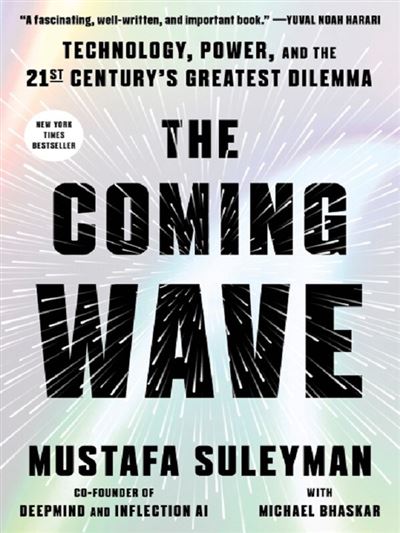
The Coming Wave
The big-picture warning — can humanity contain the AI wave? An insider’s answer.
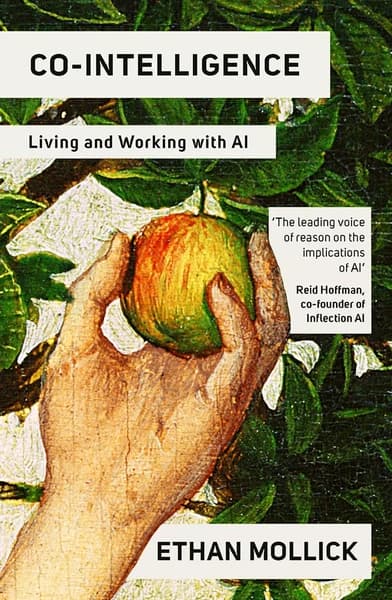
Co-Intelligence
AI mindset · Ethan Mollick — the practical playbook for living and working with AI.
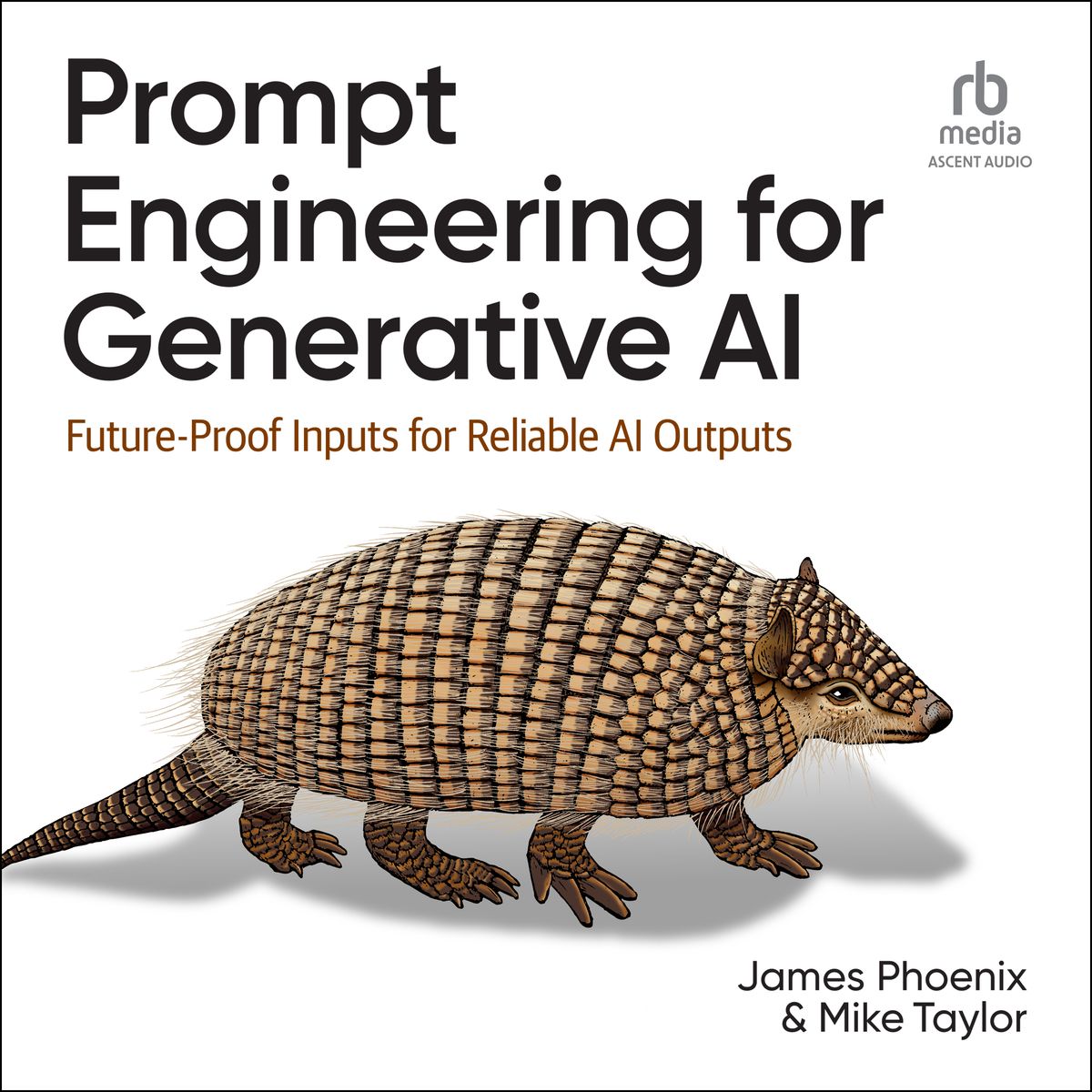
Prompt Engineering for Generative AI
Hands-on techniques · O’Reilly — the technical craft of getting more from AI models.
Prices and availability may vary — tap any product to check the current listing.
What to Look For in an AI Future Book
Books about “the future of AI” age faster than milk. Most are either breathless hype or recycled headlines. Here’s how to tell the ones that last from the ones that don’t.
An author with real skin in the game
Suleyman co-founded DeepMind in 2010, sold it to Google, and later co-founded Inflection AI — he has spent his entire career building the exact technology he’s now warning about. That changes the texture of the book completely. When a career pundit warns about AI, it’s content. When one of the people who built frontier AI says “we may not be able to contain this,” it’s a confession. For any big-picture AI book, the author’s biography is the first thing to check: did they build it, regulate it, or just write about it?
A thesis, not just vibes
The book’s core argument has a name: the containment problem. Powerful technologies tend to proliferate because the incentives — profit, prestige, national competition — push everyone to build and share them, while the incentives to slow down are weak and diffuse. That’s a real thesis, falsifiable and structured, not a mood. If an AI-future book can’t be summarized in two sentences, it probably doesn’t have an argument. This one can: the wave is coming, containment is the whole game, and history says containment usually fails.
Historical grounding, not just prediction
Suleyman reaches back through previous technological waves — the rare cases where humanity contained a dangerous technology, and the far more common cases where it didn’t — to show that the containment problem isn’t new. This is what keeps the book from reading like a TED talk. Predictions are cheap; patterns across centuries are not. A future-of-AI book that only talks about the last eighteen months is already expiring. One that draws on history has a much longer shelf life.
Scope beyond chatbots
The “wave” in the title isn’t just large language models — it’s AI and synthetic biology, the two general-purpose technologies Suleyman argues will define the century. That wider lens is a genuine strength. Most AI books published in 2023 couldn’t see past ChatGPT; this one treats chatbots as one crest of a much bigger swell. If you want a book that won’t feel dated the moment the next model drops, scope matters.
Readability for non-experts
Despite the heavy subject, it’s a big-ideas trade book: no equations, no assumed technical background, narrative-driven chapters. Suleyman writes like someone who has explained AI to heads of government — because he has — which means he’s good at making the abstract concrete. The trade-off is depth on any single mechanism; if you want the math of why models scale the way they do, look elsewhere. This book is about incentives and power, not architectures.
What’s missing — by design
Here’s the honest limitation: this book will not help you use AI better. There are no prompting tips, no workflow advice, no “ten things to try on Monday.” It’s a macro book — governments, labs, incentives, treaties — and it stays at that altitude throughout. That’s a legitimate choice, but buy with clear eyes: if your question is practical, Co-Intelligence or a prompting manual is the better purchase.
How to Match This Book to Your Situation
This is a book for people who think about the trajectory, not the tool. Three readers in particular:
The professional who needs the 30,000-foot view
You’re a founder, executive, or manager, and AI keeps coming up in strategy conversations you’re expected to lead. You don’t need prompting tricks; you need to understand where the technology is going, what gets regulated, and what the failure modes of governance look like. This book is basically a briefing document for that role — the one that lets you ask the uncomfortable questions in the meeting.
The policy-minded reader
Students of public policy, journalists, anyone who followed the AI regulation debates and felt lost in the jargon. Suleyman gives you the framework the whole debate runs on: containment, proliferation incentives, the difficulty of international coordination. Read it and the next “AI safety summit” headline will make sense instead of sounding like theater.
The builder thinking about what’s next
You work in or around tech and you’re placing bets — on products, on careers, on where the puck goes. The book’s incentives-first lens is genuinely useful for that: it asks not “what can the technology do” but “what will everyone be compelled to do with it.” That second question is the one that predicts the future. Just don’t expect product ideas. Expect a colder shower.
How the Top AI Books Compare
Same shelf, four completely different jobs. Here’s the map.
| Book | Best For | Price Tier | Key Feature | Watch Out |
|---|---|---|---|---|
| The Coming Wave | Grasping AI’s trajectory and governance challenge | Mid-range | An insider’s containment framework | Macro lens — nothing hands-on |
| Co-Intelligence | Using AI well in daily work | Budget-friendly | Practical, Mollick’s field guide | Light on systemic risk |
| Prompt Engineering for Generative AI | Technical prompting craft | Mid-range | O’Reilly-style hands-on depth | Assumes you already use AI tools |
| Weapons of Math Destruction | Understanding algorithmic harm | Budget-friendly | The ethics classic, still cited everywhere | Pre-generative-AI, big-data era |
Pick The Coming Wave when you want to understand where AI is headed and why steering it is so hard. Choose Co-Intelligence when you want to get better at using AI this week — practice over theory. Go with Prompt Engineering for Generative AI when you want craft: the actual techniques, written as a technical manual. And grab Weapons of Math Destruction when you want the ethics foundation — the classic account of how algorithms already harm people at scale.
Where This Book Earns Its Shelf Space
Trying to make sense of AI regulation headlines
Every few months there’s another summit, another executive order, another open letter from researchers. Without a framework, it all blurs together. This book is the framework: once you understand the containment problem, you can read any AI policy story and immediately see which incentive it’s fighting against. That’s a durable skill, and it’s the book’s highest-value use.
Gifting it to someone who “doesn’t get the AI fuss”
Know someone smart who still thinks AI is just a better autocomplete? This is the conversion book. It’s serious without being academic, urgent without being hysterical, and it comes from someone who built the stuff — which carries weight with skeptics in a way that activist literature doesn’t. Fair warning: it may ruin their peace of mind. That’s rather the point.
Reading it while you actually use AI tools daily
There’s a productive tension in reading the macro-warning while doing the micro-practice. Pair this book with Co-Intelligence and you get both halves: the hands to use the tools, the head to understand what you’re participating in. Read the practical book in the morning, the warning at night. You’ll use AI better and think about it more clearly — a combination most readers never quite manage.
Common Mistakes Buyers Make
Mistake 1: Buying it for prompt tips. There are none. Zero. If your question is “how do I write better prompts,” you want the O’Reilly book or Co-Intelligence. This book operates at the level of nations and decades.
Mistake 2: Reading it as pure doom. Suleyman’s position is worried, not defeatist — he argues containment is extremely difficult yet still possible, and sketches what it would take. Readers who want either apocalypse or reassurance will both be slightly disappointed. That’s a sign of honesty.
Mistake 3: Treating it as a prediction to grade. The book’s value is the framework, not the forecast. Its argument runs on incentives, not model versions, so it doesn’t expire when the next generation of models arrives. Judge it on whether the containment lens clarifies things, not on whether every example still looks current.
Also see: The Alignment Problem by Brian Christian: Review — The AI Safety Book to Read Fi.
Mistake 4: Dismissing it as “another tech CEO book.” Suleyman is unusually self-critical about his own industry’s incentives — including his own role in creating them. That’s rare, and it’s what separates this from the standard founder memoir with a warning label slapped on.
Why This Book Exists, How to Read It, What You’ll Get
Why did a DeepMind co-founder write a book about containment? Because he watched the incentives from the inside. Suleyman spent over a decade in the labs where frontier AI was built, and the book reads like someone who realized — earlier than most — that the forces pushing the technology outward are stronger than any single company’s good intentions. The credibility of the converted insider is the book’s engine; without it, this would be just another warning.
How should you read it? Read for the framework, not the forecast. The early chapters set up the wave metaphor and the history; the containment chapters are the payoff. If the historical sections feel familiar, skim them — but don’t skip the argument about incentives. That’s the part you’ll still be thinking about months later.
What will you actually use from it? A mental model for every AI headline you’ll read for the next decade: incentives drive proliferation, proliferation outruns governance, containment is the whole game. Three sentences, and suddenly the news makes a different kind of sense. Not comforting sense. But sense.
Questions People Ask Before Buying
Is The Coming Wave worth reading in 2026?
Yes — because the book’s core argument isn’t about any particular AI model, it’s about the incentives that make powerful technology spread faster than our ability to govern it, and that dynamic has only intensified since the book’s 2023 publication. What dates a tech book is specifics; what lasts is frameworks, and the containment framework here has aged better than most 2023 predictions.
The Coming Wave vs Co-Intelligence — which AI book should I buy first?
Buy The Coming Wave first if you want to understand where AI is headed and why it’s hard to steer; buy Co-Intelligence first if you want to get better at using AI tools in your actual work starting this week — most serious readers eventually buy both, in that order. One gives you the map of the territory, the other teaches you to drive in it. The map first, then the driving lessons.
Should I read The Coming Wave before a book on prompt engineering?
Read The Coming Wave first for the why and the prompt engineering book for the how — the first gives you the stakes and the trajectory of the technology, the second gives you craft you can use the same day, and neither one substitutes for the other. If you only care about getting better outputs from AI tools this week, skip straight to the technical book. If you want to understand what you’re participating in, start here.
Is The Coming Wave too technical for a beginner?
No — it’s written for a general audience with no equations and no assumed technical background, so if you can follow a long magazine feature about technology and power, you can read this book cover to cover without getting lost. The hardest concept in it is “containment,” and Suleyman spends several chapters making sure you understand exactly what he means by it.
Is Suleyman optimistic or pessimistic about AI?
Neither, exactly — he’s worried but not defeatist, arguing that containing the wave is extremely difficult yet still possible, which puts him between the doomers who say we’re finished and the boosters who say there’s nothing to worry about at all. If you want a book that picks a side and yells about it, this isn’t that. If you want the uncomfortable middle, it is.
Who is Mustafa Suleyman?
Mustafa Suleyman is a British AI entrepreneur who co-founded DeepMind in 2010 — the lab famous for AlphaGo — which Google acquired in 2014. He later co-founded Inflection AI, the company behind the Pi assistant. He wrote The Coming Wave with Michael Bhaskar, and now works on AI policy and safety efforts. He’s one of the few people who has both built frontier AI systems and written seriously about governing them.
What does “containment” mean in this book?
Containment is Suleyman’s term for the project of keeping the wave’s benefits while limiting its harms — through some combination of technical safety work, regulation, auditing, and international coordination. The book’s central claim is that this is extraordinarily difficult because the incentives to build and spread powerful technology are so much stronger than the incentives to restrain it.
Is this book just about ChatGPT?
No. It was published in 2023, as the ChatGPT era was beginning, but its scope is much wider: AI broadly, plus synthetic biology, which Suleyman treats as the wave’s second crest. ChatGPT appears as an example of the dynamic he’s describing, not as the subject. Readers looking for LLM-specific content should look at a prompting or practical-AI book instead.
Is it a long, dense read?
It’s a substantial big-ideas book — most readers take the better part of a week, reading in the evenings — but it’s not dense in the academic sense. No equations, no jargon walls. The history sections reward skimming if you’ve seen the material before; the containment argument deserves your full attention.
Does the book actually propose solutions?
Yes — the final section lays out a containment agenda spanning technical measures, regulation, and international cooperation. Whether you find the proposals convincing is another question; some critics find them vaguer than the diagnosis. The honest read: the book is stronger on “here’s why this is hard” than on “here’s the fix,” and Suleyman doesn’t really hide that.
What should I read after The Coming Wave?
For the practical half — actually using AI well — read Co-Intelligence by Ethan Mollick. For the ethics foundation, read Weapons of Math Destruction by Cathy O’Neil. For hands-on prompting craft, the O’Reilly prompt engineering book. This book gives you the stakes; those give you the skills and the history.
Final Recommendation
Buy The Coming Wave if you want the most credible big-picture account of why AI is so hard to govern — written by someone who built the technology and is unusually honest about his own industry’s incentives. It’s the right book for understanding the stakes, the regulation debate, and where things plausibly go next.
It is not the book that teaches you to use AI, and it doesn’t pretend to be. Pair it with Co-Intelligence for the practical half of the picture. But if you only read one book about AI’s future, make it this one.
OUR TOP PICK
The Coming Wave
The big-picture warning — can humanity contain the AI wave? An insider’s answer.
Decision Tree: Which AI Book First?
Choose The Coming Wave if: you want the macro view — where AI is going, why it’s hard to steer, and what containment would actually take.
Choose Co-Intelligence if: you want to use AI better starting this week — practical skill over systemic analysis.
Choose Prompt Engineering for Generative AI if: you want craft — the technical manual for getting more out of the models.
Still torn? Start with this book for the stakes, then Co-Intelligence for the skills. That order sticks.
Key Takeaways
The containment problem is the whole book. Incentives push powerful tech outward faster than governance can follow — that’s the thesis in one sentence.
Written by an insider, not a pundit. DeepMind co-founder credibility is what separates this from other AI-future books.
Macro, not practical. No prompts, no workflows — pair it with Co-Intelligence for the hands-on half.
Framework over forecast. It ages well because the argument runs on incentives, not model versions.
Disclosure: This page contains affiliate links. If you buy through them, we may earn a commission at no extra cost to you.