
Disclosure: This page contains affiliate links. If you buy through them, we may earn a commission at no extra cost to you.
Weapons of Math Destruction by Cathy O’Neil: Review
Weapons of Math Destruction by Cathy O’Neil is the book behind a thousand “the algorithm did it” headlines. First published in 2016, this AI ethics classic argues that the mathematical models quietly scoring our credit, filtering job applicants, and even influencing prison sentences aren’t neutral — and some of them are doing real damage at scale. This review walks through what O’Neil actually claims, who the book is really for, and how it holds up next to the AI books written in the ChatGPT era.
Related reading: Superintelligence by Nick Bostrom: Book Review — Still the AI Safety Classic in , Prediction Machines by Agrawal, Gans & Goldfarb: Book Review — The AI Economics .
Quick Answer
If you want one readable book that explains how everyday algorithms fail — teacher ratings built on shaky math, job screens that punish the wrong proxies, credit models that trap the poor — start here. It’s written for people who never took statistics, it predates generative AI, and its core idea (opaque models + massive scale + real harm) still explains half the AI scandals in your news feed. Buy it for the ethics foundation. Add a newer book if you also want the ChatGPT-era picture.
Compare Top AI Books
Three essential reads side by side — pick the one that fits your shelf.
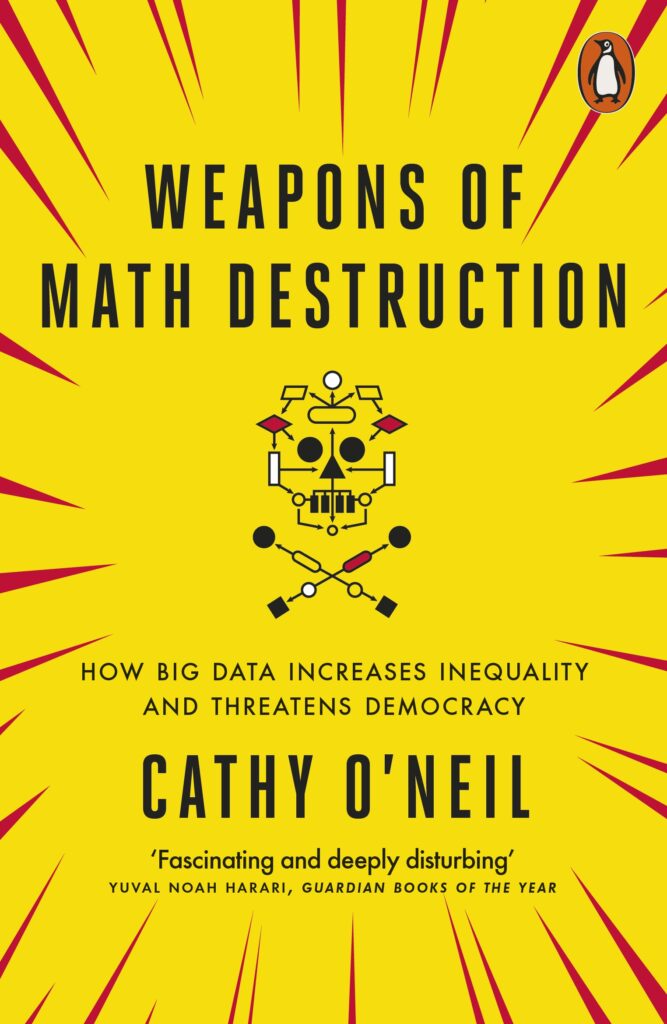
Weapons of Math Destruction
The AI ethics classic — how everyday algorithms go wrong, explained for everyone.
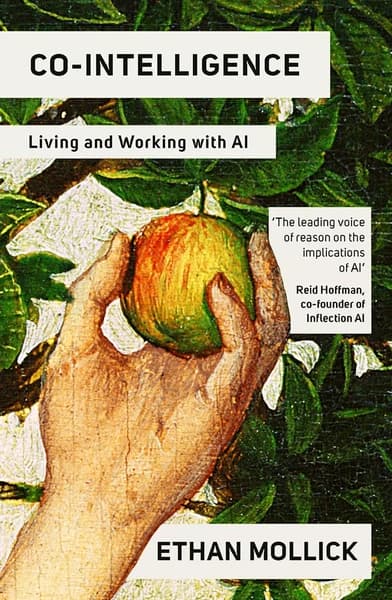
Co-Intelligence
AI mindset · Ethan Mollick — the practical playbook for living and working with AI.
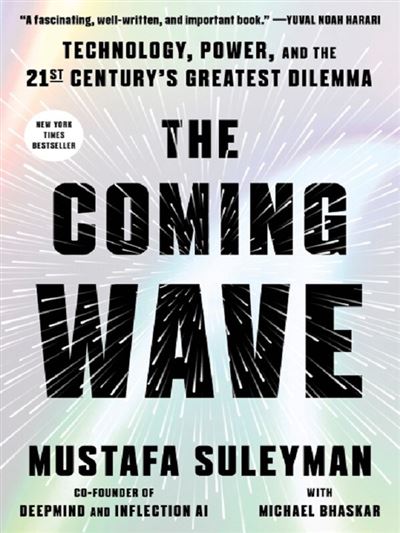
The Coming Wave
AI future outlook · Suleyman — the big-picture warning about where AI is headed.
Prices and availability may vary — tap any product to check the current listing.
What to Look For in an AI Ethics Book
Not every book with “AI” on the cover is worth your evening. The shelf is crowded with hot takes, and most of them expire within a year. Here’s what actually separates a book you’ll still be quoting in five years from one you’ll forget by spring.
An author who’s been inside the machine
O’Neil isn’t a journalist parachuting into the topic. She’s a mathematician who worked in finance through the 2008 crisis, then walked away and started asking what happens when the same modeling mindset gets applied to hiring, lending, and policing. That history matters. Books about algorithmic harm written by outsiders tend to stay at the level of vibes; this one names the mechanisms — proxies, feedback loops, opacity — because the author has built models herself. When you’re shopping for any AI ethics book, check the author’s day job first. A practitioner-turned-critic writes differently than a pundit, and you can feel it on every page.
Real cases, not just warnings
The book is built from case studies: teacher evaluation formulas that got educators fired in Washington D.C., college rankings that reward gaming the numbers, online ads steering vulnerable people toward for-profit colleges and predatory loans, recidivism scores used in sentencing, predictive policing that sends more patrols to the same neighborhoods. Some chapters land harder than others — the teacher-evaluation story is genuinely infuriating — but the pattern to look for in any book like this is mechanism, not just outrage. Does the author show you how the model fails, or only that it does? O’Neil shows the how, which is why teachers and data scientists both keep recommending it a decade later.
A definition you can actually reuse
Her definition of a “weapon of math destruction” — opaque, operating at scale, and damaging — is the reason this book became a classic. It’s a portable test. Next time someone tells you an algorithm is “objective,” run her three questions: can anyone see inside it, how many people does it touch, and what happens to the people it gets wrong? A good AI book should hand you at least one mental tool this sharp. This one does, and honestly, the definition alone is worth the price of admission.
Fairness to the other side
O’Neil doesn’t claim every model is evil. She’s explicit that plenty of models are wonderful — she just wants a clear line between models that help and models that harm, and she wants the harmful ones opened up to scrutiny. That balance is what separates a serious ethics book from a scare piece. If a book on this shelf only ever tells you AI is either salvation or apocalypse, put it back. The honest ones live in the messy middle. This one does.
Readability for the math-averse
There are no equations in this book. None. O’Neil writes in plain, sometimes funny English, and the math arrives as stories. That’s deliberate — she wants teachers, journalists, and policymakers reading it, not just data scientists. If academic AI papers make your eyes glaze over, this is the opposite of that. The trade-off: readers who build models for a living may find some technical points simplified. It’s a feature, not a bug. Just know which reader you are before you judge it.
Shelf life — written in 2016, read in 2026
Here’s the honest catch. The book predates large language models entirely, so there’s nothing here about ChatGPT, prompt injection, or AI-generated deepfakes. What it covers — the big-data era of scoring and sorting people — hasn’t gone away; generative AI just got layered on top of it. Hiring screens, tenant screening, insurance pricing: still WMD territory. So the book ages well as a foundation and badly as a survey of today’s AI. Think of it as the prequel, not the whole story, and you won’t be disappointed.
How to Match This Book to Your Situation
Three kinds of readers keep buying this book. See which one you are.
The student or early-career reader building an AI ethics vocabulary
You need the canonical references — the definition everyone cites, the examples you can drop in a paper or an interview. This book is basically required reading for that. It’s short, it’s quotable, and “weapons of math destruction” is the phrase your professors expect you to know. Get this one first, before the newer books.
The practitioner — data, product, or policy
You build or buy models for a living, and you want the failure modes before they become your failure modes. Read it as a checklist of what not to do: unexamined proxies, feedback loops that confirm their own predictions, scores nobody can appeal. It’ll change how you read vendor claims forever. Fair warning, though: it won’t teach you how to fix the models. That’s a different book, and this one doesn’t pretend otherwise.
The curious reader who just wants to understand the news
You keep seeing “algorithmic bias” headlines and want to know what’s actually going on underneath. This is the most readable entry point on the shelf — no math background needed, stories carry every chapter, and you’ll finish it understanding why “the data says so” is never the end of an argument. If I’m being honest? This reader gets the most out of the book.
How the Top AI Books Compare
These four cover the same territory from completely different angles. Here’s the quick map.
| Book | Best For | Price Tier | Key Feature | Watch Out |
|---|---|---|---|---|
| Weapons of Math Destruction | Understanding algorithmic harm and bias | Budget-friendly | The classic, portable WMD framework | Pre-LLM — no generative AI coverage |
| Co-Intelligence | Learning to work with AI tools today | Budget-friendly | Practical, current, hands-on guidance | Less about systemic harms |
| The Coming Wave | Big-picture AI future and governance | Mid-range | An insider’s containment framework | Macro and policy lens, not practical |
| Prompt Engineering for Generative AI | Technical prompting craft | Mid-range | O’Reilly-style hands-on depth | Assumes you already use AI tools |
Pick Weapons of Math Destruction when you want the ethics foundation that every AI debate keeps referencing. Choose Co-Intelligence when you want to get better at using AI this week rather than theorizing about it. Go with The Coming Wave when you want to understand where the whole thing is headed and why it’s so hard to steer. And grab the O’Reilly prompt engineering book when you want craft, not commentary — it’s the only one of the four written as a technical manual.
Where This Book Earns Its Shelf Space
Reading it for a class or reading group
Half the value here is that everyone else has read it. Discussion questions practically write themselves: which systems at your school or workplace would qualify as WMDs under O’Neil’s three-part test? The chapters are standalone cases, so a group can assign different ones and compare notes. If your syllabus lists one AI ethics book, it’s usually this one — there’s a reason.
Giving it as a gift
It works surprisingly well as a gift: for the tech-skeptical parent, the college-bound kid, the friend who forwards you AI-doom articles without quite knowing what they mean. It’s serious without being academic, critical without being miserable. Just don’t gift it to someone expecting a ChatGPT manual. They’ll be confused by page ten.
Reading it to change how you work
If you touch data at work — marketing segments, hiring screens, credit models, “AI-powered” vendor tools — read it with a notebook open. The proxies chapter alone will make you ask harder questions in your next procurement meeting. I’ve seen people spend serious money on scoring tools they never interrogated; this book is the cheapest possible inoculation against that.
Common Mistakes Buyers Make
Mistake 1: Buying it for the ChatGPT conversation. It was written years before large language models existed. If your question is “how do I use AI,” you want Co-Intelligence or a prompting guide, not this.
Mistake 2: Expecting a technical manual. There are no formulas, no code, no model architectures. It’s a book of big ideas illustrated with stories. Readers who want math should look at O’Neil’s more technical writing instead.
Mistake 3: Reading it as pure doom. The book’s actual demand is accountability — audits, transparency, the right to appeal — not the abolition of models. She even proposes a Hippocratic oath for data scientists. Miss that and you miss the point.
Also see: Pen GPT AI Pen: Instant AI Answers for Math, History, Tests. 3.69″ HD Touchscree.
Mistake 4: Assuming you already know all this. “Algorithms can be biased” is the headline everyone knows. The mechanisms — how a proxy quietly stands in for race or class, how a feedback loop makes a bad prediction come true — are subtler, and they’re where the book earns its keep.
Why This Book Still Matters, How to Read It, What You’ll Get
Why does a 2016 book still get cited in 2026 AI debates? Because the vocabulary stuck. “Weapons of math destruction,” “proxies,” “feedback loops” — the whole AI fairness conversation still runs on these terms a decade later. And newer scandals keep replaying the exact patterns O’Neil described: hiring tools rejecting resumés for spurious reasons, tenant-screening algorithms with no appeal process. The technology changed. The failure modes didn’t.
How should you read it? Straight through works fine — the chapters are standalone cases, so you can also dip in and out. Short on time? Read the introduction and the chapters closest to your industry. Then pick up one newer book (Co-Intelligence is the natural follow-up) to cover the generative era this one predates.
What will you actually walk away with? A bullshit detector for “the algorithm decided.” That’s the whole product, and it’s a good one. Three questions — can I see inside it, how many people does it affect, what happens when it’s wrong — and suddenly vendor pitches, policy debates, and news headlines all look very different.
Questions People Ask Before Buying
Is Weapons of Math Destruction still worth reading in 2026, even though it was published in 2016?
Yes, because the book isn’t really about 2016 technology — it’s about the failure patterns of opaque, large-scale models, and those patterns (bad proxies, self-confirming feedback loops, unappealable scores) are still running inside hiring tools, credit systems, and screening software today. What you won’t get is anything about ChatGPT or image generators, so treat this as the foundation and pair it with a book from the generative era if you want the full picture.
Should I read Weapons of Math Destruction before Co-Intelligence?
If your goal is understanding how AI systems cause harm, read Weapons of Math Destruction first — it gives you the ethics vocabulary (WMDs, proxies, feedback loops) that makes every later AI book easier to evaluate; if your goal is getting better at using AI tools, start with Co-Intelligence instead. Most serious readers end up owning both, and this order — harms first, practice second — tends to stick better.
Weapons of Math Destruction vs The Coming Wave — which AI book should I buy first?
Buy Weapons of Math Destruction first if you want to understand the AI harms already operating in hiring, lending, and policing; buy The Coming Wave first if you want the big-picture argument about where AI is headed and why it’s so hard for anyone — governments included — to contain it. One is about the present and recent past, the other about the future. They don’t really compete; they complement.
I’m bad at math — is this book too technical for me?
Not at all — the book contains no equations and was written for a general audience, so if you can follow a newspaper story about a teacher unfairly fired by a rating formula, you can follow every chapter here without any trouble. The most technical it gets is explaining what a “proxy” is, and O’Neil does that with stories, not symbols.
Does the book offer solutions, or is it just criticism?
It’s mostly diagnosis, but not only criticism — O’Neil argues for auditing models, opening them to scrutiny, and even proposes a Hippocratic oath for data scientists, though readers hoping for a step-by-step fix-it manual will find the solutions section thinner than the problem chapters. Think of it as the book that tells you what’s broken and who should be responsible, not the one that hands you the wrench.
Who is Cathy O’Neil?
Cathy O’Neil is a mathematician who earned her PhD, taught at the college level, and then worked in the finance industry — including through the 2008 crisis — before leaving to write and consult on data ethics. That insider-turned-critic path is exactly why the book works: she’s built the kind of models she criticizes. She’s since become one of the most cited voices on algorithmic accountability.
What exactly is a “weapon of math destruction”?
It’s O’Neil’s term for a mathematical model that meets three conditions: it’s opaque (the people scored by it can’t see inside or appeal it), it operates at scale (affecting thousands or millions of people), and it causes damage (it punishes people unfairly and tends to hit the vulnerable hardest). A model that fails any one of those tests — say, a transparent model affecting a handful of people — doesn’t qualify.
Is this book a textbook?
No. It’s a trade book written for general readers — no equations, no prerequisites, narrative-driven chapters. That said, it shows up on a lot of course syllabi because professors assign it as the readable introduction before the harder academic material.
How long will it take me to read it?
Most readers finish it in a few sittings over a weekend. The chapters are standalone case studies, so you can also read selectively — the introduction plus the two or three chapters closest to your interests will give you the core argument.
I already know algorithms can be biased. Will I learn anything new?
Probably, yes — because the book’s value isn’t the headline, it’s the mechanisms. Knowing “bias exists” is one thing; understanding how a zip code becomes a proxy for race, or how a feedback loop makes a flawed prediction self-fulfilling, is another. Those mechanisms are what you’ll actually reuse.
What should I read after this book?
For the practical side — actually using today’s AI well — read Co-Intelligence by Ethan Mollick next. For the big-picture future and governance questions, read The Coming Wave by Mustafa Suleyman. For hands-on prompting craft, the O’Reilly prompt engineering book. This book is the foundation; those are the upper floors.
Final Recommendation
Buy Weapons of Math Destruction if you want the single most-cited, most readable introduction to algorithmic harm — the book that gave the AI ethics debate its vocabulary. It’s the right first AI book for students, for the simply curious, and for anyone who builds or buys models and wants to know the failure modes before they become expensive mistakes.
If you specifically want to master today’s AI tools, or to understand where AI is headed next, pair it with Co-Intelligence or The Coming Wave. But start here. A decade on, nothing else explains the why of AI bias this clearly.
OUR TOP PICK
Weapons of Math Destruction
The AI ethics classic — how everyday algorithms go wrong, explained for everyone.
Decision Tree: Which AI Book First?
Choose Weapons of Math Destruction if: you want the ethics foundation — the classic everyone cites, the vocabulary the whole debate runs on, stories instead of equations.
Choose Co-Intelligence if: you want to use AI better starting this week — practical skill over systemic critique, current tools over history.
Choose The Coming Wave if: you want the macro view — where AI is going, and whether anyone can steer it.
Still torn? Start with this book. It’s the shortest path to sounding informed in any AI conversation.
Key Takeaways
WMD = opaque + large-scale + damaging. That three-part test is the whole framework — and the reason the book became a classic.
Written in 2016, still the clearest intro to algorithmic bias. The failure modes it describes keep showing up in new scandals.
No math background needed. Stories, not equations — built for general readers.
Pair it with a post-2022 book (Co-Intelligence or The Coming Wave) for the generative-AI half of the picture.
Disclosure: This page contains affiliate links. If you buy through them, we may earn a commission at no extra cost to you.