
Disclosure: As an affiliate partner, we may earn a commission from qualifying purchases made through links on this page — at no extra cost to you.
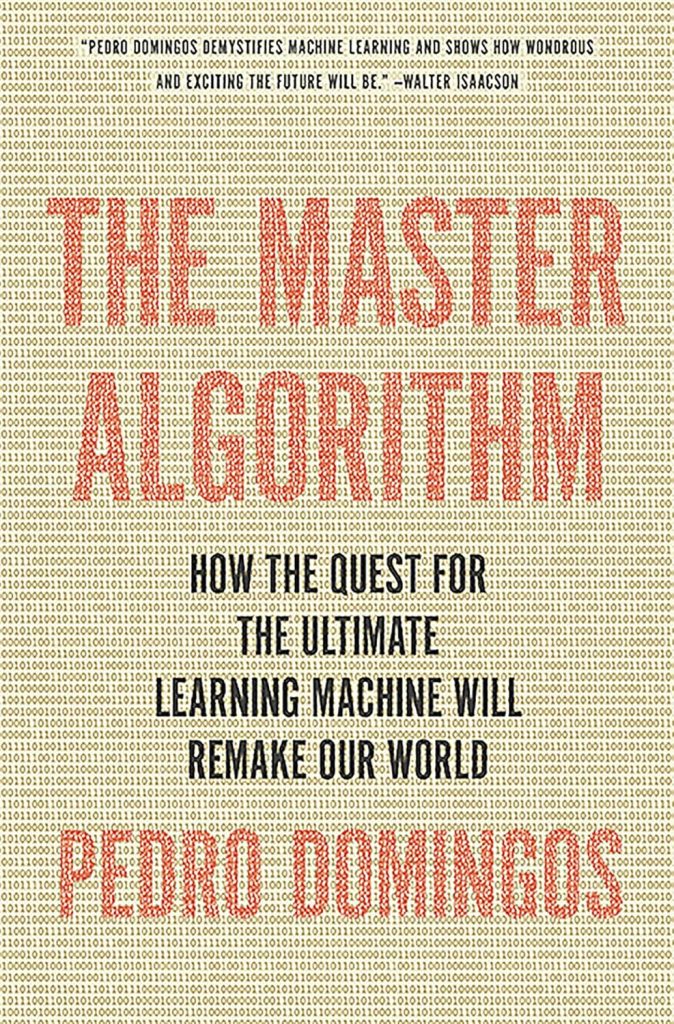
The Master Algorithm by Pedro Domingos: Book Review — Machine Learning’s Big Ideas, Explained?
The Master Algorithm is Pedro Domingos’s tour of the five rival schools of machine learning — and their race to discover the one algorithm that can learn anything from data. This review is for curious readers who want the big picture of how machines actually learn, without the math: what Domingos gets right, where his boosterism shows, and how the book compares to Prediction Machines and Weapons of Math Destruction.
Related reading: Superintelligence by Nick Bostrom and Human Compatible by Stuart Russell.
Quick Answer
The Master Algorithm is the most readable map of machine learning’s competing ideas — five “tribes,” one quest, zero equations required. It’s optimistic to a fault and was written just before deep learning’s total victory, which dates some of its bets. If you want to understand what machine learning is, conceptually, this is still the book to start with.
Compare Top AI Books
Three proven picks side by side — choose the one that fits your needs.
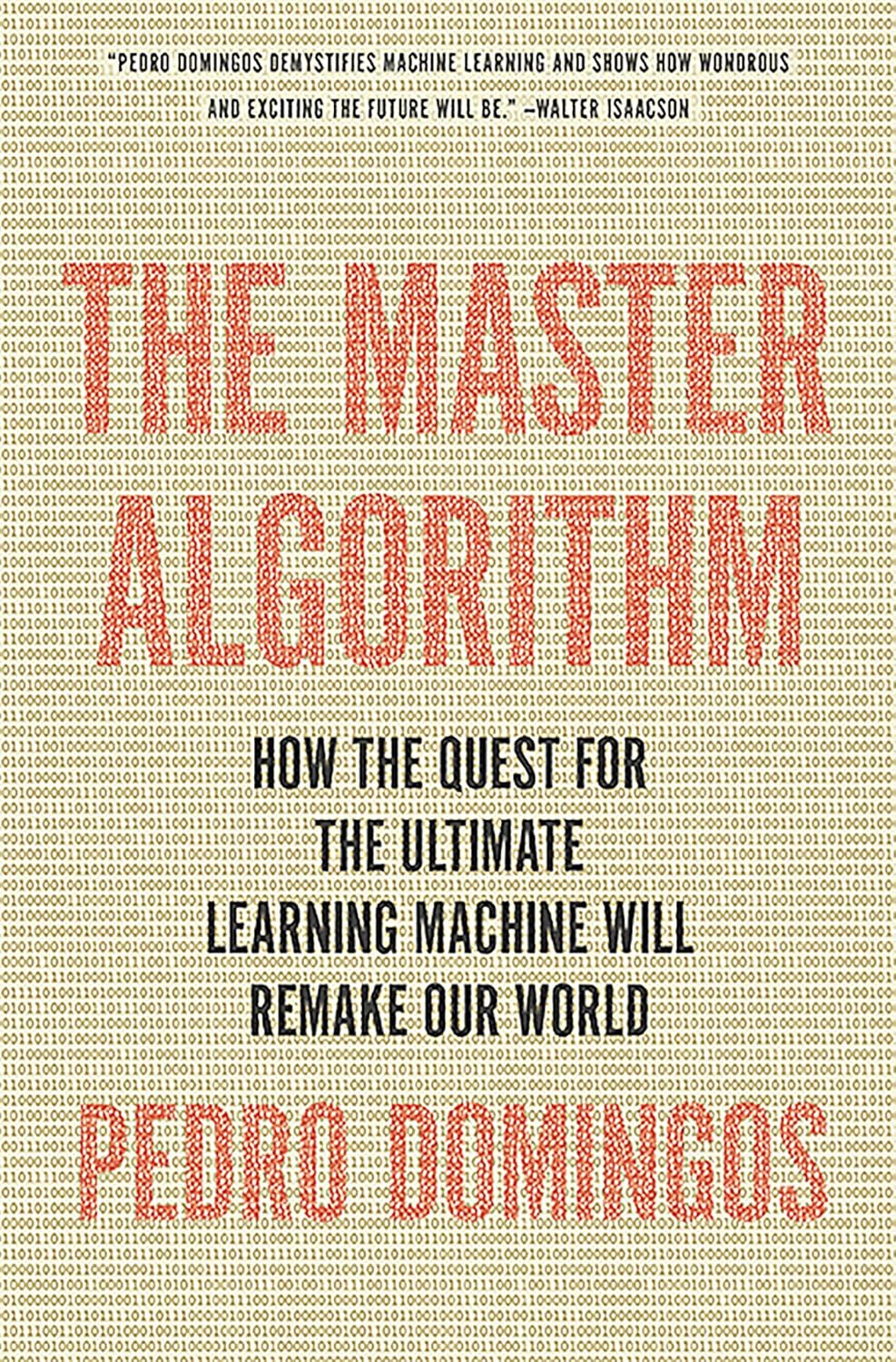
The Master Algorithm
The full map of machine learning’s five rival schools — tech history as detective story
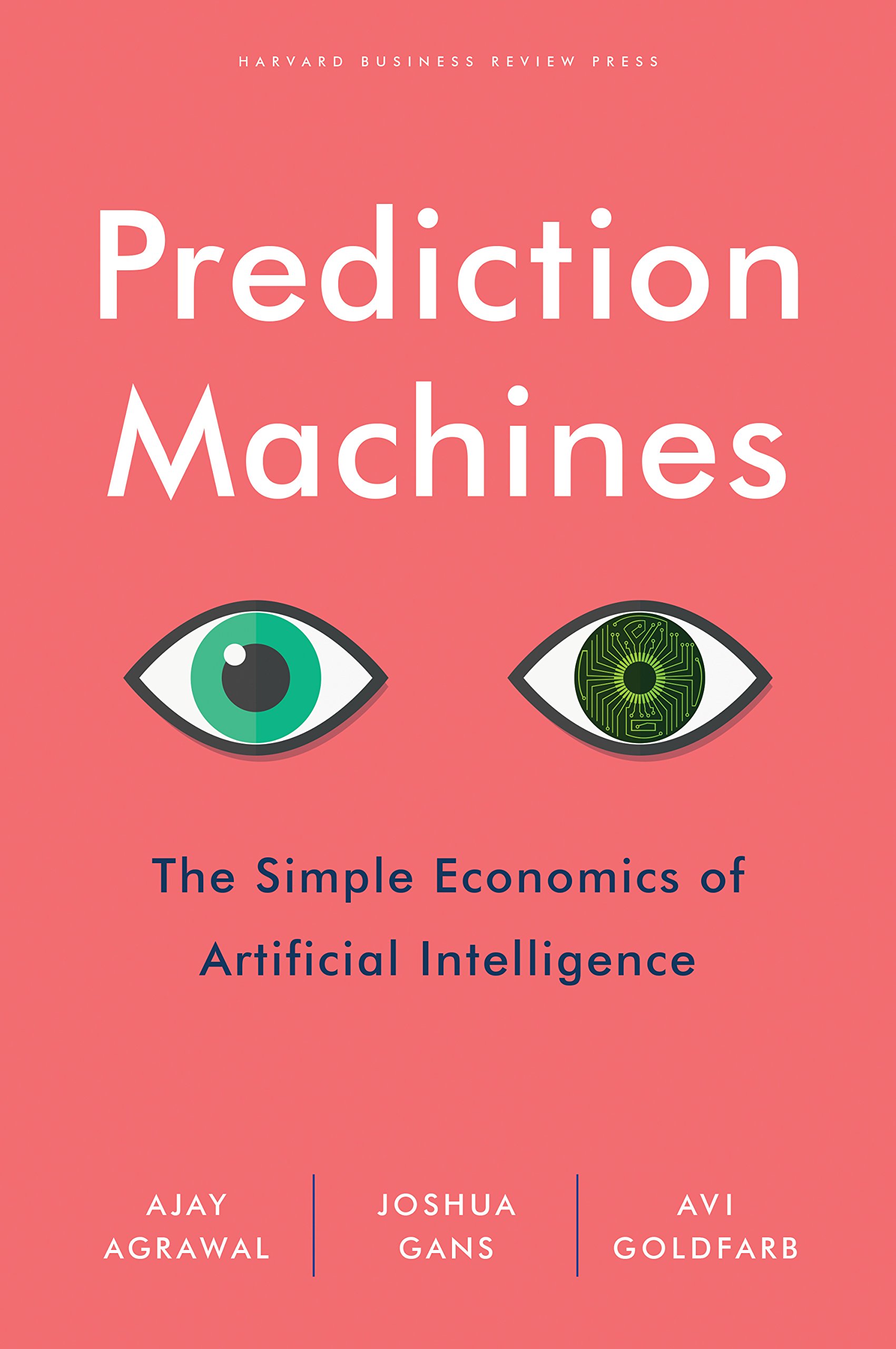
Prediction Machines
The economics angle — why cheaper prediction changes everything
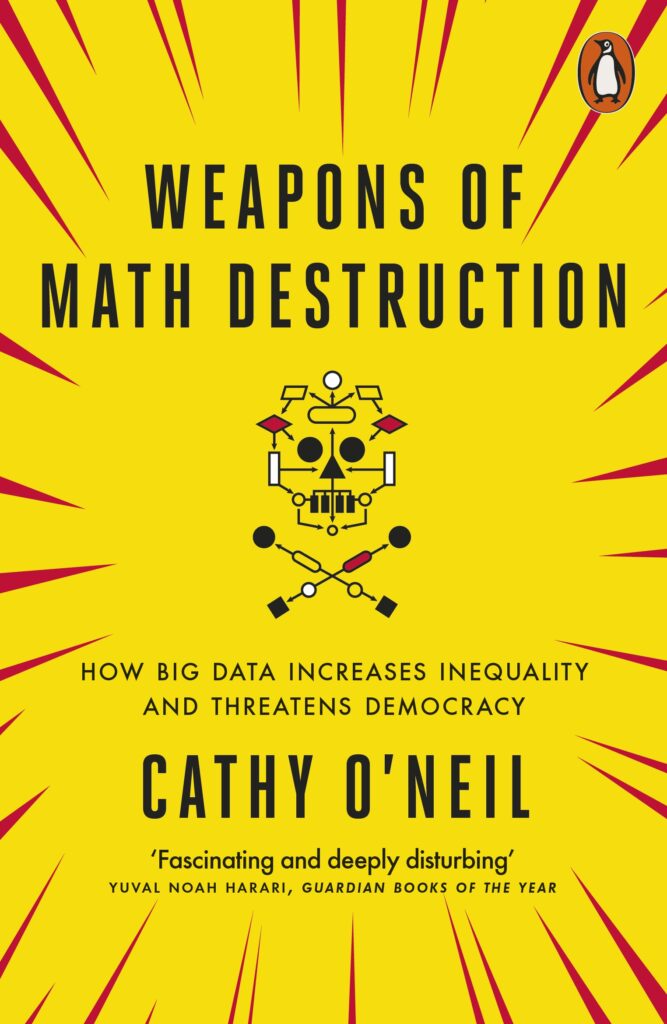
Weapons of Math Destruction
The critical counterweight — when algorithms harm real people
Prices and availability may vary — tap any product to check the current listing.
What to Look For When Buying a Machine Learning Book
Machine learning books split into two species: manuals that teach you to code, and maps that explain what’s actually going on. The Master Algorithm is firmly a map — but not all maps are drawn equally. Six filters separate the useful ones from the shelf decorations.
1. Map or Manual?
Domingos gives you the lay of the land: five “tribes” of machine learning — symbolists, connectionists, evolutionaries, Bayesians, analogizers — each with its own philosophy of how machines should learn. You will not learn to train a model. That’s the deal, and it’s a good one: tools go stale in eighteen months, but the ideas underneath them age far more slowly. If you want skills, buy a textbook. If you want understanding, keep reading.
2. The Author’s Bet: Does He Pick a Winner?
Domingos is a machine learning professor at the University of Washington, and he doesn’t pretend to be neutral — he has a horse in this race. The book’s final act argues the tribes must ultimately unify into a single Master Algorithm. Critics say he crowns a winner prematurely; fans say the synthesis is the point. Either way, knowing his bet lets you read with your eyes open.
3. Vintage Check: 2015 Was a Long Time Ago in AI
This book was written just as deep learning was taking off — Domingos devotes a chapter to the connectionists but couldn’t have known they’d win so completely, so fast. Some of his predictions missed. And yet the tribal framework still organizes the field surprisingly well: even the “losing” tribes’ ideas live on inside modern systems. Read it as a map of ideas, not a forecast, and the vintage barely matters.
4. Accessibility: Big Ideas Without Equations?
Yes, genuinely. Domingos translates technical concepts into analogies, anecdotes, and plain language — no math background required, no code to squint at. The cost of that accessibility: working practitioners will find it high-level, a book about what the tribes believe rather than how to join one. For everyone else, it’s the rare technical subject rendered genuinely fun.
5. Optimism Level: Hype or Sober?
Domingos is a believer, and it shows — the tone is enthusiastic, occasionally to a fault. Readers allergic to techno-optimism will roll their eyes in a few chapters. The built-in antidote is right here on this page: pair it with Weapons of Math Destruction, which documents what happens when the same techniques go wrong in the real world. Read the two back to back and you’ll have the argument with yourself that the field is still having.
6. The Quest Framing: Does the “Master Algorithm” Idea Hold Up?
The premise — one algorithm to learn everything from data — is part science, part marketing. As a narrative engine it works brilliantly: it turns a survey of research schools into a detective story with a destination. As a scientific claim, it’s contested, and plenty of researchers would call it a fantasy. Read it as a quest story and you’ll love it; read it as prophecy and you’ll spend the last third arguing with the author.
How to Match The Master Algorithm to Your Situation
Books about machine learning get bought by the wrong people constantly. Three profiles cover nearly everyone — see which one is you.
The Curious Non-Coder
You keep hearing “machine learning” in meetings, podcasts, headlines — and you’d like to know what it actually means before the next wave of jargon hits. This book is your on-ramp. The tribal tour gives you real concepts to attach the buzzwords to, and you’ll never again nod blankly when someone says “neural net.”
The Data-Adjacent Professional
You manage ML teams, buy ML products, or make decisions that ML systems touch. You don’t need to code, but you do need to understand why your data scientists argue with each other. The five-tribes map explains those arguments — they’re philosophical disagreements wearing technical clothes. Suddenly the meeting makes sense.
The Student or the Gift Buyer
For a student heading into data science, this is the conceptual foundation that makes the later math click — learn the map before the territory. As a gift, it works beautifully for the intellectually curious friend who reads pop science. Just don’t hand it to someone expecting Python tutorials. They’ll feel betrayed by chapter two.
Three Lenses on Machine Learning
| Type / Tier | Best For | Price Tier | Key Feature | Watch-Out |
|---|---|---|---|---|
| Tribes panorama (The Master Algorithm) | Readers who want the conceptual map of ML | Mid-range | Five schools of learning, one unifying quest, zero equations | Boosterish tone; some 2015-era bets missed |
| Business economics (Prediction Machines) | Managers, founders, and strategists | Mid-range | AI reframed as a historic drop in prediction cost | Light on how the models actually work |
| Algorithmic harms (Weapons of Math Destruction) | Readers who want the critical, real-world case | Mid-range | Vivid cases of models hurting actual people | Strong on critique, thinner on fixes |
Tribes panoramas like The Master Algorithm win on understanding — if you want to know what machine learning is, start here.
Business economics books like Prediction Machines win on decision-making relevance, but they treat the technology as a black box.
Algorithmic harms accounts like Weapons of Math Destruction win on moral urgency — they’re the necessary shadow to Domingos’s sunlight.
Reading The Master Algorithm in Real Life: Two Scenarios
The Weekend Binge
The book is practically serialized: one tribe per section, each with its own heroes, origin story, and worldview. Read one tribe per sitting — symbolists on Saturday morning, connectionists after lunch — and let each philosophy sink in before meeting its rivals. By Sunday evening the finale’s unification argument lands with real force — you’ll close the book seeing machine learning everywhere.
Before Diving Into AI News
Read this book first, then start following AI news seriously. Headlines about breakthroughs, funding rounds, and research rivalries suddenly parse into tribal politics — oh, that’s the connectionists winning again; that’s the Bayesians pushing back. I’ve watched people finish this book and immediately start sorting every AI headline into tribes. It’s a little obsessive. It’s also the point.
Common Mistakes Buyers Make
Mistake 1: Expecting to learn coding. This comes up constantly. The Master Algorithm contains no tutorials, no exercises, no code — it’s a book of ideas. Buyers who wanted a course feel cheated; buyers who wanted understanding feel enlightened. Know which one you are before clicking.
Mistake 2: Treating the five tribes as still-equal contenders. Deep learning — the connectionists — has won far more decisively than the book’s 2015 framing suggests. Read with that knowledge and the book becomes richer, not poorer: you get to watch history’s verdict arrive in real time. Also see: Prompt Engineering for Generative AI.
Mistake 3: Reading only for the winner. Skipping to the finale to learn “which tribe won” misses the value. The journey through each school — how symbolists think, why Bayesians count — is where the understanding lives. The destination is the least interesting part.
Mistake 4: Dismissing it as outdated. Yes, some bets missed. But the ideas are the durable part: logic-based learning, evolution-inspired search, probabilistic reasoning, and similarity matching all still shape modern systems under the hood. Old map, still-accurate terrain.
Why These Tribes, How to Read It, What Comes Next
Why five tribes?
Because “machine learning” was never one thing — it’s five different philosophies of how knowledge gets extracted from data. Symbolists trust logic and rules; connectionists mimic the brain’s networks; evolutionaries breed solutions like organisms; Bayesians reason under uncertainty; analogizers learn by similarity. Each tribe has real triumphs and real blind spots. Domingos’s insight is that the field’s history only makes sense as a rivalry between these worldviews — and the rivalry is the story.
How should you actually read it?
In order, but without rushing the tribe chapters — they’re modular enough to savor one at a time. Don’t skip the historical anecdotes — personalities make abstract ideas stick. Save your skepticism for the finale’s big unification pitch, and argue with it.
What should you read after The Master Algorithm?
Want the business translation? Prediction Machines turns the technology into economics. Want the moral counterweight? Weapons of Math Destruction shows the same techniques harming real people. Want the control problem — how we keep all of this aligned with human goals? Stuart Russell’s Human Compatible takes it from there. Domingos shows you the engine; these show you where the car is going.
Questions People Ask Before Buying
Is The Master Algorithm still worth reading now that deep learning has won?
Yes — The Master Algorithm remains worth reading because Domingos’s five-tribe framework explains the ideas behind modern AI rather than just the winning technique, and understanding the symbolists, Bayesians, and evolutionaries makes today’s deep-learning-dominated landscape far more legible, even if the book’s own bets about which tribe would triumph didn’t fully pan out. The connectionists’ victory doesn’t erase the other tribes — their ideas keep resurfacing inside modern systems, like losing finalists who left fingerprints on the winner.
Should I start with The Master Algorithm or Prediction Machines?
Start with The Master Algorithm if you want to understand how machine learning actually works — the ideas, the rival schools, the quest for a universal learner — and reach for Prediction Machines when you want the business translation, because Domingos explains the engine while Agrawal and his co-authors explain what the engine does to markets and decisions. One is a tour of research philosophies, the other an economics framework for strategists — curious minds start with Domingos, busy executives with Prediction Machines.
Do I need a math or coding background to understand The Master Algorithm?
No — Domingos wrote the book for general readers and carries the technical weight with analogies, stories, and plain-language explanations instead of equations, so anyone comfortable with popular science can follow the five tribes, though readers with some technical background will catch extra layers in his asides. If you can follow a good science documentary, the difficulty will feel familiar — the challenge is conceptual, not mathematical.
Which of the five tribes does Domingos think will win?
Domingos ultimately bets on unification rather than a single winner — he argues the Master Algorithm will combine insights from all five tribes — though his sympathies clearly lean toward his own intellectual neighborhood, and readers should know that the connectionists’ deep learning has since dominated the field far more completely than the book anticipated. The honest 2026 answer is the connectionists, by a mile — but Domingos’s deeper point, that winners absorb their rivals’ ideas, aged better than his forecast.
Hardcover, paperback, or ebook — which edition of The Master Algorithm should I get?
The content is the same in every edition, so pick the hardcover if you want a durable shelf copy of a book you’ll reference, the paperback for the best reading comfort per dollar, and the ebook for travel — this is a book people revisit for the tribal framework, so choose the format you’ll actually reopen. No expanded edition exists to chase — tribe-summary flippers should pick print; everyone else, whatever they’ll finish.
Frequently Asked Questions
Who is Pedro Domingos?
Pedro Domingos is a professor of computer science at the University of Washington and a longtime machine learning researcher. He’s known both for his technical work and for this book’s ambitious attempt to map the entire field’s competing philosophies — an insider’s tour rather than a journalist’s summary.
What are the five tribes of machine learning?
Domingos divides the field into five schools: symbolists, who learn through logic and rules; connectionists, who build brain-inspired neural networks; evolutionaries, who breed solutions the way nature does; Bayesians, who reason under uncertainty with probabilities; and analogizers, who learn by finding similarities between new and known cases. Each tribe gets its own chapter — and its own heroes.
Is The Master Algorithm a textbook?
No — it’s popular science, written for curious general readers. There are no exercises, no code listings, and no prerequisites beyond an interest in how machines learn. Students sometimes read it alongside technical coursework, but it was designed to be enjoyed, not studied.
Is the book outdated since it was published in 2015?
Parts of it, honestly — deep learning’s dominance exceeded what the book anticipated. But the five-tribe framework describes ideas, not products, and ideas age slowly. Read it as a map of enduring concepts rather than a news report.
Can beginners in data science benefit from this book?
Absolutely — it’s one of the better conceptual on-ramps available. Learning the five tribes first gives beginners a mental map that makes later technical study click faster: when a course introduces neural networks or Bayesian methods, you’ll already know which tribe you’re visiting and why it thinks the way it does.
Where can I buy The Master Algorithm?
The Master Algorithm is available through major retailers and widely available online in hardcover, paperback, and digital editions — check the current listing here to compare formats and pick the one that fits how you read.
Final Recommendation
Buy The Master Algorithm if you want the big conceptual map of machine learning — the five tribes, their rival philosophies, and the audacious quest to unify them. It’s the rare book that makes a technical field feel like an adventure story, and its framework still organizes how insiders talk about the field.
Skip it if you need coding skills or a sober risk assessment — grab a textbook for the first and Weapons of Math Destruction for the second. For everyone else, Domingos’s enthusiasm is infectious, his tribes are memorable, and you’ll finish seeing the whole AI conversation differently.
OUR TOP PICK
The Master Algorithm
The full map of machine learning’s five rival schools — tech history as detective story
Decision Tree: Which AI Book Should You Get?
If you want to understand how machine learning works → get The Master Algorithm. The five-tribes map is the clearest conceptual tour in print.
If you want what AI means for business and strategy → get Prediction Machines. It translates the technology into economics.
If you want the dark side of the same techniques → get Weapons of Math Destruction. O’Neil documents where the models go wrong.
Key Takeaways
The Master Algorithm maps machine learning’s five rival schools — symbolists, connectionists, evolutionaries, Bayesians, analogizers — and their race toward one universal learning algorithm.
Written by a University of Washington professor; enthusiastic, equation-free, and structured like a quest story — though some 2015-era bets didn’t survive deep learning’s victory.
Best for readers who want the conceptual map; pair with Prediction Machines for the business view or Weapons of Math Destruction for the critical one.
Disclosure: As an affiliate partner, we may earn a commission from qualifying purchases made through links on this page — at no extra cost to you.