
This page contains affiliate links; we may earn a commission on qualifying purchases.
AI Snake Oil by Arvind Narayanan & Sayash Kapoor: Book Review — Can It Really Teach You to Spot Bogus AI Claims?
Every week brings another headline: an AI tool that reads minds, predicts crime, grades essays better than teachers. If you’re drowning in those claims and want a working bullshit detector, this AI Snake Oil book review is for you. I’ll break down what the authors actually argue, where the book shines, where it falls short, and who should spend money on it.
Related reading: Empire of AI by Karen Hao and The Big Nine by Amy Webb.
The short version? It’s one of the few AI books that teaches you a method instead of just handing you opinions. But it’s not for everyone.
Quick Answer
AI Snake Oil is worth buying if you want a practical framework for judging AI claims — vendor pitches, breathless media coverage, the lot. The predictive-vs-generative AI distinction alone reframes most AI news you’ll read this year. Skip it if you want coding tutorials or prompt tricks; this is an ideas book, not a how-to manual.
Compare Top AI Literacy Books
Three proven picks side by side — choose the one that fits your needs.
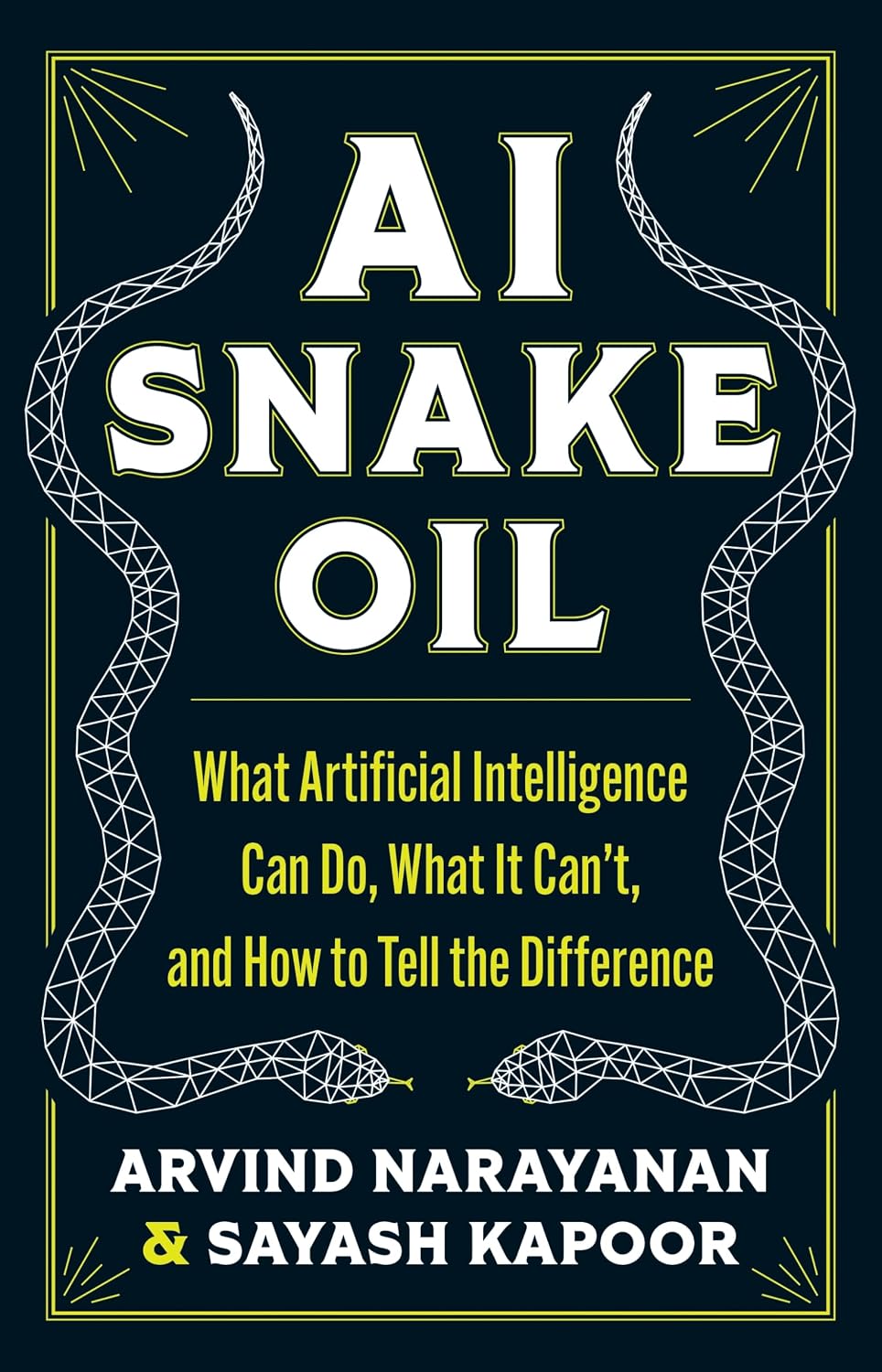
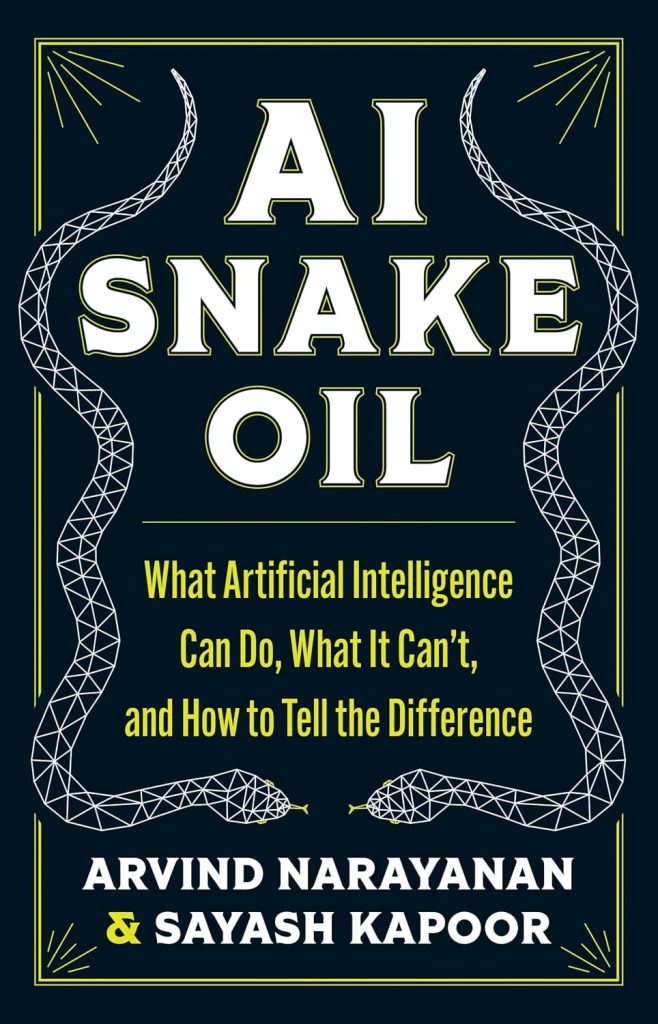
AI Snake Oil — Narayanan & Kapoor
The field guide to telling real AI from hype — predictive vs. generative AI, explained by two Princeton computer scientists.
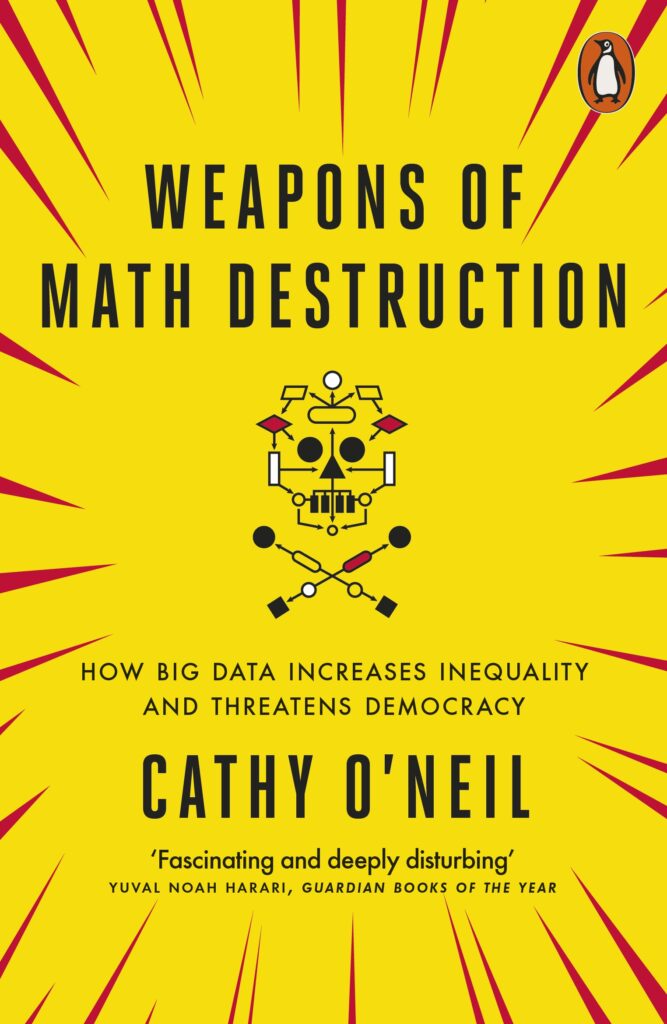
Weapons of Math Destruction — Cathy O’Neil
The classic on how opaque algorithms quietly harm — hiring, lending, policing.
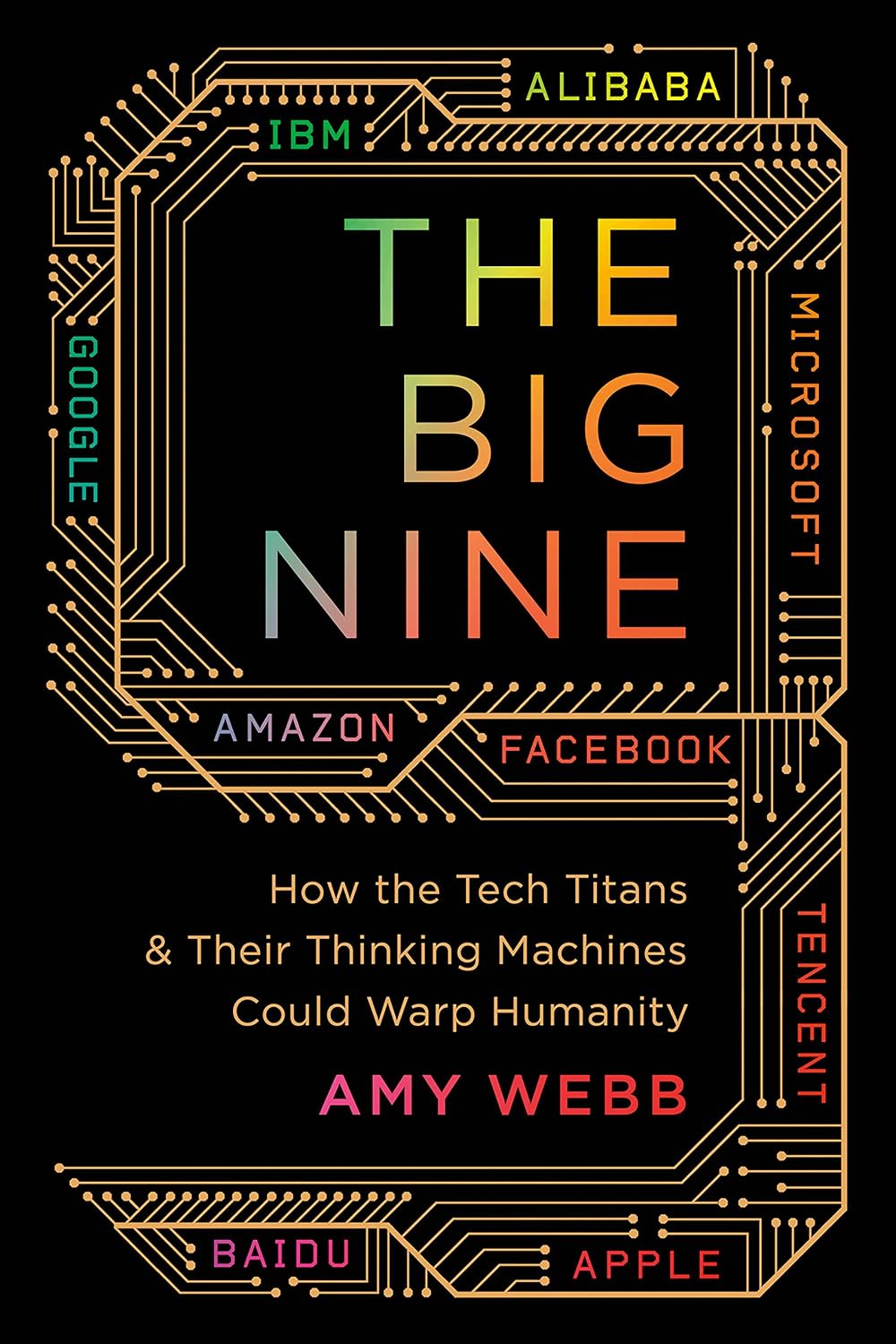
The Big Nine — Amy Webb
Who actually controls AI’s future — the nine tech giants, and what that means for everyone else.
Prices and availability may vary — tap any product to check the current listing.
What to Look For in an AI Literacy Book
Most AI books recycle the same five talking points and call it insight. Before you buy any title in this category — including AI Snake Oil — run it through these six filters.
1. A real argument, not a vibe
Does the book claim something you could actually disagree with? Narayanan and Kapoor deliver one of the clearest theses in years: AI isn’t one thing. Predictive AI finds patterns in data (fraud detection, spam filtering); generative AI produces fluent text with no idea what’s true. Most AI confusion, they argue, comes from smashing the two together and mistaking fluency for intelligence. That’s a testable framework, not a mood — you’ll use it at the next vendor pitch you sit through. The trade-off: the boxes are almost too neat. Real systems sometimes blend prediction and generation, and the edges blur. A slightly-too-tidy model still beats no model at all.
2. Named, falsifiable claims about what AI can’t do
Plenty of books warn vaguely about “hype.” Few name names. The book’s sharpest move is its own definition: snake oil means products that don’t work and probably never will. The authors plant flags on specific domains — hiring tools that claim to read personality from faces, automated essay grading, predictive policing — and explain why the approach is broken, not just that vendors oversell it. That specificity is the difference between “be skeptical” and “here’s the exact question to ask.” Where it wobbles: the takedowns land harder in some chapters than others. The hiring-AI section is devastating; a few later ones feel more like surveys than demolitions.
3. Authors who actually do the work
Narayanan is a Princeton computer science professor, Kapoor his research collaborator, and both were named among TIME’s 100 Most Influential People in AI. Pedigree doesn’t make them right — but it means they read the papers and can’t be dismissed as tech-illiterate scolds. I’ve watched sharp people wave off AI criticism with “the author clearly doesn’t understand the tech.” That dodge doesn’t work here; the book meets engineers on their own turf and still says no. Honestly, that’s what sold me on covering it: credentials decide who gets a hearing, and these two get one.
4. Coverage of generative AI, not just old algorithms
Here’s where a lot of AI criticism quietly goes stale: 300 pages on recommendation engines, then a nervous bolted-on chapter about LLMs. AI Snake Oil (Princeton University Press, September 2024) was written during the generative AI boom, so ChatGPT-style systems are a central subject — what LLMs can and can’t do, why fluency misleads us, what it means for education and knowledge work. The cost of that freshness is shelf life. The field moves monthly; some 2024 examples will feel like yesterday’s news sooner than you’d like. The framework survives. The anecdotes won’t, quite.
5. Honesty about uncertainty
Good books in this space admit what they don’t know. These authors push back on both camps — hype merchants promising utopia and doomers panicking about robot overlords. Their position is more interesting than either: the real danger isn’t superintelligence, it’s what people do with AI today and how it’s controlled by unaccountable big tech. That stance annoys maximalists on both sides, which usually means someone’s thinking instead of performing. Fair warning, though: the second half leans into governance and regulation. Some readers will call that the point. Others will call it homework.
6. Readability for non-technical readers
The prose is academic-adjacent but genuinely readable — closer to a long magazine feature than a textbook, with concepts built from examples rather than equations. A manager, teacher, or journalist can follow it without a CS degree. It is not, however, a page-turner in the airport-book sense. At around 360 pages it asks for real attention, and the chapters are dense. Which raises the obvious question: who is this actually for?
How to Match the Book to Your Situation
Three readers walk into a bookstore. Two of them should walk out with this one.
The overwhelmed professional
You sit in meetings where vendors promise their AI will “revolutionize your workflow,” and you can’t tell which claims are real. This book was written for you. The snake-oil test — what type of AI is it, what happens when it’s wrong, is the problem even solvable with data — becomes a checklist you run in your head during a sales pitch. If your job involves evaluating AI tools or advising people who do, buy it.
The educator
Schools are ground zero for AI confusion right now. Should students use ChatGPT? Can detectors catch them? The chapters on education and generative AI hand you grounded arguments instead of panic or cheerleading. Teachers especially will find the section on why AI can’t grade essays like humans do worth the purchase alone.
The hands-on builder
You want prompt techniques, fine-tuning guides, or product-building skills. Turn around — nothing for you here, and that’s fine. This book teaches judgment, not technique, and it won’t apologize for it. Buy a tutorial instead. Come back when a customer asks you an uncomfortable question about your own product’s claims.
AI Snake Oil vs. Its Closest Rivals
Here’s how the three books in our comparison stack up, in plain terms:
| Book | Ideal For | Price Tier | Key Feature | Watch-Out |
|---|---|---|---|---|
| AI Snake Oil | Judging today’s AI claims, including generative AI | Mid-range hardcover | Predictive vs. generative framework you can reuse | Dense in places; policy-heavy second half |
| Weapons of Math Destruction | Understanding algorithmic harm in hiring, lending, policing | Budget-friendly paperback | Vivid case studies of opaque models hurting real people | Pre-LLM; generative AI barely appears |
| The Big Nine | Grasping who controls AI and where the power sits | Mid-range hardcover | Strategic view of the nine tech giants shaping AI | More geopolitics than claim evaluation |
AI Snake Oil is the only one of the three built for the ChatGPT era — that recency is its biggest edge, and also its biggest expiration risk.
Weapons of Math Destruction remains the most gripping read; O’Neil’s case studies hit like short stories, and it’s the cheapest way into the topic.
The Big Nine answers a different question — not “does this AI work” but “who profits when it does” — which makes it a complement, not a substitute.
Two Scenarios That Decide It
Scenario 1: Your boss wants AI “in everything” by next quarter
Three vendor decks, all full of words like “agentic” and “transformative.” Reading this book first gives you the questions vendors hate: what exactly is the model predicting, what’s the error rate, what breaks when it’s wrong? I’ve seen people spend way too much on AI features nobody uses — usually because nobody in the room could translate the pitch into plain English. This book is that translator.
Scenario 2: You write or teach about AI
Journalists and teachers face a subtler problem: repeating claims they can’t verify. The book’s treatment of generative AI — why fluency fools us, why “the AI said so” isn’t evidence — is genuinely useful source material, quotable without being sensational. One caution: cite the argument, not the anecdote. Some examples will date; the framework won’t.
Common Mistakes Buyers Make With AI Books
Mistake 1: Buying it for skills it never promises. The title says what AI can and cannot do — analysis, not instruction. Don’t expect one book to teach judgment and technique.
Mistake 2: Reading “critical of AI” as “against AI.” The authors are AI researchers who use these tools. Their target is dishonest claims, not the technology. Readers wanting a simple pro-or-anti verdict will be frustrated. That frustration is the point.
Mistake 3: Reading it as a news book instead of a methods book. Read for the anecdotes and you’ll enjoy it, then forget it. Read for the framework — predictive vs. generative, the snake-oil test — and you’ll still be using it years from now. Skim the stories. Study the method.
Why, How, and What — Three Quick Answers
Why does AI hype keep working on smart people?
Because generative AI sounds right. Fluency short-circuits skepticism — when something explains itself confidently, our brains file it under “expert.” Add vendor demos that cherry-pick wins and coverage that confuses a research demo with a finished product, and even careful people get fooled. The defense isn’t cynicism; it’s the book’s two-question filter: which type of AI is this, and what does failure look like?
How do you actually use the snake-oil test?
Take any AI claim — say, software predicting which candidates will succeed. First classify it: predictive or generative? Then ask whether the task is even predictable from data; job performance involves luck and context no dataset captures. Finally ask what happens when it’s wrong, and who pays. Vague answers mean the vendor is selling confidence, not capability. Run that loop three times and it becomes reflex.
What does the book leave out?
It’s stronger on diagnosis than prescription — the policy chapters sketch better governance but read more like directions than a map. And the skepticism occasionally undersells genuine predictive-AI wins; fraud detection and spam filtering get less stage time than the failures. A fair book? Yes. A complete one? No book is.
Key Takeaways
Worth it if: you want a reusable framework for judging AI claims — the predictive-vs-generative distinction reframes most AI news, pitches, and policy debates you’ll meet. Also see: AI Superpowers by Kai-Fu Lee.
Its edge over rivals: the only one of the three written for the generative-AI era, with concrete tests for vendor claims rather than just warnings.
Skip it if: you want hands-on LLM skills or find policy discussion boring. No tutorial appears in these pages.
Best pairing: Weapons of Math Destruction first if algorithmic fairness is your core concern; The Big Nine if big-tech power dynamics interest you more.
Decision Tree: Which AI Book Should You Buy?
Buying your first AI literacy book? → Get AI Snake Oil. Most ground covered: hype detection, generative AI, claim evaluation.
Already read one algorithms book and want the classic? → Get Weapons of Math Destruction. The case studies on hiring, lending, and policing started the modern conversation.
More interested in who wins the AI race? → Get The Big Nine. Power and strategy, not claim evaluation.
Want coding skills or prompt techniques? → Skip all three and buy a hands-on guide.
Questions People Ask Before Buying
Questions People Ask Before Buying
Is AI Snake Oil actually worth reading, or is it just another book riding the AI hype wave?
It’s genuinely worth reading if you want a working method for judging AI claims rather than a stack of opinions, because Narayanan and Kapoor give you two testable lenses — predictive versus generative AI — that you can apply to the next vendor pitch, news headline, or policy memo that crosses your desk.
Most titles in this space describe the hype; this one dissects the mechanism behind it. If you want entertainment over analysis, some chapters will feel like work — but the payoff is a mental toolkit, not a thrill ride.
AI Snake Oil vs Weapons of Math Destruction — which one should I read first?
Read AI Snake Oil first if your priority is understanding today’s AI — especially generative tools like ChatGPT — because it’s newer, covers the generative AI boom, and hands you a decision framework; pick up Weapons of Math Destruction afterward if algorithmic fairness in hiring, lending, and policing is what keeps you up at night.
Think of them as complements. O’Neil’s book is the gut-punch — vivid stories of people harmed by opaque scoring systems. This one is the toolkit. If your work touches generative AI at all, start here; the other book’s core subject predates the LLM era.
Do I need a technical background to understand AI Snake Oil?
No technical background is required to follow the argument, since the authors build every concept from examples and plain language rather than equations or jargon, though readers with some familiarity with machine learning will catch extra layers in the chapters on benchmarks and evaluation.
A curious teacher, manager, or journalist can read it cover to cover without getting lost. The harder demand is patience: the chapters reward slow reading, and skimming the technical explanations costs you the payoff later.
Will AI Snake Oil still be relevant in a year, given how fast AI changes?
The framework will outlast the examples, because the book’s core contribution is a way of thinking — the predictive-generative distinction and the snake-oil test — that applies to whatever models appear next, even though specific product anecdotes and benchmark discussions will inevitably feel dated as the field moves on.
That’s the honest trade-off of any AI book written mid-boom. The 2024-era examples will age — but the question it trains you to ask (“what type of AI is this, and what does failure look like?”) doesn’t expire. Buy it for the method, not the news.
Does the book actually teach me to spot bogus AI claims, or just describe the problem?
It genuinely teaches the skill, not just the scenery, because each takedown — hiring algorithms, automated grading, predictive policing, medical AI — walks through the reasoning step by step, so by the third or fourth example you’re running the test yourself before the authors reveal their verdict.
Most criticism books leave you nodding along; this one leaves you practicing. Whether the habit sticks depends on you — but the training wheels come off by design, which is more than most books in this genre attempt.
Frequently Asked Questions
Who are the authors of AI Snake Oil?
Arvind Narayanan is a professor of computer science at Princeton, and Sayash Kapoor is his research collaborator. Both were named among TIME’s 100 Most Influential People in AI. They’re working AI researchers, not outside commentators — which is why their criticism lands differently from the usual punditry.
How long is AI Snake Oil, and how long does it take to read?
The book runs about 360 pages (Princeton University Press, September 2024). Most readers finish it in a week of evening reading — denser than pop-science, lighter than a textbook.
Is AI Snake Oil biased against AI?
No — and that’s the point the authors keep hammering. They separate AI that works (fraud detection, spam filtering, scientific pattern-finding) from snake oil (products that don’t work and probably never will). Their target is dishonest claims, not the technology.
Does the book cover generative AI like ChatGPT?
Yes, extensively — its main advantage over older AI criticism. Written during the generative AI boom, it treats ChatGPT-style systems as a central subject: what large language models can and can’t do, and why their fluency misleads us.
What’s the difference between predictive AI and generative AI in the book?
Predictive AI finds patterns in data to make forecasts — fraud detection, weather models. Generative AI produces new content — text, images, code — that sounds right but may not be true. Confusing the two, the book argues, is the root of most AI hype.
Is AI Snake Oil a good gift for someone in tech?
It’s a strong gift for the tech-adjacent — managers, product people, journalists, educators — who evaluate AI claims without a PhD. For a hardcore ML engineer it may cover familiar ground. And honestly — when was the last time a book changed how you read the news? This one might.
Final Recommendation
If your problem is hype — too many claims, too little clarity — buy AI Snake Oil. It’s the rare AI book that leaves you with a skill instead of just a mood. The predictive-generative distinction will change how you read AI news the same week you learn it.
If your problem is skills — you need to actually use or build these tools — this isn’t your book, and buying it anyway will only frustrate you. Know which problem you have. Then pick the book that solves it.
If you’re ready, you can check the current listing for AI Snake Oil here.
This page contains affiliate links; we may earn a commission on qualifying purchases.