
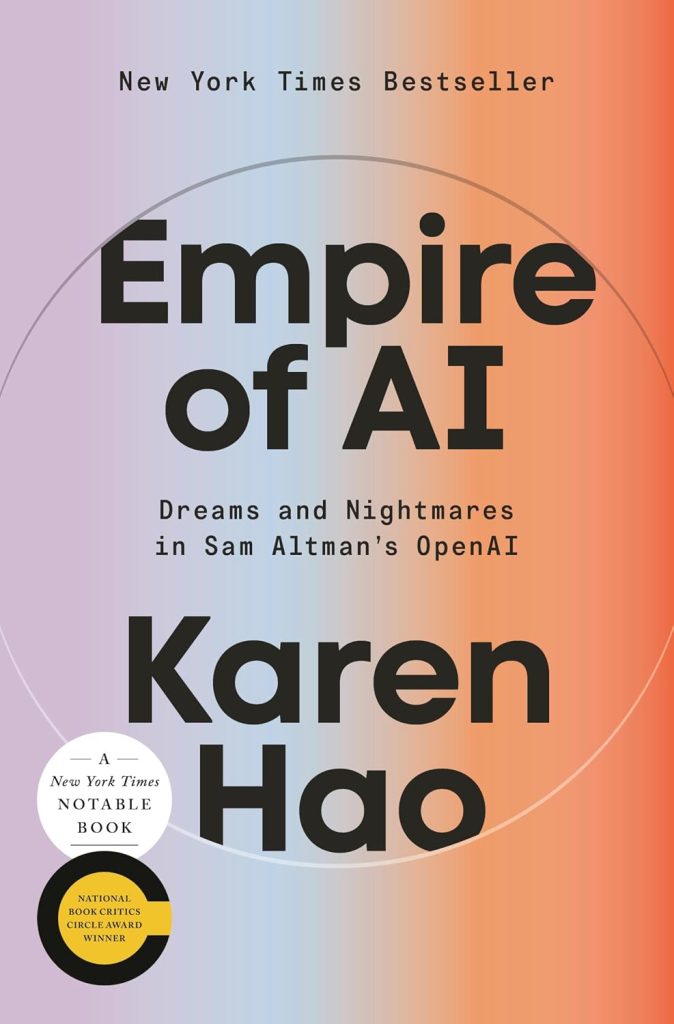
This page contains affiliate links; we may earn a commission on qualifying purchases.
Empire of AI by Karen Hao: Book Review — Is This the Definitive Inside Story of OpenAI?
This Empire of AI book review is for anyone trying to understand the company behind ChatGPT without reading a year’s worth of tech headlines. Karen Hao spent years reporting inside OpenAI’s orbit, and her 2025 book takes on the question everyone asks: how did a nonprofit founded to keep AI safe turn into one of the most secretive, well-funded companies on the planet? Here is what the book actually delivers — and where it leaves gaps.
Related reading: AI Snake Oil and AI Superpowers by Kai-Fu Lee.
The short version? The reporting is the real deal. The argument will either convince you or provoke you. Either way, you’ll know more than before.
Quick Answer
Empire of AI is worth buying if you want a deeply reported, readable account of OpenAI’s rise from nonprofit idealism to corporate empire. It’s investigative journalism with a verdict — not a balanced biography — so readers who want the counter-argument should pair it with a second book. For the tech-curious, it’s the most informative single book on the company shaping the AI era.
Compare Top AI Industry Books
Three proven picks side by side — choose the one that fits your needs.
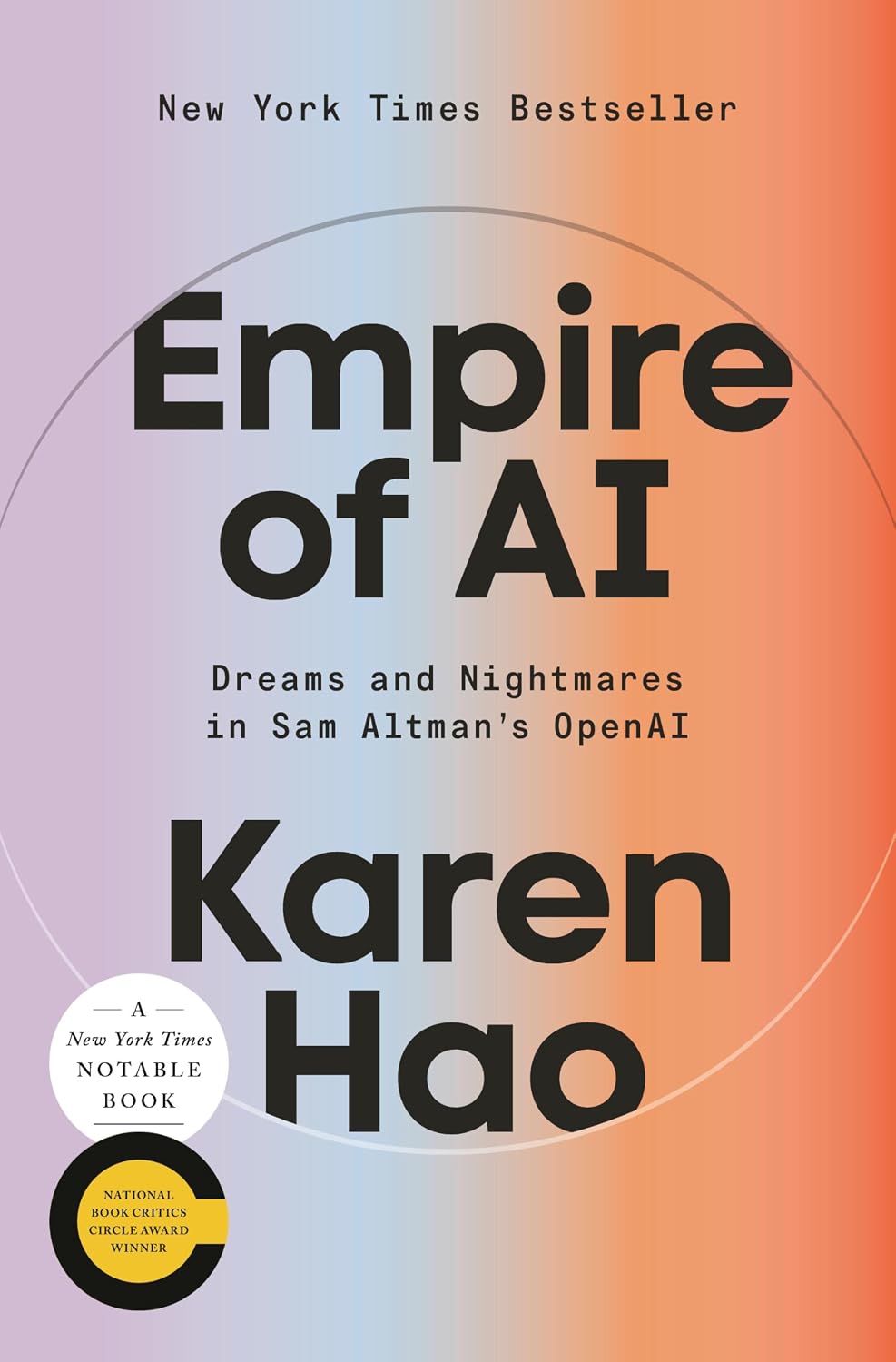
Empire of AI — Karen Hao
Inside-the-room journalism on OpenAI and the AI arms race — National Book Critics Circle Award winner, 2025.
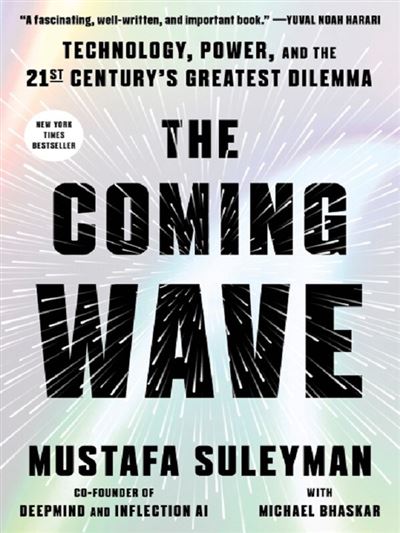
The Coming Wave — Mustafa Suleyman
The insider’s case for why AI progress is unstoppable — and why containment is the only way forward.
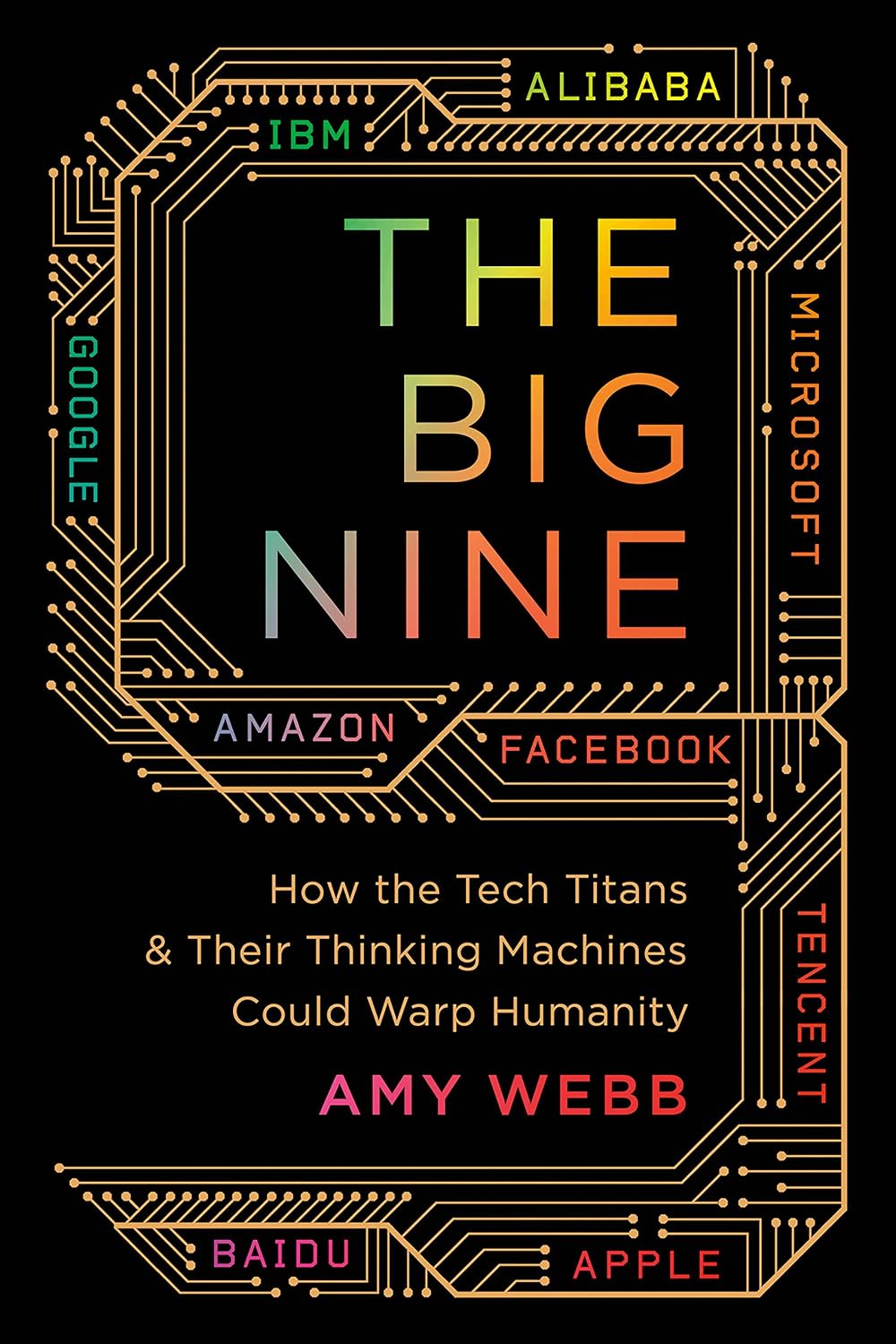
The Big Nine — Amy Webb
Who actually controls AI’s future — the nine tech giants, and what that means for everyone else.
Prices and availability may vary — tap any product to check the current listing.
What to Look For in an AI Industry Book
AI books pile up fast, and most of them are either hero-worshipping founder profiles or doomsday essays with no reporting behind them. Before buying any title in this category — including Empire of AI — run it through these six filters.
1. Sourcing you can feel
Does the author actually know the people, or just the press coverage? Hao covered OpenAI from its early days as a senior AI reporter at MIT Technology Review and later for the Wall Street Journal, and she maintained sources inside the company through its biggest crises. The book reads like someone who was in the hallway, not someone summarizing news alerts. Trade-off: some passages lean on anonymous background sources — you either trust the reporter’s notebook or you don’t.
2. A thesis, not just a timeline
A chronology of events is worthless without an argument about what they mean. Hao’s thesis is the title: building frontier AI requires unprecedented proprietary resources — cutting-edge chips, massive data, underpaid human labor, and staggering energy and water — so only a handful of companies can even play. The “empire” framing turns a company biography into a theory of the whole industry. Risk: the argument is so elegant it flattens some complexity; not every AI story is really an empire story.
3. The human and environmental cost, taken seriously
Plenty of AI books mention “data workers” in one paragraph and move on. Hao gives the subject real chapters: the workers in the Global South paid pennies to clean up training data, the communities watching data centers drain local water and power. This is the book’s distinguishing material — nobody else with her access wrote these chapters. Trade-off: the numbers will age fast. The direction of the argument matters more than any single figure.
4. How the main character is treated
Every OpenAI book is really a book about Sam Altman, and every author decides: friend or adversary? Hao is firmly adversarial — her portrait of Altman’s leadership style, from the 2023 boardroom ouster to the deals with Microsoft, is unsparing. On one hand, there’s no sycophancy here; the fawning founder biography this is not. On the other, readers looking for a neutral portrait won’t find it. Know which you want before you buy.
5. Readability for non-insiders
Narrative journalism should read like a story, not a whitepaper. Hao writes in vivid scenes — boardroom confrontations, reporting trips to Kenya and Chile — and explains the technology in plain language as she goes. You don’t need to know what a transformer is. The wrinkle: the timeline jumps around to serve the argument, and several reviewers found the hopping between eras confusing. Pay attention at chapter breaks.
6. Honesty about what it can’t tell you
A 2025 book can’t cover what happens in 2026, and AI moves faster than publishing. The boardroom narrative will date — that’s unavoidable in journalism about a live story. The structural argument (the compute-data-labor-energy economics) is the part built to last. Buy it for the economics and the reporting, not for the news.
How to Match the Book to Your Situation
The tech-adjacent professional
You work near AI — product, marketing, consulting — and OpenAI keeps coming up in meetings. This book gives you the full backstory: the nonprofit origins, the Microsoft alliance, the 2023 leadership crisis, the extraction economics. You’ll walk out sounding like you’ve been following the story for years.
The skeptical reader of AI headlines
You suspect the breathless coverage hides something but you can’t tell what. Hao’s reporting on the gap between OpenAI’s safety rhetoric and its business reality is exactly the filter you need. Fair warning: you’ll come out more skeptical, not less.
The founder or investor
You care less about personalities and more about the industry’s economics. The “empire” thesis — why frontier AI consolidates around a few giants — is a genuinely useful lens for thinking about where the money and power flow. Skim the personal drama; study the resource chapters.
Empire of AI vs. Its Closest Rivals
| Book | Ideal For | Price Tier | Key Feature | Watch-Out |
|---|---|---|---|---|
| Empire of AI | The inside story of the company defining the AI era | Mid-range hardcover | Deep sourcing inside OpenAI plus global reporting on AI’s costs | Adversarial toward Altman; timeline hops around |
| The Coming Wave | Understanding why AI progress feels unstoppable | Budget-friendly paperback | An insider’s containment argument from a DeepMind co-founder | More thesis than reporting; thin on the people |
| The Big Nine | Understanding who holds AI’s power | Budget-friendly paperback | Clear map of the nine companies shaping AI’s future | Pre-ChatGPT; some chapters feel dated |
Empire of AI is the only one with real reporting from inside OpenAI — its biggest edge, and the reason it won major book awards. The Coming Wave gives you the technology’s momentum as argued by someone who built it; The Big Nine is the most readable map of where AI power sits, though written before the generative boom.
Two Scenarios That Decide It
Your colleagues keep name-dropping OpenAI and you want the real story
Every strategy deck mentions “the ChatGPT moment,” but nobody explains the company behind it. This book is the crash course: the Musk-era founding, the pivot to for-profit, the Microsoft deal, the 2023 coup attempt. I’ve seen people quote this book’s arguments in meetings months after reading it — it’s that kind of reference point. One book, one weekend, and you’re the person who actually knows.
You want to understand AI’s impact beyond the hype cycle
The boardroom chapters are gripping, but don’t skip the reporting from Kenya and Chile. The sections on data labor and resource extraction change how you think about every “AI is free magic” claim. These chapters are also the most durable part of the book — boardroom drama fades, but the economics of building frontier models will still be true in five years. Buy it for these chapters; the OpenAI narrative is the bonus.
Common Mistakes Buyers Make With AI Books
Mistake 1: Expecting a neutral biography of Sam Altman. This is investigative journalism with a verdict, not a balanced life story. If you want the sympathetic version of events, you’ll be annoyed by page fifty. Buy it knowing which book you’re getting.
Mistake 2: Buying it for practical AI skills. Zero prompt tips, zero tutorials, zero “how to use AI in your workflow.” The book explains the industry, not the tools. Wrong problem, wrong book.
Mistake 3: Treating it as the whole story. One company’s story is not the industry’s story. The natural companion is Parmy Olson’s Supremacy, which covers the OpenAI–DeepMind rivalry from the other side. Read both and you have the full picture; read one and you have half of it.
Why, How, and What — Three Quick Answers
Why does the book call it an “empire”?
Because the economics of frontier AI look like the economics of old empires: enormous resource extraction from the periphery to enrich the center. Training top-tier models demands scarce chips, oceans of data, armies of low-paid annotators, and power-hungry data centers. Only a handful of companies can afford that game — so the industry consolidates by physics, not just ambition. That’s the argument, and it’s hard to unsee once you’ve read it.
How did Hao get this material?
By being there early and staying. She started covering OpenAI in 2019 for MIT Technology Review, built sources inside the company and its orbit, and kept them through the Microsoft deal, the leadership crises, and the generative boom. The book also draws on reporting trips to the places AI’s costs land — data-labeling operations, communities hosting data centers. Years of access, not a press junket.
What does the book leave out?
Diagnosis beats prescription — the book is far stronger at documenting the problem than at proposing what should replace the current system. The DeepMind and Google side of the story gets less space than OpenAI deserves a rival of equal depth. And some chapters about Altman read more like character evidence for a prosecution than analysis. Fair? Readers will decide.
Key Takeaways
Worth it if: you want the definitive reported account of OpenAI — the access, the narrative, and the “empire” thesis make it the most informative single book on the company.
Its edge: years of inside sourcing plus on-the-ground reporting on AI’s human and environmental costs — material no other OpenAI book covers this well.
Skip it if: you want a neutral portrait of Sam Altman or practical AI how-to. This is adversarial journalism, not a manual. Also see: The Big Nine by Amy Webb.
Best pairing: Supremacy by Parmy Olson for the DeepMind-side view of the rivalry; The Big Nine if you care more about who holds AI’s power than how one company rose.
Decision Tree: Which AI Book Should You Buy?
Want the inside story of OpenAI? → Empire of AI. The deepest reporting on the company, full stop.
Want the broader industry race? → Supremacy by Parmy Olson. OpenAI vs. DeepMind, both sides.
Want the containment argument from an insider? → The Coming Wave. Why AI can’t be stopped — only managed.
Want who holds AI’s power? → The Big Nine. The nine giants, mapped.
Want practical AI skills? → Skip all four; buy a hands-on guide instead.
Questions People Ask Before Buying
Questions People Ask Before Buying
Is Empire of AI actually worth reading, or is it just anti-tech clickbait?
It’s worth reading if you want deeply reported journalism on how the most influential AI company in the world actually works, because Hao spent years inside this story as a reporter, and the book reads like investigative narrative — not a hot take assembled from headlines.
The 2025 book awards back the reporting: New York Times bestseller, NYT Notable Book, and National Book Critics Circle Award winner for nonfiction. Clickbait doesn’t win those.
Empire of AI vs Supremacy by Parmy Olson — which one should I read first?
Read Empire of AI first if your curiosity centers on OpenAI itself and the people running it, because Hao’s book is the deeper dive into one company with years of sourcing behind it, while Supremacy is the wider two-horse race between OpenAI and DeepMind — pick based on whether you want the company story or the industry rivalry.
If the company story grabs you, Supremacy is the natural second book. Together they cover both sides of the rivalry.
Is Empire of AI too biased against Sam Altman to trust?
It’s adversarial journalism, not a hit piece — but you should know going in that Hao makes her verdict on Altman’s leadership clear, because she documents decisions, quotes, and incidents from years of reporting, and readers who want both sides will need a second book for the counter-arguments.
Think of it like reading one side’s brief: thorough, evidence-based, but written to persuade. Honest about its angle.
Will Empire of AI still be relevant in a year, or does it date too fast?
The narrative half will age — boardroom drama always does — but the structural half should hold, because the book’s real argument is about what it takes to build frontier AI models (compute, data, cheap labor, energy) and those economics aren’t changing anytime soon.
The 2025-era anecdotes will fade; the empire economics won’t. Buy it for the argument, not the news.
Does the book cover the human and environmental costs of AI, or just boardroom drama?
It covers both, and the reporting outside Silicon Valley is the book’s strongest material, because Hao documents the data workers in the Global South paid pennies to label training data and the communities watching AI data centers drain local water and power.
These chapters are what separate it from every other OpenAI book. Don’t skip them.
Frequently Asked Questions
Who is Karen Hao?
Karen Hao is an investigative journalist who specializes in AI. She covered the beat as a senior reporter at MIT Technology Review and later at the Wall Street Journal, and TIME named her to its TIME100 AI list. She began reporting on OpenAI back in 2019 — long before it became a household name.
What is the full title of the book?
“Empire of AI: Dreams and Nightmares in Sam Altman’s OpenAI,” published by Penguin Press in May 2025. The subtitle tells you exactly what you’re getting: an account of the company, told through its controversial leader.
Is Empire of AI a bestseller?
Yes. It debuted as a New York Times bestseller, was named a New York Times Notable Book, and won the National Book Critics Circle Award for nonfiction. It was also longlisted for the 2025 Financial Times Business Book of the Year.
Do I need to follow AI news to understand the book?
No. The book builds the story from the beginning — the founding, the early ideals, the Microsoft deal — so newcomers can follow it cold. If you already know the 2023 leadership crisis, you’ll just recognize the characters faster.
Is it more history, journalism, or opinion?
Investigative journalism with a strong argument. The reporting — scenes, quotes, documents, interviews — is the foundation; the “empire” thesis is the argument Hao builds on top of it. Expect evidence, then a verdict.
Is Empire of AI a good gift for someone curious about AI?
Strong choice for the tech-curious friend who reads real books — the journalist, manager, or policy nerd who wants to understand AI’s power structures, not learn prompts. It’s the rare AI book that works as serious nonfiction and a page-turner.
Final Recommendation
If your problem is understanding — who built the most consequential AI company in the world, how, and at whose expense — buy Empire of AI. It’s the rare tech book that’s both the most-reported and the most readable account of its subject, and the empire thesis will change how you read AI news long after you finish it.
If your problem is neutrality — you want every side weighed equally — pair it with a second book, because Hao has a verdict and doesn’t hide it. Know which reader you are, then pick accordingly. If you’re ready, check the current listing for Empire of AI here.
This page contains affiliate links; we may earn a commission on qualifying purchases.