
Disclosure: This page contains affiliate links. If you buy through them, we may earn a commission at no extra cost to you.
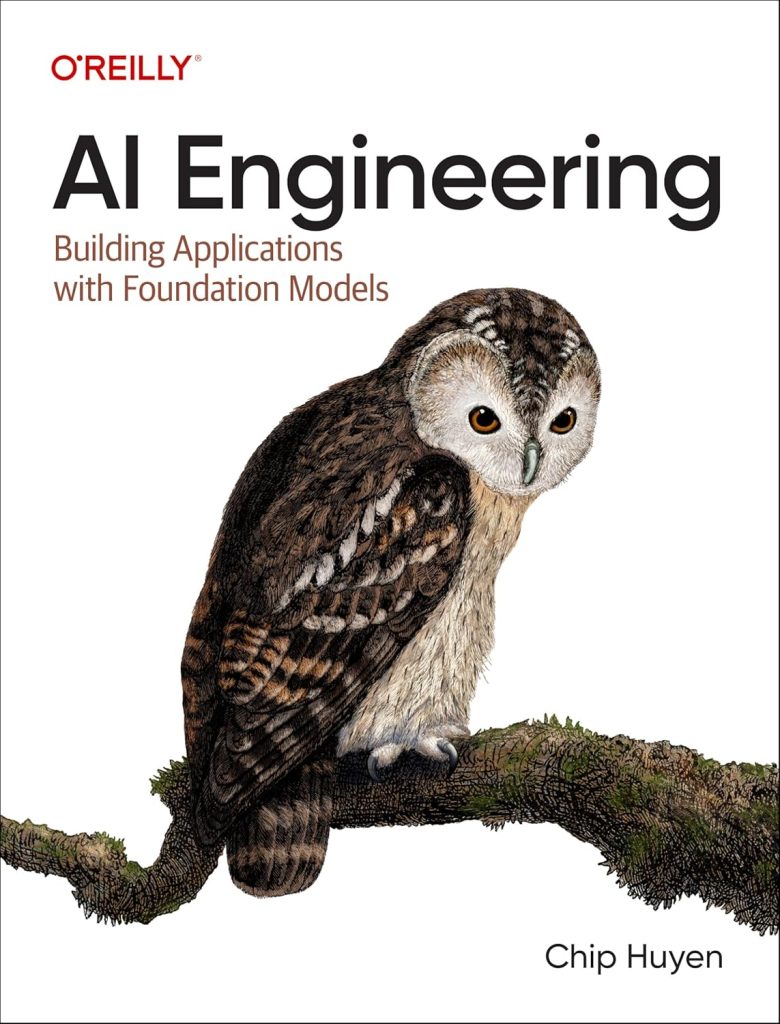
Every team has the same demo story. A foundation model answers questions beautifully in a notebook, the room gets excited, and then real users arrive — with typos, with edge cases, with questions the demo never met — and the thing wobbles. Chip Huyen wrote AI Engineering for the morning after that demo. Published by O’Reilly in 2025, it skips how models are trained and starts where most books stop: how do you evaluate, adapt and operate an application built on top of somebody else’s model?
That framing is the book’s whole identity, so it deserves stating plainly. There is no transformer construction here, no training run to babysit. The publisher’s description positions it as a guide to building applications with foundation models, and the chapters deliver exactly that — evaluation pipelines, retrieval, agents, the fine-tuning versus prompting decision, latency and cost, and what to monitor once the system is live and drifting.
Huyen arrives with the right scar tissue. Her earlier book, Designing Machine Learning Systems, became a standard reference for production ML, and this one reads like its successor for a world where the model is rented rather than built. The perspective is a systems perspective throughout: models are components, components fail, and engineering is the discipline of noticing before your users do.

So, worth buying in 2026? For engineers and product builders moving from demos to production — yes, this is currently the clearest map of that territory. For readers who want model-training theory, or a friendly no-code tour of chatbots, it is the wrong book entirely, and this review will point both groups somewhere better rather than pretend otherwise.
Quick Answer
Buy AI Engineering by Chip Huyen if you build software and need to ship a reliable application on top of a foundation model — evaluation, retrieval, agents, adaptation trade-offs, cost and monitoring. Skip it if you want zero-code reading, prompt tricks or model-training theory; readers who want to understand model internals should build one with Raschka instead. This AI Engineering book review rates it a strong buy for production builders, an easy pass for everyone else.
Compare Top Books for Building Production AI Applications
Three proven picks side by side — choose the one that fits your needs.
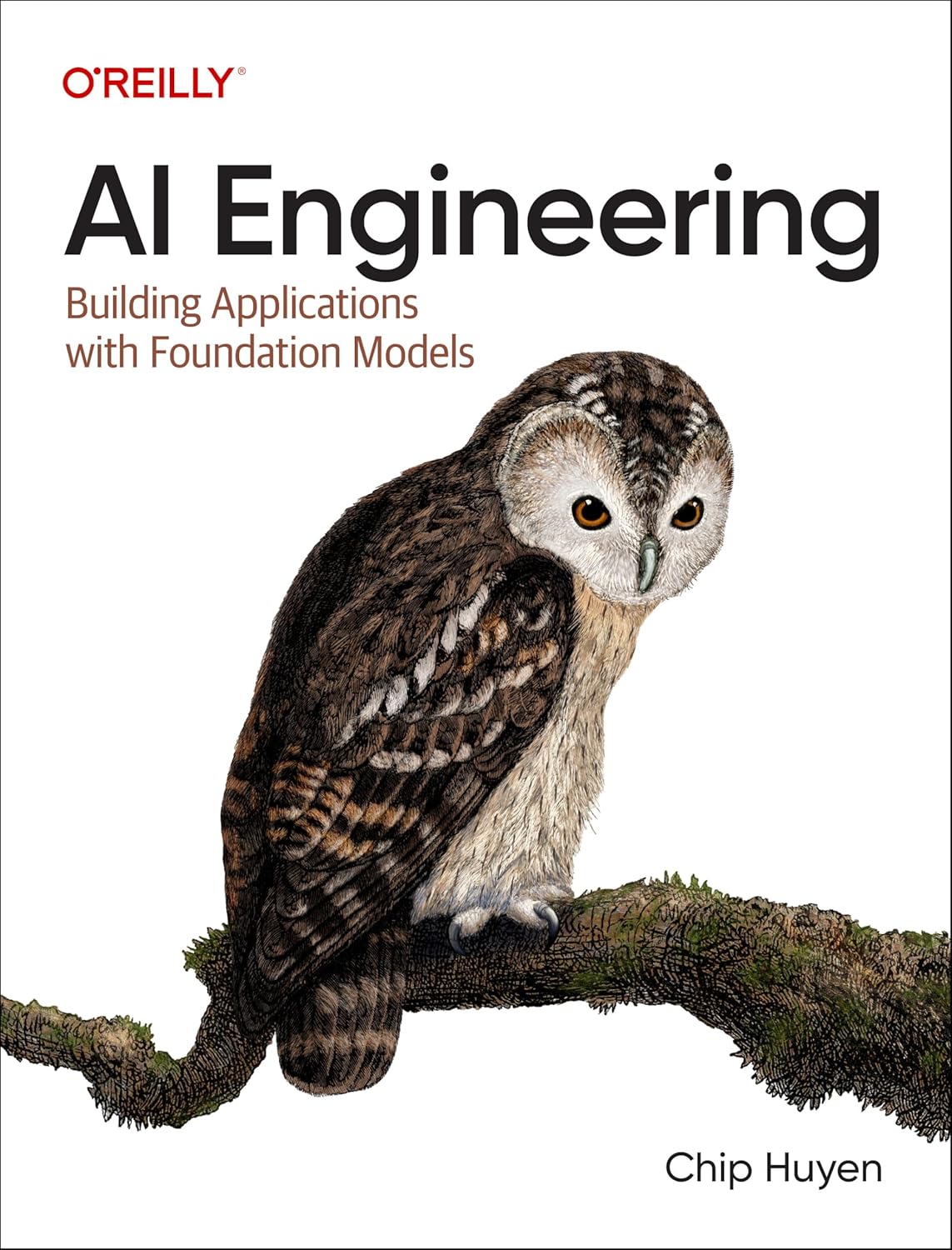
AI Engineering by Chip Huyen
Build applications on foundation models — evaluation, retrieval, agents and production operations, without training a model
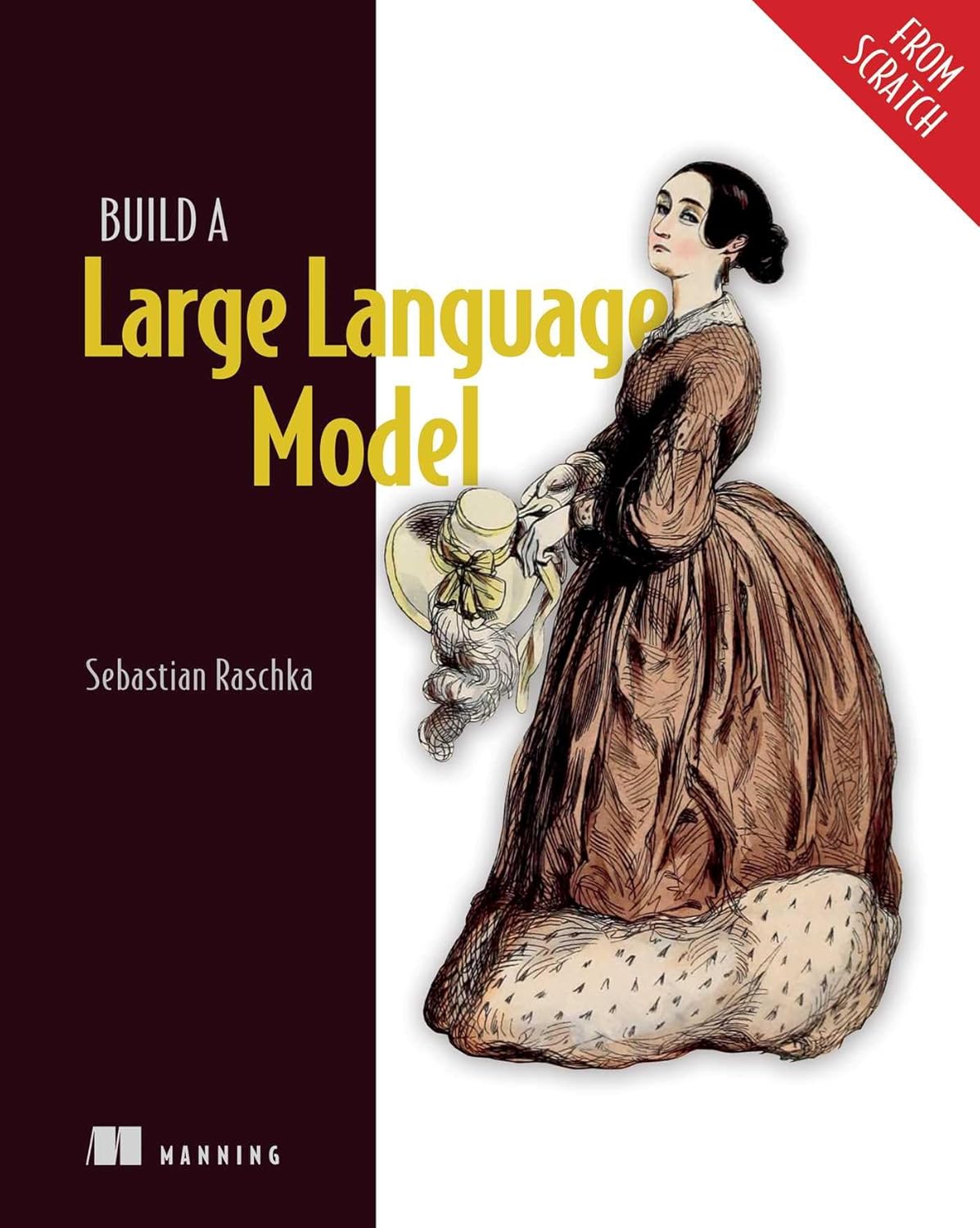
Build a Large Language Model (From Scratch) by Sebastian Raschka
Build a GPT-style model yourself in PyTorch — for readers who want model internals, not application shipping
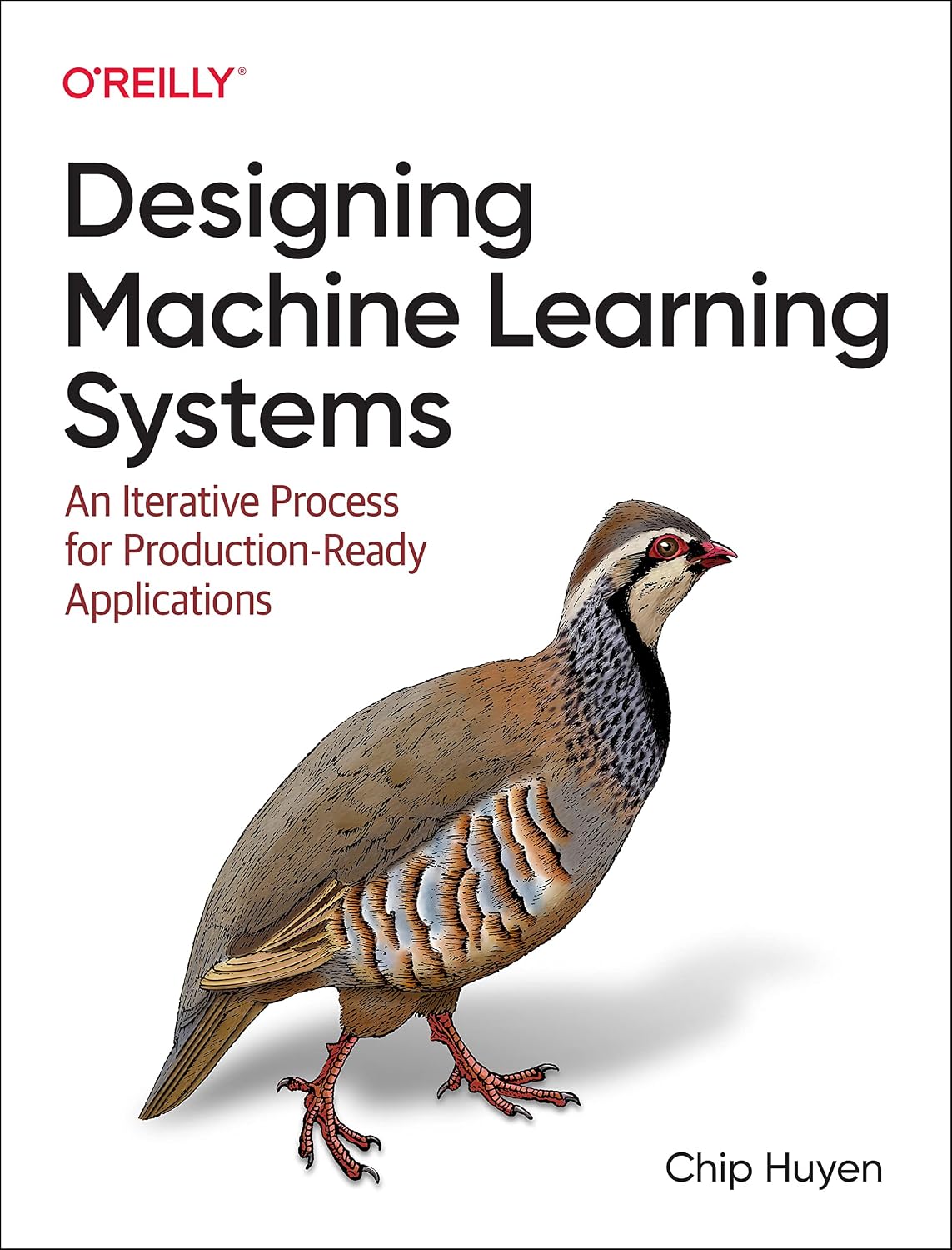
Designing Machine Learning Systems by Chip Huyen
The broader production ML playbook — data, training pipelines and monitoring for models you build and train yourself
Prices and availability may vary — tap any product to check the current listing.
AI Engineering Book Review: What to Look For in a Production AI Book
Books about building with foundation models fail in recognisable ways. Demo-driven chapters that collapse under real traffic. Vendor enthusiasm dressed as architecture. Six tests separate a production guide from a conference talk with page numbers, and this AI Engineering book review runs Huyen’s book through each of them.
1. Evaluation comes first, not last
The book’s most valuable insistence is that evaluation is the foundation everything else stands on — you cannot improve what you cannot measure, and with generative models measurement itself is a design problem. Huyen works through automated checks, model-based judging and human review as complementary layers rather than rivals, and keeps returning to a point demo culture hates: a system without an evaluation pipeline is a hope, not a product.
2. Retrieval gets treated as engineering, not a plugin
Retrieval-augmented generation is where most real applications actually live, and the treatment here respects that. Chunking, embedding choices, retrieval quality, what to do when the retrieved context is wrong — the discussion stays at the level of failure modes and trade-offs, which is the level production teams operate at. Readers expecting a framework tutorial will find principles instead; principles survive framework churn better.
3. Fine-tuning versus prompting, argued honestly
Every team hits this fork: prompt harder, retrieve better, or fine-tune? The book lays out the decision with unusual fairness — what fine-tuning genuinely buys (format reliability, behaviour shaping, smaller cheaper models at inference) against what it costs (data, maintenance, evaluation burden). The honest caveat runs the other way too: prompting is not free either, and bloated prompts are a latency and cost decision whether you admit it or not.
4. Agents, minus the hype
Agent chapters in most 2025 books read like keynote transcripts. Huyen’s treatment is cooler: planning, tool use and reflection examined as engineering choices with compounding error rates, where each extra autonomous step multiplies the ways the system can wander off. That sobriety is exactly what a team needs before giving a model the ability to act rather than merely answer.
5. Latency and cost treated as design constraints
Production economics get their own serious attention — where latency actually accumulates, what caching and model routing buy you, why the cheapest model per call can be the most expensive system per successful task. This is the material that decides whether an AI feature survives its first finance review, and it is the material most AI books skip.
6. Monitoring and feedback loops close the system
The final movement covers the unglamorous machinery that keeps a shipped system honest: logging, drift, user feedback as data, and the loop that turns production failures into evaluation cases. It is the least fashionable topic in the book and, over a two-year product life, probably the most consequential. If that production focus sounds like your actual job, check the current listing for format options before you commit.
Who Should Read It — and Who Should Skip It
Three reader types keep arriving at this book. One should buy it immediately. One should buy it eventually. The third should walk past, and a review that won’t say so isn’t doing its job.
The engineer whose prototype just got approved
Your demo worked, leadership said ship it, and you can feel the gap between a notebook and a product widening under your feet. This book was written for that exact moment. It assumes you can build software — APIs, pipelines, testing instincts — and spends none of its pages re-teaching programming. What it hands back is the production checklist you didn’t know you were missing: evaluation before features, retrieval as a system, adaptation as an economic decision.
The product builder deciding where the moat is
If your question is strategic — what can a team actually defend when everyone rents the same models — the evaluation and data chapters are the useful ones. Differentiation, in Huyen’s telling, lives in your evaluation sets, your feedback loops and your domain data, not in prompt cleverness. Readers who first want the internals story can start with our Build a Large Language Model From Scratch book review and come back here when the question turns from how models work to how products survive.
The zero-code reader — skip this one
You want to use chatbots better at work on Monday, with no interest in operating anything. This book will not help you, honestly. It contains no prompt recipes to copy and no gentle on-ramp for non-builders, because its reader is assumed to be shipping software. A prompting guide serves that need far better, and model-training theory — the other common wrong purchase — lives in Raschka’s book, not this one.
How It Compares With Build a Large Language Model and Designing Machine Learning Systems
Our Empire of AI book review covered the corporate race behind the biggest models. These three books sit at the working end of the shelf, and two of them share an author — which makes the comparison more useful, not less. The real question in this AI Engineering book review is which layer your problem lives at: inside the model, on top of the model, or across the whole ML system. Our Prompt Engineering for Generative AI book review covers the remaining layer, the input layer, for readers whose work stops at the prompt.
| Book | Where It Works | What You Actually Do | Code Level | Best For | Watch-Out |
|---|---|---|---|---|---|
| AI Engineering by Chip Huyen (O’Reilly) | On top of the model | Evaluate, adapt and ship applications built on existing foundation models | Moderate; system design and trade-offs over raw implementation | Engineers and product builders turning a model into a product people rely on | Assumes the model exists; won’t teach training or internals |
| Build a Large Language Model (From Scratch) by Sebastian Raschka (Manning) | Inside the model | Build and train a small GPT-style model in PyTorch, then fine-tune it | Heavy; you write the core components yourself | Developers and students who want real understanding of how models work | Little on serving real users or controlling production cost |
| Designing Machine Learning Systems by Chip Huyen (O’Reilly) | Across the whole ML system | Design data, training, deployment and monitoring for models your team builds itself | Moderate; architecture and process over code listings | Teams running traditional ML systems in production | Predates the foundation-model shift; adaptation and prompting get little space |
Huyen’s two books bookend the shift. Designing Machine Learning Systems assumes your team trains the model and owns the pipeline end to end. AI Engineering assumes the model arrives through an API and the hard problems have moved up a layer — evaluation, context, adaptation, cost. Most production teams in 2026 live in the second world, whether or not they’ve admitted it yet.
Where AI Engineering beats the other two
Relevance to the work most teams are actually doing. Few product teams will train a model this year; nearly all of them will evaluate one, bolt retrieval onto one, argue about fine-tuning one, and get a surprise bill from one. Huyen’s book is the only one of the three organised around that reality, and its evaluation-first stance alone justifies the shelf space for a team lead.
Where it is weaker
Depth of implementation, deliberately. You finish understanding what an evaluation pipeline must do without being handed a finished one, and readers who learn by typing code may find Raschka’s build-it-yourself method sticks harder. The book also ages at the speed of its subject: specific tools and model names will date, even though the underlying trade-offs — measure first, adapt deliberately, watch the system — are the durable part.
AI Engineering Book Review: Two Ways Teams Actually Use This Book
The pre-launch audit
The most common productive pattern: a team with a working prototype reads the evaluation and monitoring chapters as a checklist before launch, and discovers how much of their system is unmeasured. Honestly, that discovery is the value. Finding out your retrieval fails silently is unpleasant in a book club and catastrophic in a launch week.

The architecture reference on the desk
The second pattern is slower: the book stays within reach during design reviews, opened at the adaptation chapter when someone proposes fine-tuning, or the latency chapter when a demo feels sluggish. It tolerates this reference use well because chapters are organised by problem rather than by a single narrative build — you can enter at your failure mode.
Common Mistakes Buyers Make With Production AI Books
Mistake one: buying it as a prompt cookbook. There are no copy-paste prompts waiting to be harvested. Readers who arrive hunting for tricks leave disappointed by a book about measurement and systems — a purchasing error, not a writing failure.
Mistake two: buying it to learn how models are trained. The training story belongs to Raschka. Huyen starts after the model exists, and no amount of careful reading will conjure the internals chapters she deliberately left out.
Mistake three: reading it as a spectator. The evaluation material only pays off when mapped onto a real system — yours, ideally, with its embarrassing gaps. Read it beside a project, not instead of one.
Mistake four: treating the tooling examples as the content. Tools named in a 2025 book will churn. The decision frameworks are the purchase; the product names are packaging.
Questions People Ask Before Buying
Is AI Engineering by Chip Huyen worth buying?
Yes, AI Engineering is worth buying if you already build software and your real problem is turning a promising foundation model demo into a reliable production application, because Chip Huyen organises the whole book around evaluation, adaptation and operations rather than around model training theory alone.
That verdict, from this AI Engineering book review, comes with its boundary stated plainly: the book will not teach you to train a model, and it will not entertain a reader who never intends to ship anything. Its value is operational — a framework for deciding what to measure, what to adapt and what to watch once users depend on the system.
AI Engineering or Build a Large Language Model (From Scratch) — which should I read first?
Read AI Engineering first if your gap is shipping an application on top of an existing model, and read Build a Large Language Model (From Scratch) first if your gap is understanding model internals, because Huyen assumes the model already exists while Raschka teaches you to construct one.
The two books are complements wearing similar covers. Raschka explains the machine; Huyen explains the job around the machine. Teams building products usually feel Huyen’s absence first — the failed evaluation, the runaway inference bill — while students and the deeply curious feel Raschka’s. Match the purchase to the gap that is actually costing you.
Do I need machine learning experience before reading AI Engineering?
You need solid software engineering experience before AI Engineering makes sense, but you do not need to have trained models before, because the book explains foundation model concepts as it goes while assuming you already understand APIs, data pipelines, testing habits and how production systems fail.
That split is the honest entry ticket. A backend engineer who has never touched ML can follow this book and use it immediately. A data scientist who has never operated a service will find the production chapters harder going than the modelling ones — the book quietly assumes operational instincts that only shipping software teaches.
Does AI Engineering teach prompt tricks or model training?
No, AI Engineering teaches neither prompt tricks nor model training as its main subject, because its subject is the engineering layer around a foundation model, covering evaluation design, retrieval, agents, adaptation choices, latency, cost control and monitoring once real users start depending on the system daily.
Prompting appears in its proper place — as one adaptation technique among several, weighed against retrieval and fine-tuning rather than celebrated. Readers whose whole job happens at the prompt will find that framing clarifying or deflating, depending on temperament. Either way, nobody should buy this book expecting a recipe collection.
Who should skip AI Engineering?
Skip AI Engineering if you want a zero-code introduction to chatbots, a collection of clever prompts or deep theory about how models are trained, because every chapter assumes you intend to build and operate a real application and judges techniques by production evidence rather than novelty.
Researchers working on training itself will also find their subject mostly absent — the book gestures at the model through an API window. And casual readers should know the density is real: this is a working reference that rewards a project in progress, not an evening’s light reading about the AI moment.
Decision Tree: Should You Buy AI Engineering?
Your prototype works and production is next → Buy it. Evaluation, retrieval and monitoring are your actual problems now, and this is the clearest map of them.
You lead a team deciding between prompting, retrieval and fine-tuning → Buy it. The adaptation framework alone will settle arguments your team is currently having by instinct.
You want to understand how a language model works inside → Skip it for now. Build one with Raschka; return to Huyen when the prototype has to grow up.
You want prompts, workflows or a no-code tour → Skip it. A prompting guide serves you better, faster and cheaper in time.
Key Takeaways
✅ The central claim: shipping an AI application is an evaluation problem first — measure before you optimise, or you are guessing at scale.
✅ The strongest material treats retrieval, adaptation and monitoring as one system, because in production they fail as one system.
✅ Latency and cost get the serious treatment most AI books skip, which is why finance teams indirectly love this book too.
⚠️ Not a training manual, not a prompt cookbook, and not readable as a no-code introduction. Buy it for the production layer, not the model.
📚 Pairs with (doesn’t replace) Build a Large Language Model: how to ship with a model here, how the model works there.

Frequently Asked Questions
When was AI Engineering published, and who published it?
O’Reilly Media published AI Engineering in early 2025, per the publisher’s catalogue. Its full title is AI Engineering: Building Applications with Foundation Models, and it is Chip Huyen’s guide to the production layer of modern AI applications.
Who is Chip Huyen?
Chip Huyen is a machine learning systems writer and engineer, best known as the author of Designing Machine Learning Systems. Her work focuses on how ML systems behave in production — data, evaluation, deployment and monitoring — which is exactly the perspective AI Engineering brings to foundation models.
What topics does AI Engineering cover?
The book covers building applications with foundation models end to end: evaluation methods, retrieval and retrieval-augmented generation, agents, the choice between prompting, retrieval and fine-tuning, latency and cost optimisation, and monitoring with feedback loops once a system is live.
How is AI Engineering different from Build a Large Language Model and Designing Machine Learning Systems?
AI Engineering works on top of the model: evaluating and shipping applications that use existing foundation models. Build a Large Language Model works inside the model: you build and train one yourself. Designing Machine Learning Systems covers the broader production pipeline for models a team trains itself, from data to monitoring.
Which edition does this review cover?
The edition this AI Engineering book review covers is the O’Reilly paperback edition linked from this page. The framework chapters — evaluation, adaptation, system design — carry across formats, so choose the format you will actually keep beside your desk; check the listing for the options currently offered.
Final Recommendation
The call, plainly, from this AI Engineering book review: buy AI Engineering if you are moving an AI application from demo to production and need the discipline that transition demands. No other book on this shelf organises the whole production layer — evaluation first, retrieval as a system, adaptation as an economic decision, cost and monitoring as design constraints — into one coherent framework written by someone who has clearly watched systems fail in the wild.
Pass if your need sits at a different layer. Training theory lives with Raschka, prompt craft lives with the prompting guides, and a no-code reader will find no handhold here at all. For the production group, the paperback of AI Engineering is available through major retailers — check the current listing, and consider shelving Raschka beside it for the day curiosity about the model’s insides catches up with you.
Compare Top Books for Building Production AI Applications
Three proven picks side by side — choose the one that fits your needs.
AI Engineering by Chip Huyen
Build applications on foundation models — evaluation, retrieval, agents and production operations, without training a model
Build a Large Language Model (From Scratch) by Sebastian Raschka
Build a GPT-style model yourself in PyTorch — for readers who want model internals, not application shipping
Designing Machine Learning Systems by Chip Huyen
The broader production ML playbook — data, training pipelines and monitoring for models you build and train yourself
Prices and availability may vary — tap any product to check the current listing.
Disclosure: This page contains affiliate links. If you buy through them, we may earn a commission at no extra cost to you.