
Disclosure: This page contains affiliate links. If you buy through them, we may earn a commission at no extra cost to you.
Most books about large language models talk at you from a safe distance — diagrams, arrows, a transformer drawn like plumbing. This Build a Large Language Model From Scratch book review starts from the opposite fact: Sebastian Raschka, a machine learning researcher and the author of well-known Python machine learning texts, doesn’t want you looking at the plumbing. He wants you holding the wrench. By the middle chapters you have written a working GPT-style model yourself, in PyTorch, piece by piece.
That promise in the title is literal, which is rarer than it should be. “From scratch” here doesn’t mean a weekend toy or a wrapper around somebody else’s library calls. It means starting with raw text, building a tokenizer, turning words into embeddings, stacking attention blocks, training the thing on real text, then fine-tuning it — first as a classifier, later to follow instructions.
Raschka comes to this as a teacher first. The same patience from his earlier teaching books shows here: short listings, one idea at a time. The trade-off is built into the premise. A book that insists you write the attention mechanism yourself will never be the fastest route to an opinion about AI. It might be the most durable one.

So, worth buying in 2026? For a Python developer who suspects their understanding of chatbots is mostly borrowed vocabulary — yes, and it isn’t close. But it won’t teach you to use today’s AI products, and it won’t ship an app for you. Both limits matter, and this review will keep returning to them.
Quick Answer
Buy Build a Large Language Model (From Scratch) if you write Python and want to truly understand what sits inside a GPT-style model — tokenization, attention, pretraining, fine-tuning — by building a small one yourself. Skip it if you want a no-code introduction, prompting tricks or a production deployment playbook; Chip Huyen’s AI Engineering serves that last group far better. This Build a Large Language Model From Scratch book review rates it a strong buy for builders and students, an easy pass for tool-first readers.
Compare Top Books for Understanding and Building With LLMs
Three proven picks side by side — choose the one that fits your needs.
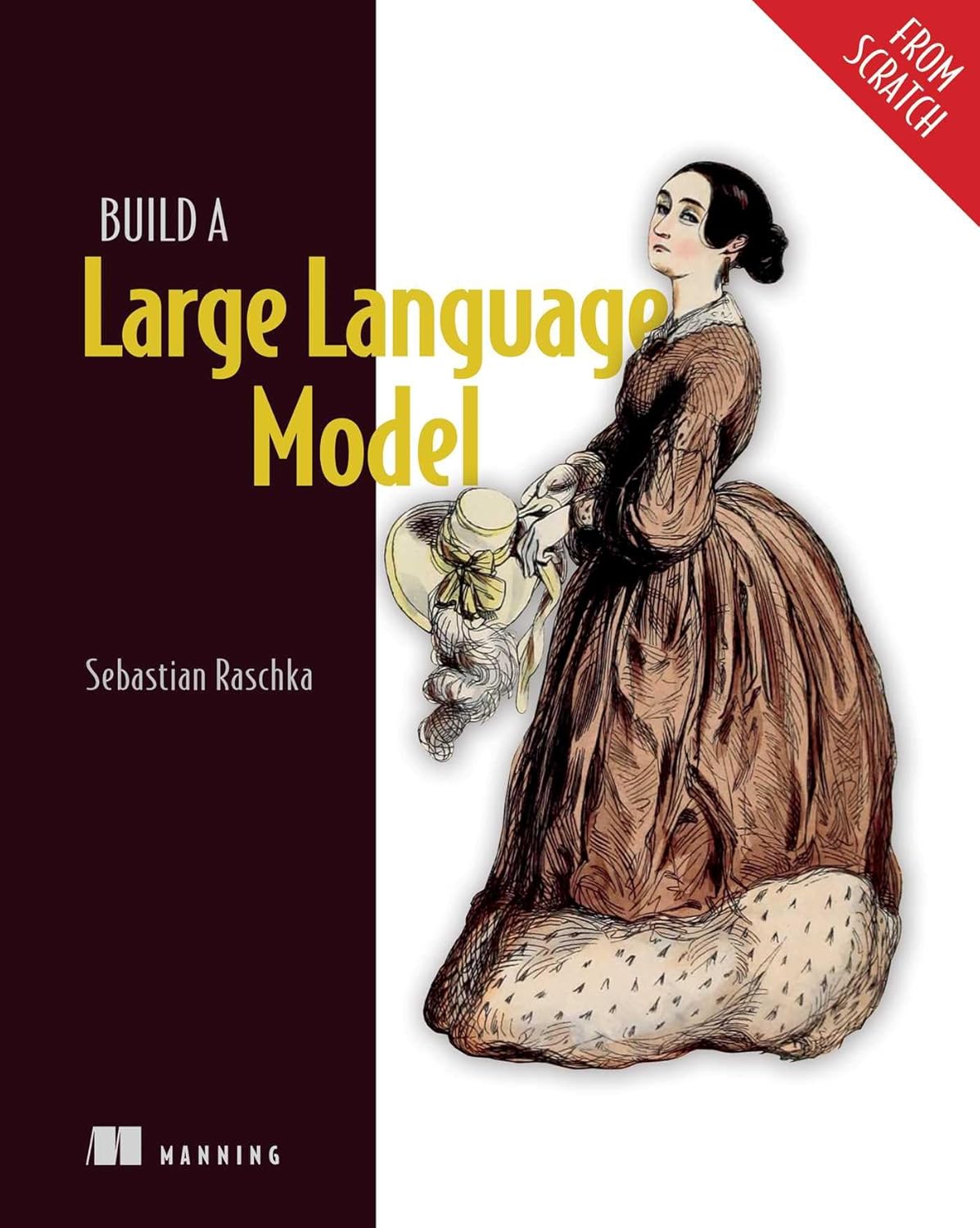
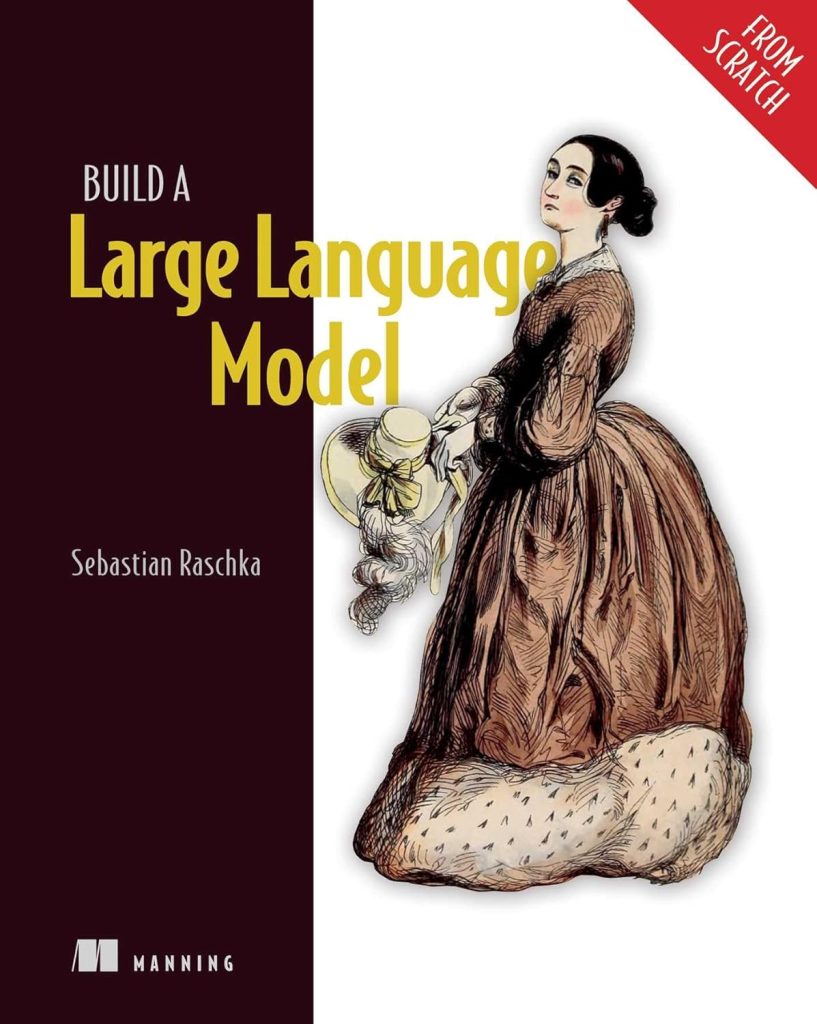
Build a Large Language Model (From Scratch) by Sebastian Raschka
Build a GPT-style model yourself in PyTorch, step by step — for readers who want to understand LLM internals
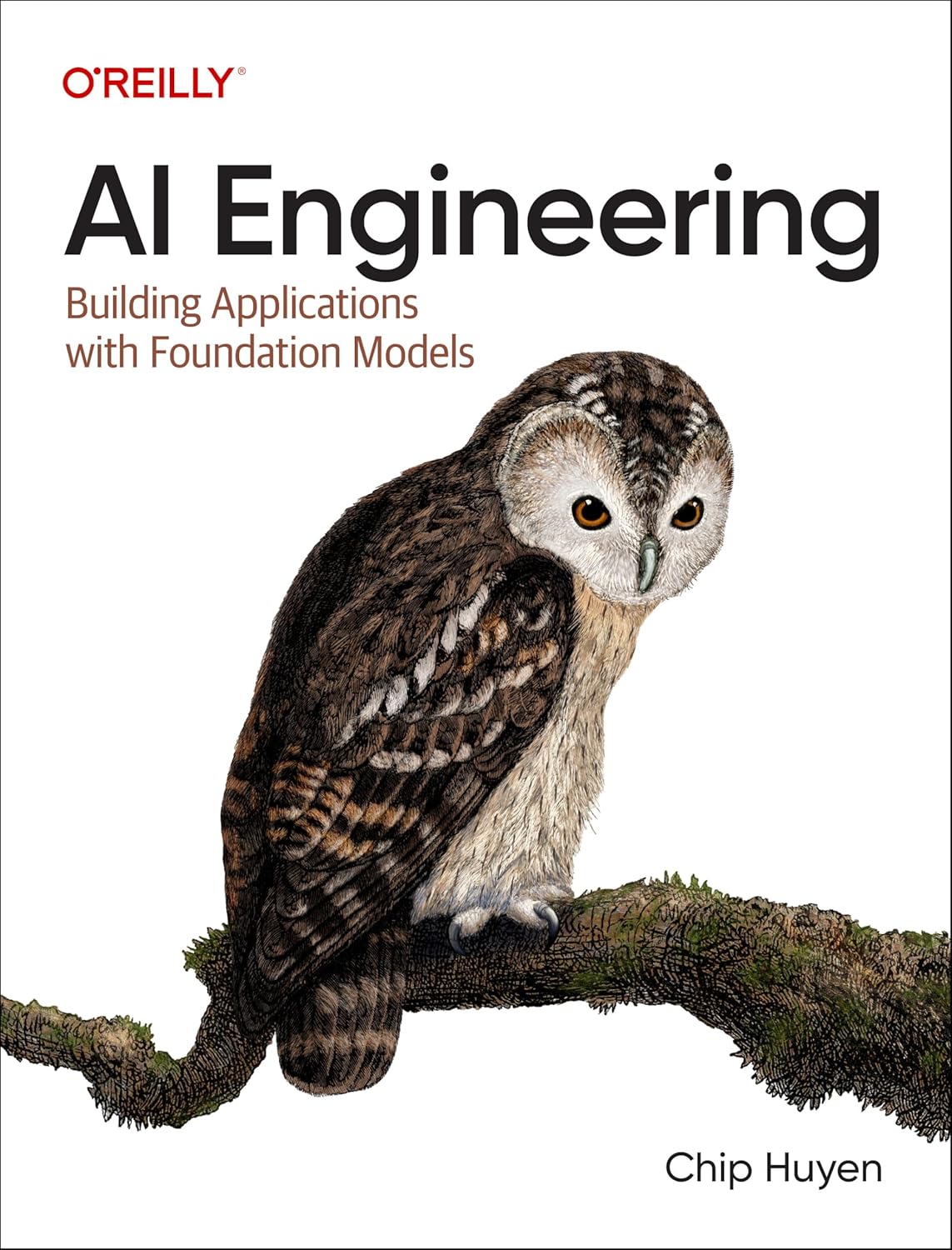
AI Engineering by Chip Huyen
No model training — how to turn foundation models into production applications, from evaluation to deployment
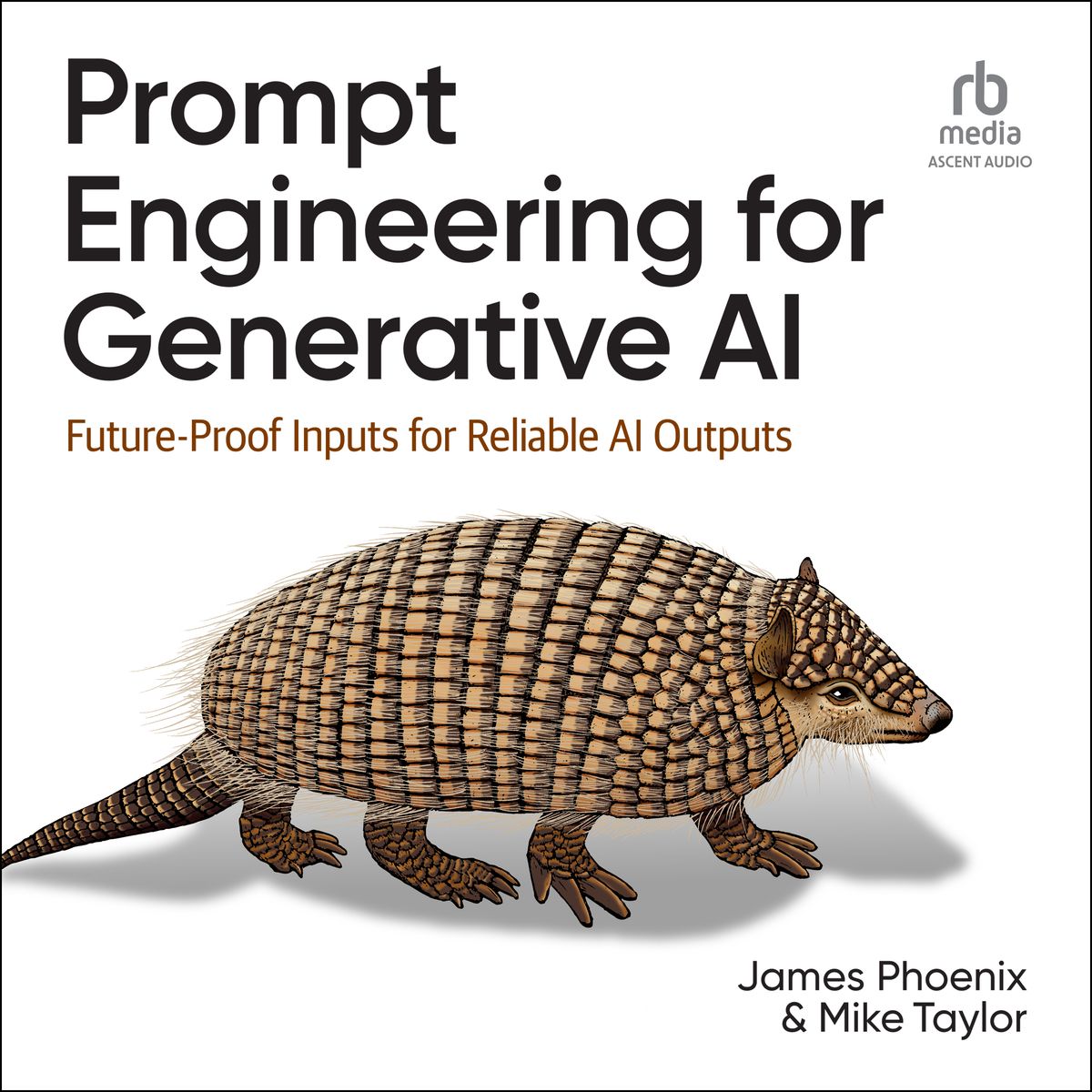
Prompt Engineering for Generative AI
Stays at the input layer — reliable prompting technique, without touching model internals
Prices and availability may vary — tap any product to check the current listing.
Build a Large Language Model From Scratch Book Review: What to Look For in a Hands-On LLM Book
Hands-on AI books fail in predictable ways. Toy examples that collapse the moment you change a number. Library calls dressed up as understanding. Six tests separate the ones worth buying from the shelf-fillers, and this Build a Large Language Model From Scratch book review runs Raschka’s book through each of them.
1. You write the code instead of watching it
The central design choice: almost nothing important arrives as a finished black box. The tokenizer, the attention mechanism, the training loop — you assemble each one from ordinary PyTorch parts, in listings short enough to type and argue with. That sounds slower. It is slower. It’s also why the ideas stick, because a bug in your own attention code teaches you more than three chapters of commentary about somebody else’s.
2. Tokenization stops being magic
Most introductions wave at the first step — text becomes numbers, somehow — and hurry on. Raschka lingers, usefully. You build a simple tokenizer, watch where it breaks, then move to the byte-pair approach real models use, and suddenly arguments about context length and weird model behaviour have a mechanical cause you can point at.
3. Attention, explained by building it
Here you build it in stages: a simplified version first, then the causal masking that stops a model peeking ahead, then multi-head attention assembled from the pieces you’ve already written. The honest caveat is mathematical depth — readers wanting the formal theory behind the architecture will need a textbook beside this one, because Raschka optimises for working intuition over proofs.
4. Pretraining at a scale you can survive
Training a model sounds like something that happens in a data centre, full stop. The book shrinks it honestly: a compact GPT-style model, trained on modest public text, small enough to run and finish on hardware a student might actually have — while the code structure stays close to how larger training runs are organised. What you don’t get is scale. Nobody should finish this book believing they have rehearsed training a frontier model; they have rehearsed the shape of it, which is a different and still valuable thing.
5. Fine-tuning closes the loop
A pretrained model that completes text isn’t yet useful, and the final stretch of the book shows the two turns that make it so. First the model is fine-tuned as a classifier — sorting spam-style messages is the worked example — which teaches the mechanics on a task where success is easy to check. Then comes instruction fine-tuning, where the model learns to respond rather than merely continue. The limit, again, is depth: modern alignment techniques get an honest introduction, not a research survey.
6. A code repository that acts like a lab partner
The companion code lives in a public repository organised by chapter, with exercises and their solutions, plus appendices that cover setup and background the main text skips. Raschka maintains the material actively, which softens the usual risk of a fast-moving field dating a print book. If that working style sounds like yours, check the current listing for format options before you commit.
Who Should Read It — and Who Should Skip It
Three reader types keep circling this book. Two should buy it without much deliberation. The third should walk past — a review that won’t say so isn’t doing its job.
The Python developer whose LLM knowledge feels borrowed
You use these models daily, you can talk tokens and temperature at standup, and privately the talk feels thinner than it sounds. This book was written for that discomfort. It assumes you can code — functions, classes, tensors at a working level — and repays the assumption by never wasting your time re-explaining programming. What it gives back is mechanical sympathy: after building attention yourself, API documentation and model release notes read differently.
The student, or the self-taught builder filling a gap
Courses love assigning papers; papers assume background nobody handed you. Raschka’s sequence works as the missing staircase — each chapter’s model is the previous chapter’s model plus one idea, so a student can point at exactly where their understanding thins. Readers who’d rather start with the human story of how modern AI arrived can open our The Worlds I See book review first — Fei-Fei Li’s memoir explains the vision era this book’s language models grew out of. Then come back and build.
The tool-first reader — skip this one
You want better prompts, smarter workflows, a feel for what today’s assistants can do for your job on Monday morning. This book will not help you, and buying it hoping otherwise wastes money and a weekend. Practitioners at the input layer should buy a prompting guide instead — see our Prompt Engineering for Generative AI book review — and readers who need to ship applications should jump straight to Huyen, below.
How It Compares With AI Engineering and Prompt Engineering for Generative AI
Our Empire of AI book review covered the company race behind the biggest models — the money, the compute, the personalities. These three books sit at the opposite end of the shelf: no boardrooms, just the question of where your own hands go. Inside the model, on top of the model, or at the prompt. Pick the wrong layer and even a good book feels useless, which is why this Build a Large Language Model From Scratch book review treats the comparison as the real buying decision.
| Book | Where It Works | What You Actually Do | Code Level | Best For | Watch-Out |
|---|---|---|---|---|---|
| Build a Large Language Model (From Scratch) by Sebastian Raschka (Manning) | Inside the model | Build and train a small GPT-style model in PyTorch, then fine-tune it | Heavy; you write the core components yourself | Developers and students who want real understanding of LLM internals | Little on deployment or production systems |
| AI Engineering by Chip Huyen | On top of the model | Evaluate, adapt and ship applications built on existing foundation models | Moderate; concepts and system design over raw implementation | Engineers turning a model into a product people use | Assumes the model exists; won’t teach you how it works inside |
| Prompt Engineering for Generative AI | At the input layer | Design, test and harden prompts and prompt-based workflows | Light; examples centred on prompting rather than training | Practitioners who work through chat interfaces and APIs | Prompt skill plateaus fast if you never learn what sits beneath it |
Raschka’s row is the only one ending with a model you trained — small, rough, and for the right reader the whole point. Huyen’s row starts where his stops: evaluation, retrieval versus fine-tuning, what breaks when real users arrive. Ask which gap costs you more.
Where Raschka’s book beats the other two
Depth you can verify. A prompting guide can tell you a model predicts the next token; Raschka makes you build the machinery that does the predicting, then train it until the predictions visibly improve. It also ages gracefully: interfaces change quarterly, while tokenization, attention and the pretrain–fine-tune sequence are this era’s load-bearing ideas.
Where it is weaker
Reach, mostly. It stops at the laboratory door: serving a model to users, evaluating it under real traffic, controlling cost — the daily substance of AI engineering jobs — gets little space, deliberately. And the entry ticket is non-negotiable. A reader without working Python doesn’t get a slower version of this book; they get a wall, somewhere around the early code chapters, and no amount of clear writing removes it.
Build a Large Language Model From Scratch Book Review: Two Ways Readers Actually Finish This Book
The chapter-a-week coder
The natural rhythm is one chapter per sitting, code open, typing rather than pasting. Honestly, the typing is the method. Copy-paste the listings and you’ve bought an expensive story about someone else’s model.

The targeted reader with a specific hole to fill
Not everyone starts at page one. Plenty of working engineers arrive with one foggy topic — attention, usually, or what fine-tuning actually changes — read two chapters hard, run those listings, and leave. The book tolerates this better than most sequential builds, because each component is introduced as a self-contained unit before it’s wired in.
Common Mistakes Buyers Make With Hands-On LLM Books
Mistake one: buying it as a no-code introduction. The title says “build”, and it means it. Readers hoping for a gentle tour of AI concepts with the code as decoration stall early — a purchasing error, not a writing failure, and an avoidable one.
Mistake two: reading without running anything. The understanding this book sells lives in the listings. Skim-read it like a memoir and the attention chapters blur into the same fog you bought the book to escape.
Mistake three: expecting production skills at the end. You’ll finish able to explain and prototype — not to deploy, monitor or budget a model serving real users.
Mistake four: treating the small model as a toy and rushing it. The compact scale is the pedagogy.
Questions People Ask Before Buying
Is Build a Large Language Model (From Scratch) worth buying?
Yes, Build a Large Language Model (From Scratch) is worth buying if you already write Python and want to understand how a GPT-style model actually works inside, because Sebastian Raschka has you build tokenization, attention, pretraining and fine-tuning yourself, step by step, in readable PyTorch code rather than hiding them behind library calls.
That recommendation, from this Build a Large Language Model From Scratch book review, has a boundary: readers after deployment guidance will find almost none. The value is the mechanism — a model small enough to train on your own machine, whose every behaviour you can trace back to code you wrote.
Build a Large Language Model or AI Engineering — which should I read first?
Read Build a Large Language Model (From Scratch) first if your gap is understanding how models work, and read AI Engineering first if your gap is shipping an application, because Raschka builds a small model from zero while Chip Huyen skips training and focuses on evaluation, retrieval, fine-tuning choices and production trade-offs instead.
Plenty of engineers eventually read both, in that order or the reverse. Raschka explains the machine; Huyen explains the job around the machine. Match the book to the gap that’s actually costing you — the honest answer is usually obvious once the question is put that plainly.
Do I need to know Python and math before reading it?
Yes, you need working Python before this book makes sense, and you need enough comfort with basic math ideas like vectors and probabilities to follow why the code works, because Raschka writes real PyTorch from early chapters onward and readers without that base usually stall before the attention chapters even begin properly.
Working Python means functions, classes and a tolerance for reading error messages — not professional software engineering. The appendices patch common background gaps, and the repository’s setup material helps. But patching has limits, and a determined beginner is better served learning Python first and arriving a month later.
Does this book teach prompt engineering or how to use chatbots?
No, this book does not teach prompt engineering or chatbot tricks, because its subject is the model underneath those tools, so readers who mainly want better prompts, ready-made workflows or product advice should choose a prompting guide instead and come back here only when they want to know why the model responds at all.
What it teaches instead is cause and effect: why a model continues text the way it does, why context fills up, why fine-tuning changes behaviour more deeply than any instruction typed into a chat box. Readers often find their prompting improves as a side effect — they stop asking the tool for things its machinery can’t do.
Who should skip Build a Large Language Model (From Scratch)?
Skip Build a Large Language Model (From Scratch) if you want a no-code introduction, a production deployment manual or a quick weekend skim, because the book asks you to write, run and debug code chapter after chapter, and that slow hands-on pace is exactly its value for builders and its problem for everyone else.
Researchers deep in the literature may also move quickly; the architecture here is the established transformer design, taught rather than extended. For everyone else the deciding factor is appetite — weeks of building, not an evening of reading.
Decision Tree: Should You Buy Build a Large Language Model (From Scratch)?
You write Python and your LLM knowledge feels like borrowed vocabulary → Buy it. Building the model converts slogans into mechanics you own.
You’re a student who needs the staircase between tutorials and papers → Buy it. One idea per chapter, each model an extension of the last.
You need to ship an application on an existing model → Skip it for now. AI Engineering answers your actual questions; return to Raschka when curiosity, not deadline, is driving.
You want prompting technique or a no-code tour → Skip it. A prompting guide serves you better and cheaper in time.
Key Takeaways
✅ The central claim: you understand a large language model properly only after building a small one — tokenizer, attention, training loop and all.
✅ The strongest material is the unbroken chain: every chapter’s model extends the previous one, so pretraining and fine-tuning land as continuations, not new subjects.
✅ The companion repository, exercises and appendices make it usable as a course text as well as a self-study build.
⚠️ Not a deployment manual, not a prompting guide, and not readable without working Python. Buy it for the internals, not the products.
📚 Pairs with (doesn’t replace) AI Engineering: how the model works here, how to ship with one there.

Frequently Asked Questions
When was Build a Large Language Model (From Scratch) published, and who published it?
Manning published Build a Large Language Model (From Scratch) in late 2024, per the publisher’s catalogue. It’s Sebastian Raschka’s from-scratch guide to building a GPT-style model, and it grew out of his years of teaching machine learning with Python.
Who is Sebastian Raschka?
Sebastian Raschka is a machine learning researcher and educator, known for bestselling Python machine learning books and for years of work applying machine learning in research settings. His teaching style — small steps, real code, no skipped stages — is the book’s defining feature.
What do you actually build in the book?
You build a compact GPT-style language model end to end: a tokenizer, embeddings, multi-head attention blocks, a training loop that pretrains the model on text, and then two fine-tuning passes — one turning it into a classifier, one teaching it to follow instructions.
Do I need a powerful computer or GPU to follow along?
The model is deliberately small, so the code is designed to run on ordinary hardware — a modern laptop can follow the builds, though a GPU makes the training chapters noticeably less patient work. Exact requirements vary by chapter; the repository’s setup guidance is the reference to check.
How is this book different from AI Engineering and Prompt Engineering for Generative AI?
Raschka works inside the model: you build and train one. AI Engineering works on top of the model: evaluation, retrieval and deployment of applications using existing foundation models. Prompt Engineering for Generative AI stays at the input layer, teaching reliable prompting without touching internals.
Which edition does this review cover?
The edition this Build a Large Language Model From Scratch book review covers is the Manning paperback edition linked from this page. The companion code repository is maintained alongside it, so the code side of the book stays current even as libraries update — check the listing for other formats.
Final Recommendation
The call, plainly, from this Build a Large Language Model From Scratch book review: buy Build a Large Language Model (From Scratch) if you write Python and you’re tired of understanding large language models at the level of slogans. No other book on this shelf hands you the whole machine — tokenizer to instruction tuning — in code you assemble yourself, and that authorship of the artefact changes what sticks.
Pass if your need is practice at a different layer — prompts that behave, or an application that ships. Raschka offers neither, deliberately. For the first group, the paperback of Build a Large Language Model (From Scratch) is available through major retailers — check the current listing, and consider shelving Huyen’s AI Engineering beside it for the day the prototype has to grow up.
Compare Top Books for Understanding and Building With LLMs
Three proven picks side by side — choose the one that fits your needs.
Build a Large Language Model (From Scratch) by Sebastian Raschka
Build a GPT-style model yourself in PyTorch, step by step — for readers who want to understand LLM internals
AI Engineering by Chip Huyen
No model training — how to turn foundation models into production applications, from evaluation to deployment
Prompt Engineering for Generative AI
Stays at the input layer — reliable prompting technique, without touching model internals
Prices and availability may vary — tap any product to check the current listing.
Disclosure: This page contains affiliate links. If you buy through them, we may earn a commission at no extra cost to you.