
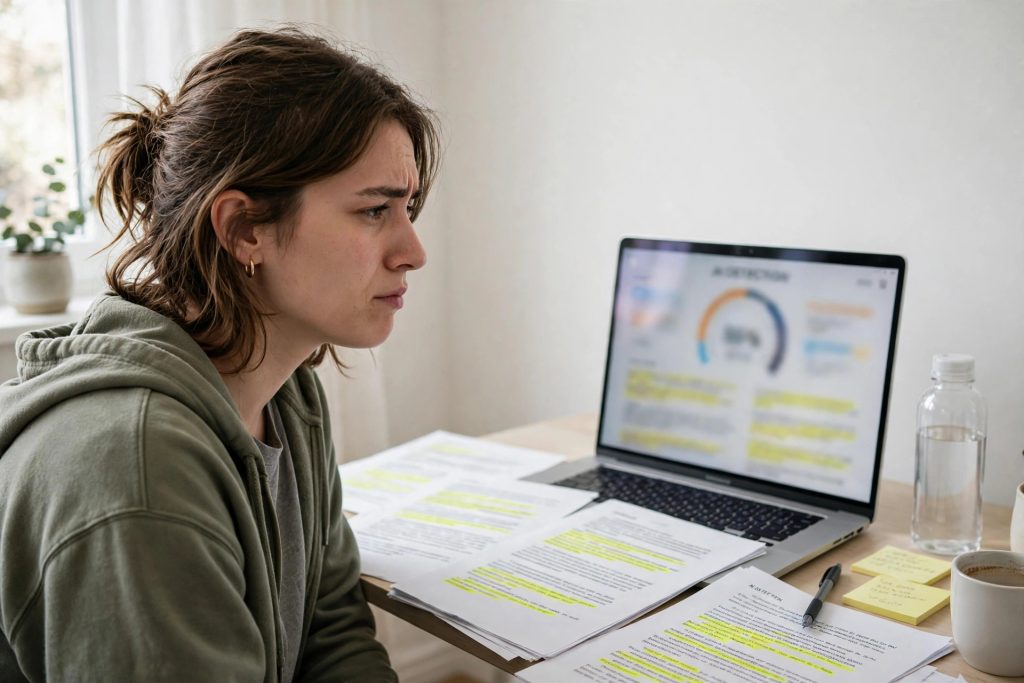
ZeroGPT is probably the first detector most people ever paste an essay into. It’s free, it’s fast, no account stands between you and a verdict. And right there on the homepage sits the number doing all the persuading: accuracy above 98%.
98% of what, exactly?
That question has a boring answer and an interesting one. The boring answer is that nobody outside the company can check, because ZeroGPT has never published the test set, the threshold, or a false positive rate next to that claim. The interesting answer lives in the public benchmarks the company didn’t run — and there, the same tool lands somewhere between 65% and 74%, with roughly one human text in five getting flagged in one independent sample set. That gap is the whole story. A student deciding whether to panic, and a teacher deciding whether to file a report, are both reading the first number. They should be reading the second and third.
What does ZeroGPT’s 98% actually cover?
ZeroGPT’s 98% is a self-reported figure from internal testing, with no published dataset, no stated false positive rate, and no entry in the standard public benchmark — so it describes the vendor’s own test conditions, not your classroom or your inbox. Try to audit it and you hit a wall fast. No whitepaper. No version history for the model. No breakdown by text length, language, or model family.
I went looking for the study behind the number the way you’d look for the study behind any bold claim on this site. Their blog and marketing pages cite validation in the abstract. Track the citations down and they dissolve — small samples, old model generations, no human baseline worth the name. Silence like that is data too. Compare it with the one benchmark everyone in this field has to answer to: RAID, built by Dugan and colleagues, presented at ACL 2024, roughly 6.2 million generations from 11 models across 8 domains and 11 adversarial attacks, with every detector calibrated to the same 5% false positive rate so nobody could buy a better score with a looser threshold. ZeroGPT averaged 65.5% there. GPTZero scored 66.5%. Originality.ai managed 85.0%.
Sixty-five point five. Not ninety-eight.
Running the same text through six detectors and watching the scores scatter from 8% to 94% is an old experience on this desk, and RAID explains why it keeps happening: these tools were each tuned on different text, at different thresholds, against different generations of models. A percentage with no threshold attached is a mood, not a measurement. We laid out the wider pattern in how accurate AI detectors actually are — the marketing number and the benchmark number never live in the same house.
The truth about ZeroGPT false positives
In a 160-text independent comparison reported across 2025–2026 accuracy roundups, ZeroGPT scored 73.8% overall and flagged 20.51% of human-written texts as AI — about one in five innocent samples. Its false negative rate in that same test was just 3.85%, which tells you exactly how the dial is set. This tool would rather accuse a person than miss a machine. For a casual first glance that’s a defensible setting. For an academic integrity hearing it’s a liability wearing a progress bar.
The mechanism isn’t mysterious. ZeroGPT reads predictability — how expected each next word feels, how evenly the sentences march. Clean, formulaic human writing shares that fingerprint. So does writing in a second language. Stanford researchers Liang and colleagues demonstrated the category-wide version of this in Patterns in 2023: seven detectors misclassified an average of 61.3% of TOEFL essays written by non-native English speakers, against a near-zero rate on native-speaker school essays. ZeroGPT’s own FAQ quietly concedes the local version — highly polished, formulaic, low-entropy writing can resemble AI and get human text flagged. A lab methods paragraph. A standard business update. A legal definition. All human. All predictable. All at risk.
Nature’s reporting on detector unreliability has even noted pre-ChatGPT documents — founding-era American prose among them — returning near-total AI verdicts from popular free detectors, ZeroGPT included. A tool that looks at 18th-century sentences and sees a chatbot isn’t detecting authorship. It’s detecting tidiness, then calling tidiness guilt. Our head-to-head of GPTZero vs ZeroGPT reached the same fork: pick ZeroGPT and you catch more raw machine output; you also wrong more humans.
Run the short-text trap before you trust any score
A detector willing to hand you a confident verdict on 50 words is guessing, because 50 words does not contain enough signal to separate human habit from model habit. Test this yourself in ten minutes, free. Take one piece of your own writing on a single topic and cut it three ways: 50 words, 100 words, 200 words. Run all three. A serious instrument gets steadier as the sample grows — the 200-word run should look the most decisive, the 50-word run the shakiest. If the shortest slice comes back with the boldest percentage, you’re not looking at analysis. You’re looking at a random number wearing a lab coat.
Then count burstiness by hand. Take five consecutive sentences of your own prose and count the words in each. Human runs look like 8, 22, 5, 18, 11 — jagged, impatient, uneven. Machine runs hover in a narrow band. If ZeroGPT calls your jagged sample AI anyway, it just told you its perplexity dial outweighs the one signal it claims to respect. That mismatch, screenshot it. It’s worth more in an appeal than any paragraph you will write.
If ZeroGPT flags you, appeal the statistic — not the score
The winning move in a false accusation is to attack what the score measures: predictability is a property of constrained writing, not proof of machine authorship. Bring process evidence first. Drafts, notes, version history, the outline you wrote before the essay existed. Then name the confound in plain language: your vocabulary range and sentence patterns sit inside the band detectors associate with AI because you write carefully, formally, or in your second language — the exact bias Liang’s team measured at 61.3% across the detector category. Ask the institution a question they rarely have an answer for: what false positive rate did they accept when they chose this tool, and was it measured on writers like you?
Honestly, most appeals that succeed do it with paperwork, not rhetoric. We keep a fuller walk-through in what to do if you’re falsely accused of using AI, and the ZeroGPT version adds just one line to it: demand the threshold. A percentage without its threshold and its error rate is half a fact.
Before you pay for ZeroGPT
The free checker is the product; the paid tier, listed at $9.99 a month for Pro in recent pricing roundups, mostly buys higher limits and an ad-free screen — it does not buy a better error rate. Price the hidden ledger honestly. A year of Pro is about $120. The expensive line item never appears on that invoice: it’s the afternoon a teacher spends building a case on a 20% false positive instrument, or the week a student spends proving a negative. No tier removes that cost. Turns out the cheapest detector is the one whose mistakes you can afford.
So where does ZeroGPT actually belong? On raw, unedited output from a mainstream chat model, pasted in a decent-length chunk, as a first glance — it’s fast, it’s free, and it’ll catch the lazy cases. Everywhere else, treat its percentage as a question, never an answer. Use it to decide what to read closely. Never to decide who to punish
Go Deeper: Books That Explain the Score
Why detection claims inflate, and what opaque algorithms do to the people they grade.
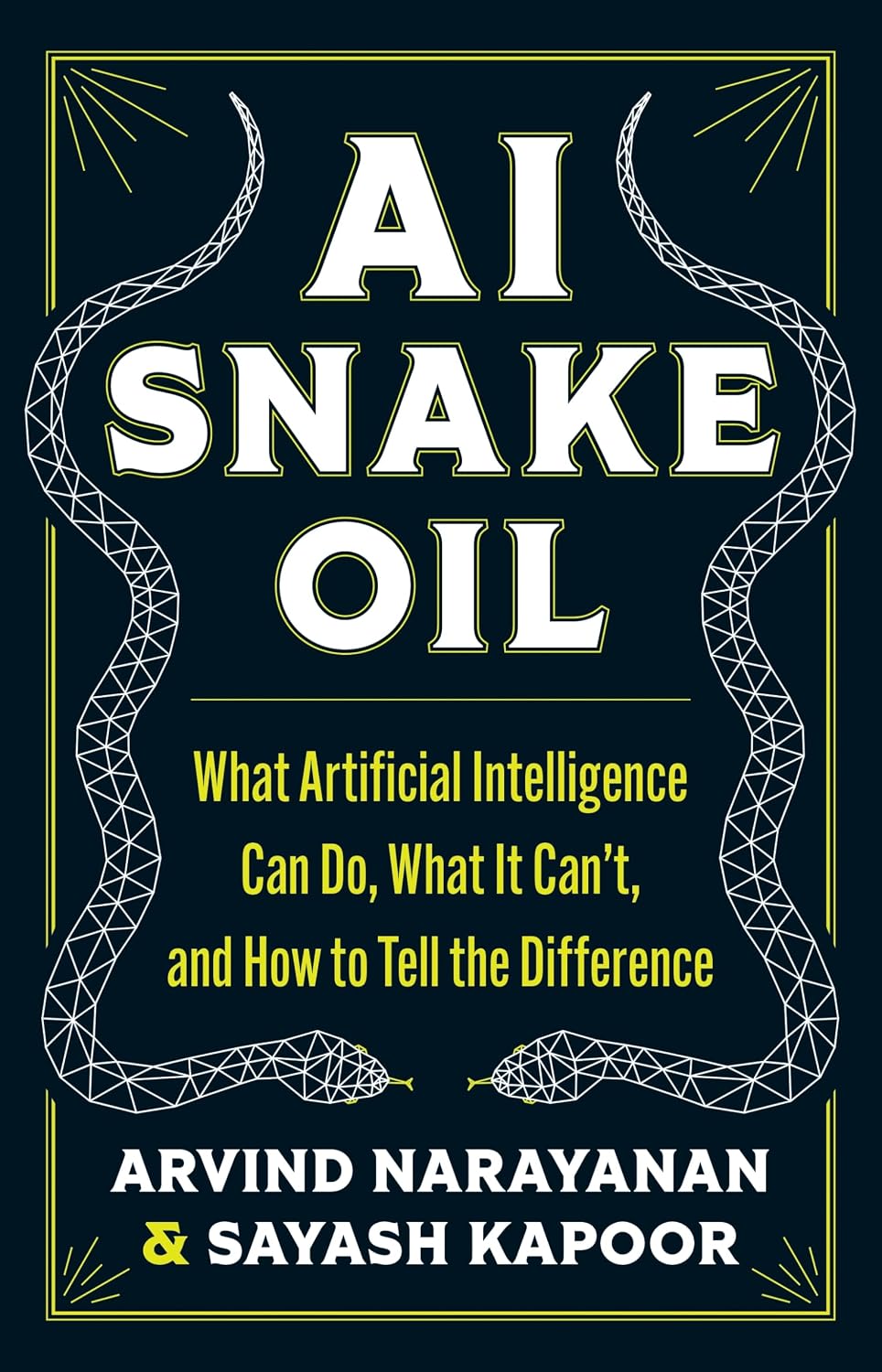
AI Snake Oil — Narayanan & Kapoor
The field guide to telling real AI capability from hype, by two Princeton computer scientists
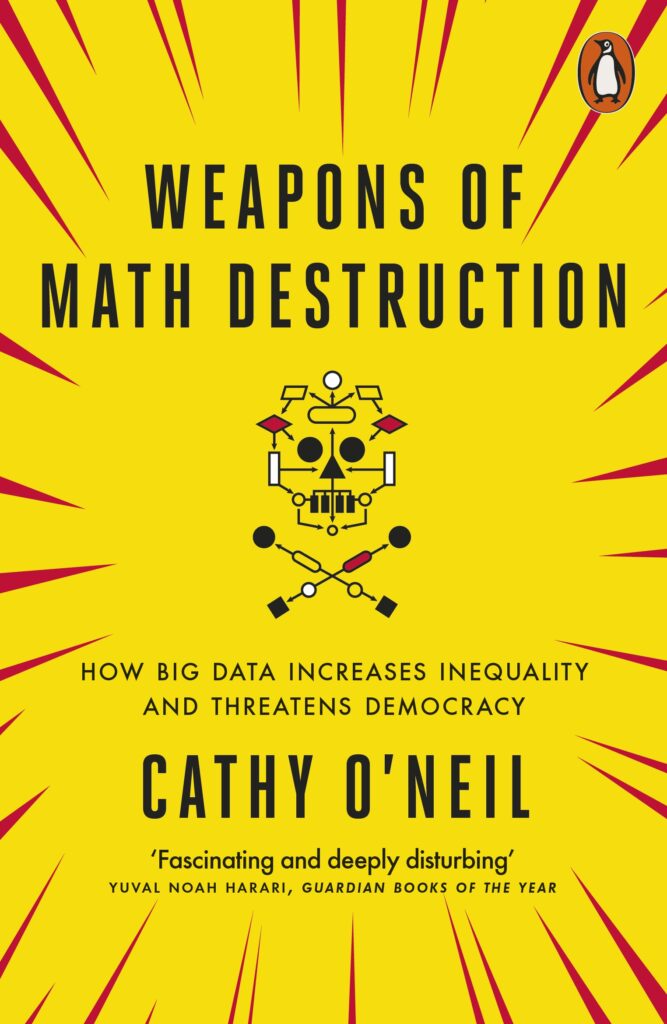
Weapons of Math Destruction — Cathy O’Neil
The classic on how opaque scoring systems quietly punish the wrong people
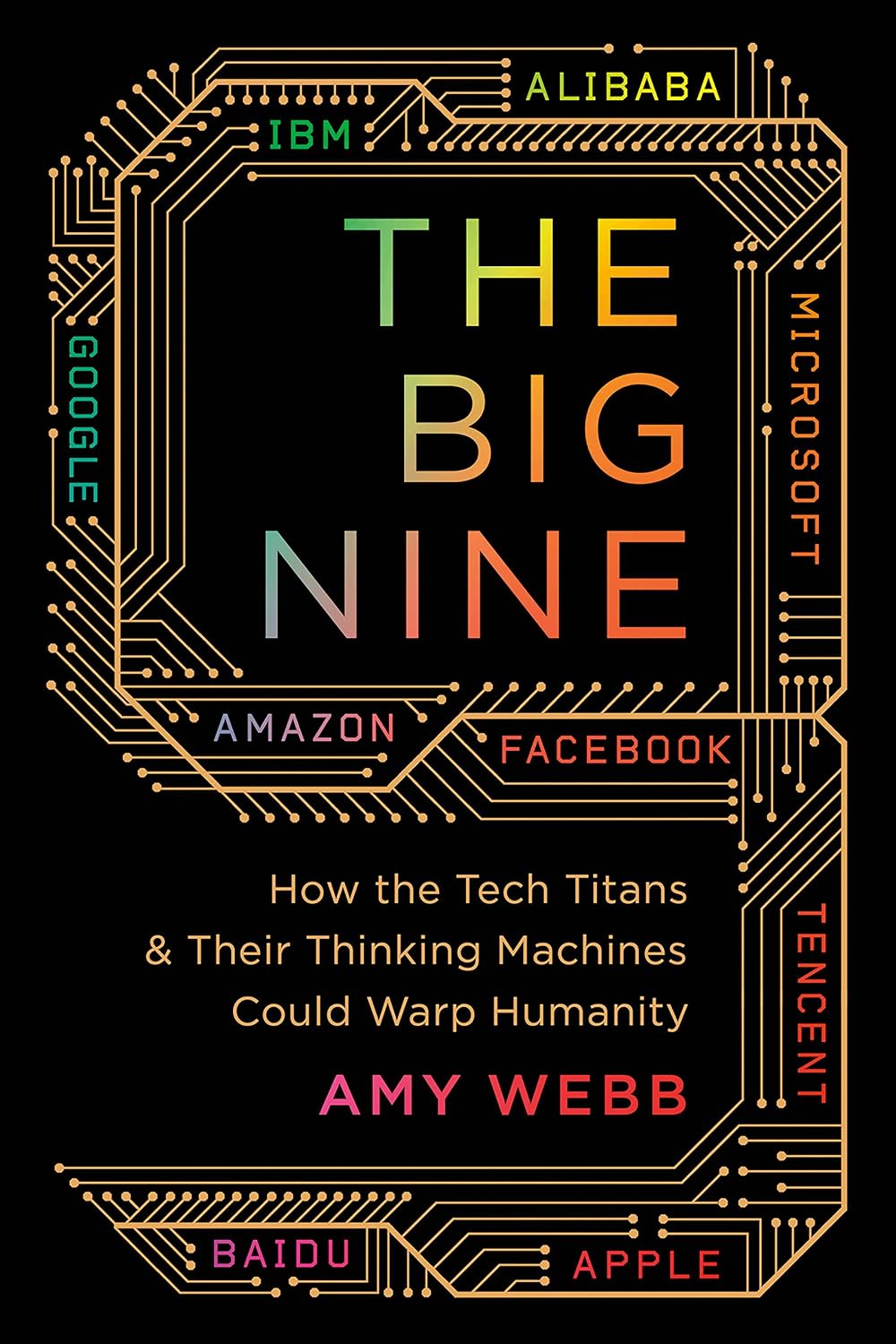
The Big Nine — Amy Webb
Who actually controls AI’s future, and what that means for everyone being scored by it
This site contains affiliate links. We may earn a commission on qualifying purchases.
FAQ
Is ZeroGPT accurate enough to accuse a student of cheating?
No. ZeroGPT claims above 98% accuracy from its own internal testing, but on the public RAID benchmark (ACL 2024) it averaged 65.5% at a fixed 5% false positive rate, and a 160-text independent comparison reported a 20.51% false positive rate on human writing. A ZeroGPT flag justifies a conversation and a request for drafts — not a misconduct finding on its own.
Why does ZeroGPT flag human writing as AI?
Because it scores predictability. Clean, formulaic, or low-entropy human writing — lab reports, business updates, careful academic prose, and especially writing by non-native English speakers — shares the statistical fingerprint of machine output. Stanford research (Liang et al., Patterns, 2023) found detectors misclassified an average of 61.3% of TOEFL essays by non-native speakers, and ZeroGPT’s own FAQ acknowledges polished human writing can be flagged.
How long should a text be before a ZeroGPT score means anything?
At least 200 words, and longer is better. Below that, there is not enough statistical signal to separate human habit from model habit, so a confident percentage on a 50-word sample should be treated as a guess. Test any detector by running the same text at 50, 100, and 200 words and checking whether its confidence behaves sensibly as the sample grows.
Is ZeroGPT better than GPTZero?
Neither is clearly better overall. On RAID they finished close — ZeroGPT 65.5%, GPTZero 66.5% — but they fail in opposite directions: ZeroGPT catches more raw AI output while flagging more human writing, while GPTZero is gentler on humans and lets more edited machine text through. The right choice depends on which error costs you more.