
Disclosure: This article contains affiliate links. If you buy through them, we may earn a commission at no extra cost to you.
AI 2041 by Kai-Fu Lee & Chen Qiufan: Book Review — The Best AI Future Fiction?
AI 2041 pairs ten science fiction stories by Chen Qiufan with plain-language technology essays by Kai-Fu Lee — and this review digs into whether that unusual format works. It’s for curious readers who want a grounded sense of where AI is heading, without slogging through a textbook: who the book suits, where it stumbles, and how it stacks up against two other well-known AI books.
Related reading: AI Superpowers by Kai-Fu Lee: Book Review — Still the Best Book on the US-China , Empire of AI by Karen Hao: Book Review — Is This the Definitive Inside Story of .
Quick Answer
AI 2041 is a strong pick for readers who learn through stories rather than lectures: the fiction makes abstract AI trends feel human, and Lee’s essays decode the real technology behind each tale. Skip it only if you need a practical AI handbook or deep technical detail — this is a thinking book, not a how-to manual.
Compare Top AI Books
Three proven picks side by side — choose the one that fits your needs.
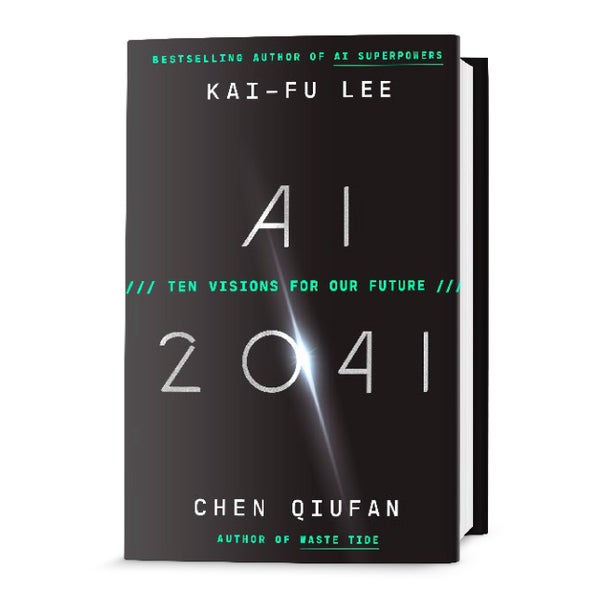
AI 2041
Ten sci-fi stories + AI analysis — the most readable intro to AI’s future
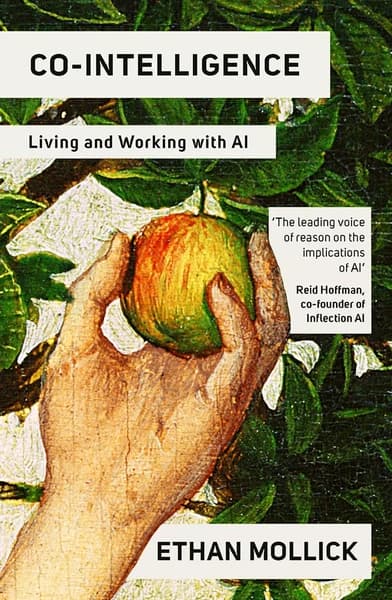
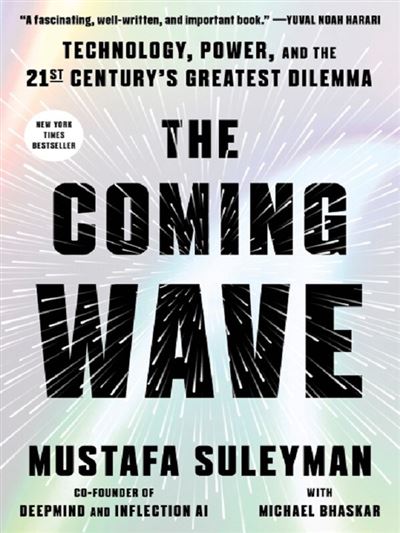
Prices and availability may vary — tap any product to check the current listing.
What to Look For When Buying an AI Future Book
Most AI books fail quietly: they were written for the author’s world, not yours. Before reaching for AI 2041, run it through the six filters that actually decide whether an AI book earns its shelf space.
1. Story-to-Essay Ratio: Do You Want Fiction, Analysis, or Both?
AI 2041 alternates every chapter: a short story, then an essay explaining the real technology inside it. Roughly half the book is storytelling, half is explanation — know that going in. If you hate fiction on principle, this structure will annoy you by chapter three. The essays stay conversational throughout: no equations, no jargon walls. The honest question is whether you want AI explained through human lives, or prefer it straight.
2. Written Before the Generative Boom: Handle the Timeline With Care
AI 2041 was written before large language models went mainstream, so some of its 20-year projections already look… quaint. Does that ruin the book? Not really — the social questions (who gets left behind, what work means, how families adapt) age far better than the technology timelines. But if you need a book reflecting the post-ChatGPT world, this isn’t it. Treat it as a time capsule with durable ideas, not a field guide to today’s tools. The human questions outlive the product cycles.
3. How Accessible Is the Analysis, Really?
Kai-Fu Lee writes like someone who’s spent years explaining AI to non-engineers — because he has. The essays cover deep learning, computer vision, natural language processing, and AI in education and healthcare, all in plain language. No statistics course required; he builds up from zero. The trade-off: working engineers will find these chapters light. They’re primers, not papers. For smart general readers, the level is just right.
4. The Author’s Lens: Optimist, Investor, Insider
Every AI book carries its author’s bias, and Lee’s is visible: optimist, venture investor, former head of Google China. His essays frame AI as an enormous net positive societies must manage wisely — jobs will change, not vanish. Skeptics of Big Tech may find this too sunny. Knowing the lens doesn’t disqualify the book; read it like any insider account — informed, valuable, worth balancing with other perspectives. The comparison books on this page do that balancing job.
5. Translation Quality of the Fiction
Chen Qiufan writes in Chinese, and the English translation holds up well: clean prose, natural dialogue, vivid cultural texture across stories set from Lagos to Tokyo to San Francisco. A couple of stories lean didactic, but that’s a structural choice, not a translation flaw. If translated fiction has burned you before, this won’t be the problem.
6. Your Actual Reading Habits: Will You Read Both Halves?
Be honest with yourself. Plenty of buyers read all ten stories, skim two essays, and call it done. But the book works best when both halves get attention — the essay reframes the story you just read, and that’s where the insight lands. If you’ll skip half the content, weigh it against a pure fiction collection or a pure nonfiction guide, where every page matches your appetite.
How to Match AI 2041 to Your Situation
Books aren’t one-size-fits-all, and AI books least of all. Three reader profiles cover most AI 2041 buyers — see which one sounds like you.
The Curious Non-Technical Reader
You hear about AI constantly and want to understand it without a computer science degree. This is the book’s core audience. The stories give you characters to care about; the essays give you enough grounding to hold your own at dinner parties. A story a night — it’s practically serialized for that.
The Gift Buyer or Book Club Organizer
One of the easier AI books to gift: handsome cover, intriguing premise, nobody feels lectured. For book clubs it’s gold — every chapter pairs a story (easy to discuss) with an essay (easy to argue about). Watch out: members who dislike speculative fiction will grumble.
The AI Practitioner or Student
Honest caveat: if you work in machine learning, the analysis chapters will feel like a refresher, not a revelation. The stories remain enjoyable, but you’re not the target reader. Buy it for storytelling pleasure, not professional development.
AI Books Compared: Three Styles, Three Readers
| Type / Tier | Best For | Price Tier | Key Feature | Watch-Out |
|---|---|---|---|---|
| Story-driven futures (AI 2041) | Readers who absorb ideas through narrative | Mid-range | 10 stories paired with real tech analysis | Pre-generative-AI timelines feel dated in spots |
| Practical AI guides (Co-Intelligence) | Professionals who want to use AI at work now | Mid-range | Actionable prompting and workflow mindsets | Advice ages fast as tools change |
| Policy & risk debates (The Coming Wave) | Readers focused on AI governance and power | Mid-range | Insider account of the containment dilemma | Denser and more demanding than the other two |
Story-driven futures win on readability — if a book feels like homework, you won’t finish it, and AI 2041 rarely feels like homework.
Practical AI guides win on immediate usefulness, but their shelf life is short; a prompting trick from last year may already be obsolete.
Policy and risk debates win on depth and stakes, yet they ask more of the reader — they’re the books you admire more than you enjoy.
Reading AI 2041 in Real Life: Two Scenarios
The Commute Reader
Twenty-five minutes on the train, and the chapter structure is almost suspiciously perfect: one story per ride, essay optional depending on your stop. A week-long gap between chapters won’t hurt — the stories are self-contained. Small warning: a couple of endings will have you staring out the window instead of checking email.
Gifting It to a Teenager Interested in Tech
A teenager into coding or sci-fi will likely devour this: young protagonists, global settings, technology that feels like their world rather than a lecture about it. Parents should know a few stories touch on mature themes (job loss, inequality, surveillance) — thought-provoking, not graphic. For a kid considering tech, the essays quietly double as career orientation.
Common Mistakes Buyers Make
Mistake 1: Treating it as a prediction textbook. AI 2041 is speculative fiction with commentary, not a forecast with footnotes. Readers who fact-check every timeline against 2026 reality will be disappointed — and will have missed the point. The value is in the questions, not the dates.
Mistake 2: Skipping the essays. The stories are the fun part, so the essays get skipped. But the essays are where Lee connects each story to real research and real deployments. Skip them and you’ve read a decent anthology; read them and you’ve actually learned something. The pairing is the product.
Also see: AI Snake Oil by Arvind Narayanan & Sayash Kapoor: Book Review — Can It Really Te.
Mistake 3: Expecting hard-SF rigor. A few stories prioritize illustrating a technology over strict plausibility. If you’re the reader who pauses a movie to complain about the physics, some chapters will itch. Let them. The stories are vehicles for ideas, not engineering proposals.
Mistake 4: Buying it for the wrong person. Gifting AI 2041 to someone who actively dislikes speculative fiction is a classic misfire — they’ll read twenty pages and shelve it. Match the book to the reader’s taste in format, not just their interest in the topic.
Why This Format, How to Read It, What Comes Next
Why pair fiction with analysis at all?
Because abstract AI trends are hard to care about. “Labor displacement” is a phrase; a story about a truck driver watching autonomous rigs take his route is a feeling. Narrative creates the emotional stake, and the analysis converts it into understanding — readers remember the displaced worker long after forgetting the essay’s statistics. Fiction is the spoonful of sugar, except the medicine is genuinely interesting too.
How should you actually read it?
Story first, essay second, in order — the essays assume you’ve just read the story. Don’t binge it; the ideas need room to breathe. One chapter a day is the sweet spot. Trick: after each story, guess what you think the technology was before Lee tells you. You’ll be wrong in interesting ways, and the essay will land harder.
What should you read after AI 2041?
Hungry for practical skills? Move to Co-Intelligence. Worried about darker scenarios? The Coming Wave takes governance seriously. Want more fiction? Chen Qiufan’s Waste Tide is grittier and less didactic. AI 2041 gives you the map; you choose the road.
Questions People Ask Before Buying
Is AI 2041 still worth reading in 2026, or is it outdated?
Yes — AI 2041 remains worth reading in 2026, even though its technology timelines were written before the generative AI boom and feel optimistic in places, because the ten stories and paired analysis chapters explain how AI reshapes jobs, education, and relationships in ways that still ring true today. The dated parts are specific predictions about when capabilities arrive; the social questions — what happens to work, who benefits — haven’t aged at all. It’s a book about people living with AI, not a product roadmap.
Should I read AI 2041 or Co-Intelligence first?
Start with AI 2041 if you want stories that make AI’s future feel human and concrete, then read Co-Intelligence when you’re ready for practical tactics; choose Co-Intelligence first only if you need AI help at work this month and have zero patience for fiction. The two barely overlap: one builds intuition through narrative, the other builds skill through frameworks. For a non-technical gift recipient, AI 2041 is safer — nobody has ever been intimidated by a story.
Is AI 2041 too technical for someone without an engineering background?
No — AI 2041 was written for a general audience, and the analysis chapters explain technologies like computer vision and natural language processing in plain language, so a curious reader with no coding background can follow everything without feeling lost or talked down to. Engineers may find the essays too basic — they’re introductions, not deep dives. If you can follow a good science documentary, you can follow this book.
Are the short stories in AI 2041 actually good science fiction?
Mostly yes — several of the ten stories stand comfortably alongside good magazine science fiction, with memorable characters and genuine emotional stakes, though a couple read more like illustrated lectures than fiction, since each story exists mainly to set up the technology analysis that follows it. The stronger chapters show Chen’s award-winning craft: lived-in settings, specific cultural details. The weaker stories are transparently built around their essay topic — not bad, just didactic. Character-driven SF fans will find plenty to like.
Which edition of AI 2041 should I buy?
The hardcover edition makes the better gift and sits sturdily on a shelf, while the paperback or digital editions suit readers who just want the content; any edition delivers the same ten stories and analysis chapters, so pick based on how you read rather than worrying about missing material. There’s no “definitive” edition with exclusive content — choose for your hands and your shelf, not for completeness anxiety.
Frequently Asked Questions
Who wrote AI 2041?
A collaboration between Kai-Fu Lee — AI scientist, venture capitalist, former head of Google China — and Chen Qiufan, the acclaimed Chinese SF author of Waste Tide. Lee wrote the essays; Chen wrote the ten stories. Insider technology knowledge wrapped in a storyteller’s imagination.
Is AI 2041 a novel or a nonfiction book?
Both, by design. Each chapter opens with science fiction and closes with a nonfiction essay on the real AI technology in the story — read it as an anthology, a popular-science book, or the two woven together.
How long does AI 2041 take to read?
Substantial but not intimidating — most casual readers finish in about a week of evening reading. Each story-essay pair is self-contained, so one chapter a night works well. The ideas benefit from slower digestion.
Is AI 2041 appropriate for teenagers?
Generally yes. Mature themes — job displacement, inequality, surveillance — appear in thought-provoking rather than graphic ways. For a teen into technology or science fiction, it’s a rewarding gateway into serious AI thinking.
Where can I buy AI 2041?
AI 2041 is available through major retailers and widely available online in hardcover, paperback, and digital editions — check current availability. Use the links on this page to see the current listing and choose the edition that fits how you read.
Final Recommendation
Buy AI 2041 if you want AI’s future to feel human before it feels technical — if you remember stories longer than statistics. It works as a gift, a book-club pick, and a genuine education at once. The pre-generative-AI vintage shows in places, but its questions about work, family, and meaning only get more urgent.
Skip it if you need hands-on AI skills this month (grab Co-Intelligence) or if speculative fiction annoys you — no book is worth fighting its own format. Everyone else: the stories pull you in, the essays make you smarter. Fair trade.
OUR TOP PICK
AI 2041
Ten sci-fi stories + AI analysis — the most readable intro to AI’s future
Decision Tree: Which AI Book Should You Get?
If you learn through stories → get AI 2041. The fiction-first format will keep you turning pages, and the essays will quietly teach you the technology.
If you need AI skills for work right now → get Co-Intelligence. It’s the practical manual AI 2041 deliberately isn’t.
If you’re worried about AI risk and power → get The Coming Wave. It takes the governance question further than either of the other two.
Key Takeaways
AI 2041 pairs ten sci-fi stories with plain-language AI analysis — an unusual format that works for story-driven learners.
Written before the generative AI boom, its tech timelines feel dated in spots, but the social questions about work and family hold up.
Best for curious general readers, gift buyers, and book clubs; working AI engineers may find the analysis light.
Disclosure: This article contains affiliate links. If you buy through them, we may earn a commission at no extra cost to you.