
This site contains affiliate links. We may earn a commission on qualifying purchases.
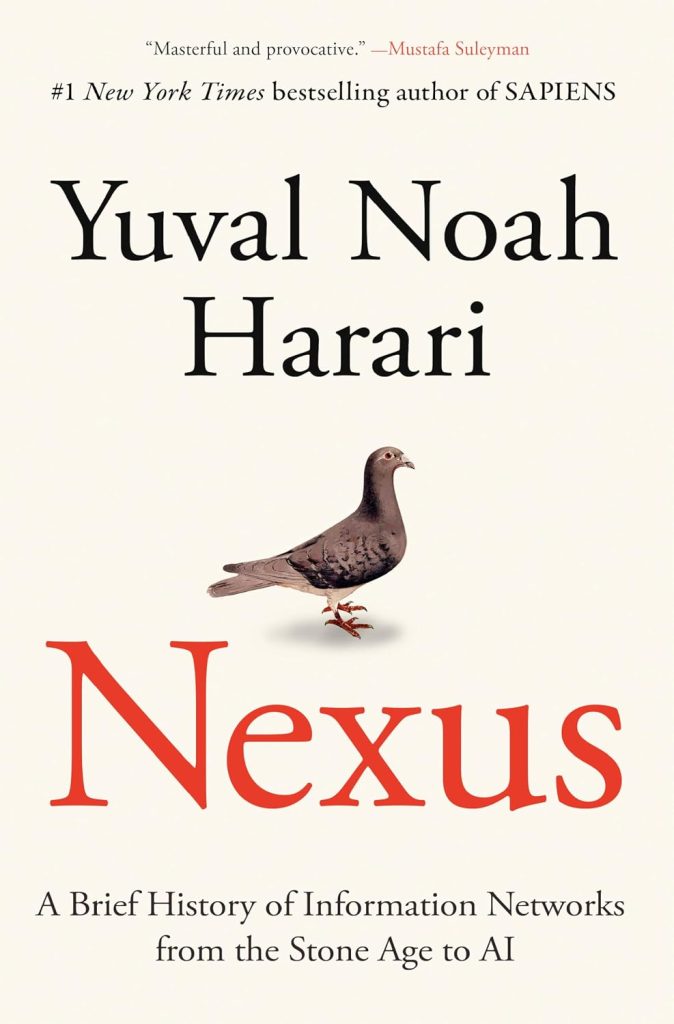
If a Nexus book review is what brought you here, here’s the short version of a long answer: this is a book about why information networks keep steering humanity in directions nobody planned — and why AI might be the most consequential one yet. Yuval Noah Harari, the Sapiens historian, spends much of the book on everything from Stone Age gossip to Stalinist propaganda before AI even takes center stage. And honestly? That structure is the whole point.
This guide is for the curious-but-cautious buyer: the Sapiens fan wondering if lightning strikes twice, the AI-news follower drowning in hot takes, the gift-buyer eyeing the bestseller shelf. I’ll tell you who should read it, who should skip it, and how Nexus stacks up against The Coming Wave and Life 3.0 — the two books it keeps getting shelved next to.
Quick Answer
Nexus is worth your time if you want the long historical view of why AI feels so destabilizing — it’s Harari doing what he does best, connecting dots across millennia, this time aimed at information itself. It’s not a how-to guide, not a sequel to Sapiens, and not a light weekend read.
If that sounds like your kind of book, check the current edition of Nexus to see today’s listing.
Compare the Top AI Books of Recent Years
Three proven picks side by side — choose the one that fits your needs.
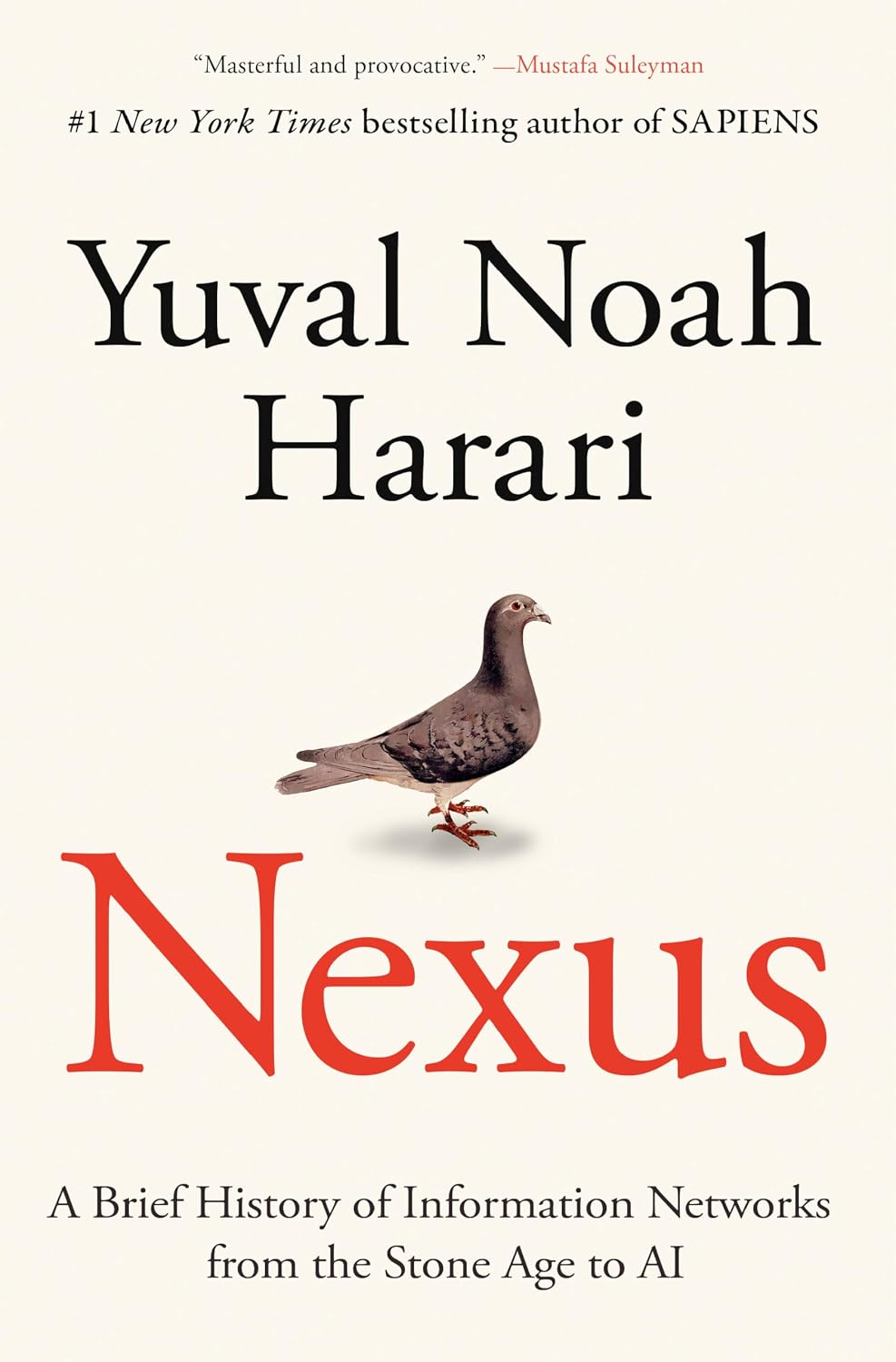
Nexus by Yuval Noah Harari
The historian’s long view — information networks from the Stone Age to AI.
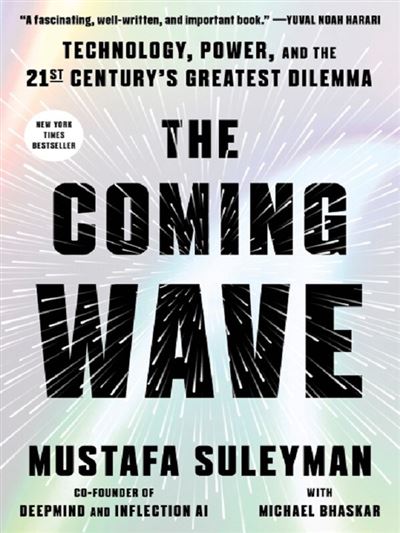
The Coming Wave by Mustafa Suleyman
DeepMind co-founder’s insider take on the AI wave and how to contain it.
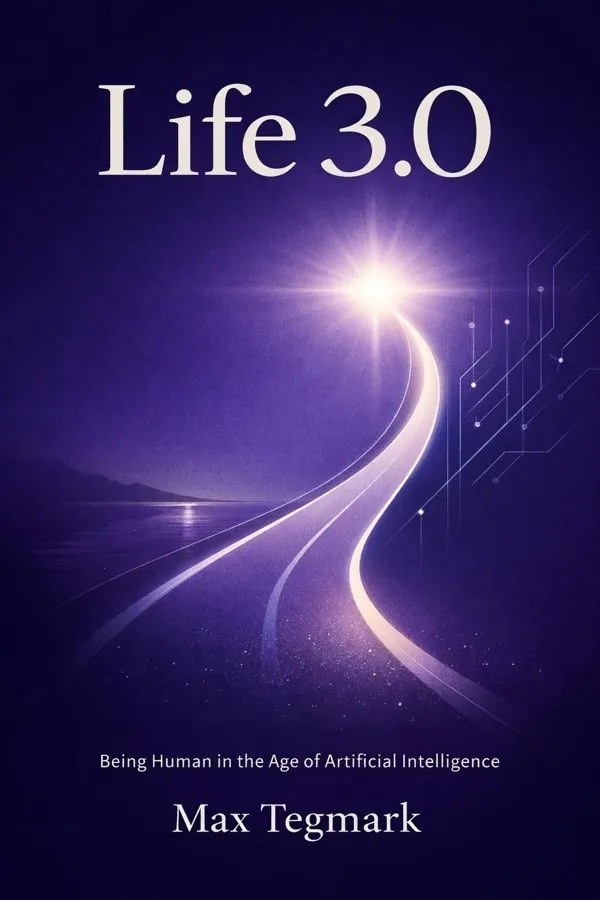
Life 3.0 by Max Tegmark
An MIT physicist’s sweeping tour of possible AI futures.
Prices and availability may vary — tap any product to check the current listing.
So… Should You Actually Read Nexus?
Look, the honest answer is: it depends on what you’re buying it for. If you want a book that makes AI feel less like a sudden meteor strike and more like the latest chapter of a very old story — yes, buy it. Nexus is at its best when Harari is doing panoramic history: the witch trials as an early information panic, the canonization of the Bible as a network-standardization project, Stalinism and Nazism as rival experiments in information control. These chapters crackle.
But — and it’s a real but — the book has a saggy middle. When the argument turns abstract, the storytelling thins out and you’re left wading through thesis. Readers who devoured Sapiens in a weekend may find themselves checking how many pages are left. That’s the trade-off: a genuinely original framework, delivered with uneven pacing.
Who should skip it? Anyone shopping for practical AI skills — prompt techniques, tool walkthroughs, career advice. Nexus contains approximately zero of that. And if grand-narrative history makes your eyes glaze over, no bestseller status will save this one for you.
One more thing. I’ve seen plenty of readers buy big-idea hardcovers as aspirational shelf decor. Be honest with yourself about whether you’ll actually finish a dense history of information networks. If the answer is “probably not,” there’s no shame in borrowing it — or in picking the book on this page that matches your actual reading habits.
What to Know Before You Pick It Up
This is a book about information, not a book about AI tools
Nexus argues that information networks — gossip, scripture, newspapers, algorithms — exist first to connect people and hold societies together, not to deliver truth. Harari’s signature line: “information is not the raw material of truth.” Everything else in the book hangs off that sentence. If you came looking for language-model tips, you’ll be disappointed early. If you came looking for a new lens on why your social feed feels like a battleground, you’ll be hooked early.
The reading experience: vivid, then demanding
The early chapters read like Sapiens at its best — the witch hunts, the making of the biblical canon, the propaganda machines of the 20th century. Then the abstraction creeps in. Some readers will love the theorizing; others will skim. My take? The unevenness is the price of ambition. A book trying to stretch from the Stone Age to AI was never going to hum at a constant pitch.
The Suleyman connection is real
Here’s a detail worth knowing: the cover of Nexus carries a recommendation from Mustafa Suleyman — the DeepMind co-founder whose own book, The Coming Wave, is one of the two titles stacked next to Nexus in every bookstore’s AI section. The two books are practically in conversation: Suleyman writes from inside the technology about containing it; Harari writes from outside history about understanding it. Reading them back-to-back is genuinely illuminating — I dig into the full comparison in my review of The Coming Wave.
What the reception actually tells you
Nexus debuted as a #1 New York Times bestseller, picked up a starred review from Kirkus Reviews, and got the full serious-review treatment from the Economist, the Guardian, and the New York Times. That tells you two things: the book is culturally unavoidable right now, and the discussion around it will be lively. It doesn’t tell you whether you’ll enjoy it. Bestseller status is a signal of conversation, not of fit.
Hardcover now, or wait?
This is a discussion-dense book — the kind people argue about at dinner parties while it’s current. Books like that have a shelf life for conversation, even if the ideas last. If you’re going to read it, read it while everyone’s still talking about it. The ideas will keep; the dinner-party currency won’t.
What Makes Nexus Different From the Other AI Books on Your Shelf?
The AI bookshelf has split into tribes. The Coming Wave is the insider’s briefing: Suleyman helped build the technology, and his book reads like a field report from inside the wave, preoccupied with how to contain what he helped unleash. Life 3.0 is the physicist’s thought experiment: Tegmark systematically maps possible AI futures, from flourishing to catastrophe, with the cool detachment of someone running scenarios. (My full take on Tegmark’s scenarios is in my Life 3.0 review.)
Nexus is the odd one out — and that’s its strength. Harari isn’t a technologist; he’s a historian of information. Where Suleyman asks “what do we do about AI?” and Tegmark asks “what could AI become?”, Harari asks “why do information networks keep producing outcomes nobody intended?” AI, in his telling, isn’t a rupture in history. It’s the latest and most powerful information network in a lineage stretching back to before writing — one that may finally operate without humans in the loop.
The trade-off is practicality. You will finish The Coming Wave with policy proposals in your head. You will finish Life 3.0 with scenarios to argue about. You will finish Nexus with a changed mental model and not much to do on Monday morning. For some readers that’s a feature. For others, it’s a very expensive shrug.
And if your interest runs more toward the companies and money behind the AI boom — the chips, the data centers, the corporate power plays — that’s a different book entirely. See my Empire of AI review for that angle.
Nexus vs The Coming Wave vs Life 3.0 — Which Should You Read First?
Three books, three completely different jobs. Here’s the honest breakdown — no filler, just the differences that actually matter when you’re deciding where to spend your reading hours.
| Type | Best For | Price Tier | Key Feature | Watch-Out |
|---|---|---|---|---|
| Nexus Big-idea history |
Readers who want the “why” behind AI disruption | Hardcover new release | The information-networks-as-order thesis | Some chapters get abstract; not a practical guide |
| The Coming Wave Insider technology account |
Readers who want to understand the AI wave from the inside | Hardcover new release | Firsthand perspective from a DeepMind co-founder | Leans heavily into containment policy proposals |
| Life 3.0 Future-scenarios exploration |
Readers who enjoy thought experiments about AI futures | Mid-range classic | Systematic mapping of AI outcome scenarios | More speculative; light on historical grounding |
Nexus earns its place if you want the “why” — but go in knowing some chapters demand more patience than others, and you won’t leave with a single actionable takeaway.
The Coming Wave earns its place if you want the insider’s urgency — but expect the containment proposals to take up real estate alongside the technology story.
Life 3.0 earns its place if you enjoy structured speculation about where AI could go — but don’t expect much grounding in how we got here.
Three Readers, Three Different Answers
The Sapiens fan
You already know Harari’s rhythm: the sweeping claim, the vivid example, the unsettling implication. Nexus is that, with the optimism dialed further down. Sapiens asked how we conquered the world; Nexus asks whether our own networks are now conquering us. If that sentence gave you a chill of interest rather than a groan, this is your book. Just know it’s the darkest of his major works — the wonder is still there, but the warning is louder.
The AI-news follower who feels lost
You read the headlines — new models, new warnings, new breakthroughs — and they blur together. Nexus won’t update you on this week’s model release. What it will do is give you a framework sturdy enough to hang the headlines on. After the chapters on totalitarian information control, today’s debates about AI alignment read differently. Not simpler. Differently — and, I’d argue, more seriously.
The practical reader
You want takeaways, frameworks you can use, maybe career-relevant insight. Nexus will frustrate you. It’s a book to think with, not a book to act on. Borrow it from the library instead of buying — or pick up The Coming Wave, which at least hands you proposals to argue with over coffee.
Common Mistakes People Make Before Reading Nexus
1. Buying it as an AI how-to. It contains no prompt techniques, no tool recommendations, no career playbook. If that’s what you need, you’re in the wrong aisle entirely — and no amount of bestseller hype changes that.
2. Expecting Sapiens, part two. Same author, same panoramic style — but Nexus is darker, denser, and less playful. Readers who found the middle of Homo Deus heavy going should calibrate expectations accordingly.
3. Skipping the history to get to the AI. I get the temptation. But the history chapters are the argument — without the witch trials and the canonization debates, the AI chapters are just another set of warnings. Skim them and the ending won’t land.
4. Gifting it to a non-reader. A #1 bestseller makes a tempting gift. But this is a dense history of information networks, not a beach read. Gift it to the Sapiens fan in your life, not to someone who “should read more.”
Why, How, What: Three Questions, Straight Answers
Why did Harari write about information instead of writing about AI directly?
Because he thinks the direct approach misses the point. Everyone writes about AI as if it appeared from nowhere; Harari’s bet is that AI only makes sense as the newest member of a very old family — information networks that have been shaping power since before writing existed. It’s a contrarian framing, and whether you buy it determines whether you buy the book. Fair warning: if the premise sounds like a stretch to you now, 300 pages won’t convert you.
How should you actually read Nexus?
Slowly, and not all at once. This is a book that rewards margin notes and arguments with friends — the chapters on social media and propaganda practically beg to be discussed. Reading it in a rush turns the abstract sections into a slog; reading it in chunks lets the big ideas breathe. And honestly? The discussion is half the value. This is a book-club book wearing a bestseller’s clothes.
What will you actually walk away with?
A new mental model: that more information doesn’t mean more truth, and that networks built for connection can become instruments of control — with AI as the first network that might not need us at all. You won’t walk away with action items. You’ll walk away seeing your news feed, your group chats, and the AI headlines through a colder, older lens. For some people that’s worth the price of admission. For others, it’s not. Know which one you are before you buy.
Questions People Ask Before Buying
Is Nexus worth reading if I already loved Sapiens?
Yes — if you read Sapiens for the big-pattern thinking rather than the storytelling, Nexus will feel like the darker, more urgent sibling you didn’t know you needed, because it takes Harari’s signature move of connecting distant dots and aims it directly at the question of whether our information networks are steering us somewhere we actually want to go.
The caveat: Nexus is darker and denser than Sapiens. The playful storytelling is still there in the early chapters, but the overall mood is more warning than wonder. If you loved the “cognitive revolution” sections of Sapiens, you’ll feel at home. If you preferred the lighter pop-history moments, brace yourself — this one asks more of you.
Is Nexus too academic to enjoy as a casual reader?
Not really — the prose reads much closer to Sapiens than to a journal article, with Harari leaning on vivid stories like witch trials and Stalinist propaganda to carry heavy ideas, though you should know that some middle sections slow down noticeably when the argument gets abstract, and that’s where casual readers are most likely to drift.
Harari writes for the curious general reader, not for academics — no jargon walls, no assumed background. The trade-off is length and density: this is a full-length popular history, not a breezy essay. If you finished Sapiens or Homo Deus without pain, you’ll be fine. If dense nonfiction usually defeats you by chapter three, borrow before you buy.
Should I read Nexus or The Coming Wave first?
Start with The Coming Wave if you want the insider’s account of what AI actually is and where the technology is headed, and read Nexus if you want the philosopher-historian’s answer to why information networks behave the way they do — they’re genuinely complementary, and the order matters less than reading both within the same season.
There’s a nice symmetry here: Suleyman’s blurb sits on the cover of Nexus, and Harari’s historical lens reframes Suleyman’s technological urgency. The Coming Wave tells you what the wave is and how to survive it; Nexus tells you why waves like this keep forming. Either order works — but reading them close together is where the real payoff lives.
Does Nexus actually say anything new about AI, or is it all history?
The history is the argument — Harari’s genuinely fresh move is to treat AI not as a brand-new phenomenon but as the endpoint of a long story about information networks prioritizing connection and control over truth, which reframes today’s AI debates in a way that most tech-centric books simply don’t attempt.
That’s not to say the AI chapters are filler — the final section on AI agency is the destination the whole book walks toward. But if you’re hunting for fresh technical insight into how large language models work, look elsewhere. Nexus’s contribution is a framework for thinking about AI’s social power, not a briefing on its internals.
Should I buy the hardcover now or wait for the paperback?
Grab the hardcover if you’re planning to read it in the next few months, because a book this discussion-dense loses its edge when everyone has moved on to the next big release — and honestly, this is the kind of volume that earns its shelf space rather than gathering dust.
The practical note: this is the kind of book people lend, quote, and argue about — a physical copy earns its keep. If you’re a digital reader by habit, the ebook works fine; the argument doesn’t depend on format. Either way, don’t let it sit in a to-read pile until the conversation moves on.
Frequently Asked Questions
Who is Yuval Noah Harari?
He’s an Israeli historian at the Hebrew University of Jerusalem who became a global bestselling author with Sapiens, his sweeping history of humankind, followed by Homo Deus and 21 Lessons for the 21st Century. His signature move is big-pattern history — zooming out to tell the human story at the species level. Nexus applies that same lens to a new subject: the information networks that have connected — and controlled — societies from the Stone Age to the age of AI.
What is the core argument of Nexus?
Harari’s central claim is that information networks exist primarily to connect people and maintain social order — not to uncover truth. His signature formulation: “information is not the raw material of truth.” From gossip to scripture to algorithms, he argues, networks that bind societies together can also become instruments of power. AI, in this telling, is simply the newest and most potent such network — and the first that might operate with real agency of its own.
Is Nexus a sequel to Sapiens?
No. It’s a standalone book with its own subject — information networks — and you don’t need to have read Sapiens to follow it. That said, it lives in the same intellectual universe: the panoramic style, the millennia-spanning examples, the taste for unsettling implications. Think of it as a companion volume, not a continuation.
How is the book structured, and how long is it?
It moves roughly chronologically, from early human information sharing through the canonization of religious texts, the witch hunts, 20th-century totalitarian propaganda, and the social media era, arriving finally at AI. It’s a substantial full-length popular history — expect a multi-evening commitment rather than a weekend skim. The history chapters aren’t throat-clearing; they’re the foundation the AI argument stands on.
How did critics and reviewers receive Nexus?
Strongly, by the measures that are public: it debuted as a #1 New York Times bestseller, earned a starred review from Kirkus Reviews, and received serious long-form reviews from the Economist, the Guardian, and the New York Times. The critical conversation has centered on the ambition of the framework — whether the “information as order, not truth” thesis really stretches from the Stone Age to AI. That’s a live debate, and frankly part of the fun.
Where does Nexus fit among the recent wave of AI books?
The last couple of years produced a shelf of notable AI books, each from a different tribe: technologists like Mustafa Suleyman with The Coming Wave, scientists like Max Tegmark with Life 3.0, journalists covering the corporate power struggles. Nexus is the historian’s entry — the only major one that treats AI as the latest chapter of information history rather than as a technical briefing. If the AI bookshelf is a conversation, Nexus is the long-memory voice in the room.
Final Recommendation
Here’s where I land. Buy Nexus if you’re a Sapiens reader who wants the darker, more urgent follow-up; if you follow AI news and want a framework instead of more headlines; or if you’re the kind of reader who enjoys arguing with a book. Skip it — or borrow it — if you need practical AI guidance, if grand narratives bore you, or if dense nonfiction tends to stall you out.
And don’t read it in isolation. Pair it with The Coming Wave for the insider’s urgency, or with Life 3.0 for the full menu of possible futures. The three together give you something no single AI book can: the history, the technology, and the scenarios — past, present, and future in one reading list.
Still Deciding? Compare the Three Side by Side
Three proven picks side by side — choose the one that fits your needs.
Nexus by Yuval Noah Harari
The historian’s long view — information networks from the Stone Age to AI.
The Coming Wave by Mustafa Suleyman
DeepMind co-founder’s insider take on the AI wave and how to contain it.
Life 3.0 by Max Tegmark
An MIT physicist’s sweeping tour of possible AI futures.
Prices and availability may vary — tap any product to check the current listing.
Decision Tree: Which AI Book Should You Buy?
If you loved Sapiens and want its darker, AI-focused sibling → Nexus is your book.
If you want the insider’s account of the technology wave → start with The Coming Wave.
If you enjoy exploring possible futures as thought experiments → pick up Life 3.0.
If you need practical AI skills or tool guides → none of these — look for a hands-on guide instead.
Key Takeaways
✅ Nexus reframes AI as the latest chapter in the long history of information networks — not a sudden rupture.
✅ Its core thesis: information networks serve connection and order first, truth second (“information is not the raw material of truth”).
✅ Best for Sapiens fans, AI-news followers wanting a framework, and readers who like big-idea history.
✅ Not a how-to, not a sequel, not a light read — the middle chapters demand patience.
✅ Pairs powerfully with The Coming Wave (the insider’s view) and Life 3.0 (the futures menu).
This site contains affiliate links. We may earn a commission on qualifying purchases.