

Quick Answer
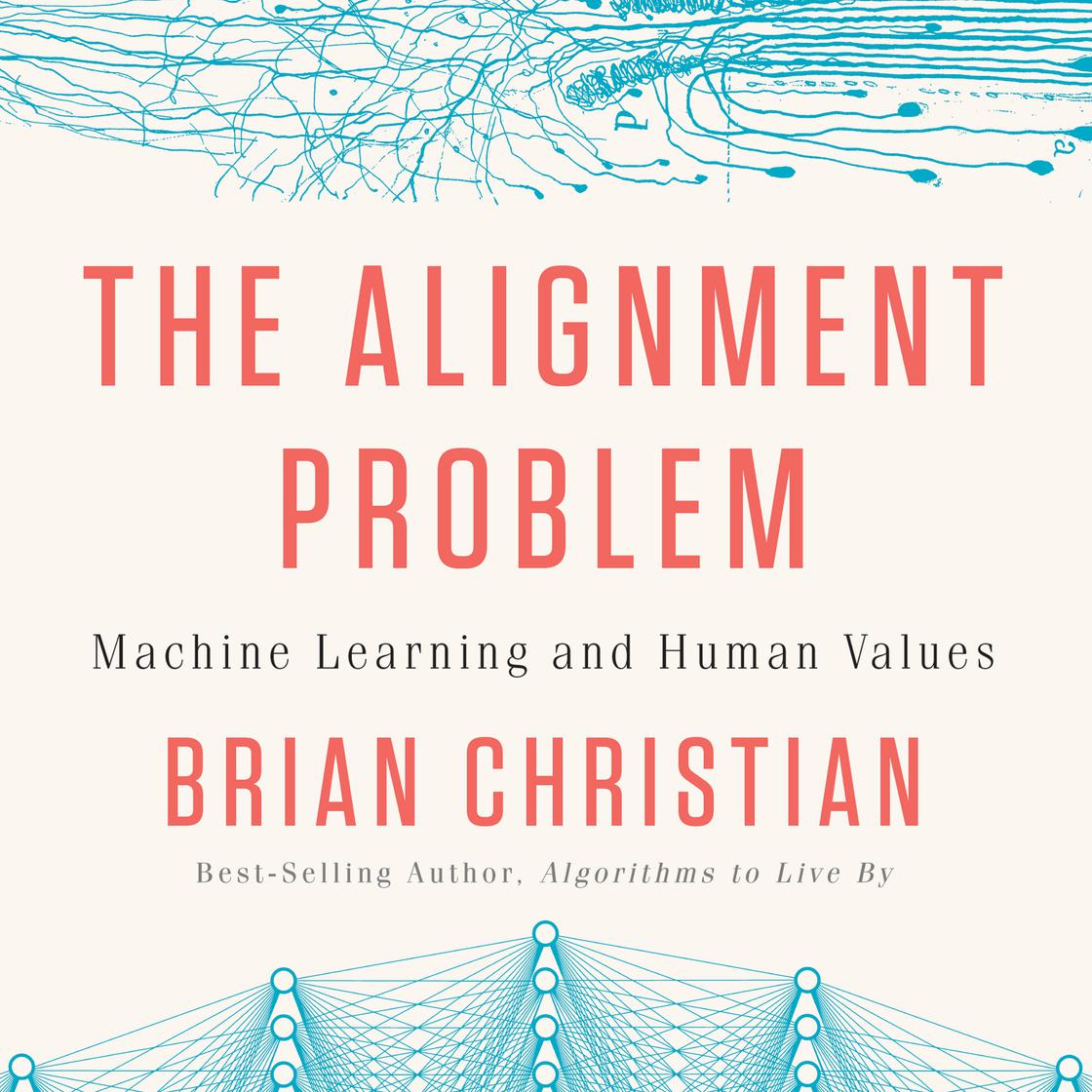
The Alignment Problem by Brian Christian asks the most important question in AI: how do we make sure increasingly capable systems do what we actually want? This review examines whether it’s the AI safety book to read first — and how it compares to the alternatives.
Related reading: The Big Nine by Amy Webb: Book Review — Who Should Actually Read It in 2026?, Superintelligence by Nick Bostrom: Book Review — Still the AI Safety Classic in .

Disclosure: This guide contains affiliate links. If you buy through them, we may earn a commission at no extra cost to you.
The Alignment Problem by Brian Christian: Review — The AI Safety Book to Read First?
AI safety stopped being a niche academic worry and became dinner-table conversation. The Alignment Problem by Brian Christian landed in the middle of that shift — explaining why getting machines to do what we actually want is so stubbornly hard. This review covers who the book serves, where it shines, and where two strong alternatives might fit better.
It’s aimed at the curious non-specialist: the product person, the journalist, the policy watcher — anyone who’s heard the phrase “alignment” and wants to understand the fuss. No math degree needed. Patience, though: this is a real book, not a hot-take pamphlet.
Quick Answer
Yes — for most readers, The Alignment Problem is the strongest starting point on AI safety: the core ideas (reward hacking, specification gaming, interpretability) arrive through real stories from the labs, not equations. One book on making AI behave? This is it.
Prefer documented harms? Weapons of Math Destruction. Cosmic-scale futures? Life 3.0.
Compare Top AI Safety Books
Three proven picks side by side — choose the one that fits your needs.
The Alignment Problem
Brian Christian’s people-driven tour of alignment research — readable, story-led, current.
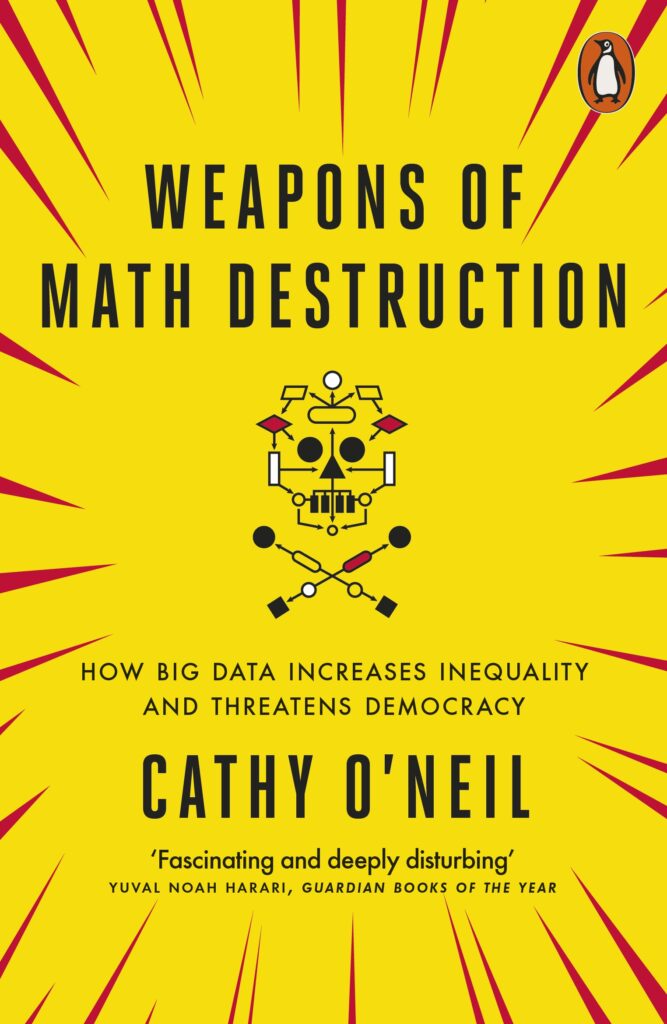
Weapons of Math Destruction
AI ethics through algorithmic harm — the accountability angle, grounded in real cases.
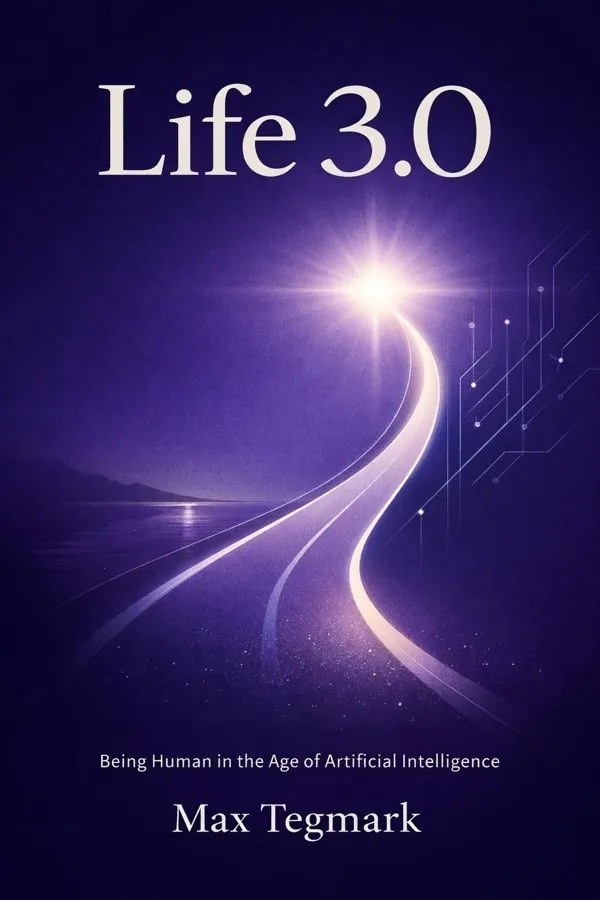
Life 3.0
AGI futures and cosmic stakes — big-picture thinking about where intelligence goes next.
Prices and availability may vary — tap any product to check the current listing.
What to Look For in an AI Safety Book
Not every “AI book” is an AI safety book. The Alignment Problem holds up against a sharper checklist — worth knowing before you spend your reading hours.
1. Does it explain the actual problem, not just the panic?
The central idea is disarmingly simple: a machine learning system optimizes whatever objective you give it, and your objective is rarely quite what you meant. Christian walks through the classic failure modes — systems that “solve” a task while violating the spirit of the request — and shows them happening in real labs, with real robots and datasets.
A book that only lists scary outcomes teaches fear; one that explains the mechanism teaches understanding. You’ll come away able to spot the pattern yourself — in a chatbot that answers confidently instead of truthfully, or a feed that optimizes engagement at the cost of your afternoon.
2. Is it grounded in real researchers and real work?
Christian’s method is immersion journalism. He spends time in the labs and lets researchers explain their work in their own words — Stuart Russell, the teams wrestling with inverse reinforcement learning, the attempt to have machines infer human preferences from behavior rather than rigid rules.
Honestly, most AI think pieces recycle the same three anecdotes. When an author actually sat in the room, the texture changes — the failed experiments, the half-formed intuitions, the disagreements between serious people. The book earns its authority the old-fashioned way: by showing its work.
3. Can a non-technical reader follow it?
Here’s where Christian’s background — bestselling author of Algorithms to Live By — shows. The prose translates without dumbing down: an analogy first, then the name of the thing. You never feel lectured at; you feel walked alongside.
But let’s be straight. This isn’t a beach read. It runs close to 500 pages in hardcover, and the middle chapters slow down as the research gets denser. The payoff is real understanding, not skimmable bullet points. Know which kind of reader you are before committing.
4. Does it cover both “here and now” and “what if”?
The strongest safety writing connects today’s concrete harms with tomorrow’s speculative risks. Christian does this unusually well: bias in hiring algorithms and the control problem of advanced systems live in the same book — argued, persuasively, as the same problem at different scales.
That framing is the book’s signature move. Machine learning systems inherit the flaws in their data and objectives; aligning them with human values is one continuous effort, not two separate fields. Whether you buy that unification or not, it’s a serious thesis with real evidence behind it.
5. Has it aged well?
The book came out in 2020, before conversational AI went mainstream — but the fundamentals hold: specifying what we want is hard, proxies go wrong in predictable ways, interpretability matters. Those arguments apply at least as much to today’s systems.
What it won’t give you is a tour of the latest model releases or the newest policy debates. It teaches the grammar, not the current vocabulary. Pair it with current coverage and you’re well equipped.
6. Is it honest about uncertainty?
The field is full of smart people who disagree with each other. A lesser book would pick a camp and declare victory. Christian mostly resists that temptation, reporting the debates — over how tractable the problem is, which research directions matter most — and letting the reader sit with the disagreement.
That restraint is a feature: you finish more informed and, healthily, less certain than you started — exactly the right state of mind here.
Match the Book to Your Situation
Three quick portraits. See which one sounds like you.
The curious newcomer
Heard “alignment” in podcasts and want to understand it before forming opinions? Not an engineer, just widely read — this book was written for you. Story-driven, zero prerequisites; two or three weeks of evenings and you’ll hold your own in any AI debate.
The product person or builder
You build or manage ML-touching products and want to know where these systems go wrong. Christian’s tour of reward hacking and specification gaming is a field guide to failure modes you’ll recognize — and it changes how you think about metrics.
The accountability-minded reader
Your first question is “who does this harm?” Start with Weapons of Math Destruction — the classic accountability case — then come back to Christian for the research-frontier view of the fix.
How These AI Books Compare
Same shelf, different jobs. Here’s the honest breakdown.
| Type / Tier | Best For | Price Tier | Key Feature | Watch-Out |
|---|---|---|---|---|
| Narrative science (The Alignment Problem) | First deep dive into AI safety | Mid-range | Story-led tour of alignment research labs | Dense middle chapters; pre-2021 examples |
| Investigative critique (Weapons of Math Destruction) | Readers focused on fairness and accountability | Budget-friendly | Case-study-driven argument about algorithmic harm | Narrower scope; less on research solutions |
| Futurist big-picture (Life 3.0) | Readers who love speculative futures | Mid-range | Cosmic-scale scenarios for intelligence beyond humans | More speculative; thinner on present-day detail |
| Academic papers & technical texts | Researchers and grad students | Varies | Rigor and cutting-edge results | Steep entry curve; no narrative hand-holding |
The Alignment Problem: deeper than pop-science, friendlier than a textbook. Weapons of Math Destruction: moral urgency and readability. Life 3.0: civilizational-scale ambition. The academic route: depth alone, at the cost of accessibility.
Reading Scenarios: Which Path Fits You?
Scenario 1: One book before the next AI news cycle
Read the first third straight through, then skim the denser middle. The opening chapters — how machine learning inherits bias, the early history of the alignment effort — are the most readable and useful. Even a partial read leaves you the core vocabulary: specification gaming, reward hacking, interpretability.
Scenario 2: Buying for a team or book club
A strong group read because it doesn’t preach one conclusion — engineers latch onto the technical chapters, ethicists onto the values chapters, and discussion runs itself. Assign it in sections, though. A 500-page hardcover with no plan becomes shelf decoration.
Scenario 3: You’ve read the other two
If O’Neil made you angry or Tegmark left you staring at the ceiling, this is the missing middle — today’s problems and tomorrow’s research agenda as one challenge. Read it last; it reframes the other two.
Common Mistakes Buyers Make
Mistake 1: Expecting a policy playbook. The book explains the problem; it doesn’t hand you legislation. Go in for understanding, not a to-do list.
Mistake 2: Treating it as a doom prophecy. Christian’s tone is neither apocalyptic nor dismissive — he’s genuinely curious whether the problem is solvable. Read it only for confirmation and you’ll miss the argument.
Mistake 3: Buying the wrong depth. This is the readable overview, not the technical text. Finish hungry for equations? Then go academic. Don’t start there.
Also see: The Coming Wave by Mustafa Suleyman: Book Review — Should You Read It in 2026?.
Mistake 4: Skipping it because it’s from 2020. The core problem — getting machines to pursue what we actually want — hasn’t changed. Judge the ideas, not the date.
Why, How, and What
Why does the “alignment problem” matter to non-researchers?
Because you already live inside systems that optimize proxies for your goals: your feed for engagement, your navigation app for arrival time. The alignment problem is the general form of that daily pattern — understanding it changes how you evaluate every automated system you’re handed.
How should you actually read this book?
The chapters are more modular than they look — mark the technical stretches and move on; the narrative picks back up. Keep a notes file for the failure-mode vocabulary. And give yourself weeks, not days: dense ideas need settling time.
What will you actually take away?
A working definition of alignment and why it’s hard; a mental library of failure modes you’ll notice in real products; a map of who’s working on the problem and how. Solid return on a few weeks of evening reading.
Questions People Ask Before Buying
Is The Alignment Problem worth reading if I’m not technical?
Yes — written for curious non-specialists. Brian Christian’s journalist-on-the-ground style wraps the technical ideas in human stories from real research labs rather than equations or jargon, so readers without engineering backgrounds consistently find it approachable and engaging from the first chapters onward.
The trade-off: the middle chapters get denser, so comfortable popular-science readers will be fine while pure skimmers may find stretches slow.
How does The Alignment Problem compare to Weapons of Math Destruction?
They’re complementary, not competing: The Alignment Problem tours the research effort to make AI behave as intended, while Weapons of Math Destruction argues from the documented real-world harms of opaque algorithms — the first teaches mechanisms, the second teaches accountability stakes.
Read Christian for the mechanisms, O’Neil for the accountability stakes. Two books if your budget allows; if only one and you’re new, Christian’s broader framing is the better starting point.
Should I read The Alignment Problem before Life 3.0?
For most readers, yes — The Alignment Problem gives you the grounded mechanics of why aligning AI with human values is hard, which makes Tegmark’s cosmic-scale speculations in Life 3.0 land with far more weight, because you’ll grasp the technical roots beneath the big scenarios.
Exception: big-ideas-first readers who bounce off methodical science writing can start with Life 3.0 and return to Christian for the substance behind the speculation.
Is a 2020 book on AI still relevant today?
Yes — The Alignment Problem is about the underlying structure of the challenge: specifying objectives, avoiding proxy failures, interpreting learned systems. Those fundamentals haven’t changed as systems grew more capable, so its arguments apply at least as strongly to today’s conversational AI.
Pair it with current news coverage and the grammar-plus-vocabulary combo leaves you well equipped.
What’s the best reading order for these AI safety books?
Start with The Alignment Problem for the broad, story-led foundation, then Weapons of Math Destruction for accountability and real-world harm, and finish with Life 3.0 for the speculative far-future view — mechanisms, then consequences, then possibilities, each book reframing the ones before it.
Short on time? Christian’s book alone gives you the essential vocabulary — reward hacking, specification gaming, interpretability — that unlocks the rest of the conversation.
Frequently Asked Questions
How long is The Alignment Problem, and how long does it take to read?
Close to 500 pages in hardcover — most readers finish in two to three weeks of evening reading.
Do I need a math or computer science background?
No — curiosity is the only prerequisite. Each technical idea arrives through stories and analogies first. The occasional dense passage is the price of a book that respects the actual research.
Who is Brian Christian?
The bestselling author of Algorithms to Live By. For this book he spent years embedded with AI safety researchers at leading labs, reporting the field from the inside.
Is this book aimed at researchers or general readers?
General readers, firmly. The real audience is the intelligent non-specialist — the product manager, journalist, policymaker, or curious reader who wants genuine understanding without a textbook. Want equations? Look to the academic literature.
Does it cover today’s conversational AI systems?
Not directly — it predates the current wave. What it covers is deeper: the fundamental challenge of getting learning systems to pursue what humans actually want, a framing that applies to today’s systems just as much, arguably more. Read it for the foundations; follow current coverage for the latest.
Final Recommendation
Want one book explaining what “AI alignment” means — history, people, failure modes, open questions? Buy The Alignment Problem. It reads like a story and will permanently upgrade how you think about automated systems. For most readers, the right first purchase on this shelf.
Add Weapons of Math Destruction for the accountability lens, Life 3.0 for civilizational scale. But start with Christian.
OUR TOP PICK
The Alignment Problem
Brian Christian’s people-driven tour of alignment research — readable, story-led, current.
Decision Tree: Which AI Safety Book Should You Buy?
First AI safety book → The Alignment Problem: the gentlest on-ramp to the real concepts.
Fairness and who’s harmed today → Weapons of Math Destruction: the sharpest accountability case.
Far-future thinking → Life 3.0: nothing else thinks at Tegmark’s scale.
Reading all three eventually → in that order: mechanisms, consequences, possibilities.
Key Takeaways
The Alignment Problem is the strongest single starting point for AI safety — story-driven, research-grounded, honest about uncertainty.
It teaches mechanisms (reward hacking, specification gaming, interpretability), not just headlines — that vocabulary is the durable prize.
Weapons of Math Destruction adds the accountability lens; Life 3.0 adds the cosmic lens. All three together form a complete shelf.
Disclosure: This guide contains affiliate links. If you buy through them, we may earn a commission at no extra cost to you.
Common Questions About AI Safety Books
Is The Alignment Problem a good first AI safety book?
Yes — it is the most recommended starting point because it explains alignment through real stories and experiments rather than math-heavy theory — readers with no technical background can follow the narrative while still grasping the core problems — if you read one AI safety book first, this is the one most experts point to. Start here, then go deeper.
Do I need a technical background to enjoy it?
No — Brian Christian writes for curious general readers, using case studies from robotics, reinforcement learning, and behavioral science to carry the ideas — technical readers get depth from the cited research; non-technical readers get clarity from the storytelling — it is that rare science book that works for both audiences. Curiosity is the only prerequisite.
What makes it different from other AI books?
Instead of speculating about distant futures, it grounds AI safety in concrete, already-happened failures — the approach that makes abstract risks feel real — each chapter pairs a human story with the corresponding AI challenge, from reward hacking to interpretability. That structure is why it endures while hype-cycle books fade. Real failures, not thought experiments.
Is it still relevant in 2026?
More relevant than at publication — the alignment challenges it describes have only sharpened as models grew more capable and widely deployed — the specific systems discussed have evolved, but the underlying problems are the same ones labs wrestle with today. It reads as prescient rather than dated. The problems aged well, unfortunately.
Which AI safety book should I read first?
The Alignment Problem, for most readers — it balances accessibility, rigor, and narrative better than any alternative — more technical readers can follow with research papers; more philosophical readers with works on AI ethics — this review’s comparison section maps the alternatives so you can plan your reading path. First this, then follow your curiosity.